
How to Evaluate Automotive Lightweight Bodies for Strength, Cost, and Repairability
Evaluating automotive lightweight bodies is no longer a narrow exercise in chasing lower mass. The real task is to judge how a body structure performs when strength targets, production economics, and repair realities pull in different directions.
That balance matters across the global mobility sector. A lighter body can improve efficiency and range, but weak joining strategies, unstable costs, or poor repair paths can erase the expected value.
Within the GNCS view of safety and precision, automotive lightweight bodies sit close to passive protection, body stampings, and cabin safety performance. Their evaluation affects crash energy management, compliance confidence, and long-term ownership outcomes.
What should be measured beyond weight reduction
A lightweight body is not simply a thinner body. It is a structural system built from material choice, section design, joining technology, and load-path control.
In practice, technical evaluation starts with one question: what function must the body preserve while reducing mass? The answer usually includes crash integrity, stiffness, durability, manufacturability, and serviceability.
This is why automotive lightweight bodies should be reviewed as complete architectures. Aluminum closures, hot-stamped steel pillars, tailored blanks, adhesives, and cast nodes can work well together, but only when their interactions are understood.
Core performance layers
- Static strength, including torsional and bending stiffness for handling, NVH, and sealing performance.
- Crash strength, especially energy absorption, intrusion control, and occupant survival space retention.
- Fatigue and corrosion resistance, which often become critical in mixed-material structures.
- Process robustness, covering forming limits, springback control, and joining consistency.
- Repairability, including cut-and-replace feasibility, heat sensitivity, and workshop equipment needs.
Why the industry pays closer attention now
Several pressures are converging. Electrification raises mass through batteries. Emissions and efficiency targets still demand lighter vehicles. At the same time, crash regulations continue to tighten.
That creates a difficult design space. A body-in-white must offset battery weight, protect the cabin, remain manufacturable at scale, and avoid runaway insurance or repair costs.
GNCS often tracks this topic through the same logic used in other safety-critical systems: precision in one subsystem cannot be separated from containment performance in another. Body structures influence airbags, seatbelts, and seat mounting loads during a crash.
For that reason, automotive lightweight bodies are now assessed not only by OEM design teams, but also by supply chains, repair networks, compliance analysts, and residual value models.
Strength evaluation starts with load paths, not brochures
Material labels alone do not prove structural quality. Ultra-high-strength steel, aluminum, magnesium, and composites each offer advantages, but their value depends on where loads travel during normal driving and impact events.
A sound review of automotive lightweight bodies should identify primary load paths first. Then it should test whether the selected materials and joints support those paths without unstable deformation.
Key strength checkpoints
More mature assessments combine CAE data, coupon testing, sub-assembly validation, and full-vehicle crash evidence. One source alone rarely captures failure modes at joints, corners, and repair sections.
Cost is shaped by the full industrial chain
A lightweight body may look efficient in a mass spreadsheet while becoming expensive in tooling, scrap, joining time, or downstream warranty exposure. Cost evaluation must follow the structure from raw material to field service.
This is especially true for automotive lightweight bodies that combine hot-stamped steel, aluminum extrusions, castings, and structural adhesives. Each adds benefits, but each adds process conditions and supply dependencies.
Cost drivers worth separating
- Material price volatility, especially for aluminum, magnesium, and specialty grades.
- Tooling intensity, including die wear, hot forming lines, and casting investments.
- Joining cycle time for rivets, lasers, adhesives, sealants, and mixed processes.
- Scrap rates linked to springback, dimensional variation, and surface defects.
- Quality control burden, including nondestructive inspection and traceability systems.
In many cases, the lowest-cost solution is not the lightest one. It is the design that reaches target mass with acceptable process stability and limited rework across volume production.
Repairability often determines real-world value
Repairability is frequently underestimated during early assessment. Yet it directly influences insurance cost, downtime, workshop safety, and customer acceptance.
Automotive lightweight bodies become difficult to repair when materials require special heat control, access is restricted, or structural adhesives hide damage progression. Mixed-material bodies also raise galvanic corrosion and replacement complexity.
A technically strong design can still underperform commercially if minor collision damage triggers expensive module replacement or long repair cycles.
Practical repairability checks
- Can damaged sections be separated cleanly without harming nearby high-strength areas?
- Do repair procedures require dedicated riveting, bonding, or calibration tools?
- Will heat from straightening or welding change metallurgical properties?
- Are replacement parts modular enough to avoid whole-side or full-floor replacement?
- Can workshops verify post-repair geometry and sensor alignment reliably?
For safety-related structures, repairability is not just a service issue. It is part of structural integrity management across the vehicle lifecycle.
Comparing common lightweight body approaches
Different body strategies solve different problems. A useful comparison keeps the decision tied to target vehicle class, production scale, and damage profile.
The best choice depends on where the body must absorb energy, how many units will be built, and how often accident repairs are expected in the target market.
A workable evaluation logic for technical decisions
A practical review sequence helps prevent one-dimensional decisions. It also makes supplier comparisons more meaningful.
A five-step logic
- Define target functions by crash class, stiffness need, packaging limits, and lifetime conditions.
- Map candidate materials and joining routes against those functions, not against headline mass savings.
- Quantify manufacturing cost with realistic scrap, takt time, tooling amortization, and quality assumptions.
- Test repair scenarios for common damage zones such as sills, pillars, front rails, and underbody edges.
- Check compliance fit with IIHS, E-NCAP, regional repair standards, and battery protection rules.
This structured approach aligns well with the GNCS intelligence perspective. It connects body stampings, collision energy absorption, and downstream safety performance instead of treating them as isolated categories.
Where to look next
The next step is usually not to ask which lightweight material is best. It is to build a comparison framework that matches vehicle architecture, production volume, crash targets, and service conditions.
When reviewing automotive lightweight bodies, keep strength, cost, and repairability on the same page from the start. Decisions become clearer when load paths, process limits, and repair consequences are examined together.
That creates a more reliable basis for screening suppliers, validating body concepts, and tracking industry signals that may affect future compliance or commercial performance.
Related News

How to Specify Integrated Marine Electronics for Reliable Bridge Operations
Integrated marine electronics: learn how to specify reliable bridge systems with clear data flows, redundancy, alarm control, lifecycle interfaces, and operational testing.

How to Evaluate Navigation Radar Manufacturers for Commercial Vessel Projects
Navigation radar manufacturers: learn how to compare performance, compliance, integration, support, and lifecycle cost for commercial vessel projects.

How Adjustable Cabin Ergonomics Reduce Operator Fatigue in Long-Shift Vehicles
Adjustable cabin ergonomics reduces operator fatigue through better seating, reach, visibility, vibration control, and climate comfort for safer long-shift vehicles.
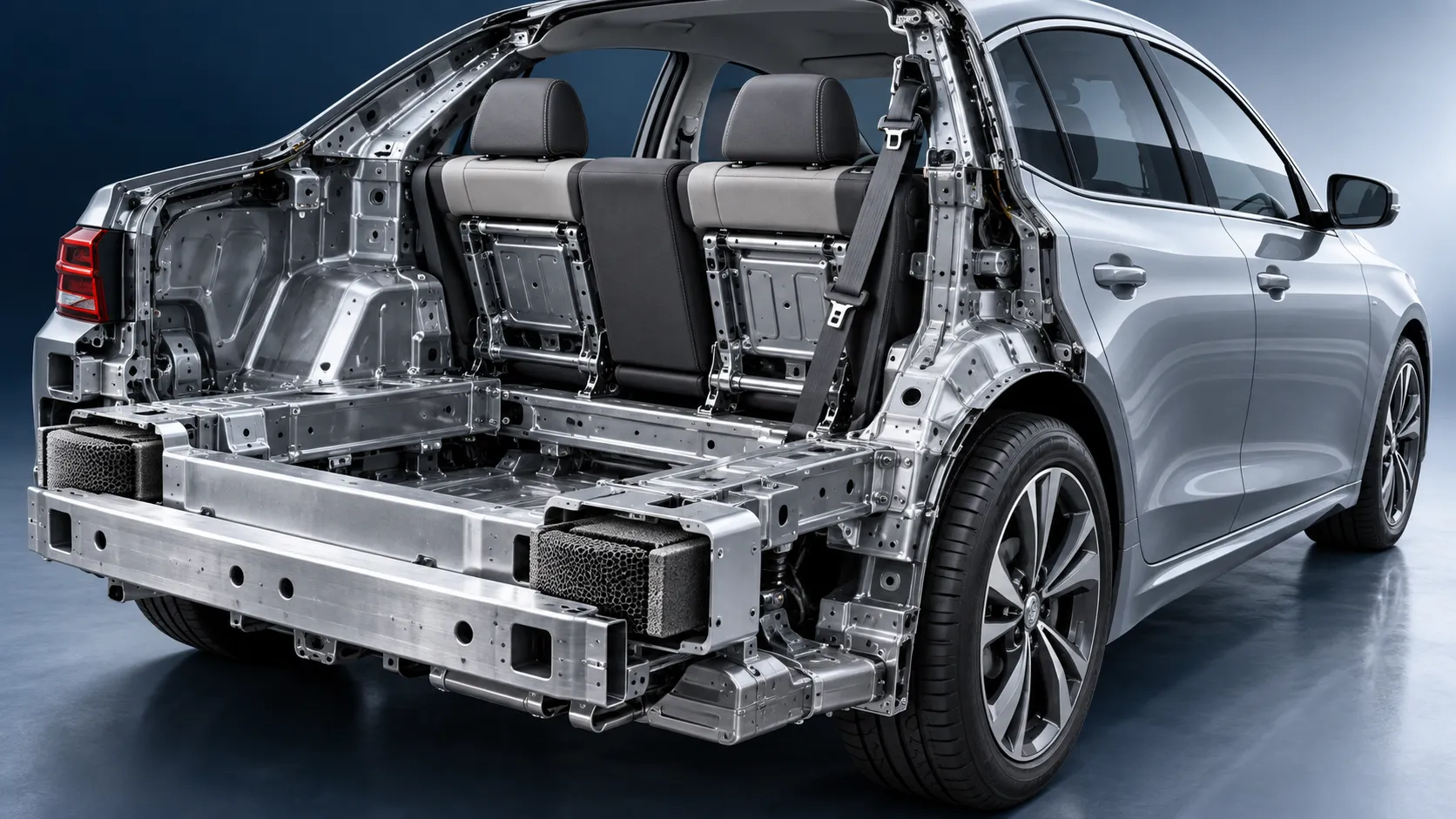
How Rear-Impact Safety Components Work Together to Protect Vehicle Occupants
Explore how automotive safety components for rear impact work together—from crash structures and seats to head restraints and belts—to enhance occupant protection.

How to Evaluate a Marine Safety Systems Manufacturer for Vessel Compliance and Reliability
Marine safety systems manufacturer evaluation guide: verify compliance, engineering quality, lifecycle costs, and global service support for safer, reliable vessel operations.
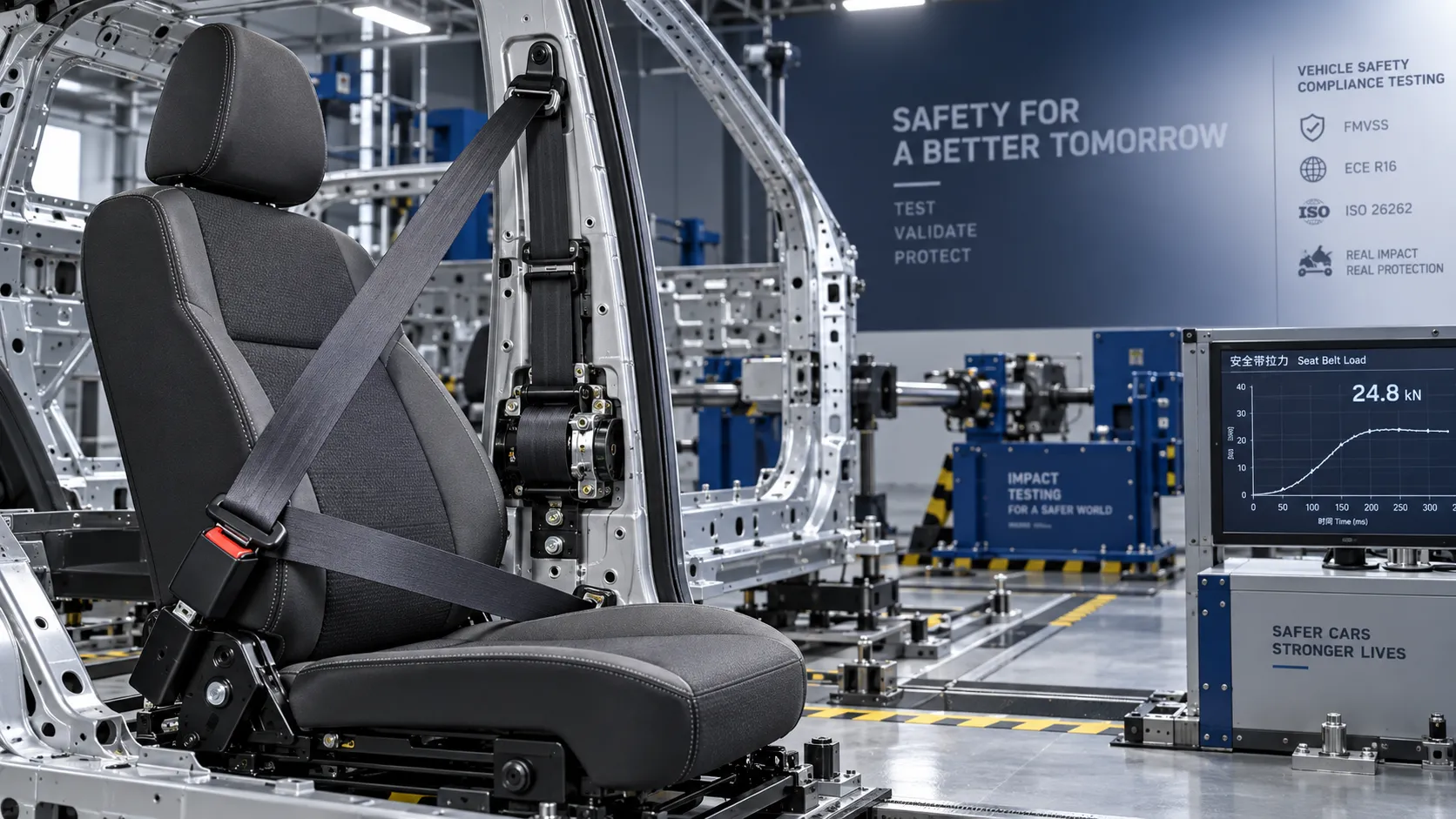
Crash Test Regulations for Seatbelts: Key Compliance Requirements Explained
Crash test regulations seatbelts explained: explore FMVSS, UN rules, anchorage strength, and dynamic restraint testing for safer, compliant vehicle systems.

How to Calculate the Total Cost of Automotive Lightweighting for a Vehicle Program
Automotive lightweight solutions cost: learn how to calculate program-level costs, including materials, tooling, joining, validation, risk, and vehicle-level value.

How Automotive Seat Occupancy Sensing Improves Airbag Deployment Decisions
Automotive seat occupancy sensing helps optimize airbag deployment decisions, improving passenger classification, safety diagnostics, and compliance across real-world conditions.

What Drives Lightweight Body Component Costs in High-Volume Vehicle Programs?
Lightweight body components cost depends on material yield, forming, joining, tooling, validation, and logistics. Explore proven ways to optimize total vehicle program cost.
Related News
- 00
0000-00
How to Evaluate an Aluminum Automotive Stampings Supplier for Cost, Quality, and Lead Time - 00
0000-00
How to Evaluate Aluminum for Vehicle Lightweight Solutions: Key Trade-Offs in Cost, Strength, and Formability - 00
0000-00
Stamped Aluminum Body Parts: Key Grades, Forming Limits, and Best-Fit Vehicle Applications - 00
0000-00
How Aluminum Automotive Stampings for Body Panels Improve Weight, Corrosion Resistance, and Formability - 00
0000-00
Automotive Lightweight Solutions: How to Compare Materials, Processes, and Cost Drivers
Weekly Insights
Stay ahead with our curated technology reports delivered every Monday.