How to Choose Maritime Safety Equipment for Commercial Vessels and Port Operations
How to Choose Maritime Safety Equipment for Commercial Vessels and Port Operations
Choosing the right maritime safety equipment is not a box-ticking exercise, especially when you are buying for working vessels, terminals, yards, and port-side operations where downtime, inspections, and incident exposure all hit at once. For procurement teams, the real job is to separate equipment that merely looks compliant on paper from equipment that will hold up in salt, vibration, heat, rough handling, and actual emergency use.
If you are evaluating suppliers or preparing a purchase list, start with this: define where the equipment will be used, who will use it, what regulations apply to that vessel or facility, and how fast replacement or servicing must happen. That sounds basic, but many bad buys start with a generic RFQ that mixes offshore, harbor, cargo handling, and passenger-risk assumptions into one line item list.
Begin with the operating profile, not the catalog
Before comparing brands, pin down the operating environment. A tug working short cycles in port, a bulk carrier on long international voyages, and a container terminal running 24/7 shifts do not need the same mix of maritime safety equipment, even when some product categories overlap.
- Vessel type and flag state requirements
- Trade route: coastal, inland, offshore, or international
- Crew size and passenger exposure
- Port facility hazards such as fuel handling, heavy lifting, confined spaces, or night operations
- Environmental stress: corrosion, washdown, temperature swings, vibration, UV, and explosive atmospheres where relevant
This step usually narrows the shortlist faster than any brochure claim. For example, if your teams are working exposed decks and quayside loading points, ingress protection, glove-friendly controls, and visibility in low-light conditions may matter more than extra features nobody will use.
Check compliance early, but do not stop there
Procurement mistakes often happen when buyers accept “marine grade” as if it were a standard. It is not. For commercial vessels, verify which approvals are actually required for the equipment category. Depending on the item, that may involve SOLAS alignment, IMO-related requirements, MED Wheelmark for certain European markets, flag-state acceptance, class society expectations, or Coast Guard-related requirements in some operating contexts. Exact applicability depends on the vessel, route, and installation scope, so this should be checked against the ship’s compliance matrix and current regulatory obligations.
Also separate mandatory lifesaving and fire protection equipment from operational safety gear. Lifebuoys, lifejackets, immersion suits, EPIRBs, fire extinguishers, detection systems, emergency lighting, AIS-related safety functions, and navigation support equipment may all sit in the same budget discussion, but they do not sit under the same approval path. Ask suppliers for certificates, declaration details, test references, and expiry-sensitive documentation where applicable. If a vendor cannot clearly explain what the approval covers, treat that as a warning sign.
One practical check: make sure the certificate belongs to the exact model you are buying, not a related product family with different materials, battery configuration, enclosure rating, or software revision.
Buy around the risk points that actually cause incidents
Not every safety item deserves the same level of scrutiny. Spend more time on the equipment categories that fail under stress, create inspection findings, or slow emergency response.
For many buyers, the high-attention list includes:
- Personal flotation devices and immersion protection: fit range, donning speed, storage condition tolerance
- Fire detection and suppression components: response reliability, inspection interval, spare availability
- Emergency communications and distress equipment: battery life, self-test functions, service network
- Navigation-critical safety electronics: compatibility with onboard systems, update support, alarm clarity
- Port-side PPE and rescue gear: visibility, durability, contamination resistance, replacement logistics
A supplier may offer a wide bundle, but bundled buying is only useful if the weak items in the package do not become your maintenance burden later.
Look closely at lifecycle cost, not just purchase price
Cheap maritime safety equipment can become expensive through inspection failures, servicing delays, battery replacement issues, training overhead, and early corrosion. Procurement teams already know this in theory; the problem is that quotes often hide the downstream costs.
If two offers are close, the better buy is usually the one with clearer service intervals, easier onboard checks, and stronger regional support. That matters more than a small headline discount.
Demand proof of reliability in marine conditions
Ports and vessels are hard on equipment. Salt spray, impact, deck vibration, cable fatigue, sunlight, oil mist, and poor storage discipline will expose weak products quickly. Ask less about marketing labels and more about failure points.
- What is the enclosure rating, and under what test conditions was it achieved?
- Which parts are most frequently replaced in service?
- Are housings, straps, brackets, and connectors corrosion-resistant enough for your duty cycle?
- Can the equipment tolerate rough handling during drills and inspections?
- Is there a known software or firmware support policy for electronic safety systems?
When possible, ask for maintenance records from comparable operating environments, but do not accept anonymous “customer success” claims as evidence. If the supplier cannot provide usable references, request sample units for technical evaluation or pilot deployment.
Do not separate usability from safety performance
A lot of maritime safety equipment fails in practice because it is awkward, confusing, bulky, or badly positioned. Crews improvise around gear that gets in the way. Port workers stop trusting alarms they cannot interpret quickly. Those are procurement issues too.
Check the human side of the product:
- Can users operate it with gloves, hearing protection, or in rain?
- Are labels, indicators, and alarms understandable without vendor-specific training?
- Does the fit or mounting method work for your actual crew mix and workwear?
- Can inspections be performed quickly enough that they will actually happen on schedule?
This is especially relevant when buying rescue devices, portable gas detection, emergency communications units, and wearable gear. The specification may look fine, but a five-minute onboard handling check often tells you more than a data sheet.
Match the supplier to the consequences of failure
For low-risk consumables, broad distributor coverage may be enough. For critical safety systems, supplier quality matters almost as much as product quality. You need to know who handles commissioning, who owns documentation, who answers after a failed inspection, and how fast parts move when a vessel schedule is at risk.
Good questions to put into the evaluation:
- Is the supplier an OEM, an authorized integrator, or only a trader?
- Where are service points located relative to your trading routes or terminals?
- Can they support document packs for audits, class reviews, and handover files?
- What is the escalation path for defects, recalls, or software issues?
- Are lead times stable, or heavily dependent on one factory or one battery source?
If your organization buys across multiple fleets or facilities, standardizing approved brands can reduce training friction and spare complexity. That said, standardization should not override local compliance or operating realities.
Watch the common procurement traps
These show up repeatedly in marine and port purchasing:
- Specifying by brand memory instead of current approval status
- Buying electronics without checking software support life or update obligations
- Assuming a land-industrial product is acceptable for marine exposure
- Ignoring storage space, mounting constraints, or retrofitting labor
- Letting distributors substitute models without formal technical review
- Failing to align procurement with HSE, technical, and operations teams before PO release
The substitution issue deserves extra attention. A “same specification” replacement can create approval gaps, mounting changes, or crew confusion, particularly on emergency devices and fixed systems.
For international buying, check market differences early
If you source maritime safety equipment across regions, do not assume that one certification set clears every destination market. Documentation format, accepted approvals, language needs, servicing arrangements, and customs handling for safety-related batteries or pressurized components can all vary. Exact trade restrictions and import handling should be verified case by case【待核实】, especially for distress equipment, hazardous contents, and controlled communications devices.
This is where an intelligence-driven sourcing approach helps. Buyers who follow compliance updates, support network coverage, and product revision history generally make fewer urgent replacements later. That is also why specialist industry platforms such as GNCS are useful to procurement teams: not because they replace technical approval, but because they help filter suppliers, track regulatory movement, and spot whether a product line is actually keeping pace with marine navigation and safety system requirements.
A practical short-form checklist before you issue the order
- The equipment matches the vessel or port use case, not a generic marine label.
- Required approvals and certificates are current and model-specific.
- Installation, storage, and inspection routines are workable in real operations.
- Consumables, batteries, and spare parts are available on a realistic timeline.
- Users can operate the gear quickly under PPE, weather, and stress.
- Service support, documentation, and escalation paths are clear in writing.
- Total ownership cost has been compared, not only unit price.
- Any regional compliance or import questions have been checked before purchase.
That is usually enough to separate a sound purchase from a risky one. In this category, the best buying decisions tend to be fairly unglamorous: clear paperwork, durable equipment, predictable service, and no surprises when the inspector shows up or the crew reaches for the gear in bad conditions.
Related News
How to Specify Integrated Marine Electronics for Reliable Bridge Operations
Integrated marine electronics: learn how to specify reliable bridge systems with clear data flows, redundancy, alarm control, lifecycle interfaces, and operational testing.

How to Evaluate Navigation Radar Manufacturers for Commercial Vessel Projects
Navigation radar manufacturers: learn how to compare performance, compliance, integration, support, and lifecycle cost for commercial vessel projects.
How Adjustable Cabin Ergonomics Reduce Operator Fatigue in Long-Shift Vehicles
Adjustable cabin ergonomics reduces operator fatigue through better seating, reach, visibility, vibration control, and climate comfort for safer long-shift vehicles.

How Rear-Impact Safety Components Work Together to Protect Vehicle Occupants
Explore how automotive safety components for rear impact work together—from crash structures and seats to head restraints and belts—to enhance occupant protection.
How to Evaluate a Marine Safety Systems Manufacturer for Vessel Compliance and Reliability
Marine safety systems manufacturer evaluation guide: verify compliance, engineering quality, lifecycle costs, and global service support for safer, reliable vessel operations.
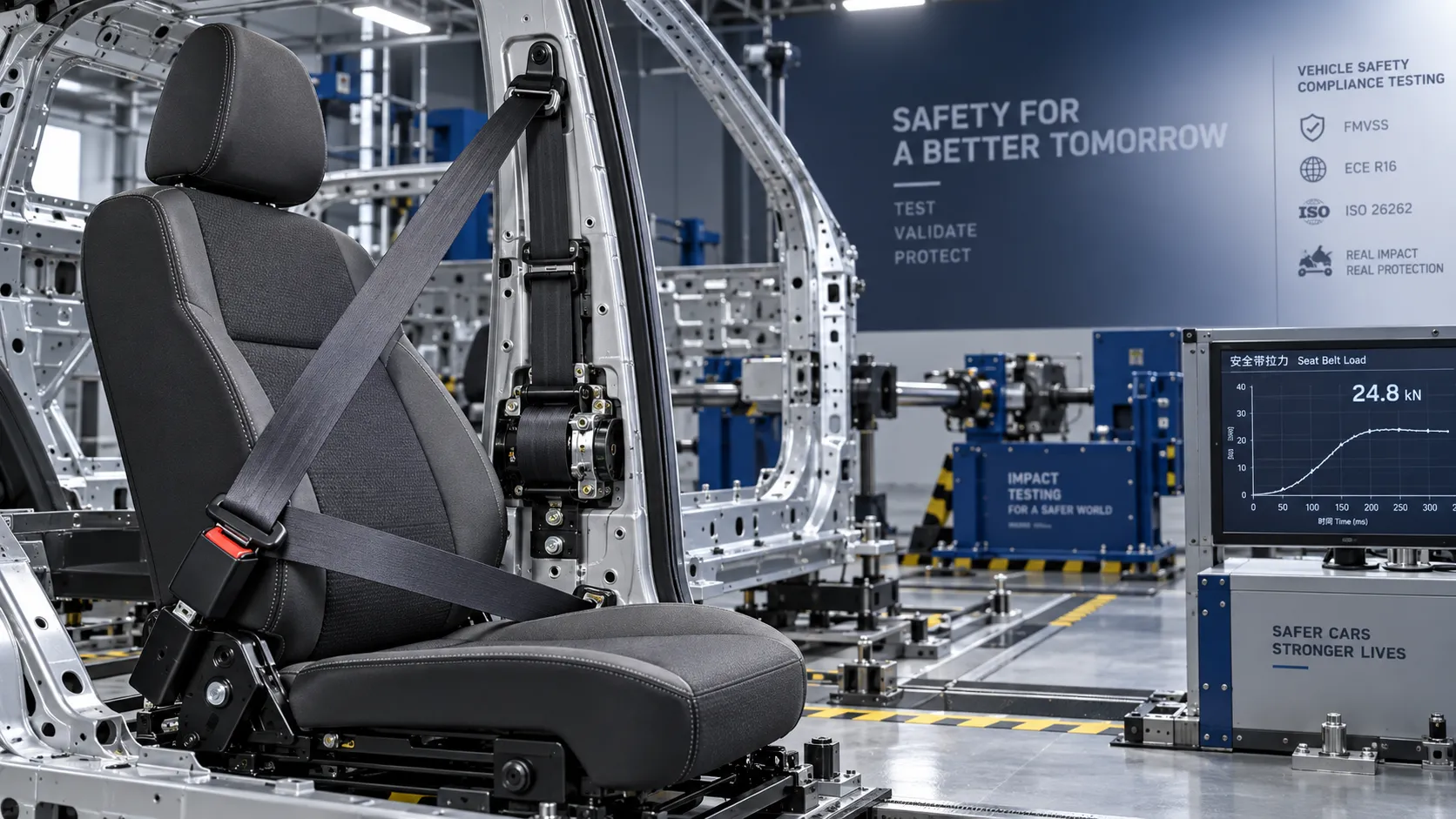
Crash Test Regulations for Seatbelts: Key Compliance Requirements Explained
Crash test regulations seatbelts explained: explore FMVSS, UN rules, anchorage strength, and dynamic restraint testing for safer, compliant vehicle systems.

How to Calculate the Total Cost of Automotive Lightweighting for a Vehicle Program
Automotive lightweight solutions cost: learn how to calculate program-level costs, including materials, tooling, joining, validation, risk, and vehicle-level value.

How Automotive Seat Occupancy Sensing Improves Airbag Deployment Decisions
Automotive seat occupancy sensing helps optimize airbag deployment decisions, improving passenger classification, safety diagnostics, and compliance across real-world conditions.

What Drives Lightweight Body Component Costs in High-Volume Vehicle Programs?
Lightweight body components cost depends on material yield, forming, joining, tooling, validation, and logistics. Explore proven ways to optimize total vehicle program cost.
Related News
- 00
0000-00
How to Specify Integrated Marine Electronics for Reliable Bridge Operations - 00
0000-00
How Adjustable Cabin Ergonomics Reduce Operator Fatigue in Long-Shift Vehicles - 00
0000-00
How to Evaluate a Marine Safety Systems Manufacturer for Vessel Compliance and Reliability - 00
0000-00
How to Calculate the Total Cost of Automotive Lightweighting for a Vehicle Program - 00
0000-00
What Drives Lightweight Body Component Costs in High-Volume Vehicle Programs?
Weekly Insights
Stay ahead with our curated technology reports delivered every Monday.