
Automotive Lightweight Bodies: How to Balance Weight Reduction, Stiffness, and Repair Cost
Automotive Lightweight Bodies: How to Balance Weight Reduction, Stiffness, and Repair Cost
In automotive lightweight bodies, cutting mass is never a single-goal exercise.
It must stay aligned with stiffness, crash behavior, manufacturing flow, and repair economics.
That is why automotive lightweight bodies demand program-level trade-off decisions, not isolated engineering wins.
A lighter structure may improve range, fuel efficiency, and emissions performance.
But if stiffness drops or repair cost climbs, the business case weakens quickly.
The smarter approach is to evaluate materials, joining methods, and architecture as one system.
From a selection standpoint, the best solution is rarely the lightest one on paper.
Why Automotive Lightweight Bodies Create Trade-Off Pressure
Recent vehicle programs show a clearer pattern.
Weight reduction targets are rising, while cost and durability reviews are becoming stricter.
This is especially true for EV platforms, crossovers, and mixed-material body structures.
In practice, automotive lightweight bodies must meet five pressures at the same time:
- Lower mass for efficiency, range, and regulatory goals.
- Higher body stiffness for handling, noise control, and battery protection.
- Stable crash energy management across front, side, and offset events.
- Scalable manufacturing with acceptable tooling and cycle time.
- Reasonable repair cost for insurers, fleets, and aftersales networks.
These pressures often pull in different directions.
A stronger alloy may help stiffness, yet complicate stamping, welding, or panel replacement.
Start with the Right Decision Framework
The most effective selection process begins with priorities, not materials.
Before comparing steel, aluminum, or composites, define what success means for the vehicle program.
A useful framework for automotive lightweight bodies includes four weighted lenses.
- Mass reduction per vehicle and per subsystem.
- Stiffness retention under static and dynamic loads.
- Total cost across tooling, production, service, and repair.
- Execution risk, including supply, process maturity, and field repairability.
This structure prevents teams from overvaluing headline weight savings.
It also makes cross-functional decisions easier when engineering, purchasing, quality, and service teams disagree.
Material Choices: Where the Real Balance Begins
Material strategy sits at the center of automotive lightweight bodies.
Yet no single material solves every target well.
Advanced High-Strength Steel
AHSS remains a practical baseline for many automotive lightweight bodies.
It offers strong crash performance, mature forming routes, and broad repair familiarity.
Hot-stamped parts are especially valuable in pillars, rockers, and intrusion-critical zones.
The trade-off is local repair difficulty and possible tooling complexity.
Aluminum Alloys
Aluminum can deliver meaningful mass savings in closures, front structures, and body panels.
For automotive lightweight bodies, this often improves efficiency without severe geometry changes.
Still, joining methods matter.
Riveting, bonding, and isolation requirements can raise assembly and repair cost.
Composites and Multi-Material Designs
Composites can unlock aggressive weight reduction in premium or niche programs.
However, repair training, inspection methods, and cycle time often limit wider adoption.
Mixed-material automotive lightweight bodies usually work best when each material has a sharply defined role.
Stiffness Is More Than Material Strength
A common selection mistake is equating strength directly with stiffness.
In automotive lightweight bodies, geometry often matters just as much.
Section depth, bead design, load paths, and closed profiles can recover stiffness efficiently.
This also means some weight targets can be achieved through architecture, not only expensive material upgrades.
Useful stiffness questions include:
- Which body zones drive torsional stiffness most strongly?
- Can gauge reduction be offset through shape optimization?
- Do joining locations interrupt the intended load path?
- Will battery enclosure integration change the body stiffness map?
When these questions are addressed early, automotive lightweight bodies avoid late-stage reinforcement loops that erase savings.
Repair Cost: The Overlooked Selection Variable
Repair economics deserve a much earlier seat in the decision process.
This is one of the biggest blind spots in automotive lightweight bodies.
A structure can look excellent in simulation and still perform poorly in insurance cost ratings.
That affects residual value, fleet attractiveness, and even brand positioning.
Key repair drivers include:
- Part accessibility after low-speed and medium-speed impacts.
- Sectioning feasibility for damaged structural members.
- Heat sensitivity around ultra-high-strength steel zones.
- Bonded or riveted joints that require special workshop tools.
- Material separation risks, including galvanic corrosion in mixed assemblies.
In real programs, repair cost should be modeled as a lifecycle variable.
That change alone improves decision quality for automotive lightweight bodies.
Joining Strategy Often Determines Success
Material selection and joining strategy cannot be separated.
For automotive lightweight bodies, welds, adhesives, rivets, and hybrid joints shape stiffness, durability, and serviceability.
Adhesives can increase local stiffness and improve fatigue behavior.
But they may slow repair operations or demand strict contamination control.
Resistance spot welding remains cost-effective, though not for every mixed-material interface.
The best joining strategy is the one that supports design intent across production and service, not just at prototype stage.
A Practical Evaluation Matrix for Program Decisions
A simple scoring matrix helps keep automotive lightweight bodies decisions grounded.
This kind of matrix makes trade-offs visible before they become launch issues.
What Usually Works Best
Across many programs, the strongest results come from selective lightweighting.
Not every panel or rail needs the most advanced material option.
For automotive lightweight bodies, high-value zones usually deserve the first investment.
These include crash rails, pillars, rockers, floor cross-members, and closures with strong mass leverage.
Then support that architecture with repair-conscious joints and replaceable subassemblies.
That balance is usually more sustainable than a broad, expensive material shift.
Final Takeaway for Better Selection Decisions
The best automotive lightweight bodies are not defined by minimum mass alone.
They succeed because weight reduction, stiffness, crash behavior, and repair cost stay in balance.
That balance usually comes from early cross-functional alignment, realistic material choices, and disciplined trade-off scoring.
In practical terms, automotive lightweight bodies should be judged by total program value, not isolated engineering metrics.
When the decision model includes service and repair from the start, better outcomes follow.
That is the most reliable way to choose a lightweight body strategy that performs well on the road and on the balance sheet.
Related News

How to Specify Integrated Marine Electronics for Reliable Bridge Operations
Integrated marine electronics: learn how to specify reliable bridge systems with clear data flows, redundancy, alarm control, lifecycle interfaces, and operational testing.

How to Evaluate Navigation Radar Manufacturers for Commercial Vessel Projects
Navigation radar manufacturers: learn how to compare performance, compliance, integration, support, and lifecycle cost for commercial vessel projects.

How Adjustable Cabin Ergonomics Reduce Operator Fatigue in Long-Shift Vehicles
Adjustable cabin ergonomics reduces operator fatigue through better seating, reach, visibility, vibration control, and climate comfort for safer long-shift vehicles.
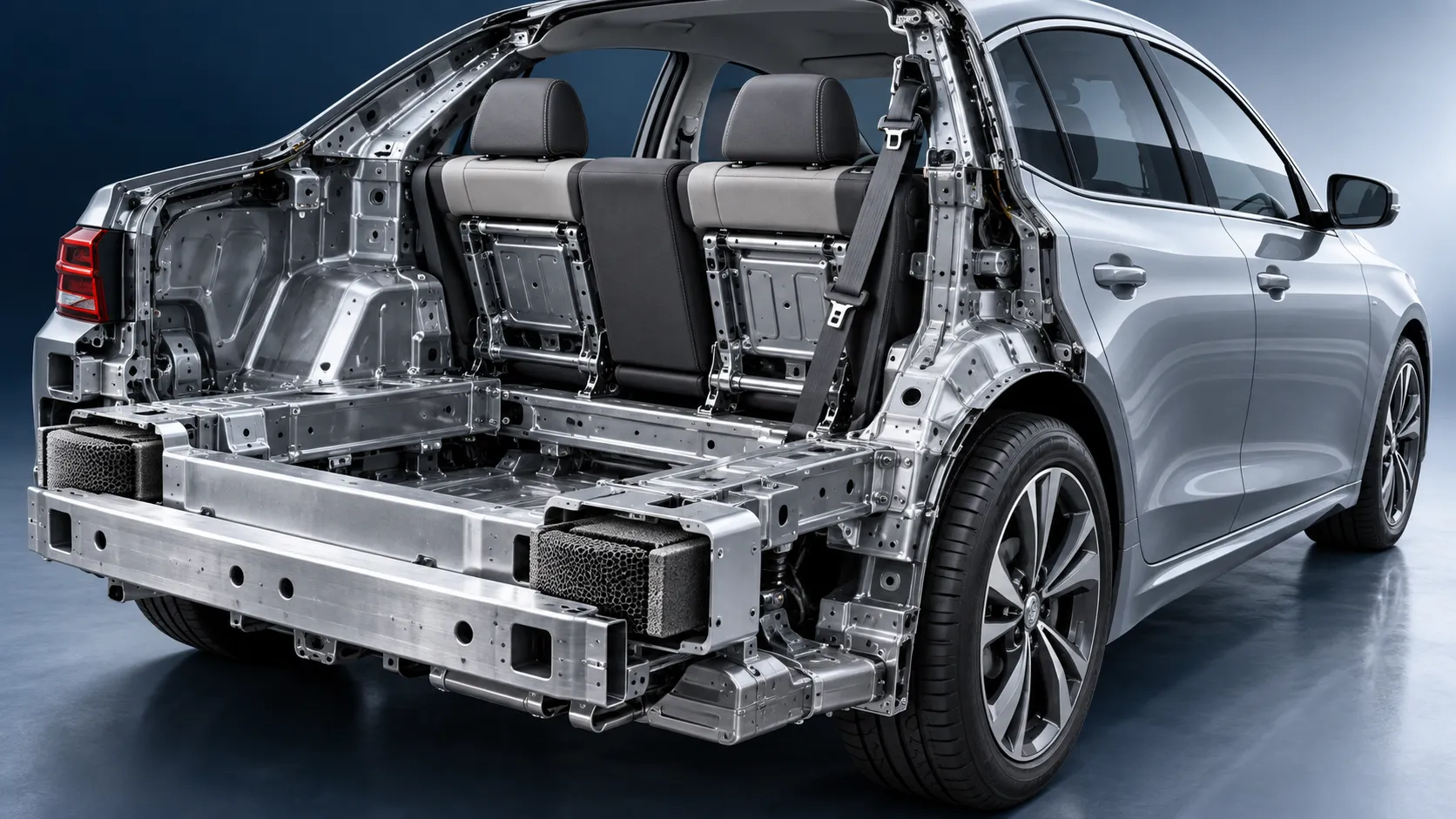
How Rear-Impact Safety Components Work Together to Protect Vehicle Occupants
Explore how automotive safety components for rear impact work together—from crash structures and seats to head restraints and belts—to enhance occupant protection.

How to Evaluate a Marine Safety Systems Manufacturer for Vessel Compliance and Reliability
Marine safety systems manufacturer evaluation guide: verify compliance, engineering quality, lifecycle costs, and global service support for safer, reliable vessel operations.
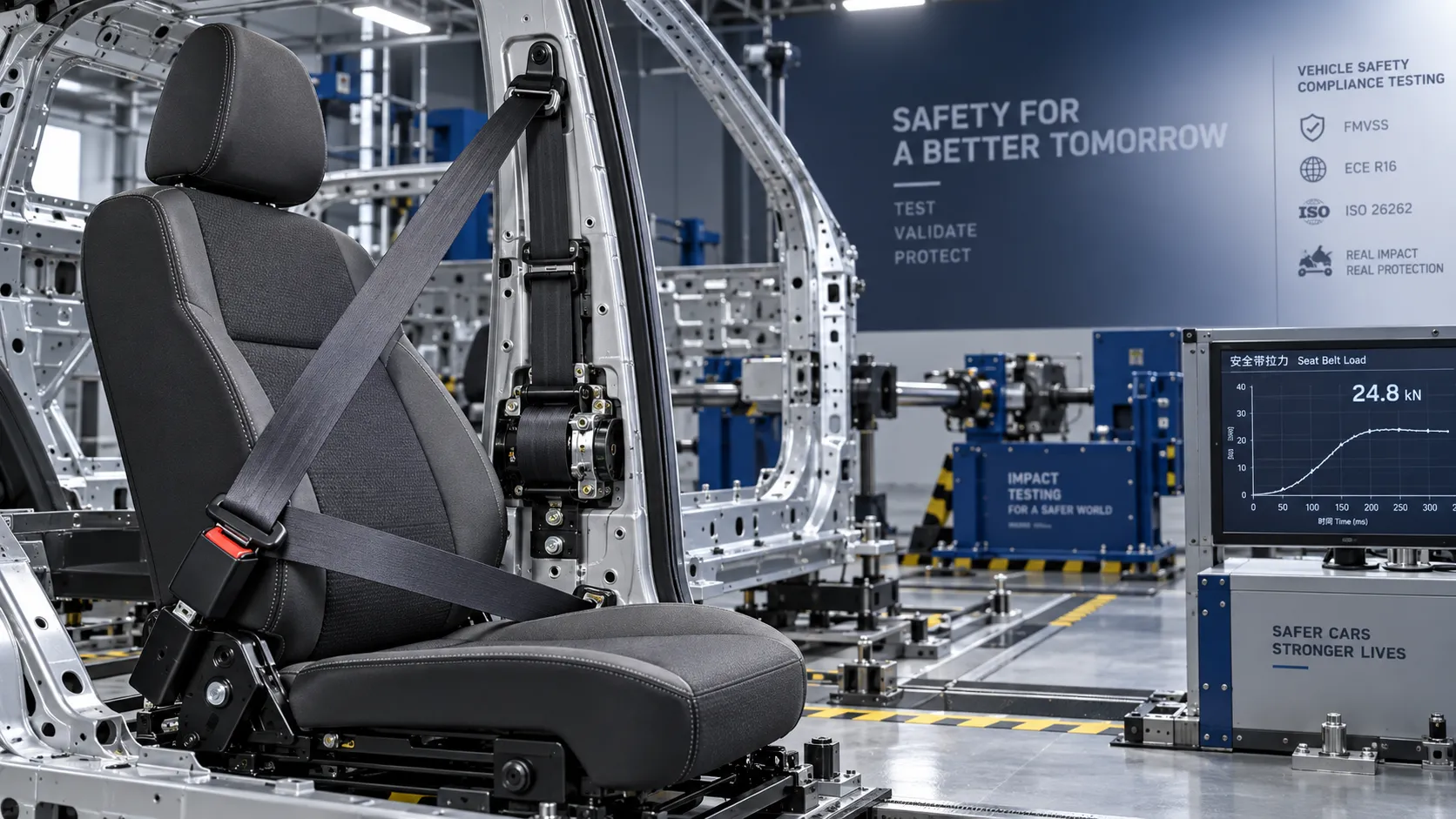
Crash Test Regulations for Seatbelts: Key Compliance Requirements Explained
Crash test regulations seatbelts explained: explore FMVSS, UN rules, anchorage strength, and dynamic restraint testing for safer, compliant vehicle systems.

How to Calculate the Total Cost of Automotive Lightweighting for a Vehicle Program
Automotive lightweight solutions cost: learn how to calculate program-level costs, including materials, tooling, joining, validation, risk, and vehicle-level value.

How Automotive Seat Occupancy Sensing Improves Airbag Deployment Decisions
Automotive seat occupancy sensing helps optimize airbag deployment decisions, improving passenger classification, safety diagnostics, and compliance across real-world conditions.

What Drives Lightweight Body Component Costs in High-Volume Vehicle Programs?
Lightweight body components cost depends on material yield, forming, joining, tooling, validation, and logistics. Explore proven ways to optimize total vehicle program cost.
Related News
- 00
0000-00
How to Evaluate an Aluminum Automotive Stampings Supplier for Cost, Quality, and Lead Time - 00
0000-00
How to Evaluate Aluminum for Vehicle Lightweight Solutions: Key Trade-Offs in Cost, Strength, and Formability - 00
0000-00
Stamped Aluminum Body Parts: Key Grades, Forming Limits, and Best-Fit Vehicle Applications - 00
0000-00
How Aluminum Automotive Stampings for Body Panels Improve Weight, Corrosion Resistance, and Formability - 00
0000-00
Automotive Lightweight Solutions: How to Compare Materials, Processes, and Cost Drivers
Weekly Insights
Stay ahead with our curated technology reports delivered every Monday.