Automotive Lightweight Bodies: Aluminum vs High-Strength Steel Choices
For project managers and engineering leads, selecting materials for automotive lightweight bodies is no longer a simple cost-versus-weight decision.
Aluminum and high-strength steel each shape crash performance, manufacturing complexity, compliance readiness, and lifecycle economics in different ways.
As global mobility programs face tighter emissions targets, stricter safety ratings, and faster launch timelines, understanding where each material delivers strongest value is essential.
This guide compares the strategic trade-offs that influence body-in-white design, supplier coordination, and risk-controlled lightweighting decisions.
The real decision is program fit, not material preference
Most searches around automotive lightweight bodies are not looking for a textbook definition of aluminum or high-strength steel.
Project leaders usually need to decide which material strategy supports weight targets without increasing launch, tooling, repair, or validation risk.
The short answer is that aluminum delivers strong mass reduction, especially for closures, crash boxes, and premium vehicle structures.
High-strength steel offers excellent crash energy management, mature stamping capability, and stronger cost discipline for high-volume platforms.
The best choice often becomes a mixed-material body architecture, rather than a winner-takes-all selection across the entire body-in-white.
For engineering managers, the main question is where each kilogram saved creates measurable value, and where complexity erodes that value.
What project managers should evaluate first
Before comparing material properties, teams should define the vehicle mission, annual volume, safety targets, manufacturing footprint, and repairability expectations.
A premium electric SUV may justify extensive aluminum usage because battery mass makes lightweighting directly relevant to range and performance.
A compact global platform may favor advanced high-strength steel because tooling stability, local supply, and cost control dominate the business case.
Crash rating strategy also matters, especially when programs target IIHS, Euro NCAP, or regional regulatory requirements simultaneously.
Material choice affects load paths, joining methods, corrosion controls, dimensional variation, and inspection standards across the whole engineering schedule.
That is why early cross-functional alignment matters more than late-stage material substitution after the package and tooling assumptions are frozen.
Aluminum: strongest where mass reduction changes vehicle value
Aluminum is attractive because its density is roughly one-third that of steel, enabling meaningful reductions in selected structural applications.
In automotive lightweight bodies, aluminum is widely used for hoods, doors, tailgates, suspension towers, crash management parts, and full premium architectures.
Its value is clearest when lower mass improves electric driving range, payload, acceleration, braking, tire wear, or emissions certification margins.
Aluminum extrusions and castings also help engineers integrate functions, reduce part counts, and create efficient crash boxes or battery enclosure structures.
However, aluminum requires careful control of springback, joining, galvanic corrosion, surface quality, and heat-affected zones during manufacturing.
It may demand self-piercing rivets, flow-drill screws, structural adhesives, laser welding, friction stir welding, or hybrid joining processes.
Those processes can increase capital investment, plant complexity, cycle-time sensitivity, and supplier qualification workload compared with conventional steel lines.
High-strength steel: strongest where crash, scale, and cost converge
High-strength steel remains central to body engineering because it combines high tensile performance with mature forming and joining ecosystems.
Advanced high-strength steel and press-hardened steel allow thinner sections while maintaining stiffness, intrusion resistance, and controlled crash deformation.
For safety-critical zones, such as A-pillars, B-pillars, rockers, roof rails, and front longitudinal members, steel remains extremely competitive.
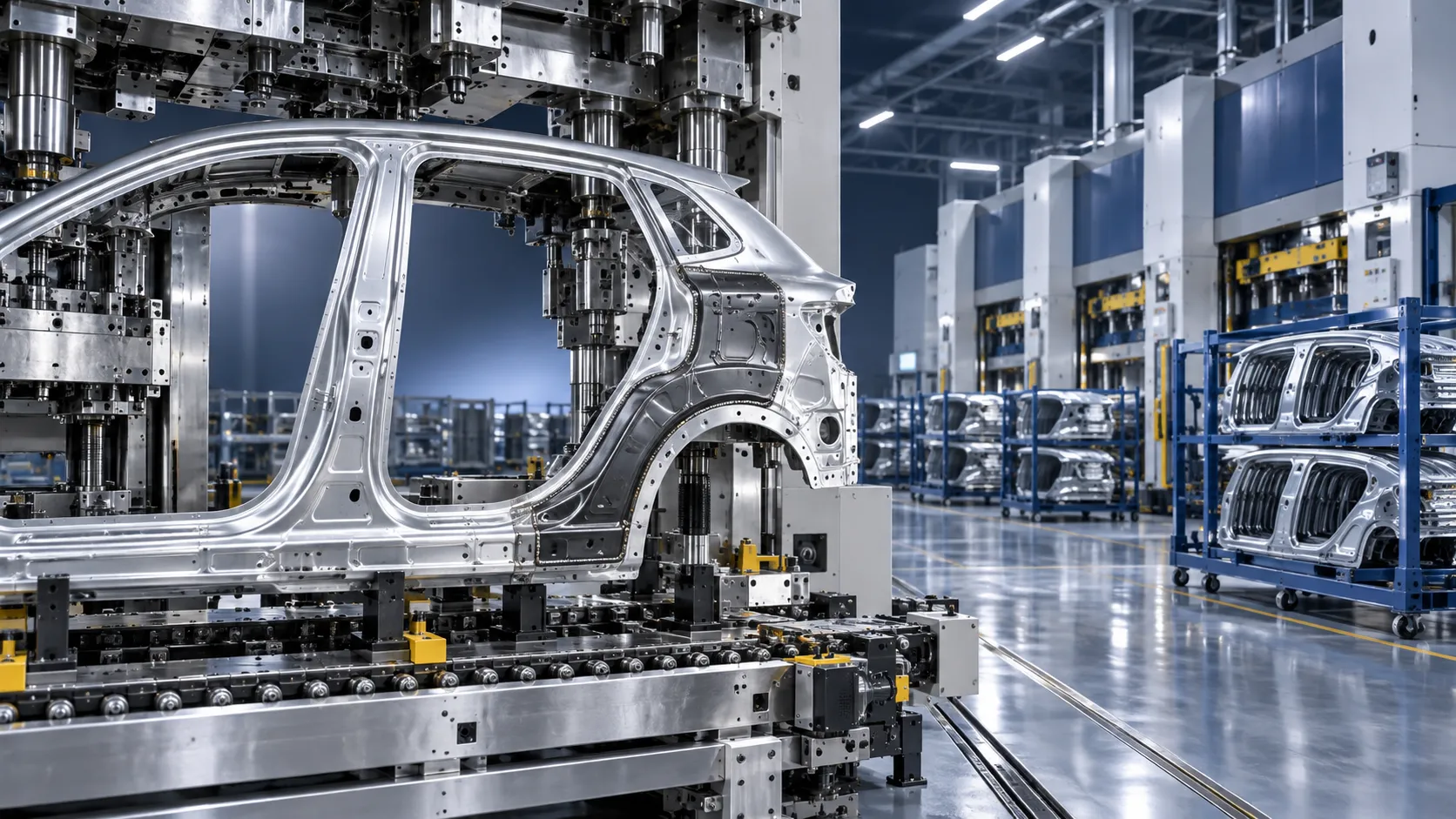
Hot stamping enables very high strength parts with predictable geometry, supporting repeatable crash performance in demanding global vehicle programs.
From a project management perspective, steel also benefits from established simulation databases, supplier capacity, repair familiarity, and cost transparency.
The limitation is that steel cannot always match aluminum’s mass reduction potential when large surface panels or complete structures are considered.
Some ultra-high-strength grades also introduce forming difficulty, tool wear, trimming challenges, hydrogen embrittlement concerns, and stricter process discipline.
Crash performance is about load-path design, not only strength
A common mistake is assuming that the stronger material automatically creates the safer body structure under real crash conditions.
In practice, safety performance depends on how energy is absorbed, redirected, delayed, and prevented from entering the occupant cell.
Aluminum can absorb crash energy efficiently through controlled folding, especially in extrusions and crush cans designed for progressive deformation.
High-strength steel can protect survival space extremely well, particularly where intrusion resistance and rigid load transfer are priorities.
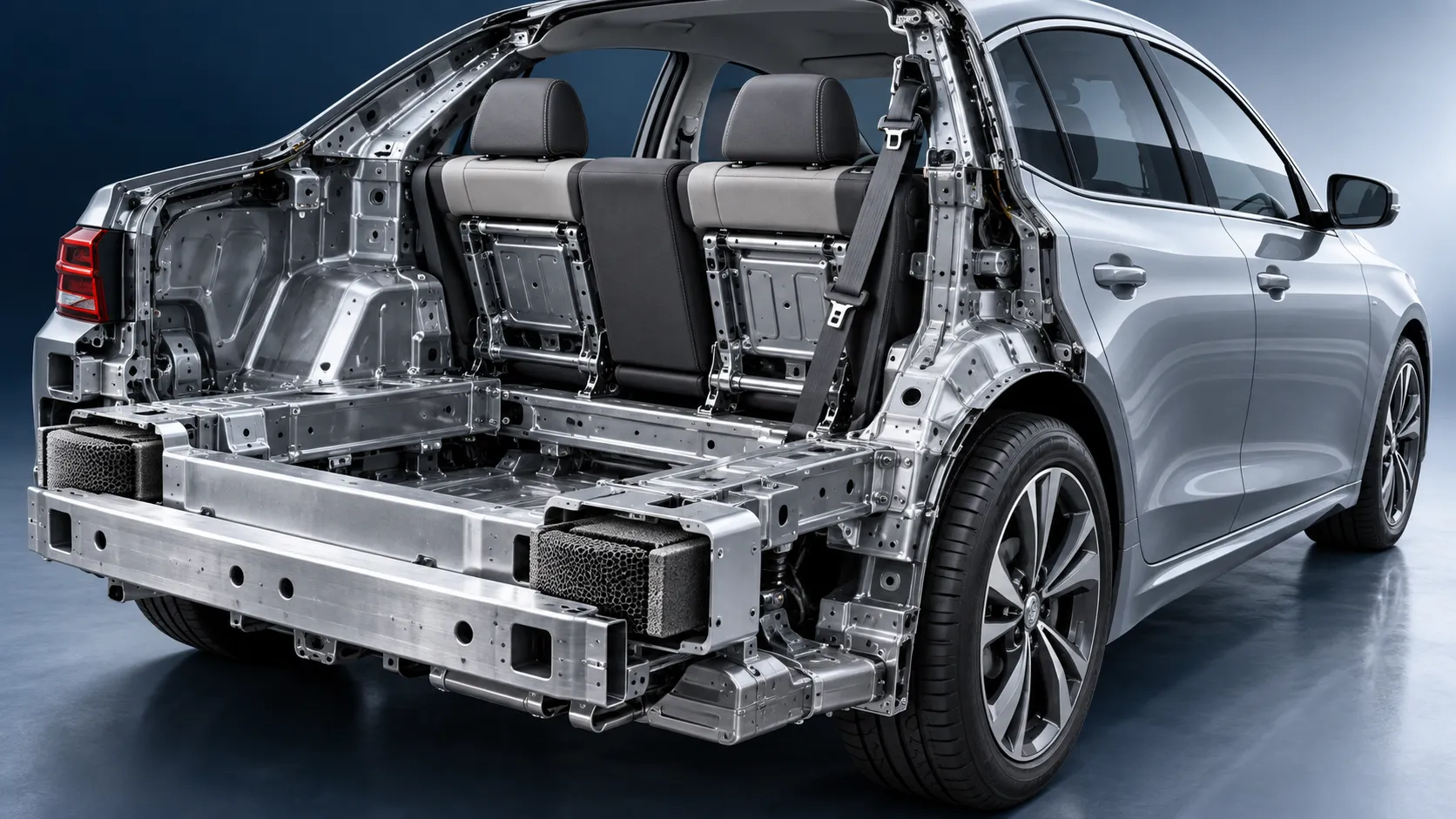
Mixed architectures often use aluminum for energy absorption and steel for the safety cage, balancing deformation zones with containment strength.
Engineering leads should therefore compare complete crash concepts, not isolated material datasheets, when evaluating automotive lightweight bodies.
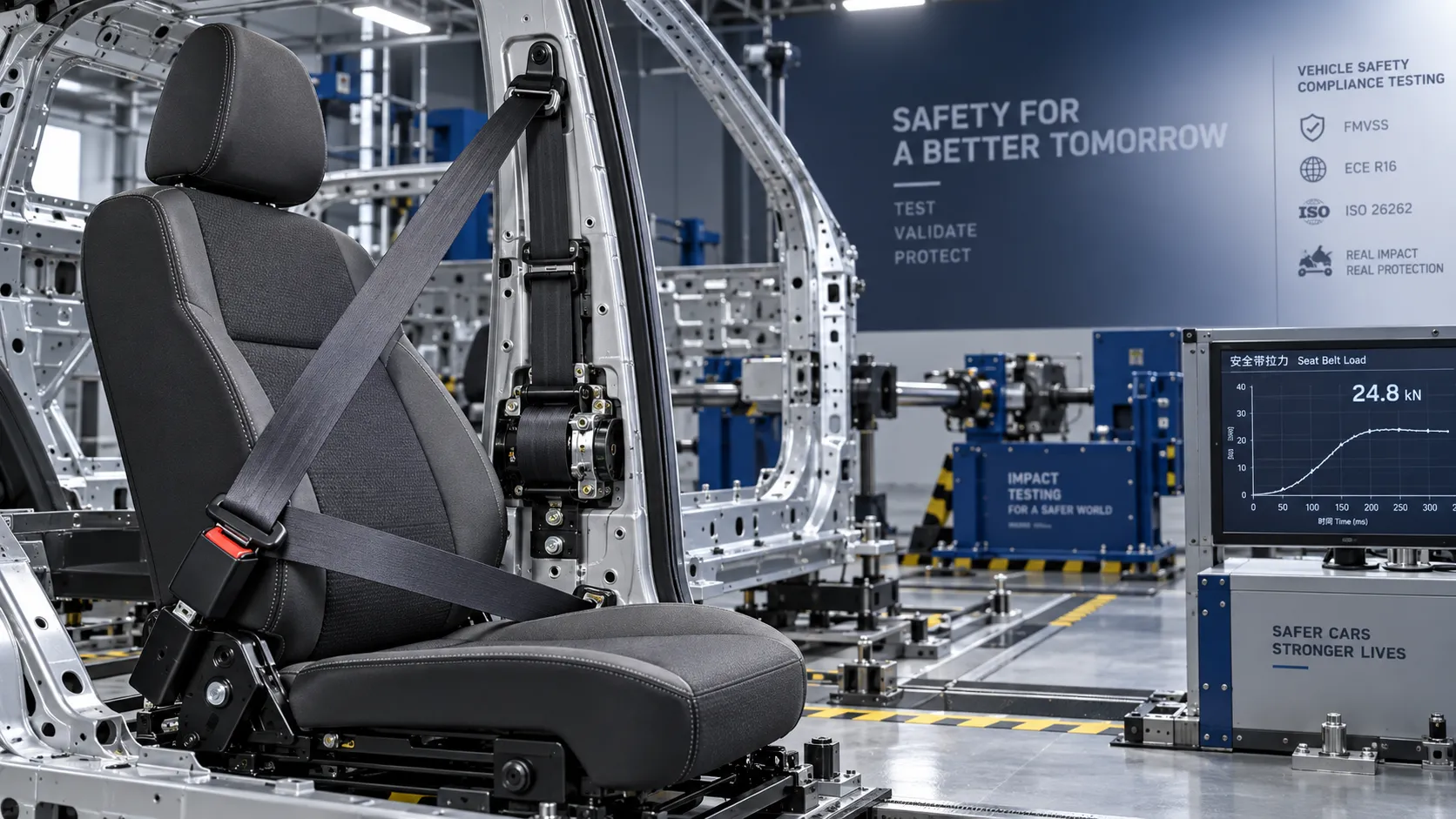
The validation plan should include frontal, side, rear, roof crush, small overlap, pole, and battery protection scenarios where relevant.
Manufacturing complexity can decide the business case
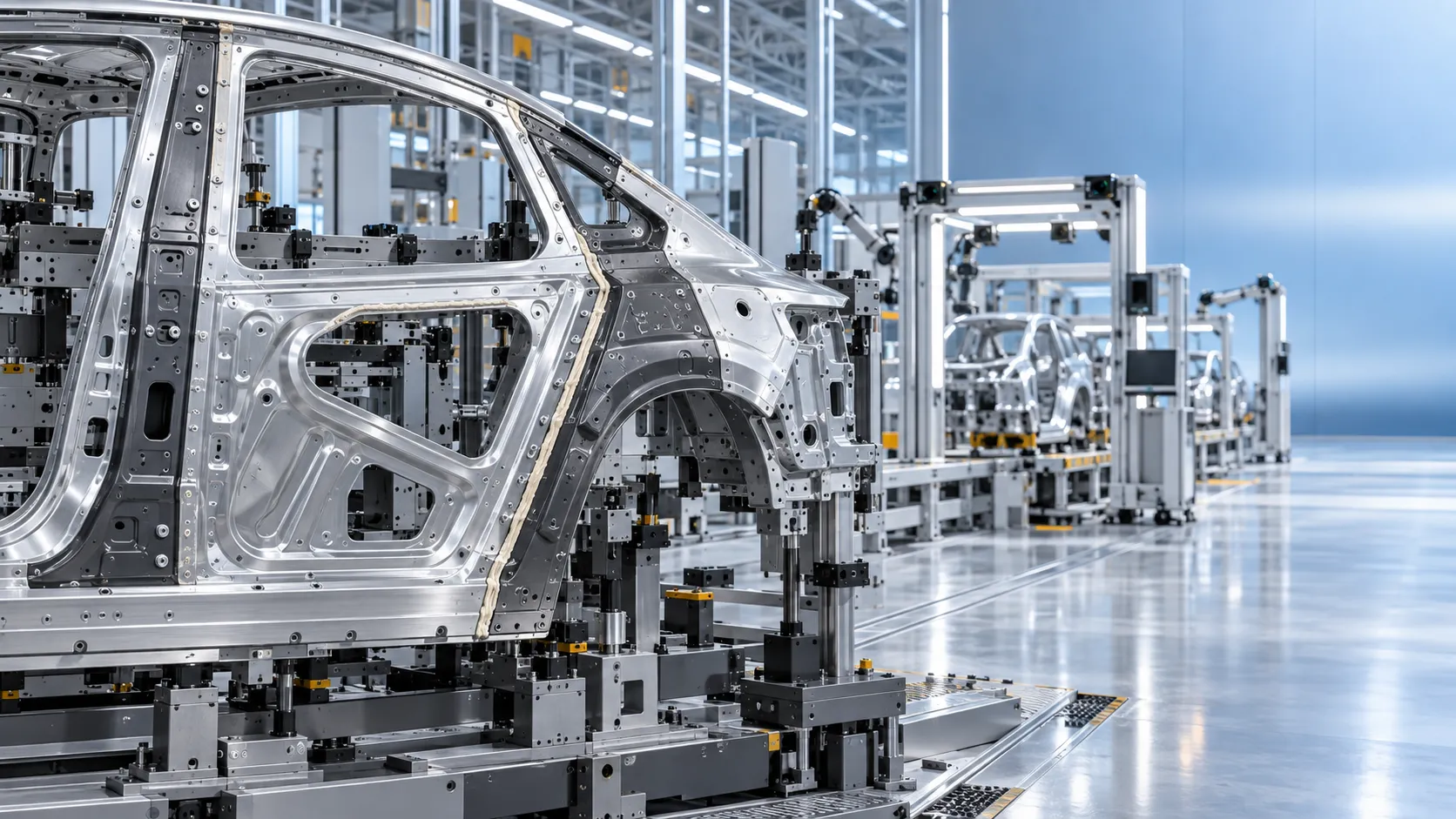
Even if aluminum saves more weight, the manufacturing system must support that choice without creating schedule or quality instability.
Aluminum panels may require separate stamping conditions, tighter lubrication control, dedicated handling, and stronger surface protection against dents.
Steel programs generally leverage broader stamping experience, resistance spot welding infrastructure, and established dimensional control procedures.
However, hot-stamped steel parts require furnace capacity, transfer timing discipline, die cooling systems, and robust blank coating control.
Joining strategy is one of the biggest hidden cost drivers in material selection for automotive lightweight bodies.
Aluminum-to-steel interfaces need insulation against galvanic corrosion, adhesive compatibility, fastener selection, and service repair procedures from the beginning.
If the plant is not prepared for mixed-material joining, late corrections can damage launch timing more than the material cost itself.
Cost comparison should include more than price per kilogram
Aluminum usually carries a higher raw material cost than steel, but direct price comparison can mislead project decisions.
The real comparison should include material utilization, scrap value, tooling investment, joining equipment, takt time, warranty exposure, and regulatory benefit.
Aluminum scrap often has strong recycling value, but contamination control and closed-loop logistics must be managed carefully.
Steel may offer lower part cost and easier sourcing, especially for high-volume programs with established regional supplier networks.
Yet very high-strength steel can require specialized tooling, slower development iterations, and more advanced forming simulation support.
Project managers should build a total cost model that links each material choice to mass reduction, performance benefit, and execution risk.
The most credible business case expresses lightweighting as cost per kilogram saved, cost per range gain, or cost per emissions improvement.
Lifecycle and sustainability considerations are becoming decisive
Material decisions are increasingly judged against lifecycle carbon, recyclability, energy intensity, and regional environmental reporting expectations.
Primary aluminum production can be energy intensive, especially where electricity sources are carbon heavy or supply-chain visibility is limited.
Low-carbon aluminum, recycled aluminum, and closed-loop scrap systems can improve the sustainability profile significantly.
Steel also has a strong recycling infrastructure and may benefit from growing adoption of electric arc furnace production.
For electric vehicles, lighter bodies may reduce operational energy demand, but lifecycle analysis must consider production emissions too.
Procurement teams should request verified carbon data, recycled content information, traceability documents, and supplier decarbonization roadmaps.
Sustainability claims become more credible when they are connected to measurable vehicle efficiency, manufacturing data, and end-of-life recovery pathways.
When aluminum is the better choice
Aluminum is often the stronger strategic option when vehicle value is highly sensitive to mass reduction and performance perception.
Premium EVs, luxury SUVs, sports vehicles, and long-range platforms can benefit from aluminum-intensive body structures or major aluminum subassemblies.
It is also useful when packaging constraints require lighter closures, battery enclosures, or crash systems without sacrificing functional performance.
Programs with flexible capital budgets, experienced suppliers, and plants already equipped for advanced joining can absorb aluminum complexity better.
Aluminum should be considered where its benefits are visible to the customer, regulatory scorecard, or platform-level energy model.
It becomes less attractive when annual volume is extremely cost-sensitive, supplier maturity is limited, or repair network readiness is weak.
When high-strength steel is the better choice
High-strength steel is often the better choice when crash performance, cost discipline, and manufacturing robustness are the primary program constraints.
It fits high-volume global platforms where repeatability, sourcing flexibility, and proven serviceability are essential to commercial success.
Steel is especially compelling for safety cages, pillars, rockers, roof structures, and zones requiring high intrusion resistance.
It also supports aggressive safety rating targets without forcing a complete transformation of the body shop and supplier base.
For many programs, advanced steel provides enough lightweighting to meet emissions or efficiency goals at a defensible investment level.
Its main weakness appears when weight targets are too aggressive for gauge reduction alone, especially in battery-heavy electric vehicles.
Why mixed-material bodies are often the practical answer
Many modern automotive lightweight bodies combine aluminum and high-strength steel because each material solves different engineering problems.
A common approach uses high-strength steel for the occupant safety cage and aluminum for closures or crash energy absorption parts.
Other architectures introduce cast aluminum nodes, extruded rails, magnesium seat structures, composites, or tailored blanks in selected zones.
This approach can optimize mass and performance, but it requires stronger systems engineering and earlier supplier collaboration.
Mixed-material programs need defined interface standards, corrosion strategies, adhesive qualification, repair manuals, and inspection processes before production launch.
The advantage is flexibility: teams can pursue meaningful mass reduction without forcing every body component into one material philosophy.
A practical selection framework for engineering leaders
Start by ranking program objectives: weight, crash rating, cost, production speed, sustainability, repairability, and regional sourcing security.
Next, map body zones by function, separating occupant protection, energy absorption, stiffness contribution, closure performance, and battery protection requirements.
Then compare aluminum and high-strength steel at zone level, not only at whole-vehicle level.
Ask whether each material delivers measurable value in that location, and whether the plant can execute it reliably.
Run early simulations using credible material cards, joining assumptions, adhesive behavior, and realistic manufacturing tolerances.
Validate the cost model with purchasing, manufacturing engineering, quality, service, and sustainability teams before freezing the architecture.
The best decision is usually the one that survives design reviews, supplier audits, crash simulations, and manufacturing readiness checks.
Supplier coordination risks to manage early
Material strategy fails when suppliers are selected too late or evaluated only on quoted price and nominal capability.
Aluminum suppliers should demonstrate forming experience, surface quality control, heat treatment knowledge, and joining compatibility with the vehicle plant.
High-strength steel suppliers should prove grade consistency, coating reliability, hot stamping capability, and dimensional repeatability across production volumes.
For mixed-material bodies, Tier 1 and Tier 2 suppliers must align on tolerances, fasteners, adhesives, inspection, and corrosion prevention.
Project leaders should require early prototype loops, production-representative samples, and escalation rules for material or dimensional deviations.
A strong sourcing plan reduces launch surprises and protects the commercial value of lightweighting decisions.
Final conclusion: choose by value, risk, and vehicle mission
Aluminum and high-strength steel are not rivals in a simple material contest; they are tools for different lightweighting priorities.
Aluminum is strongest when mass reduction creates clear customer, regulatory, or performance value that justifies added manufacturing complexity.
High-strength steel is strongest when crash robustness, scalable production, cost control, and supplier maturity drive program success.
For most engineering teams, the smartest path is a zone-based material strategy supported by early validation and total cost analysis.
Automotive lightweight bodies succeed when material choices are connected to crash architecture, plant capability, supply-chain readiness, and lifecycle economics.
Project managers who treat material selection as a cross-functional business decision will build lighter vehicles with fewer launch risks.