
Auto Body Stampings Sourcing Guide: Tolerances, Tooling, and Quality Checks
Sourcing auto body stampings is no longer a simple price-per-part decision. The real risk lies in tolerance drift, tooling readiness, material traceability, and inconsistent quality checks that can disrupt launch schedules or compromise crash performance.
This guide outlines key sourcing factors, from die design and PPAP documentation to dimensional inspection and supplier capability. It supports more confident qualification and better control of total landed value.
Auto Body Stampings in Modern Mobility Structures
Auto body stampings are formed metal parts used in vehicle bodies, closures, crash structures, seats, and reinforcement systems. They convert coil or sheet material into repeatable structural geometry.
Common processes include cold stamping, hot stamping, progressive die stamping, transfer stamping, and deep drawing. Each method affects cost, strength, dimensional stability, and production flexibility.
In lightweight vehicles, auto body stampings often combine high-strength steel, ultra-high-strength steel, aluminum, and tailored blanks. Material selection directly affects crash energy absorption and mass reduction.
A sourcing decision must therefore connect engineering intent, die capability, production consistency, and quality evidence. The lowest quoted part price may hide high launch and rework risk.
Core part families
- Body-in-white panels, including pillars, rails, rockers, crossmembers, and roof bows.
- Closure stampings, including doors, hoods, decklids, and liftgate panels.
- Crash management parts, including reinforcements, brackets, and impact load paths.
- Cabin and seat-related stampings, including frames, tracks, recliner brackets, and anchorage supports.
The sourcing logic changes across these families. Cosmetic panels demand surface control, while structural auto body stampings demand strength, weldability, and validated crash behavior.
Industry Signals Driving Stricter Sourcing Criteria
Vehicle programs now compress launch timing while raising expectations for safety, lightweighting, and traceability. This makes sourcing auto body stampings more documentation-intensive and less forgiving.
Global platforms also increase regional complexity. A part may be designed in one market, tooled elsewhere, and validated against multiple crash and compliance expectations.
These signals explain why auto body stampings require integrated evaluation. Commercial terms, engineering readiness, and quality systems must be reviewed together.
Tolerance Control and Dimensional Stability
Tolerance capability is one of the strongest predictors of stable auto body stampings. Dimensional variation can affect hemming, welding, sealing, assembly fit, and crash load paths.
For structural parts, key characteristics should be defined before quoting. Datum schemes, hole positions, flange angles, trim lines, and mating surfaces need clear control plans.
Springback deserves special attention. High-strength steel and aluminum can deviate after forming, especially across long rails, pillars, and complex reinforcement geometries.
Reliable suppliers should show simulation results, tryout records, capability studies, and corrective action history. Claims of precision are not enough without measured repeatability.
Tolerance questions to validate
- Which dimensions are safety critical, assembly critical, or cosmetic critical?
- What is the demonstrated Cpk or Ppk for major characteristics?
- How are datum shifts managed between tooling, inspection fixtures, and assembly?
- What corrective actions are triggered when trends move toward control limits?
The best sourcing reviews convert tolerances into measurable process expectations. This reduces debate after tools are built and parts begin to vary.
Tooling Readiness and Die Strategy
Tooling is the financial and technical backbone of auto body stampings. A weak die strategy can create years of downtime, scrap, and dimensional instability.
Die design should match part geometry, material grade, annual volume, press capacity, and automation plan. Progressive, transfer, and tandem approaches each have trade-offs.
Hot stamping adds further complexity. Heating uniformity, quench control, coating behavior, and die cooling channels influence strength and dimensional accuracy.
For aluminum auto body stampings, lubrication, galling prevention, surface handling, and scrap segregation are especially important. These factors affect both appearance and downstream joining.
Tool ownership, maintenance responsibility, and modification approval should be documented early. Ambiguity can delay engineering changes and increase lifecycle cost.
Material Traceability and Process Discipline
Material traceability protects the integrity of auto body stampings. It links coil identity, heat number, mechanical properties, coating data, and production lots.
Advanced high-strength steel requires strict monitoring of tensile strength, elongation, thickness, coating condition, and edge quality. Small deviations can affect forming behavior.
For hot-stamped parts, hardness mapping and microstructure verification may be required. These checks confirm that the intended strength distribution has been achieved.
For aluminum stampings, alloy grade, temper, surface finish, and corrosion controls need documented consistency. Mixed scrap handling also matters for sustainability reporting.
Traceability records worth reviewing
- Mill certificates and receiving inspection records.
- Coil-to-part lot tracking and barcode controls.
- Heat treatment or quench process data, when applicable.
- Nonconformance records and segregation procedures.
- Change notices for alternate material sources.
Traceability should not be treated as paperwork only. It is the evidence chain that supports containment when field, assembly, or audit concerns appear.
Quality Checks from Prototype to Production
Quality planning for auto body stampings should begin before die build. Inspection strategy must match part function, process risk, and customer-specific requirements.
Prototype checks often focus on formability and fit. Production checks must prove repeatability through dimensional control, material verification, surface inspection, and process capability.
PPAP packages remain central for many automotive programs. A complete submission typically includes design records, FMEA, control plans, dimensional results, and material tests.
Measurement systems must also be trusted. Gauge R&R, fixture calibration, CMM programs, and scanning methods should be reviewed for repeatability and bias.
A strong supplier does not only inspect finished auto body stampings. It controls inputs, machine conditions, die wear, operator actions, and reaction plans.
Supplier Capability and Commercial Evaluation
Capability evaluation should look beyond press tonnage. It should confirm whether the supplier can sustain quality, timing, documentation, and engineering support.
Relevant capabilities include die engineering, forming simulation, tool maintenance, welding support, coating knowledge, packaging design, and launch management.
For safety-related auto body stampings, experience with automotive quality systems is essential. IATF 16949 alignment, APQP discipline, and customer audit readiness reduce program exposure.
Commercial review should include tooling amortization, engineering changes, logistics, packaging, scrap assumptions, exchange rates, and capacity reservation. Total cost is rarely visible in unit price alone.
Capability factors to score
- Press range, automation level, and planned capacity utilization.
- Experience with similar geometry, material grade, and annual volume.
- Internal or partnered toolroom competence.
- Dimensional lab capability, including CMM and optical scanning.
- Launch record, escalation speed, and engineering responsiveness.
Site audits should include real production observation. Clean documents cannot replace evidence from presses, die storage, inspection areas, and material handling zones.
Typical Sourcing Scenarios and Decision Focus
Different sourcing scenarios create different priorities. The same checklist should be adjusted according to program maturity, part risk, and production location.
This scenario-based approach prevents overemphasis on price. It keeps attention on the risks most likely to affect delivery and performance.
Practical Checklist for Better Sourcing Control
A disciplined sourcing process for auto body stampings should be structured, evidence-based, and cross-functional. The following checklist supports practical decision control.
- Define key characteristics before RFQ release, including datums, tolerances, materials, and inspection expectations.
- Request tooling assumptions, die layout, simulation results, and estimated correction loops.
- Validate supplier experience with comparable auto body stampings and similar materials.
- Review APQP, FMEA, control plan, PPAP timing, and change control discipline.
- Confirm material traceability from coil receipt to shipped part lot.
- Audit measurement systems, fixture design, gauge calibration, and inspection frequency.
- Compare total landed value, including tooling, scrap, packaging, logistics, and quality containment.
The strongest awards balance engineering confidence with commercial clarity. They identify risk early and assign ownership before launch pressure increases.
Common Red Flags During Evaluation
Several warning signs deserve immediate attention. They may indicate hidden instability in tooling, process control, or quality management.
- Quotations that omit die maintenance, engineering changes, or inspection fixture responsibility.
- Limited evidence of capability for high-strength steel or aluminum auto body stampings.
- Unclear ownership of PPAP submission, dimensional reports, or corrective actions.
- Inconsistent lot traceability between material records and production shipments.
- Inspection plans that depend only on final checks without process monitoring.
Red flags do not always disqualify a supplier. They do require mitigation plans, milestone gates, and objective evidence before award.
Building a More Reliable Sourcing Path
Reliable sourcing of auto body stampings depends on connecting tolerances, tooling, material control, and quality checks into one decision framework.
The next step is to create a part-specific sourcing file. Include drawings, risk rankings, tooling milestones, inspection plans, and traceability expectations.
GNCS follows the technical evolution of automotive lightweight bodies, passive safety structures, and high-precision manufacturing intelligence across global mobility supply chains.
For programs involving auto body stampings, use evidence-led qualification, structured audits, and total landed value analysis. This approach improves launch confidence and long-term production stability.
Related News

How to Specify Integrated Marine Electronics for Reliable Bridge Operations
Integrated marine electronics: learn how to specify reliable bridge systems with clear data flows, redundancy, alarm control, lifecycle interfaces, and operational testing.

How to Evaluate Navigation Radar Manufacturers for Commercial Vessel Projects
Navigation radar manufacturers: learn how to compare performance, compliance, integration, support, and lifecycle cost for commercial vessel projects.

How Adjustable Cabin Ergonomics Reduce Operator Fatigue in Long-Shift Vehicles
Adjustable cabin ergonomics reduces operator fatigue through better seating, reach, visibility, vibration control, and climate comfort for safer long-shift vehicles.

How Rear-Impact Safety Components Work Together to Protect Vehicle Occupants
Explore how automotive safety components for rear impact work together—from crash structures and seats to head restraints and belts—to enhance occupant protection.

How to Evaluate a Marine Safety Systems Manufacturer for Vessel Compliance and Reliability
Marine safety systems manufacturer evaluation guide: verify compliance, engineering quality, lifecycle costs, and global service support for safer, reliable vessel operations.
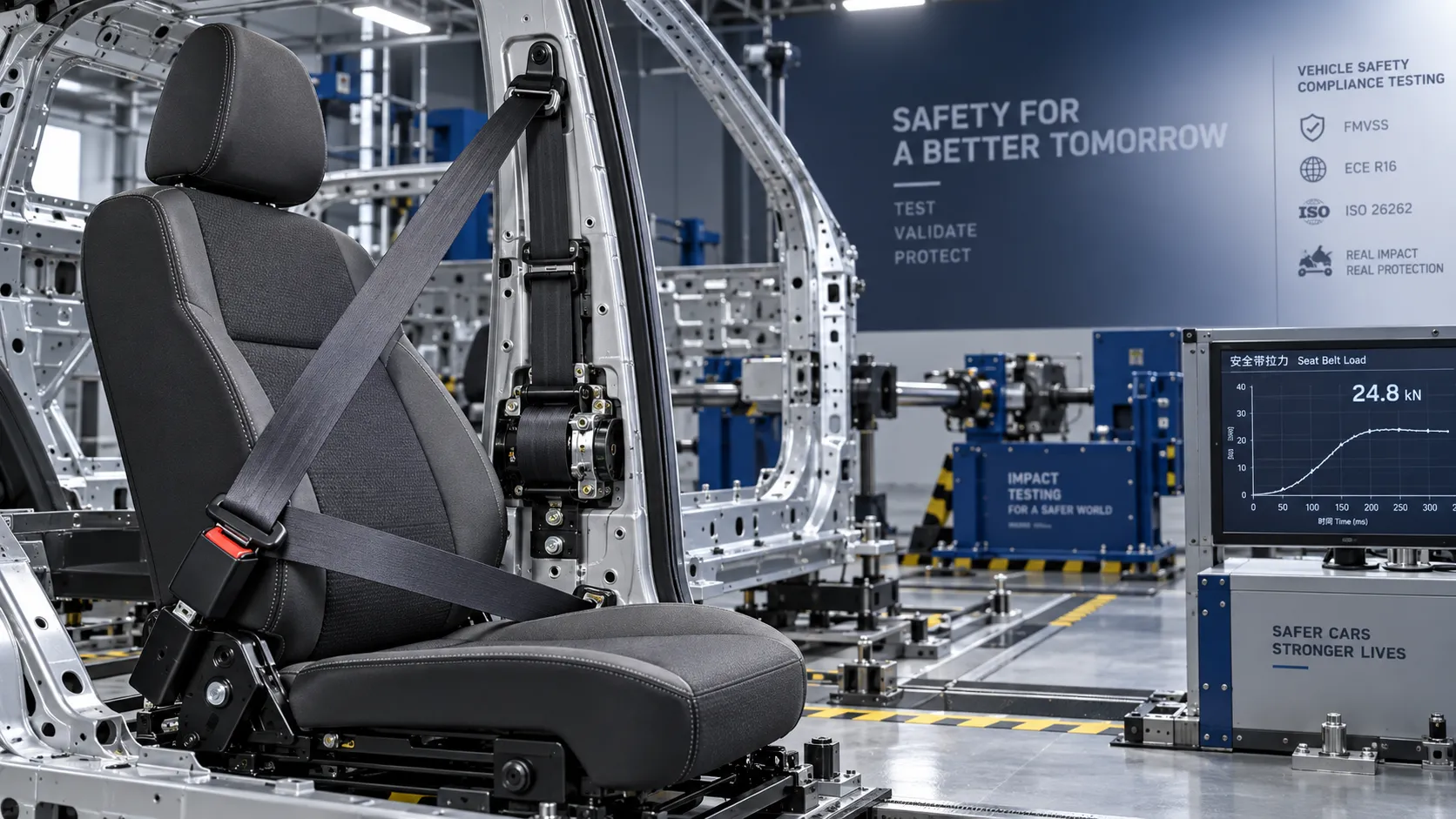
Crash Test Regulations for Seatbelts: Key Compliance Requirements Explained
Crash test regulations seatbelts explained: explore FMVSS, UN rules, anchorage strength, and dynamic restraint testing for safer, compliant vehicle systems.

How to Calculate the Total Cost of Automotive Lightweighting for a Vehicle Program
Automotive lightweight solutions cost: learn how to calculate program-level costs, including materials, tooling, joining, validation, risk, and vehicle-level value.

How Automotive Seat Occupancy Sensing Improves Airbag Deployment Decisions
Automotive seat occupancy sensing helps optimize airbag deployment decisions, improving passenger classification, safety diagnostics, and compliance across real-world conditions.

What Drives Lightweight Body Component Costs in High-Volume Vehicle Programs?
Lightweight body components cost depends on material yield, forming, joining, tooling, validation, and logistics. Explore proven ways to optimize total vehicle program cost.
Related News
- 00
0000-00
How to Evaluate High Strength Hot Stamped Steel Parts for Crash-Safety Applications - 00
0000-00
How to Evaluate Steel Auto Body Stampings for Strength, Fit, and Cost - 00
0000-00
Vehicle Lightweight Engineering for Body Structures vs High-Strength Steel: When to Use Which - 00
0000-00
Vehicle Lightweight Solutions for Structural Parts: When to Use Aluminum, HSS, or Hot Stamping - 00
0000-00
How to Evaluate High Strength Steel Stampings for Seat Structures: Key Grades and Forming Limits
Weekly Insights
Stay ahead with our curated technology reports delivered every Monday.