
Auto Body Stampings Guide: Tolerances, Materials, and Supplier Evaluation Points
For procurement teams, sourcing auto body stampings is no longer just about price—it requires balancing dimensional tolerances, material performance, process capability, and supplier consistency. This guide outlines the key evaluation points behind reliable stamped components, helping buyers reduce quality risk, improve cost control, and select partners that can support lightweighting, compliance, and long-term production stability.
Why auto body stampings are a procurement-critical category
Auto body stampings are structural and semi-structural metal parts formed by blanking, drawing, bending, trimming, piercing, and sometimes hot stamping. They directly influence body-in-white integrity, joining efficiency, crash energy management, corrosion durability, and downstream assembly yield.
For buyers, this means one supplier issue can spread across tooling, welding fixtures, paint lines, dimensional audits, and warranty exposure. In lightweight vehicle programs, the procurement decision around auto body stampings also affects mass reduction targets, part consolidation options, and compliance readiness.
- Tight dimensional control is required because stamped parts must align with mating panels, weld points, and assembly fixtures.
- Material selection matters because strength, ductility, springback, and corrosion behavior vary widely across steel and aluminum grades.
- Process capability matters because die design, press tonnage, lubrication, and trimming accuracy shape consistency from PPAP to mass production.
- Supplier maturity matters because launch timing, engineering change response, and traceability often determine total cost more than unit price alone.
Where procurement risks usually start
The biggest sourcing mistakes happen when buyers approve auto body stampings using only nominal drawings and sample appearance. Real risk sits in tolerance stack-up, material batch variation, die maintenance discipline, coating compatibility, and the supplier’s ability to hold repeatability over long production runs.
Which tolerances matter most in auto body stampings?
Procurement teams do not need to become die engineers, but they do need to know which tolerance categories drive quality claims. The table below summarizes the tolerance dimensions that most often affect fit, weldability, appearance, and assembly performance in auto body stampings.
In practice, profile and hole position are often more critical than buyers expect. A part can look visually acceptable yet still fail in body shop assembly. For this reason, procurement specifications for auto body stampings should require measurable dimensional reports, not only sample approval photos.
How to judge tolerance capability before nomination
Ask whether the supplier can provide capability evidence by part family, not only by one ideal sample. Review their approach to first-off validation, in-process dimensional checks, checking fixture calibration, and reaction plans when trend drift appears. A stable supplier explains how they control variation, not just how they inspect it.
- Check whether critical dimensions are linked to control plans and measurement frequency.
- Confirm if the supplier monitors springback trends after die maintenance or material lot change.
- Request examples of containment actions for out-of-tolerance stamped parts.
How material choice changes performance, cost, and manufacturability
Material strategy is central to auto body stampings procurement. The same geometry can behave very differently when produced in mild steel, high-strength steel, ultra-high-strength steel, aluminum, or press-hardened steel. Buyers should compare not only raw material cost, but also forming difficulty, scrap rate, joining requirements, and safety implications.
The table below gives a practical comparison that supports early sourcing discussions for lightweight body structures and reinforcement parts.
This comparison shows why the cheapest material is not always the lowest-cost sourcing path. A stronger or lighter material may cut piece weight, reduce part count, or improve crash package efficiency, but only if the supplier can form it consistently and support the related joining process.
Why GNCS pays close attention to material-process fit
GNCS tracks lightweight body technologies and passive safety trends because material choice is never isolated. In global mobility programs, hot-stamped reinforcements, seat-integrated structures, restraint interfaces, and crash load paths are connected decisions. Procurement benefits when body stamping choices are reviewed against energy absorption logic, compliance expectations, and future platform upgrades.
What should buyers ask when evaluating an auto body stampings supplier?
Supplier evaluation should go beyond factory size and quotation speed. Buyers need evidence that the supplier can launch, stabilize, and sustain quality for the specific part type. The checklist below helps compare suppliers of auto body stampings on factors that strongly affect total program performance.
A strong supplier usually answers these questions with process evidence, sample documentation, and control logic. A weak supplier relies on promises, broad claims, or only one successful reference part. Procurement should favor transparency over polished presentations.
A practical supplier audit focus list
- Review whether the quoted process route matches the part geometry and annual volume.
- Confirm how incoming coils or blanks are controlled for thickness, coating, and surface defects.
- Check if dimensional reports are generated by stable measurement systems, not occasional manual checks.
- Ask how the supplier manages ramp-up after engineering changes or material substitution.
- Verify packaging and logistics controls to prevent deformation, edge damage, and corrosion during transport.
How to balance piece price with total cost in auto body stampings
Procurement savings disappear quickly when stamped parts trigger line disruption, excessive rework, or frequent engineering support. Total cost analysis for auto body stampings should include tooling investment, scrap exposure, logistics, quality containment, and lifecycle stability.
Hidden cost drivers buyers often miss
- Springback compensation loops can delay launch and increase die rework cost.
- Poor nesting efficiency or unstable blank dimensions can raise scrap rates significantly.
- Low-capability suppliers may require more incoming inspection and stronger on-site support.
- Inadequate packaging can turn conforming parts into damaged inventory before assembly.
When comparing quotations, ask for a cost explanation by material, process route, tooling logic, finishing, and logistics assumptions. This makes it easier to identify whether a low quote comes from genuine efficiency or from underestimating quality control, die maintenance, or launch support.
When alternatives make sense
In some programs, redesigning a bracket, consolidating two reinforcements into one stamping, or shifting from cold-formed steel to a higher-strength grade can reduce total cost. However, every alternative should be checked against forming feasibility, joining compatibility, and crash-path requirements. GNCS often highlights such cross-functional trade-offs because lightweighting and safety decisions are interconnected.
What standards, documentation, and compliance signals should be reviewed?
Auto body stampings for global vehicle platforms are usually sourced under demanding documentation frameworks. Even where the final part has no stand-alone consumer-facing certification, the supplier still needs disciplined quality and compliance practices to support OEM or Tier 1 expectations.
Key documentation to request
- Material certificates with grade, coating, thickness, and relevant mechanical property information.
- Dimensional inspection reports for critical characteristics and appearance-sensitive areas.
- Control plans, PFMEA references, and reaction plans for major process deviations.
- Records of tool maintenance, change history, and traceability by lot or batch.
- If required by the program, PPAP-related deliverables and evidence of agreed submission levels.
For multinational sourcing, buyers should also confirm whether the supplier understands program-specific customer standards and test expectations tied to crashworthiness, corrosion resistance, coating behavior, or assembly interfaces. A supplier that can speak clearly about compliance is often easier to manage during launch pressure.
Common mistakes when buying auto body stampings
Mistake 1: treating all stamped parts as interchangeable
A shallow draw bracket and a crash-relevant reinforcement are not the same sourcing challenge. Geometry complexity, strength level, coating sensitivity, and assembly interface should all influence supplier selection and risk planning.
Mistake 2: focusing on sample approval but ignoring process repeatability
One acceptable sample does not prove mass-production capability. Buyers should ask how performance is maintained after thousands of hits, after die maintenance, or after a coil source change. Stable auto body stampings depend on process discipline, not isolated sample success.
Mistake 3: underestimating communication speed during change management
Engineering changes, packaging updates, and launch timing shifts are common. If the supplier lacks responsive program control, procurement may face delayed re-approval, inventory confusion, or mixed stock at assembly plants.
FAQ: procurement questions about auto body stampings
How should we compare two suppliers quoting the same drawing?
Compare more than price. Review material assumptions, tooling concept, expected scrap rate, dimensional control method, launch timing, and response plans for nonconformance. Two suppliers can quote the same auto body stampings drawing while carrying very different production risks.
Which parts usually need the strictest attention to tolerance capability?
Parts tied to body datum systems, closure fit, robotic weld positioning, and crash load paths deserve the closest review. Pillar reinforcements, floor members, rocker components, and interface-heavy inner panels often create downstream issues when profile or hole location drifts.
Is aluminum always the better choice for lightweighting?
Not always. Aluminum can deliver major mass reduction, but the best choice depends on joining process, corrosion strategy, formability, tooling wear, and program economics. Some auto body stampings achieve a better balance through advanced high-strength steel or press-hardened steel rather than aluminum.
What delivery issues should procurement anticipate?
Typical risks include tooling lead time, sample approval loops, rework after dimensional drift, packaging deformation in transit, and delays caused by material availability. Buyers should align buffer planning and escalation mechanisms before SOP pressure builds.
Why consult GNCS when evaluating auto body stampings?
GNCS follows the technical and commercial links between lightweight body structures, passive safety systems, and global mobility compliance. That perspective is useful for procurement teams because auto body stampings are not isolated metal parts—they are load-bearing, tolerance-sensitive components that influence crash behavior, manufacturing flow, and program reliability.
If you are screening suppliers or refining a sourcing brief, you can consult GNCS on practical topics such as material-route comparison, tolerance risk review, supplier evaluation criteria, likely lead-time bottlenecks, documentation expectations, and lightweighting trade-offs across body and cabin safety architectures.
- Confirm critical parameters for your auto body stampings RFQ before supplier release.
- Discuss material options for weight, cost, and crash-relevant performance balance.
- Review expected delivery cycle, sample milestones, and tooling readiness risks.
- Clarify documentation, traceability, and program compliance expectations.
- Explore custom sourcing intelligence, sample support direction, and quotation comparison logic.
For buyers under pressure to control cost without exposing the program to quality drift, early technical alignment is usually the smartest move. A focused discussion can help you narrow specifications, identify supplier gaps, and make your next auto body stampings decision with stronger confidence.
Related News

How to Specify Integrated Marine Electronics for Reliable Bridge Operations
Integrated marine electronics: learn how to specify reliable bridge systems with clear data flows, redundancy, alarm control, lifecycle interfaces, and operational testing.

How to Evaluate Navigation Radar Manufacturers for Commercial Vessel Projects
Navigation radar manufacturers: learn how to compare performance, compliance, integration, support, and lifecycle cost for commercial vessel projects.

How Adjustable Cabin Ergonomics Reduce Operator Fatigue in Long-Shift Vehicles
Adjustable cabin ergonomics reduces operator fatigue through better seating, reach, visibility, vibration control, and climate comfort for safer long-shift vehicles.
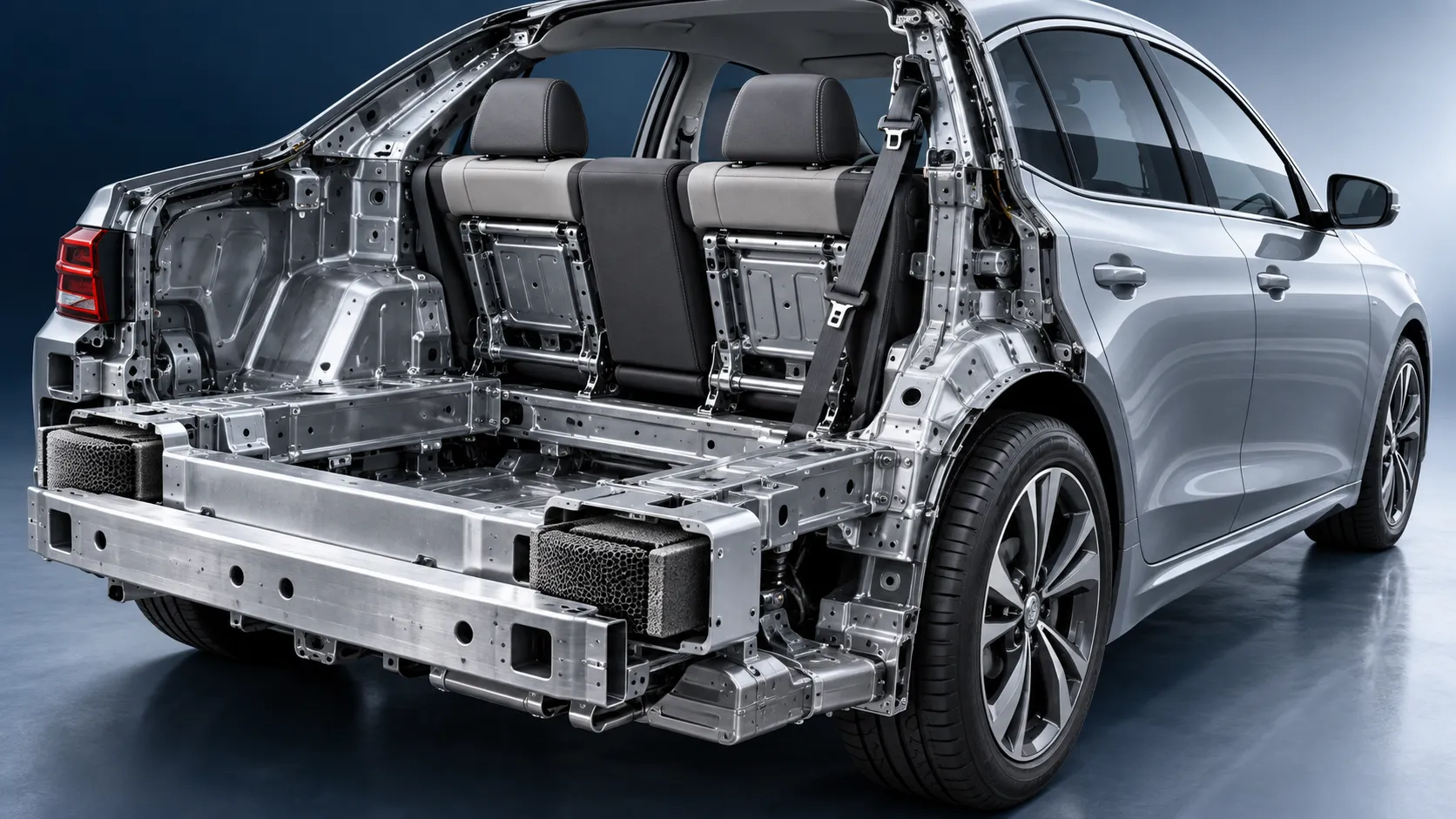
How Rear-Impact Safety Components Work Together to Protect Vehicle Occupants
Explore how automotive safety components for rear impact work together—from crash structures and seats to head restraints and belts—to enhance occupant protection.

How to Evaluate a Marine Safety Systems Manufacturer for Vessel Compliance and Reliability
Marine safety systems manufacturer evaluation guide: verify compliance, engineering quality, lifecycle costs, and global service support for safer, reliable vessel operations.
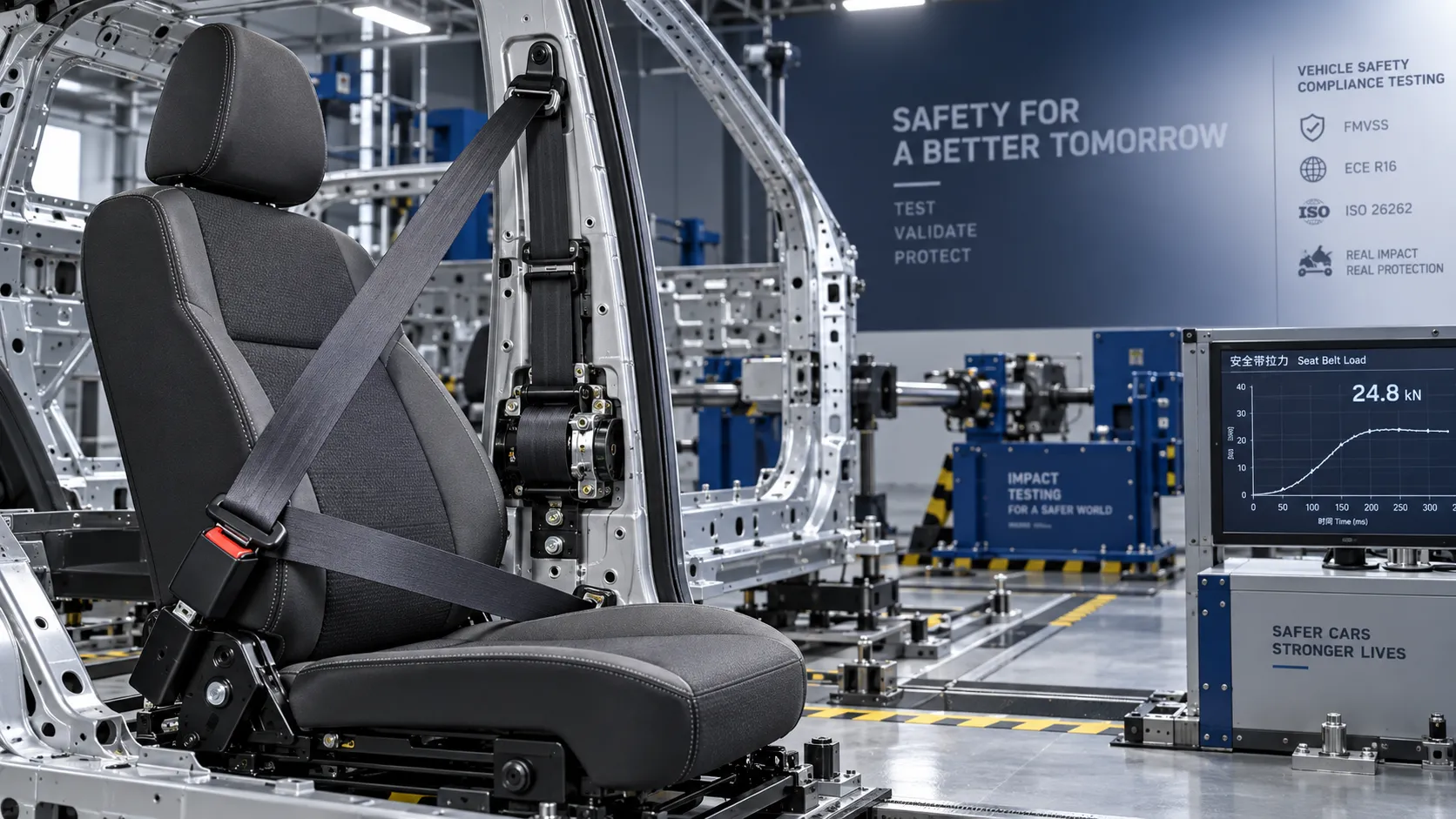
Crash Test Regulations for Seatbelts: Key Compliance Requirements Explained
Crash test regulations seatbelts explained: explore FMVSS, UN rules, anchorage strength, and dynamic restraint testing for safer, compliant vehicle systems.

How to Calculate the Total Cost of Automotive Lightweighting for a Vehicle Program
Automotive lightweight solutions cost: learn how to calculate program-level costs, including materials, tooling, joining, validation, risk, and vehicle-level value.

How Automotive Seat Occupancy Sensing Improves Airbag Deployment Decisions
Automotive seat occupancy sensing helps optimize airbag deployment decisions, improving passenger classification, safety diagnostics, and compliance across real-world conditions.

What Drives Lightweight Body Component Costs in High-Volume Vehicle Programs?
Lightweight body components cost depends on material yield, forming, joining, tooling, validation, and logistics. Explore proven ways to optimize total vehicle program cost.
Related News
- 00
0000-00
How to Evaluate High Strength Hot Stamped Steel Parts for Crash-Safety Applications - 00
0000-00
How to Evaluate Steel Auto Body Stampings for Strength, Fit, and Cost - 00
0000-00
Vehicle Lightweight Engineering for Body Structures vs High-Strength Steel: When to Use Which - 00
0000-00
Vehicle Lightweight Solutions for Structural Parts: When to Use Aluminum, HSS, or Hot Stamping - 00
0000-00
How to Evaluate High Strength Steel Stampings for Seat Structures: Key Grades and Forming Limits
Weekly Insights
Stay ahead with our curated technology reports delivered every Monday.