
How do seatbelt systems reduce hidden crash risks?
Hidden crash risks often emerge in the milliseconds before occupants fully realize an impact is happening. Modern seatbelt systems do far more than restrain the body; they coordinate pretensioning, force limiting, occupant positioning, and sensor-driven response to reduce injury pathways that are not visible in standard vehicle design discussions.
For information researchers tracking cabin safety, understanding these mechanisms reveals how passive safety components transform crash energy into controlled protection.
It also explains why seatbelt systems remain a critical baseline for reducing severe injuries across evolving mobility platforms.
Why hidden crash risks need a seatbelt systems checklist
Crash protection is often discussed through airbags, body structures, and ratings. Yet hidden injury risks usually begin with occupant motion.
If the pelvis slips, the torso rotates, or the head moves too early, even strong cabins can fail to prevent trauma.
Seatbelt systems reduce these risks by controlling timing, load paths, and body posture before the peak collision pulse arrives.
A checklist approach helps connect engineering signals with real injury outcomes. It turns complex restraint behavior into practical inspection points.
This matters as vehicles add lightweight bodies, advanced seats, electric platforms, and more varied occupant positions.
Core checklist for evaluating seatbelt systems
Use this checklist to judge whether seatbelt systems address hidden crash risks, not only visible compliance requirements.
- Verify pretensioner response time, because early webbing tightening limits forward movement before airbags and structures reach their protective window.
- Check force limiter calibration, ensuring chest loads are reduced without allowing excessive head travel or steering wheel contact.
- Assess lap belt geometry, keeping the belt over the pelvis to prevent submarining under severe frontal deceleration.
- Review shoulder belt routing, especially near adjustable anchors, to reduce neck loading and improve torso control.
- Confirm retractor locking performance under rapid vehicle yaw, rollover initiation, and multi-directional impact pulses.
- Inspect buckle stiffness and release reliability, balancing crash integrity with post-crash rescue accessibility.
- Evaluate compatibility with airbags, because poorly timed restraint loads can move the occupant outside the airbag’s optimal zone.
- Measure webbing elongation and friction, since material behavior influences chest compression, belt payout, and rebound motion.
- Test seat interaction, confirming that cushion angle, frame deformation, and anchorage strength support the intended belt path.
- Validate sensor logic, especially occupant detection, crash severity classification, and adaptive restraint decisions.
Checklist priority: timing before strength
A strong belt is not enough. Seatbelt systems must engage at the right instant, with the right load level.
Milliseconds decide whether the torso meets an airbag correctly or arrives too late, too low, or too rotated.
Therefore, timing validation should sit above static strength checks in any serious restraint review.
How seatbelt systems control hidden injury pathways
Hidden crash risks are rarely single failures. They are chains of small motion errors during a violent event.
Seatbelt systems interrupt those chains by managing occupant kinematics from the first sensing signal through rebound.
Reduce submarining
Submarining occurs when the pelvis slides under the lap belt. It can cause abdominal injury and poor airbag engagement.
Proper lap belt angle, cushion support, and pretensioning make seatbelt systems more effective against this concealed risk.
Limit chest trauma
A belt must restrain the body without concentrating excessive force on the ribs and sternum.
Force limiters allow controlled webbing payout, helping seatbelt systems balance restraint with chest injury reduction.
Control head excursion
If the head travels too far, interior contact risk rises. This can occur even when the belt remains latched.
Pretensioning, retractor locking, and airbag coordination help seatbelt systems reduce excessive forward head movement.
Manage rebound and secondary impacts
After the first peak pulse, occupants rebound toward the seat. Side structures or loose objects may create secondary risks.
Advanced seatbelt systems keep motion controlled beyond the first contact, especially during offset and multi-impact crashes.
Application notes for different crash scenarios
Frontal crashes
Frontal impacts demand rapid forward motion control. The belt must position the occupant for the airbag’s inflation curve.
Seatbelt systems with adaptive pretensioners can adjust restraint intensity according to crash severity and occupant characteristics.
Side impacts
Side crashes create lateral motion that standard frontal thinking may overlook. Shoulder belt geometry becomes critical.
Seatbelt systems help maintain posture so side airbags, curtains, and seat structures can protect the head and torso.
Rollovers
Rollover events involve gravity changes, roof intrusion, and extended movement duration. Retention matters as much as deceleration control.
Strong anchorage, reliable locking, and stable buckle behavior allow seatbelt systems to reduce ejection and roof-contact risks.
Rear impacts
Rear impacts are often linked with neck injury. Seatback behavior and belt slack can influence occupant rebound.
Seatbelt systems should be reviewed together with head restraints, seat recliners, and cushion support.
Commonly overlooked risks in seatbelt systems
Some risks remain hidden because they appear outside basic latch, pull, and strength checks.
Excess slack from real sitting habits
Loose clothing, relaxed posture, and low shoulder belt placement create slack. That slack delays restraint action during a crash.
Effective seatbelt systems must tolerate realistic occupant behavior, not only ideal laboratory posture.
Poor compatibility with child restraints
Child restraint installation changes belt loading and locking needs. A belt that works for adults may perform differently with child seats.
Seatbelt systems should be checked for locking modes, routing clarity, and repeatable tension during installation.
Aging and environmental degradation
Heat, ultraviolet exposure, contamination, and repeated abrasion can change webbing friction and elongation.
Long-life seatbelt systems require material validation that reflects real cabin environments and service cycles.
Seat redesign without restraint recalibration
Lightweight seat frames and thinner cushions may alter occupant height, belt angle, and pelvic support.
When seating architecture changes, seatbelt systems need renewed validation, not simple carryover approval.
Practical execution guide for safer restraint decisions
A practical review should combine component checks, system simulations, sled tests, and real-world evidence.
- Map the crash pulse first, then align pretensioning and force limiting to the vehicle’s structural energy absorption profile.
- Compare occupant sizes across percentiles, including smaller adults, taller occupants, and seating positions with unusual belt angles.
- Audit belt anchorage loads after body stamping or seat frame weight reduction, especially in high-strength steel transitions.
- Review airbag firing logic beside belt activation logic, ensuring restraint devices work as one synchronized safety chain.
- Use post-crash data to identify mismatch patterns between laboratory scores and field injury reports.
- Document inspection intervals for webbing, retractors, buckles, and warning functions in fleet or high-duty mobility operations.
Decision indicators worth tracking
These indicators help connect component intelligence with vehicle-level passive safety performance.
Where GNCS intelligence adds value
GNCS observes cabin safety through a wider mobility equipment lens. Seatbelt systems are not isolated hardware.
They interact with hot-stamped body structures, airbag assemblies, smart seats, electronic sensors, and evolving global crash protocols.
This broader view helps identify whether restraint improvements are genuine or only optimized for narrow test conditions.
In a mobility world shaped by lightweight platforms and stricter ratings, seatbelt systems remain a decisive safety benchmark.
Summary and action guide
Hidden crash risks are controlled through timing, geometry, load management, and occupant positioning.
Seatbelt systems reduce these risks by turning violent movement into a managed sequence of restraint actions.
The next step is to evaluate seatbelt systems as integrated safety architecture, not as simple compliance components.
Start with pretensioning, force limiting, belt path, anchorage strength, airbag coordination, and real-world occupant behavior.
Then compare findings against crash pulses, seating changes, and field injury data to expose hidden weaknesses early.
By applying this checklist, restraint decisions become clearer, safer, and more aligned with zero-casualty mobility goals.
Related News
How to Specify Integrated Marine Electronics for Reliable Bridge Operations
Integrated marine electronics: learn how to specify reliable bridge systems with clear data flows, redundancy, alarm control, lifecycle interfaces, and operational testing.
How to Evaluate Navigation Radar Manufacturers for Commercial Vessel Projects
Navigation radar manufacturers: learn how to compare performance, compliance, integration, support, and lifecycle cost for commercial vessel projects.
How Adjustable Cabin Ergonomics Reduce Operator Fatigue in Long-Shift Vehicles
Adjustable cabin ergonomics reduces operator fatigue through better seating, reach, visibility, vibration control, and climate comfort for safer long-shift vehicles.
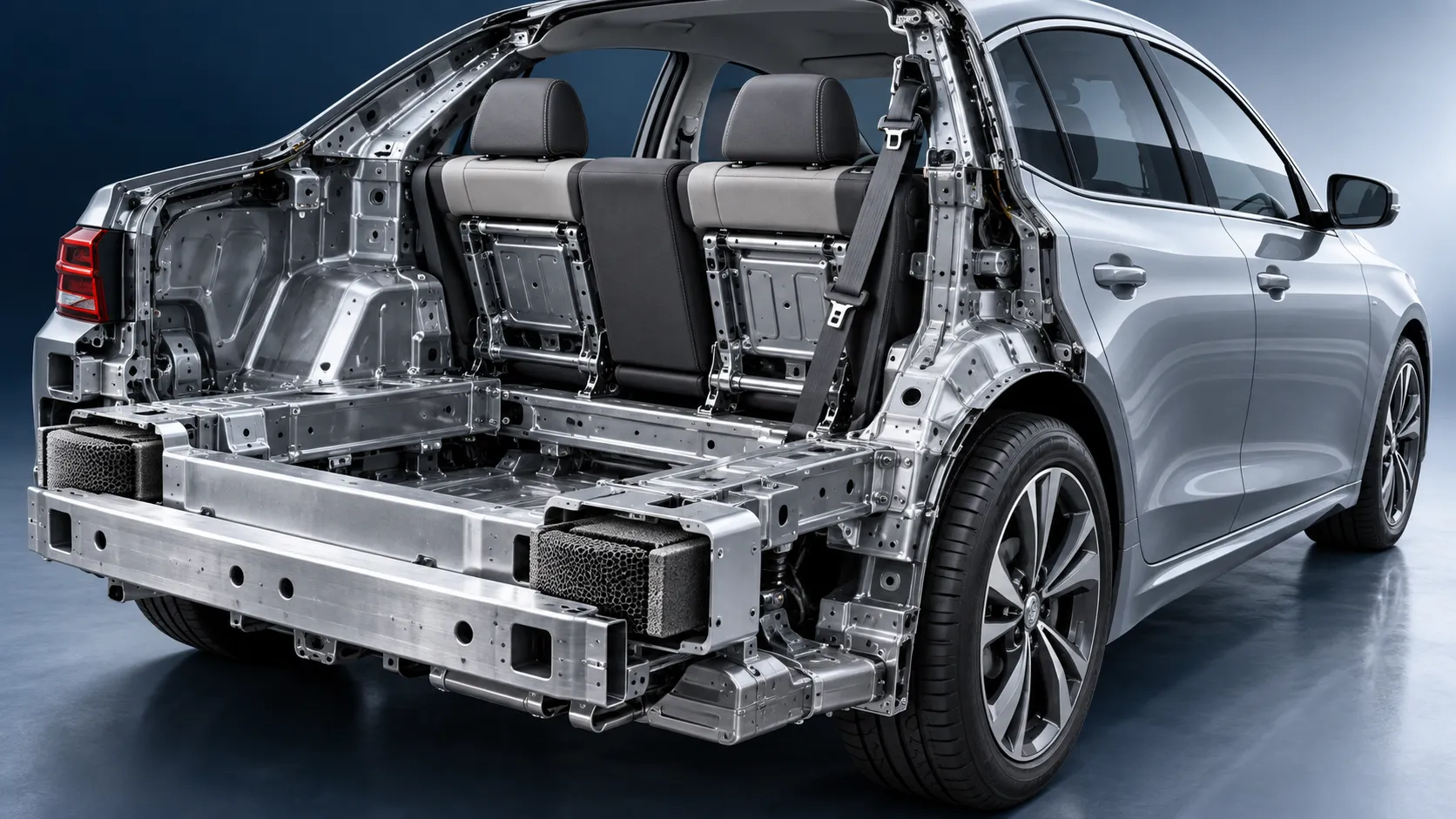
How Rear-Impact Safety Components Work Together to Protect Vehicle Occupants
Explore how automotive safety components for rear impact work together—from crash structures and seats to head restraints and belts—to enhance occupant protection.
How to Evaluate a Marine Safety Systems Manufacturer for Vessel Compliance and Reliability
Marine safety systems manufacturer evaluation guide: verify compliance, engineering quality, lifecycle costs, and global service support for safer, reliable vessel operations.
Crash Test Regulations for Seatbelts: Key Compliance Requirements Explained
Crash test regulations seatbelts explained: explore FMVSS, UN rules, anchorage strength, and dynamic restraint testing for safer, compliant vehicle systems.
How to Calculate the Total Cost of Automotive Lightweighting for a Vehicle Program
Automotive lightweight solutions cost: learn how to calculate program-level costs, including materials, tooling, joining, validation, risk, and vehicle-level value.

How Automotive Seat Occupancy Sensing Improves Airbag Deployment Decisions
Automotive seat occupancy sensing helps optimize airbag deployment decisions, improving passenger classification, safety diagnostics, and compliance across real-world conditions.
What Drives Lightweight Body Component Costs in High-Volume Vehicle Programs?
Lightweight body components cost depends on material yield, forming, joining, tooling, validation, and logistics. Explore proven ways to optimize total vehicle program cost.
Related News
- 00
0000-00
How Rear-Impact Safety Components Work Together to Protect Vehicle Occupants - 00
0000-00
Crash Test Regulations for Seatbelts: Key Compliance Requirements Explained - 00
0000-00
How Seat Belt Pretensioners for EVs Improve Crash Safety and System Response - 00
0000-00
How Do Seatbelt Systems with Pretensioner Improve Crash Protection? - 00
0000-00
How Seatbelt Technology for Buses Improves Passenger Safety and Meets Compliance Needs
Weekly Insights
Stay ahead with our curated technology reports delivered every Monday.