
High-Precision Marine Navigation for Offshore Operations: System Options and Accuracy Factors
High-Precision Marine Navigation for Offshore Operations: System Options and Accuracy Factors
For offshore operations, high-precision marine navigation is not a nice-to-have upgrade.
It directly affects vessel safety, station keeping, fuel use, and task completion rates.
That matters even more during subsea construction, offshore wind support, dredging, and crew transfer.
In these settings, small position errors can become operational delays, safety risks, or compliance problems.
This is why high-precision marine navigation should be reviewed as a full system, not a single sensor choice.
The practical question is simple: which architecture delivers stable accuracy in your actual offshore environment?
Why High-Precision Marine Navigation Matters Offshore
Offshore work rarely happens in ideal signal conditions.
You face vessel motion, multipath reflection, weather exposure, and long distances from shore infrastructure.
At the same time, many missions demand repeatable positioning within tight tolerances.
Examples include cable laying, ROV launch and recovery, anchor handling, and platform approach.
High-precision marine navigation supports safer route execution and more predictable dynamic positioning behavior.
It also improves event reconstruction, audit readiness, and confidence during incident review.
From a system evaluation view, accuracy alone is not enough.
You also need continuity, integrity, latency control, and resilience during signal degradation.
Core System Options for High-Precision Marine Navigation
Most offshore solutions combine several technologies rather than relying on one positioning source.
The right mix depends on mission profile, operating area, and acceptable error budget.
1. Multi-Constellation GNSS with Differential Correction
This is the base layer for many high-precision marine navigation systems.
Receivers track GPS, Galileo, GLONASS, and BeiDou to improve satellite geometry and availability.
Differential services, SBAS, RTK, or PPP then reduce positioning error.
This option works well when correction coverage is reliable and antenna installation is optimized.
2. RTK for Nearshore or Controlled Support Areas
RTK can provide centimeter-level results under strong conditions.
It is attractive for port approaches, survey support, and offshore construction near correction networks.
The tradeoff is sensitivity to baseline length, communications quality, and signal obstruction.
For remote offshore zones, RTK alone may not deliver enough continuity.
3. PPP and PPP-RTK for Wide-Area Coverage
PPP is increasingly relevant for deepwater and remote operations.
It reduces dependence on local base stations and supports broad geographic coverage.
The key evaluation points are convergence time, correction service stability, and motion performance.
For many fleets, PPP-based high-precision marine navigation offers a practical balance of reach and precision.
4. INS-Aided Integrated Navigation
An inertial navigation system adds continuity when GNSS is unstable or briefly unavailable.
This is especially valuable near tall structures, cranes, jackets, and support vessels.
Sensor fusion can smooth motion effects and protect navigation performance during short outages.
The main variables are IMU grade, calibration quality, and fusion algorithm design.
5. Radar, Sonar, AIS, and Relative Positioning Layers
High-precision marine navigation should not be isolated from situational awareness tools.
Radar and sonar support hazard detection and local referencing.
AIS adds traffic context, while relative positioning helps vessel-to-asset control.
In practice, these layers strengthen operational decision-making when absolute position confidence drops.
What Really Drives Accuracy
Accuracy depends on more than receiver specifications.
System performance is shaped by signal physics, vessel design, integration choices, and operating discipline.
Satellite Geometry and Constellation Diversity
More visible satellites usually improve positioning stability.
Still, geometry quality matters more than simple count.
Poor dilution of precision can weaken high-precision marine navigation even with modern receivers.
Correction Source Quality
Correction integrity is often the hidden differentiator.
Latency, update rate, service availability, and regional support all matter.
A strong receiver cannot compensate for weak correction delivery.
Antenna Placement and Electromagnetic Environment
Multipath remains a major offshore accuracy threat.
Reflections from masts, decks, cranes, and nearby structures can distort measurements.
Cable routing, grounding, and RF interference control also influence navigation reliability.
Vessel Motion and Sensor Fusion Quality
Heave, pitch, roll, and yaw can degrade measurement stability.
Well-tuned integration between GNSS, INS, gyro, and motion sensors reduces that impact.
This is where high-precision marine navigation becomes a true engineering system.
Software Logic and Update Management
Positioning performance also depends on firmware maturity and integration logic.
Filtering strategy, fault detection, and data handoff to ECDIS or DP systems affect real outcomes.
Poor change control can introduce instability after upgrades.
How to Compare System Options in Practice
A useful evaluation starts with the mission, not the brochure.
The most effective high-precision marine navigation setup is the one that holds accuracy under your real failure modes.
- Define the required horizontal and vertical tolerance for each operation.
- Separate average accuracy from worst-case performance and recovery behavior.
- Check correction service coverage across the full operating route.
- Review how the system reports integrity alarms and confidence levels.
- Confirm interfaces with ECDIS, DP, autopilot, logging, and bridge systems.
- Test degraded modes, including signal blockage, latency spikes, and antenna faults.
This approach keeps the selection process tied to operational risk, not headline precision claims.
A Practical Evaluation Matrix
Common Risks That Undermine Performance
Several issues repeatedly reduce the value of high-precision marine navigation programs.
- Choosing a correction model without checking real offshore service continuity.
- Assuming lab accuracy will hold beside large steel structures.
- Ignoring antenna siting during vessel retrofit or bridge redesign.
- Treating integration with DP or ECDIS as a simple interface task.
- Skipping sea trials under realistic motion, weather, and congestion conditions.
From recent market shifts, the clearer signal is that buyers now want resilience metrics, not just accuracy numbers.
That also means vendors must prove behavior under stress, not only nominal conditions.
Decision Guidance for Offshore Navigation Upgrades
If the goal is safer and more stable offshore execution, start with the operational envelope.
Then map that envelope to correction strategy, sensor redundancy, and interface integrity.
For many organizations, the strongest path is integrated high-precision marine navigation using multi-constellation GNSS, dependable corrections, and INS support.
Where missions are less demanding, a simpler architecture may still be the better business choice.
What matters is fit, transparency, and proven performance under offshore constraints.
A disciplined comparison process turns high-precision marine navigation from a specification line into a measurable operational advantage.
Use that lens when reviewing vendors, planning upgrades, or validating new offshore navigation deployments.
Related News
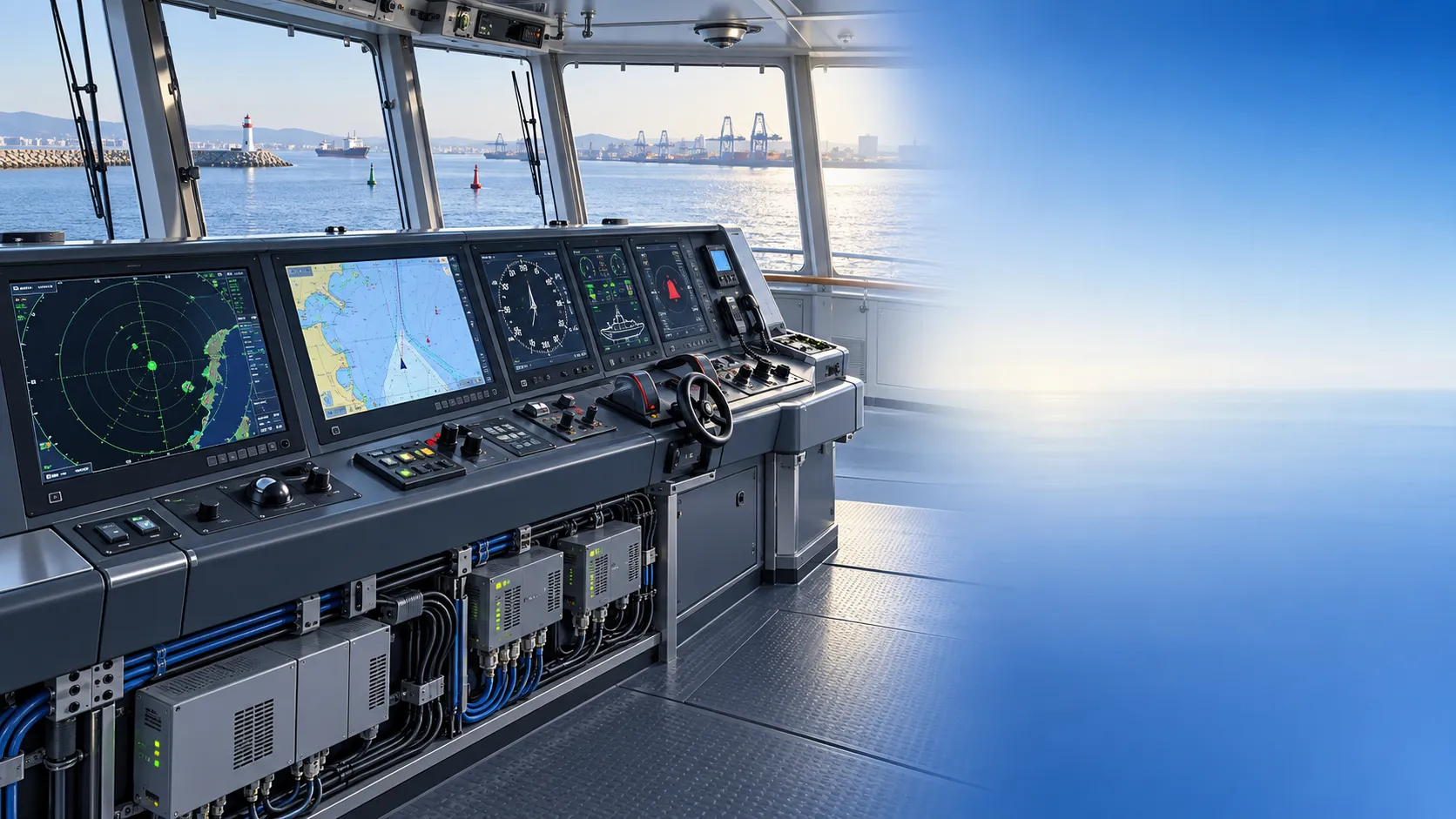
How to Specify Integrated Marine Electronics for Reliable Bridge Operations
Integrated marine electronics: learn how to specify reliable bridge systems with clear data flows, redundancy, alarm control, lifecycle interfaces, and operational testing.
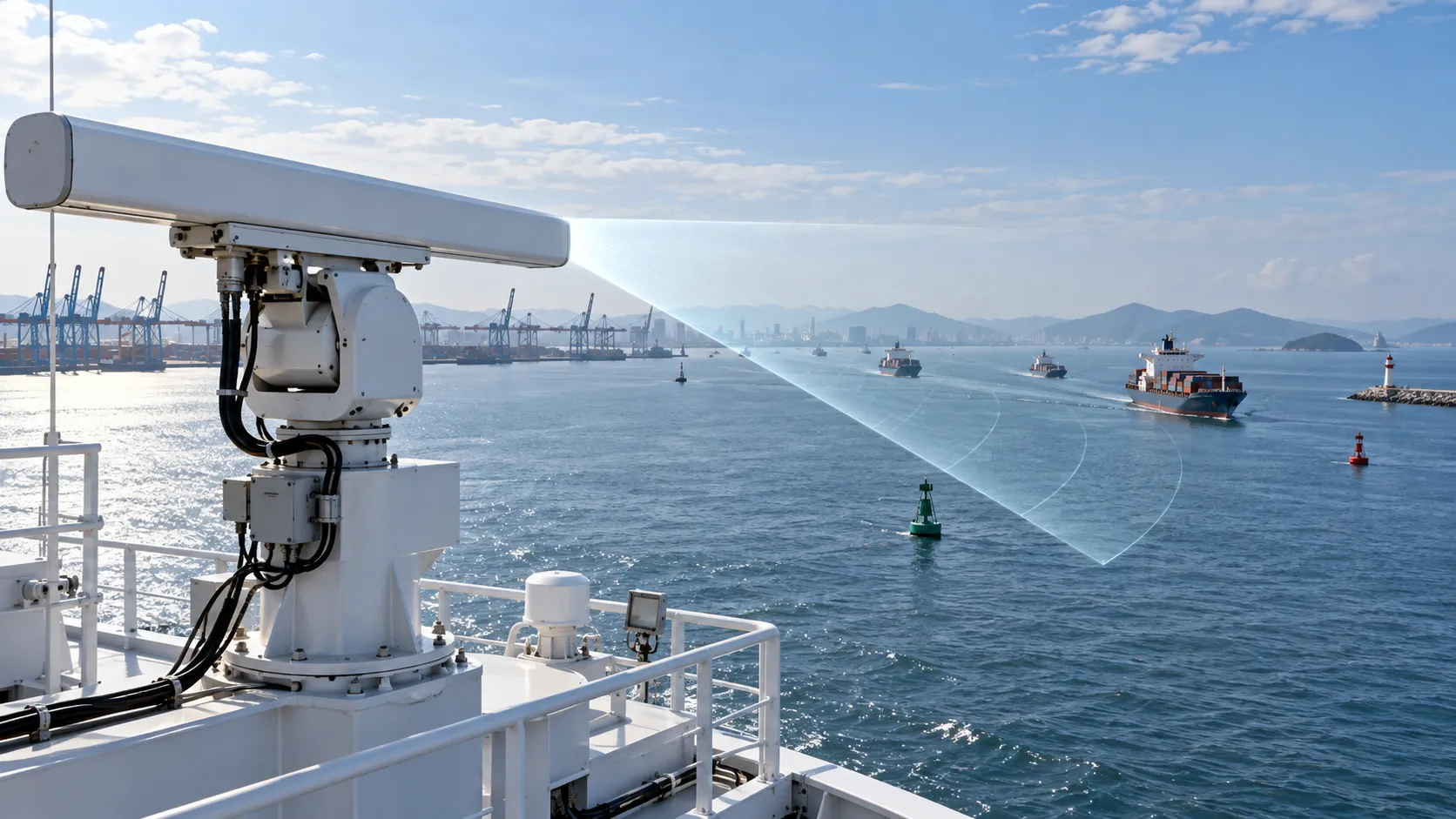
How to Evaluate Navigation Radar Manufacturers for Commercial Vessel Projects
Navigation radar manufacturers: learn how to compare performance, compliance, integration, support, and lifecycle cost for commercial vessel projects.

How Adjustable Cabin Ergonomics Reduce Operator Fatigue in Long-Shift Vehicles
Adjustable cabin ergonomics reduces operator fatigue through better seating, reach, visibility, vibration control, and climate comfort for safer long-shift vehicles.

How Rear-Impact Safety Components Work Together to Protect Vehicle Occupants
Explore how automotive safety components for rear impact work together—from crash structures and seats to head restraints and belts—to enhance occupant protection.
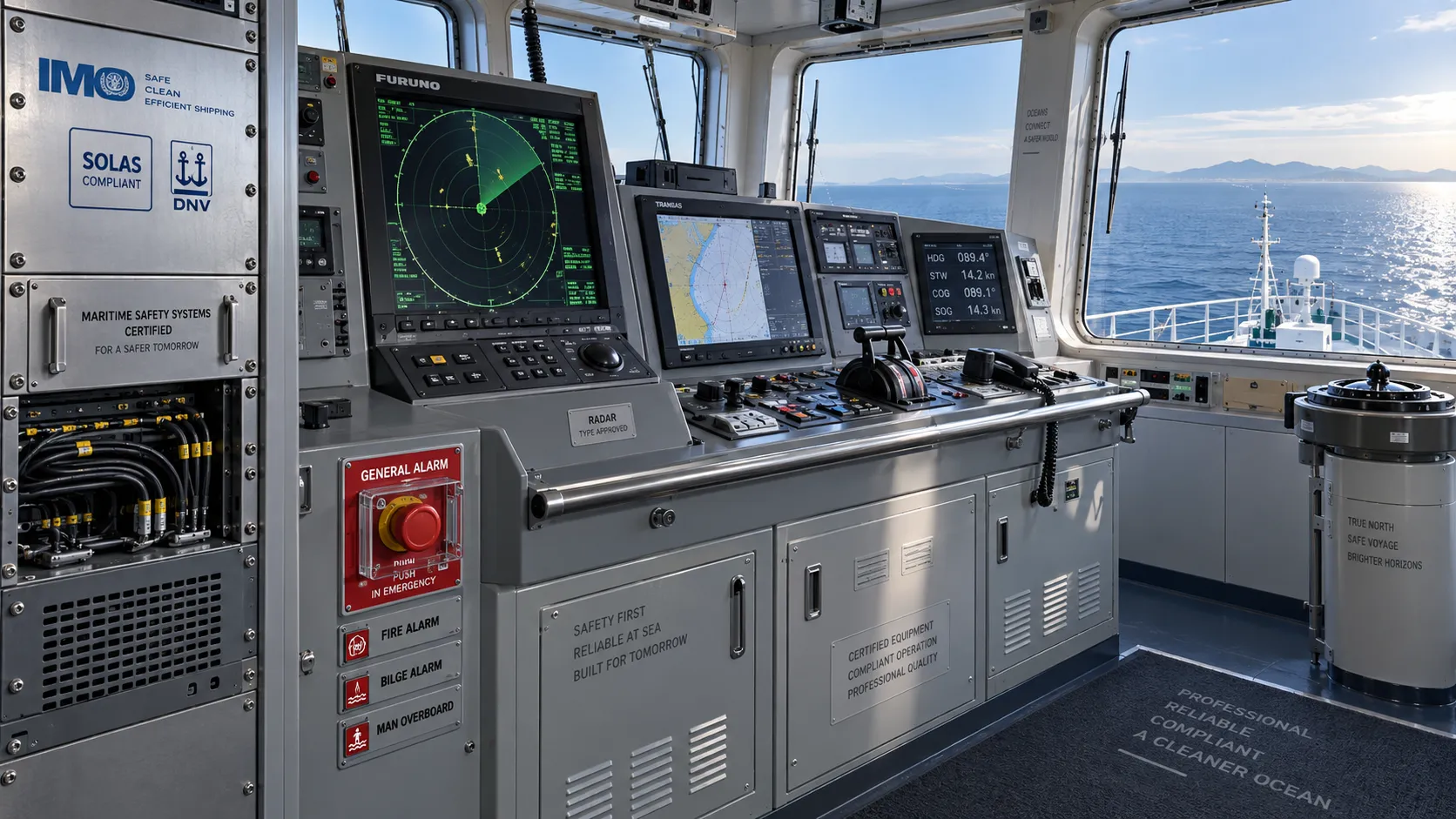
How to Evaluate a Marine Safety Systems Manufacturer for Vessel Compliance and Reliability
Marine safety systems manufacturer evaluation guide: verify compliance, engineering quality, lifecycle costs, and global service support for safer, reliable vessel operations.

Crash Test Regulations for Seatbelts: Key Compliance Requirements Explained
Crash test regulations seatbelts explained: explore FMVSS, UN rules, anchorage strength, and dynamic restraint testing for safer, compliant vehicle systems.

How to Calculate the Total Cost of Automotive Lightweighting for a Vehicle Program
Automotive lightweight solutions cost: learn how to calculate program-level costs, including materials, tooling, joining, validation, risk, and vehicle-level value.

How Automotive Seat Occupancy Sensing Improves Airbag Deployment Decisions
Automotive seat occupancy sensing helps optimize airbag deployment decisions, improving passenger classification, safety diagnostics, and compliance across real-world conditions.

What Drives Lightweight Body Component Costs in High-Volume Vehicle Programs?
Lightweight body components cost depends on material yield, forming, joining, tooling, validation, and logistics. Explore proven ways to optimize total vehicle program cost.
Related News
- 00
0000-00
How to Choose a Marine Positioning Solutions Supplier in Europe for Offshore and Port Operations - 00
0000-00
Marine Positioning Solutions Provider Comparison: GNSS, Accuracy, and Integration Factors - 00
0000-00
Marine Electromagnetic Navigation Accuracy vs GNSS: Which Performs Better Near Interference? - 00
0000-00
Marine Electromagnetic Navigation Accuracy: What Affects Position Stability at Sea? - 00
0000-00
Marine Positioning Systems Exporter Selection: What to Check in GNSS Accuracy, Compliance, and Support
Weekly Insights
Stay ahead with our curated technology reports delivered every Monday.