Precision Navigation Systems: Which Accuracy, Update Rate, and Sensors Matter Most?
Precision navigation is often discussed as a race for tighter numbers, yet the most useful systems are judged by how reliably they hold position in motion, interference, and changing environments.
That is why accuracy alone rarely tells the full story. Update rate, sensor quality, fusion logic, and resilience under real operating stress decide whether location data becomes actionable guidance.
Across marine mobility, connected vehicles, and broader equipment intelligence, this question matters because navigation now feeds compliance, safety, autonomy support, and operational efficiency at the same time.
From the perspective of GNCS, where high-precision marine navigation intersects with safety-critical mobility systems, precision navigation is best understood as part of a larger chain of spatial perception and risk control.
What precision navigation really means in practice
In simple terms, precision navigation is the ability to determine position, direction, speed, and movement changes with enough consistency to support decisions without hesitation.
A system may advertise centimeter-level performance, but that figure usually reflects controlled conditions. Real-world value appears when signal blockage, vibration, multipath, weather, or electromagnetic noise enter the picture.
For vessels, that can mean crowded ports, offshore operations, or poor visibility. For vehicles and intelligent equipment, it can involve tunnels, urban canyons, high-speed lane changes, and sensor contamination.
This is why precision navigation should be evaluated as a system behavior, not a single specification.
Why the industry is paying closer attention
Navigation data now influences far more than route guidance. It supports collision avoidance, digital charting, driver assistance, geofencing, remote monitoring, and automated control loops.
In marine environments, integrated positioning connects satellite signals, sonar inputs, radar awareness, and AIS visibility. A delay of even a few moments can affect maneuvering confidence.
In road mobility, high-integrity positioning is increasingly linked to lightweight platform control, smart seating sensing, and passive safety timing, because location and motion context shape system responses.
That broader context fits the GNCS view of mobility intelligence: perception accuracy and physical protection are no longer isolated topics. They are operationally connected.
Accuracy matters, but only with context
Accuracy is still the first metric most people compare, and for good reason. It indicates how close the reported position is to the true position.
However, several questions matter more than the headline number. Is that horizontal accuracy or vertical accuracy? Is it absolute position or relative positioning? Is it sustained or occasional?
A berth approach, hydrographic task, or lane-level driving function may require different forms of precision. Relative stability can be more important than peak precision if the application depends on continuous control.
For many evaluations, the useful test is not “How accurate can it be?” but “How accurate does it remain when the environment stops cooperating?”
Three accuracy distinctions that change system value
- Absolute accuracy affects mapping, charting, and route confirmation against fixed references.
- Relative accuracy supports repeated path control, docking, lane positioning, and machine guidance.
- Integrity determines whether the system can detect and flag unreliable outputs before they create operational risk.
Why update rate is often underestimated
Update rate describes how frequently a navigation system refreshes its output. In slow or steady conditions, modest refresh intervals may appear acceptable.
That changes quickly in dynamic environments. Fast turns, speed changes, wave motion, obstacle avoidance, and automated path correction demand fresher data.
A precise position that arrives too late can be less useful than a slightly less precise one delivered in time. Decision systems care about timing as much as location.
This is especially relevant where navigation outputs feed control systems, bridge displays, ECDIS updates, ADAS logic, or synchronized safety functions.
The sensor question is really a fusion question
No single sensor covers every condition. Strong precision navigation usually comes from combining complementary sensing methods rather than depending on one ideal input.
GNSS remains the anchor for many systems, but inertial measurement units, radar, lidar, cameras, sonar, odometry, and map references each help close specific gaps.
In marine settings, sonar and radar can reinforce situational confidence when satellite quality drops. In automotive environments, inertial and vision inputs help maintain continuity through tunnels or dense urban reflections.
The important question is not just which sensors are present. It is how well the system weights them, validates them, and transitions when one source degrades.
Sensor roles commonly seen in precision navigation
- GNSS provides global positioning and timing reference.
- IMU supports continuity during temporary signal loss.
- Radar and sonar strengthen environmental awareness in low-visibility marine operations.
- Cameras and lidar improve local object and lane interpretation.
- Map and route databases add contextual correction when matched carefully.
Environmental resilience separates lab results from field performance
The most revealing tests for precision navigation are often environmental rather than theoretical. Salt spray, vibration, thermal cycling, glare, shock, and electromagnetic interference all affect output quality.
Marine equipment faces multipath from water surfaces, weather disruption, and long-duration exposure. Road systems deal with dust, road splash, tunnels, reflective buildings, and intermittent occlusion.
A robust platform does not simply recover after disruption. It manages drift, reports confidence changes, and maintains a stable enough data stream for downstream systems.
That is where compliance and reliability begin to intersect. A good specification sheet may open the conversation, but durable performance closes it.
How different applications shift the priority order
Not every use case values the same parameter in the same way. The right balance depends on movement dynamics, safety consequences, and the cost of a bad position estimate.
This is one reason broad mobility analysis matters. Navigation performance influences not only guidance, but also how other intelligent and protective systems interpret motion.
What to examine before comparing systems
A useful evaluation framework starts with the operating scene, not the product brochure. That prevents overvaluing a strong lab metric that does not match field conditions.
- Check how accuracy is defined, tested, and sustained over time.
- Review update rate together with latency, not as a standalone figure.
- Look for sensor fusion logic, fallback behavior, and fault reporting.
- Confirm environmental and compliance evidence for the intended deployment.
- Consider software update pathways, because performance increasingly depends on algorithm evolution.
That last point is becoming more important. Cloud-linked updates, digital chart revisions, and perception algorithm tuning can materially change precision navigation outcomes after installation.
Where to focus next
The strongest conclusions usually come from matching metrics to mission risk. A harbor maneuver, a long-haul route, and a safety-linked vehicle platform should not be judged by the same shortcut criteria.
For a deeper review, it helps to map each candidate system against four questions: how precisely it positions, how quickly it updates, how intelligently it fuses sensors, and how well it survives disruption.
That approach turns precision navigation from a marketing claim into a decision framework. It also creates a clearer basis for comparing marine equipment, connected mobility platforms, and future-ready safety ecosystems.
When those factors are assessed together, the next step becomes clearer: refine the scenario, rank the failure risks, and use evidence, not headline numbers, to judge which system is truly ready for real operation.
Related News
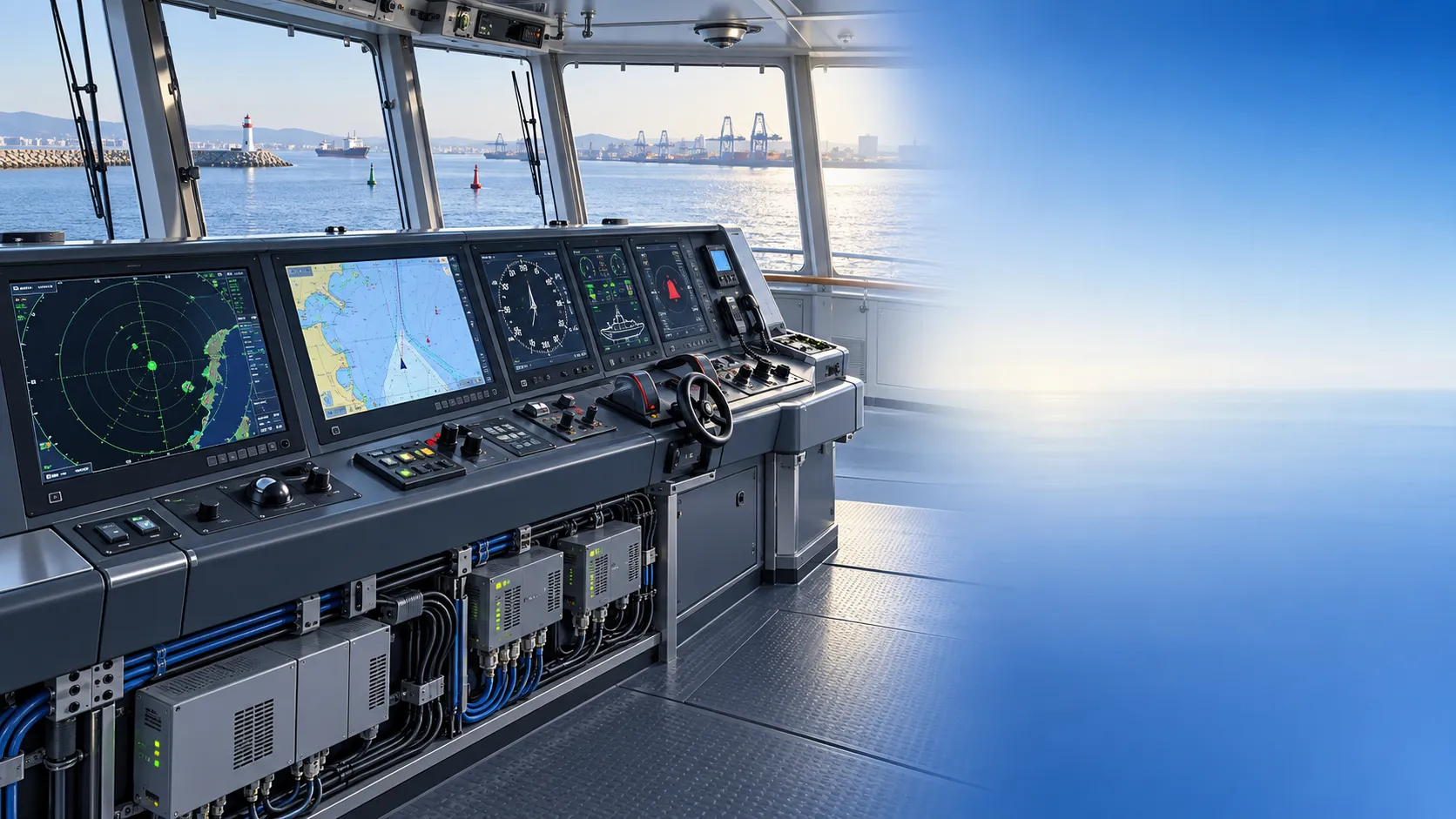
How to Specify Integrated Marine Electronics for Reliable Bridge Operations
Integrated marine electronics: learn how to specify reliable bridge systems with clear data flows, redundancy, alarm control, lifecycle interfaces, and operational testing.

How to Evaluate Navigation Radar Manufacturers for Commercial Vessel Projects
Navigation radar manufacturers: learn how to compare performance, compliance, integration, support, and lifecycle cost for commercial vessel projects.

How Adjustable Cabin Ergonomics Reduce Operator Fatigue in Long-Shift Vehicles
Adjustable cabin ergonomics reduces operator fatigue through better seating, reach, visibility, vibration control, and climate comfort for safer long-shift vehicles.

How Rear-Impact Safety Components Work Together to Protect Vehicle Occupants
Explore how automotive safety components for rear impact work together—from crash structures and seats to head restraints and belts—to enhance occupant protection.
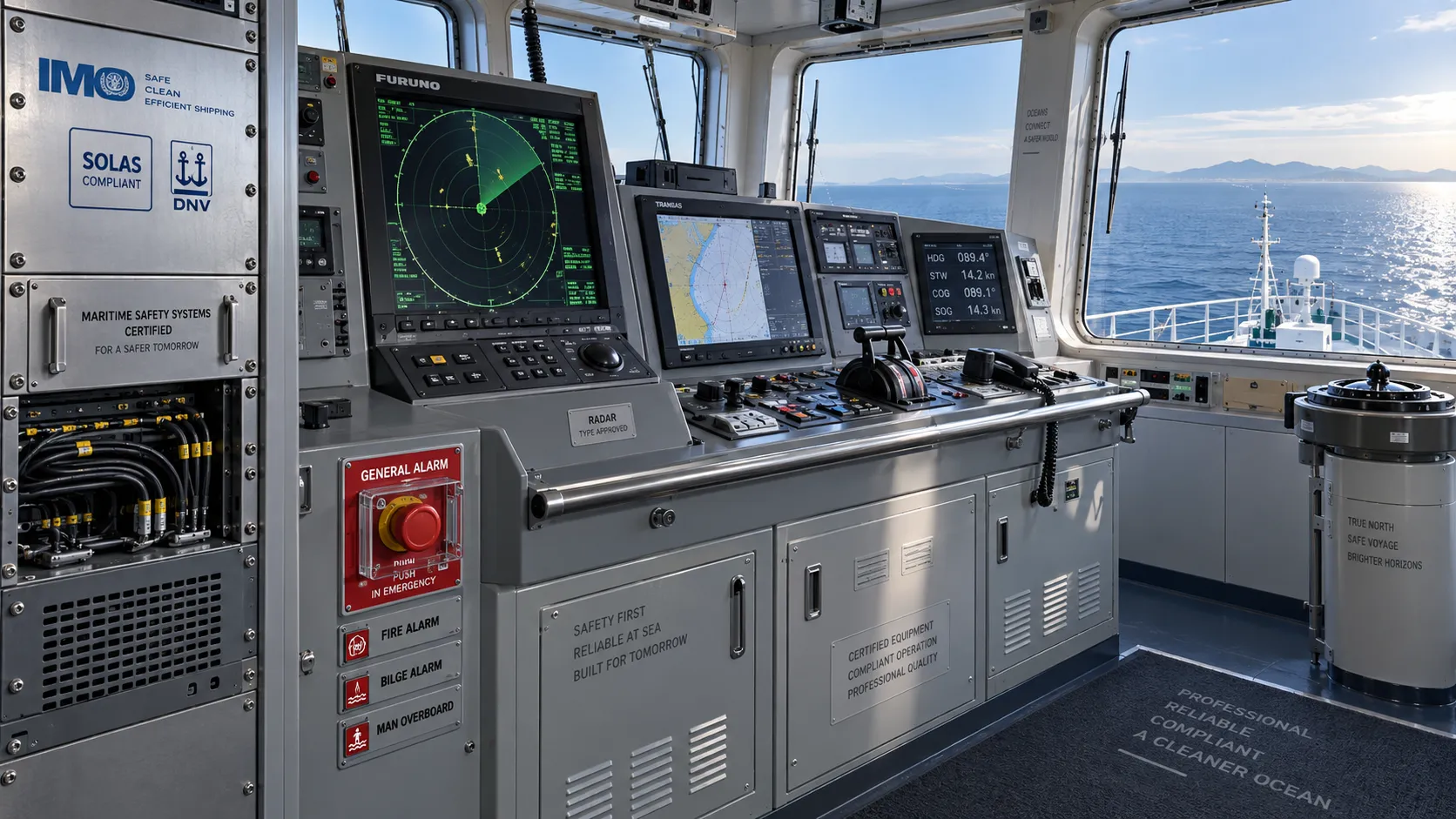
How to Evaluate a Marine Safety Systems Manufacturer for Vessel Compliance and Reliability
Marine safety systems manufacturer evaluation guide: verify compliance, engineering quality, lifecycle costs, and global service support for safer, reliable vessel operations.
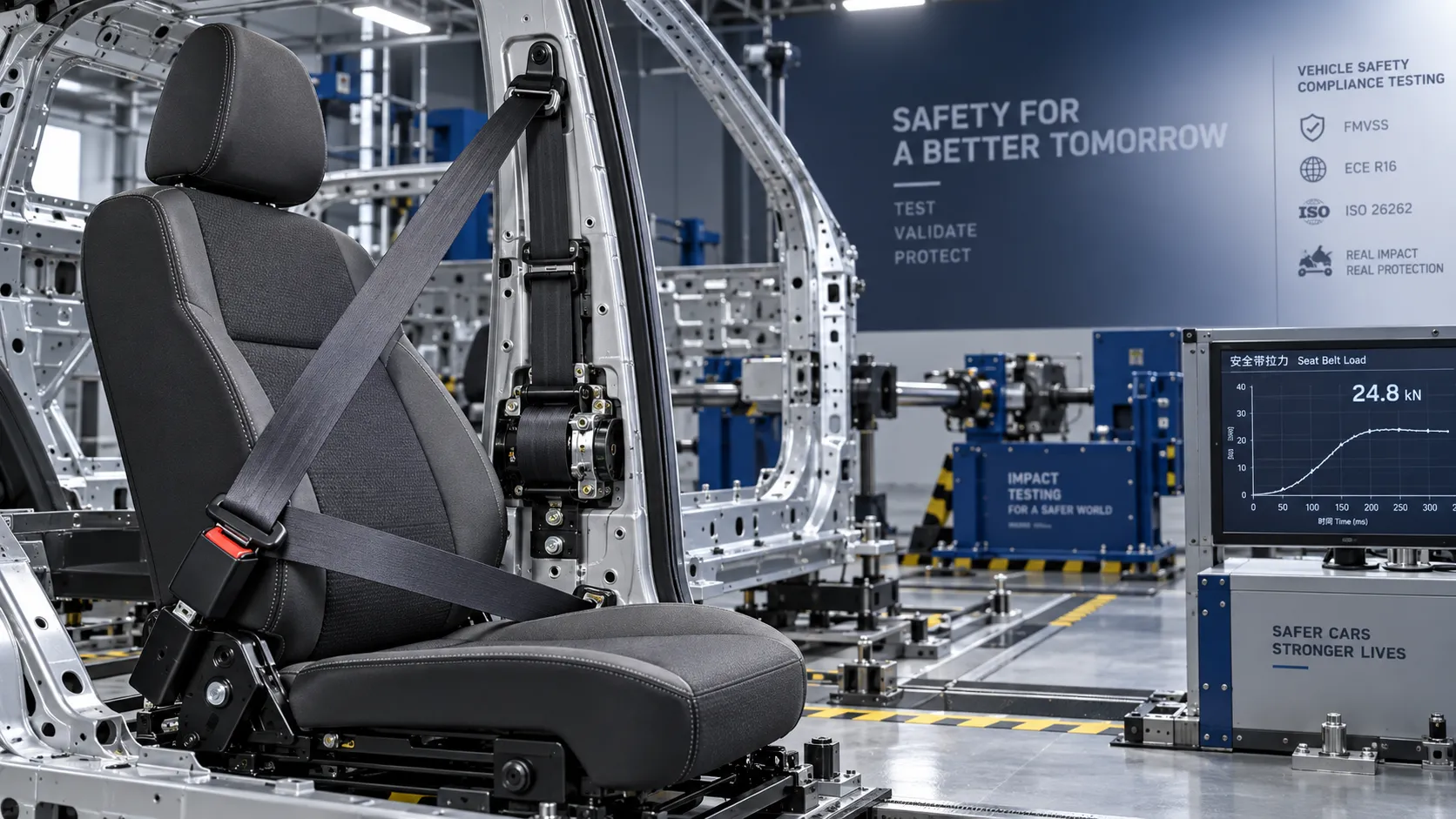
Crash Test Regulations for Seatbelts: Key Compliance Requirements Explained
Crash test regulations seatbelts explained: explore FMVSS, UN rules, anchorage strength, and dynamic restraint testing for safer, compliant vehicle systems.

How to Calculate the Total Cost of Automotive Lightweighting for a Vehicle Program
Automotive lightweight solutions cost: learn how to calculate program-level costs, including materials, tooling, joining, validation, risk, and vehicle-level value.

How Automotive Seat Occupancy Sensing Improves Airbag Deployment Decisions
Automotive seat occupancy sensing helps optimize airbag deployment decisions, improving passenger classification, safety diagnostics, and compliance across real-world conditions.

What Drives Lightweight Body Component Costs in High-Volume Vehicle Programs?
Lightweight body components cost depends on material yield, forming, joining, tooling, validation, and logistics. Explore proven ways to optimize total vehicle program cost.
Related News
- 00
0000-00
How to Choose a Marine Positioning Solutions Supplier in Europe for Offshore and Port Operations - 00
0000-00
Marine Positioning Solutions Provider Comparison: GNSS, Accuracy, and Integration Factors - 00
0000-00
Marine Electromagnetic Navigation Accuracy vs GNSS: Which Performs Better Near Interference? - 00
0000-00
Marine Electromagnetic Navigation Accuracy: What Affects Position Stability at Sea? - 00
0000-00
Marine Positioning Systems Exporter Selection: What to Check in GNSS Accuracy, Compliance, and Support
Weekly Insights
Stay ahead with our curated technology reports delivered every Monday.