
Why navigation compliance standards now shape project risk
For project managers and engineering leads, navigation compliance standards are no longer a box-ticking exercise—they now influence timelines, supplier decisions, system integration, and liability exposure. As global mobility and marine technologies become more regulated, even small compliance gaps can trigger delays, redesigns, or costly project risk. Understanding how these standards shape execution is now essential for delivering safe, competitive, and globally viable projects.
This shift is especially visible across sectors where precision perception and occupant protection intersect. In marine navigation, updates to ECDIS workflows, satellite positioning integrity, AIS interoperability, and cybersecurity controls can alter design gates and commissioning plans. In adjacent mobility sectors such as passive safety, seating systems, and lightweight structures, compliance discipline has already become a core project control mechanism rather than a final audit task.
For GNCS readers, the practical question is not whether standards matter, but how early they should shape architecture, sourcing, validation, and launch readiness. The answer, in most cross-border programs, is from day 1. A compliance issue discovered 2 weeks before factory acceptance testing is rarely a legal problem only; it is usually a schedule, cost, supplier, and reputation problem at the same time.
Why navigation compliance standards have become a primary project risk driver
Navigation compliance standards now affect project risk because systems are more connected, more software-dependent, and more visible to regulators and insurers than they were 5 to 10 years ago. What used to be a hardware acceptance topic is now tied to software version control, update traceability, sensor fusion logic, electromagnetic compatibility, human-machine interface design, and operator training records.
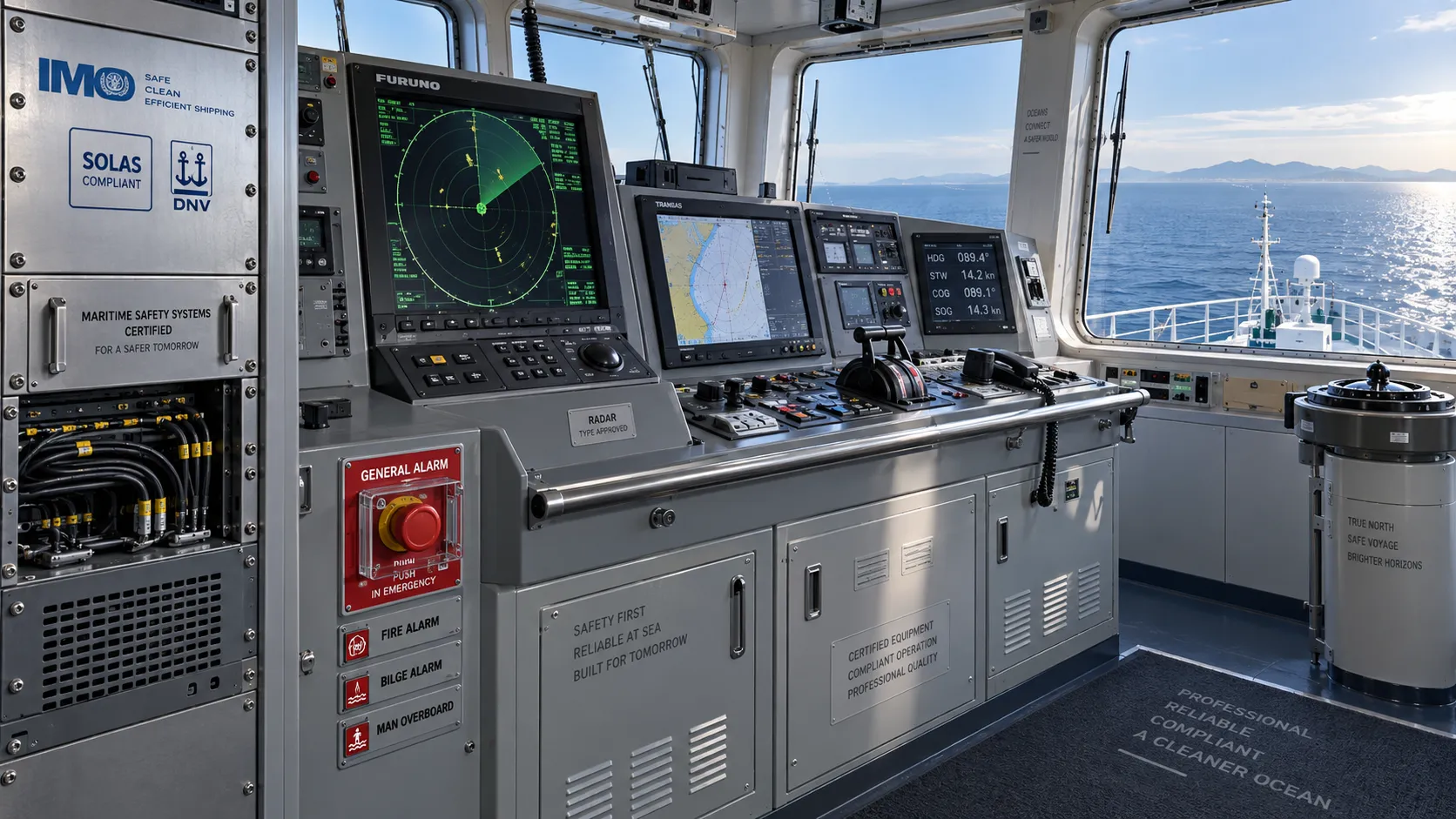
In marine programs, a single bridge system may depend on 4 to 8 core subsystems, including radar, GNSS, AIS, gyrocompass, echo sounder, and chart display. If one subsystem fails a compliance checkpoint, downstream integration can stall for 2 to 6 weeks. For project leaders managing vessel upgrades, offshore platforms, or high-spec commercial fleets, that delay can affect charter availability, acceptance windows, and contractual milestone payments.
Compliance has moved upstream into design and sourcing
The most important change is timing. Navigation compliance standards are no longer reviewed only during commissioning. They now influence requirement definition, vendor qualification, interface selection, and document control. Teams that wait until FAT or sea trials often discover that a compliant component does not automatically create a compliant system.
This is familiar in automotive passive safety as well. A seatbelt pretensioner, airbag inflator, and seat structure may each pass separate checks, yet fail combined performance expectations under integration. Marine navigation follows the same logic: interfaces, failover behavior, alarm handling, and update procedures often create the real risk.
Typical risk triggers seen by project teams
- Late discovery of regional standard differences across 2 or more target markets
- Software revisions introduced within 30 days of FAT without full regression testing
- Supplier documentation gaps in calibration, EMC, or cybersecurity evidence
- Operator interface changes that require retraining or revised bridge procedures
- Mismatch between procurement specifications and installed configuration
The table below shows how navigation compliance standards increasingly map to commercial and execution risk, not just technical review.
The key takeaway is simple: navigation compliance standards now operate as an early warning signal for broader project health. If documentation quality is weak, integration discipline is often weak too. If update governance is unclear, cybersecurity and operator readiness may also be under-managed.
How compliance shapes timelines, interfaces, and supplier decisions
Project managers often feel the impact of compliance first through schedule compression. A standard may require no dramatic design rewrite, yet still add review loops, validation checkpoints, witness tests, or software freeze dates. In practice, these controls can create 3 separate timeline effects: earlier specification lock, narrower change windows, and more formal approval dependencies.
For example, an integrated navigation package may require interface verification across radar, ECDIS, AIS, and GNSS before site installation starts. If one vendor delivers late protocol documents, the engineering team cannot complete interface mapping on time. That delay then moves cable routing, console layout, HMI verification, and onboard acceptance into a tighter and riskier window.
Supplier evaluation is now a compliance capability test
The old sourcing model emphasized price, lead time, and nominal technical fit. Today, supplier selection should also assess compliance maturity in at least 4 areas: documentation discipline, software lifecycle control, regional certification familiarity, and responsiveness during test deviations. A lower-cost vendor can become the most expensive option if each clarification takes 7 to 10 days.
This is where lessons from automotive body and cabin safety programs are useful. Tier 1 buyers often evaluate not only component performance, but also PPAP-like readiness, traceability depth, and change control speed. Navigation programs benefit from the same mindset, especially when a vessel, port authority, or export market requires country-specific approvals.
A practical supplier screening checklist
- Can the supplier provide a current compliance matrix within 48–72 hours?
- Do software release notes clearly identify affected functions and test coverage?
- Are interface documents version-controlled and aligned with delivered hardware?
- Can the supplier support FAT, SAT, and post-installation corrective actions?
- Is there a named owner for regional regulation updates and document revisions?
The next table compares procurement approaches that reduce risk when navigation compliance standards are central to project delivery.
For engineering leads, the choice is rarely binary. The better strategy is often to use compliance-led sourcing for critical systems, then apply staged acceptance criteria to preserve flexibility. This keeps innovation possible without allowing undocumented changes to enter the project too late.
A workable implementation model for project managers and engineering leads
The most effective way to reduce compliance-driven project risk is to turn standards into a controlled workflow. Instead of treating them as static documents, project teams should build them into milestone planning, design reviews, supplier gates, and change management. In many programs, a 5-step model is enough to reduce avoidable late-stage disruption.
Step 1: Build a compliance map at project kickoff
Within the first 1 to 2 weeks, define the applicable standard set by vessel type, operating region, class expectations, customer contract, and digital architecture. This map should identify mandatory, conditional, and future-facing requirements. It should also flag whether software updates, cloud synchronization, or remote diagnostics introduce extra approval needs.
Step 2: Convert standards into engineering control points
A standard becomes actionable only when linked to a drawing, interface, test, or document owner. Break requirements into measurable control points such as signal integrity checks, alarm response verification, EMC review status, update authorization, and operator manual alignment. Teams that define 20 to 40 control points early usually manage deviations faster than teams relying on narrative compliance statements.
Step 3: Set compliance gates for procurement and software release
Use release gates before purchase order, before FAT, and before onboard installation. A software revision issued inside a 14-day pre-FAT window should trigger a specific review path, not informal email approval. The same principle applies to substitute hardware, revised cable plans, or new bridge display logic.
Step 4: Run combined validation, not isolated component checks
This is especially important when multiple systems share data streams. A compliant radar and a compliant display do not guarantee compliant watchstanding behavior if alarm escalation, target overlays, or failover cues are confusing in practice. Combined validation should test at least 3 scenarios: nominal operation, degraded sensor input, and operator handover during fault conditions.
Step 5: Maintain post-handover traceability
Project risk does not end at delivery. Many disputes emerge 30 to 180 days later when updates, retrofits, or incident reviews require a clear record. Maintain a controlled archive for software baselines, acceptance reports, calibration data, and deviation closures. This is standard good practice in passive safety and should be equally routine in navigation programs.
Common mistakes that increase exposure
- Treating compliance evidence as a supplier-only responsibility
- Allowing undocumented field changes during installation week
- Skipping operator workflow review because hardware tests passed
- Using region-neutral specifications for region-specific delivery programs
- Closing punch items without linking them to standard requirements
For organizations managing both marine and mobility programs, there is an added advantage in sharing governance methods across domains. The same discipline used to validate airbag assemblies, seatbelt systems, or lightweight structural parts under strict safety criteria can strengthen marine navigation project delivery. GNCS follows this cross-sector logic closely because precision perception and physical protection increasingly depend on the same execution habits: traceability, structured validation, and disciplined change control.
What decision-makers should prioritize over the next 12 months
Over the next 12 months, project managers should expect navigation compliance standards to become more dynamic, not less. Digital updates, cyber resilience expectations, data integrity controls, and regional approval differences will keep increasing the importance of governance at subsystem and platform level. For globally deployed assets, the challenge is not only passing one audit, but sustaining compliance through change.
Three priorities with immediate payoff
- Review all active projects for hidden compliance dependencies in software and interfaces.
- Re-rank suppliers using evidence quality, not only delivery promise and unit cost.
- Create one shared compliance dashboard covering design, procurement, FAT, SAT, and updates.
When navigation compliance standards are managed early, they improve project predictability, reduce rework, and support stronger commercial positioning in regulated markets. When they are handled late, they compress schedules, complicate sourcing, and amplify liability. For engineering-led organizations competing on reliability and technical credibility, that difference is decisive.
GNCS helps project leaders interpret these shifts across marine navigation, passive safety, lightweight structures, and smart seating systems with a practical, cross-industry lens. If your team is evaluating system upgrades, supplier readiness, or compliance-driven project controls, contact us to discuss your requirements, get a tailored intelligence view, and explore more execution-focused solutions.
Related News

How to Specify Integrated Marine Electronics for Reliable Bridge Operations
Integrated marine electronics: learn how to specify reliable bridge systems with clear data flows, redundancy, alarm control, lifecycle interfaces, and operational testing.

How to Evaluate Navigation Radar Manufacturers for Commercial Vessel Projects
Navigation radar manufacturers: learn how to compare performance, compliance, integration, support, and lifecycle cost for commercial vessel projects.

How Adjustable Cabin Ergonomics Reduce Operator Fatigue in Long-Shift Vehicles
Adjustable cabin ergonomics reduces operator fatigue through better seating, reach, visibility, vibration control, and climate comfort for safer long-shift vehicles.

How Rear-Impact Safety Components Work Together to Protect Vehicle Occupants
Explore how automotive safety components for rear impact work together—from crash structures and seats to head restraints and belts—to enhance occupant protection.
How to Evaluate a Marine Safety Systems Manufacturer for Vessel Compliance and Reliability
Marine safety systems manufacturer evaluation guide: verify compliance, engineering quality, lifecycle costs, and global service support for safer, reliable vessel operations.

Crash Test Regulations for Seatbelts: Key Compliance Requirements Explained
Crash test regulations seatbelts explained: explore FMVSS, UN rules, anchorage strength, and dynamic restraint testing for safer, compliant vehicle systems.

How to Calculate the Total Cost of Automotive Lightweighting for a Vehicle Program
Automotive lightweight solutions cost: learn how to calculate program-level costs, including materials, tooling, joining, validation, risk, and vehicle-level value.

How Automotive Seat Occupancy Sensing Improves Airbag Deployment Decisions
Automotive seat occupancy sensing helps optimize airbag deployment decisions, improving passenger classification, safety diagnostics, and compliance across real-world conditions.

What Drives Lightweight Body Component Costs in High-Volume Vehicle Programs?
Lightweight body components cost depends on material yield, forming, joining, tooling, validation, and logistics. Explore proven ways to optimize total vehicle program cost.
Related News
- 00
0000-00
ECDIS Systems for Ships: Compliance Requirements, Core Functions, and Buying Checklist - 00
0000-00
Navigation Compliance for Marine Systems: Key Rules, Certificates, and Approval Steps - 00
0000-00
How to Choose Marine Navigation Systems for Coastal, Offshore, and Port Operations - 00
0000-00
How Navigation Intelligence Affects Route Planning, Fuel Use, and Bridge Decisions - 00
0000-00
ECDIS Update Protocols: How to Manage Chart, Software, and Safety Data Correctly
Weekly Insights
Stay ahead with our curated technology reports delivered every Monday.