
ECDIS Systems for Ships: Compliance Requirements, Core Functions, and Buying Checklist
ECDIS systems for ships sit at the center of modern bridge operations, yet the buying decision is rarely about screen size or interface alone. A compliant system must support safe navigation, dependable chart management, sensor integration, audit readiness, and long-term maintainability. For fleet planning, that makes ECDIS a technical control point rather than a simple electronics purchase.
That wider view matters even more in a market shaped by tighter regulation, connected vessels, and higher expectations for operational transparency. From the GNCS perspective, marine navigation belongs to a larger safety ecosystem where perception accuracy, system resilience, and compliance discipline determine real-world performance.
What ECDIS actually does on board
At its core, an Electronic Chart Display and Information System converts official digital chart data into a navigational working environment. When properly configured, it does more than replace paper charts. It combines position, heading, speed, route planning, and hazard awareness in one operational display.
In practice, ECDIS systems for ships pull data from GNSS, gyrocompass, speed log, AIS, radar overlays, echo sounder, and sometimes voyage data workflows. The value comes from how reliably those inputs are synchronized, filtered, and presented under normal operations and under stress.
A strong platform supports route creation, safety contour settings, anti-grounding awareness, alarm management, chart updates, and voyage recording. The bridge team needs that information to be clear, timely, and stable. Procurement teams need it to be certifiable and supportable.
Why compliance drives the decision
Compliance is the first screening layer because a non-compliant unit creates direct operational risk. If an ECDIS cannot meet carriage requirements, chart presentation rules, or approval standards, any feature advantage becomes secondary.
Most evaluations begin with alignment to IMO, SOLAS, IEC, and IHO frameworks. Buyers should confirm type approval status, software version traceability, and compatibility with current chart standards. A certificate alone is not enough if update policy and lifecycle governance are weak.
This point is often missed during early sourcing. Some systems look strong in demonstrations but become difficult when flag state checks, class inspections, or port state control reviews require evidence of update integrity, backup arrangements, and alarm configuration records.
Core compliance items to verify
- Current type approval from recognized bodies and clear hardware-software version mapping.
- Support for official ENC data, update handling, and relevant IHO standards.
- Documented backup arrangement that satisfies carriage and continuity requirements.
- Audit trail, alarm logs, and evidence retention suitable for inspection and incident review.
- Structured training support, including familiarization requirements after installation or major updates.
The functions that affect operational value
Not every function carries equal commercial weight. For ECDIS systems for ships, the most valuable capabilities are the ones that reduce navigation error, simplify bridge routines, and keep vessels compliant without creating extra administrative burden.
Chart handling and update reliability
Chart data management is a recurring operational task, not a one-time setup. The system should make it easy to load, validate, apply, and confirm ENC updates. Weak update workflows are a frequent cause of avoidable compliance gaps.
Cloud-enabled or centralized update options can improve control across fleets, but only when cyber measures and version governance are mature. GNCS often tracks this area because update architecture increasingly shapes both safety performance and total ownership cost.
Sensor integration quality
A well-integrated ECDIS should ingest data cleanly from bridge sensors and present it without latency, conflict, or unclear fallback behavior. Poor integration leads to operator doubt, extra manual checks, and slower decision-making in restricted waters.
Integration questions should cover protocol support, redundancy logic, failure alerts, and interoperability with existing bridge equipment. Retrofits often fail here, especially on mixed-brand fleets with aging electronics.
Alarm usability and route safety logic
An ECDIS that generates frequent nuisance alarms adds fatigue instead of protection. Good systems allow sensible configuration while preserving compliance. Safety contour logic, shallow water warnings, waypoint monitoring, and cross-track limits should be transparent and easy to review.
Cyber resilience and access control
As bridges become more connected, ECDIS systems for ships need stronger cyber controls. That includes user permissions, update authentication, network segregation options, event logging, and vendor support for vulnerability response.
This is no longer an IT side issue. A compromised or poorly controlled navigation display affects voyage continuity, inspection exposure, and insurance conversations after an incident.
Where buying mistakes usually happen
The most common mistake is comparing only upfront price. Low initial cost can hide expensive update subscriptions, limited service reach, slow spare parts support, or awkward integration work during installation.
Another issue is treating all vessel profiles the same. Deep-sea cargo ships, tankers, offshore vessels, coastal operators, and multi-vessel retrofit programs have different bridge layouts, route densities, and inspection patterns. The right ECDIS selection depends on operating reality, not just specification sheets.
There is also a documentation problem. Some suppliers provide strong technical claims but limited detail on software support windows, change control, cybersecurity practices, or migration paths when chart standards evolve. That weakens long-term confidence.
A practical buying checklist
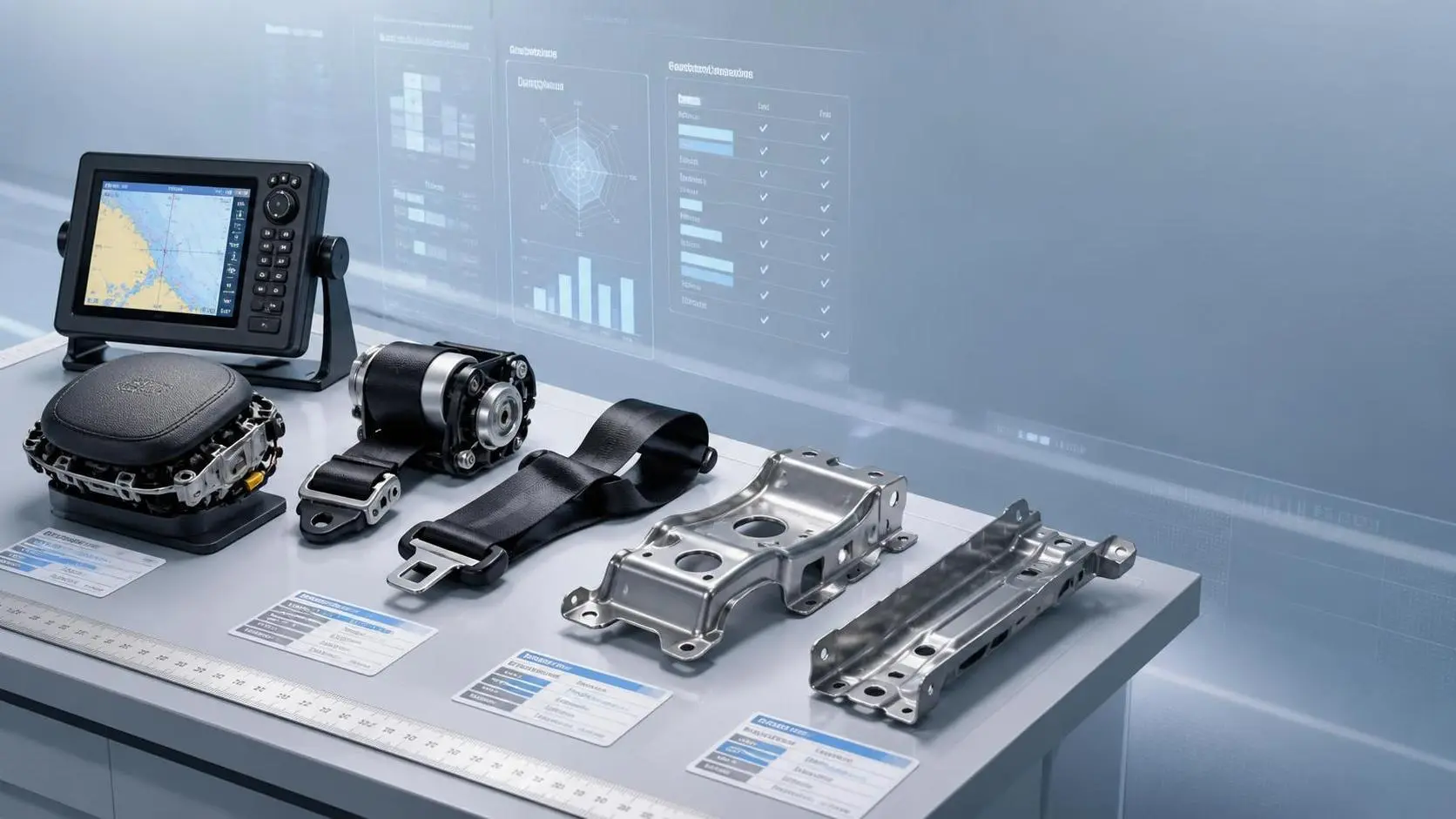
A structured comparison helps separate demonstration quality from fleet suitability. The following checkpoints are usually more useful than generic feature lists.
How to read supplier claims more carefully
Suppliers often highlight compliance, smart integration, and intuitive design. Those claims need operational proof. Request examples of deployment on similar vessel classes, software maintenance history, and documented response times for support events.
It is also useful to ask how the vendor handles standard changes, hardware obsolescence, and migration planning. ECDIS systems for ships remain in service for years, so the supplier relationship matters almost as much as the installed equipment.
In broader mobility equipment terms, this mirrors the GNCS view that high-reliability components should be judged by performance continuity, not only by initial specification. Navigation technology, like passive safety systems in other sectors, succeeds when the control chain stays dependable under real pressure.
What deserves attention next
A useful next step is to build an internal evaluation matrix around three layers: compliance readiness, operational fit, and lifecycle support. That makes supplier comparison more disciplined and reduces the risk of buying a technically acceptable system that performs poorly in fleet use.
For organizations reviewing ECDIS systems for ships today, the strongest decisions usually come from combining bridge reality with governance detail. Check the standards, test the workflows, inspect the update path, and verify the vendor’s long-term support logic before final selection.
Related News

How to Evaluate Mobility Safety Systems for Safer Vehicle Platform Design
Mobility safety systems evaluation starts with platform architecture, crash energy management, and seat-restraint timing. Learn how to choose safer, validation-ready vehicle designs.

How Seat Belt Pretensioners for EVs Improve Crash Safety and System Response
Seat belt pretensioners for EVs improve crash timing, occupant control, and system response. Discover how smarter integration boosts EV safety performance.

How to Evaluate High Strength Hot Stamped Steel Parts for Crash-Safety Applications
High strength hot stamped steel parts for crash-safety applications: learn how to assess strength, microstructure, dimensional accuracy, and process stability for safer sourcing decisions.

How Crash Management Components Reduce Repair Costs and Improve Impact Performance
Crash management components help reduce repair costs, protect critical vehicle structures, and improve impact performance. Learn how smarter design supports safer, more cost-efficient mobility programs.

How to Evaluate a Seat Sensing Systems Factory for Automotive Safety Programs
Seat sensing systems factory selection goes beyond price. Learn how to assess quality control, validation, PPAP readiness, and long-term supply reliability for safer automotive programs.

Supplier Capability Evaluation Process: Key Criteria for B2B Sourcing Decisions
Supplier capability evaluation process explained: learn the key criteria for B2B sourcing decisions, reduce supplier risk, and choose partners with confidence.

How to Evaluate a Seat Sensing Technology Supplier for Safety and Integration?
Seat sensing technology supplier evaluation guide: compare safety maturity, integration fit, algorithm reliability, and validation support to choose a partner that reduces risk.

How to Evaluate Custom Smart Automotive Seating for Premium Vehicle Programs?
Custom smart automotive seating evaluation starts with safety, comfort, integration, and production readiness. Discover how premium vehicle teams choose smarter, lower-risk seat solutions.
B2B Product Intelligence Platforms: How to Compare Features, Data Coverage, and ROI
B2B product intelligence platform comparison: learn how to evaluate data coverage, feature depth, compliance visibility, and ROI to choose a sourcing tool that reduces risk and speeds decisions.
Related News
- 00
0000-00
ECDIS Systems for Ships: Compliance Requirements, Core Functions, and Buying Checklist - 00
0000-00
Navigation Compliance for Marine Systems: Key Rules, Certificates, and Approval Steps - 00
0000-00
How to Choose Marine Navigation Systems for Coastal, Offshore, and Port Operations - 00
0000-00
How Navigation Intelligence Affects Route Planning, Fuel Use, and Bridge Decisions - 00
0000-00
ECDIS Update Protocols: How to Manage Chart, Software, and Safety Data Correctly
Weekly Insights
Stay ahead with our curated technology reports delivered every Monday.