
ECDIS Update Protocols: How to Manage Chart, Software, and Safety Data Correctly
Why ECDIS update protocols become a business control issue
ECDIS update protocols shape far more than chart accuracy. They affect software stability, bridge confidence, voyage planning, cyber hygiene, and inspection readiness across connected maritime operations.
In practice, update work fails when teams treat every vessel, route, and terminal call as identical. That assumption rarely matches real operating conditions.
A deep-sea vessel crossing multiple chart regions faces different pressures than a coastal service craft. A mixed fleet with older hardware faces another set of decisions.
This is why ECDIS update protocols should be managed like a safety-critical workflow. The right process links chart data, OEM software, security patches, and onboard safety files.
That broader view also fits GNCS thinking. Precision navigation is not isolated from compliance, hardware integrity, or wider mobility-system reliability.
Actual operating conditions change what “correct” updating means
The phrase ECDIS update protocols sounds uniform, yet the real judgment depends on route density, bandwidth, equipment age, flag requirements, and bridge procedures.
For some operators, the main risk is missing a chart correction before entering restricted waters. For others, the bigger risk is loading software not validated for installed sensors.
Safety data adds another layer. Notices, temporary updates, manual backups, and configuration records must remain consistent, especially when audits trace decision history.
A practical rule is simple: never separate chart updates, software maintenance, and safety data governance into unrelated routines. ECDIS update protocols work best when these streams meet.
Where demand usually differs
When vessels sail globally, chart discipline matters most
On long international routes, ECDIS update protocols often begin with chart permits and correction timing rather than software features.
The reason is practical. A vessel may move from one hydrographic region to another before shore support can resolve a missing file or expired license.
In this setting, the best update workflow includes a pre-voyage validation window, not just a download step. Teams should verify permit status, route overlays, and incomplete correction alerts.
It also helps to separate critical route cells from non-immediate chart holdings. That reduces noise and makes ECDIS update protocols easier to monitor before departure.
A common mistake is assuming weekly updates are enough by themselves. In dense traffic lanes, timing matters more than update frequency stated on paper.
In coastal and port calls, temporary information becomes the weak point
Nearshore operations often look simpler, but they can expose the most overlooked gap in ECDIS update protocols: short-lifecycle safety information.
Port restrictions, dredging zones, buoy changes, and local navigation warnings may shift faster than standard routines capture. The chart can appear updated while the operational picture is already dated.
Here, the judgment focus changes. It is less about broad geographic coverage and more about whether bridge procedures absorb temporary and preliminary information correctly.
A workable approach is to pair formal ECDIS update protocols with a local information checkpoint before arrival and departure. That checkpoint should record source, time, and onboard confirmation.
This is where many audits find inconsistency: updated systems, but weak proof that operationally relevant notices were actually applied.
Mixed hardware fleets need stricter software judgment
Software patches are often treated as routine housekeeping. In a mixed fleet, they can become the highest-risk element within ECDIS update protocols.
Older processors, legacy interfaces, and different sensor stacks do not respond the same way to one vendor release. A patch that closes one issue may expose another.
The safer method is staged validation. First check release notes. Then match them to installed hardware, chart engine version, interface drivers, and rollback capability.
If the vessel depends on radar overlays, AIS integration, or GNSS redundancy, those links should be tested after every major software change. That step is often skipped under schedule pressure.
- Confirm vendor approval for the exact equipment baseline.
- Keep a clean backup of settings, permits, and route files.
- Document rollback conditions before deployment starts.
- Test alarm behavior, sensor input, and display logic after installation.
Centralized fleet management works only if traceability stays intact
Cloud-supported distribution has made ECDIS update protocols faster, but speed alone does not create control. Traceability is what turns updates into a defensible process.
A central team may push chart files, software packages, and safety bulletins efficiently. The real question is whether each vessel can prove what was received, installed, checked, and accepted.
That requirement mirrors wider reliability disciplines seen across GNCS sectors. Whether handling navigation data or passive safety systems, version control and validation records protect operational credibility.
The strongest setups connect update logs with voyage schedules, exception alerts, and maintenance history. That prevents update tasks from drifting into a disconnected IT routine.
A useful control checklist
- Define who approves chart, software, and safety data changes.
- Set different deadlines for routine, critical, and voyage-specific updates.
- Flag vessels with partial installation or failed synchronization.
- Retain evidence for inspections, incident review, and internal audits.
The most common misjudgments are rarely technical
Many failures in ECDIS update protocols come from wrong assumptions rather than missing tools. The system may be capable, but the workflow is too narrow.
One frequent error is checking only whether files were installed. That does not confirm route relevance, crew acknowledgment, or compatibility with operating procedures.
Another error is focusing on acquisition cost while ignoring maintenance effort. Cheap update channels can create hidden workload through manual verification and repeated correction handling.
There is also a tendency to treat similar vessels as identical. In reality, antenna arrangements, bridge retrofits, and software histories often produce different update risks.
What to standardize before tightening ECDIS update protocols
The most effective next step is not adding more alerts. It is defining a clear baseline for how updates are judged across different voyage conditions.
Start with a map of operating scenarios: global passage, port-intensive trade, retrofitted vessels, and highly connected ships. Each one deserves different decision thresholds.
Then align chart updates, software release control, and safety data records into one review path. That reduces gaps between technical completion and navigational readiness.
For organizations building stronger compliance habits, ECDIS update protocols should be reviewed alongside cyber risk, maintenance planning, and bridge assurance documentation.
A practical rollout usually begins with three actions: compare current workflows by scenario, identify compatibility constraints, and define evidence required after each update cycle.
That approach keeps navigation data accurate, software trustworthy, and safety records usable when conditions become complex rather than routine.
Related News

How to Specify Integrated Marine Electronics for Reliable Bridge Operations
Integrated marine electronics: learn how to specify reliable bridge systems with clear data flows, redundancy, alarm control, lifecycle interfaces, and operational testing.

How to Evaluate Navigation Radar Manufacturers for Commercial Vessel Projects
Navigation radar manufacturers: learn how to compare performance, compliance, integration, support, and lifecycle cost for commercial vessel projects.

How Adjustable Cabin Ergonomics Reduce Operator Fatigue in Long-Shift Vehicles
Adjustable cabin ergonomics reduces operator fatigue through better seating, reach, visibility, vibration control, and climate comfort for safer long-shift vehicles.

How Rear-Impact Safety Components Work Together to Protect Vehicle Occupants
Explore how automotive safety components for rear impact work together—from crash structures and seats to head restraints and belts—to enhance occupant protection.
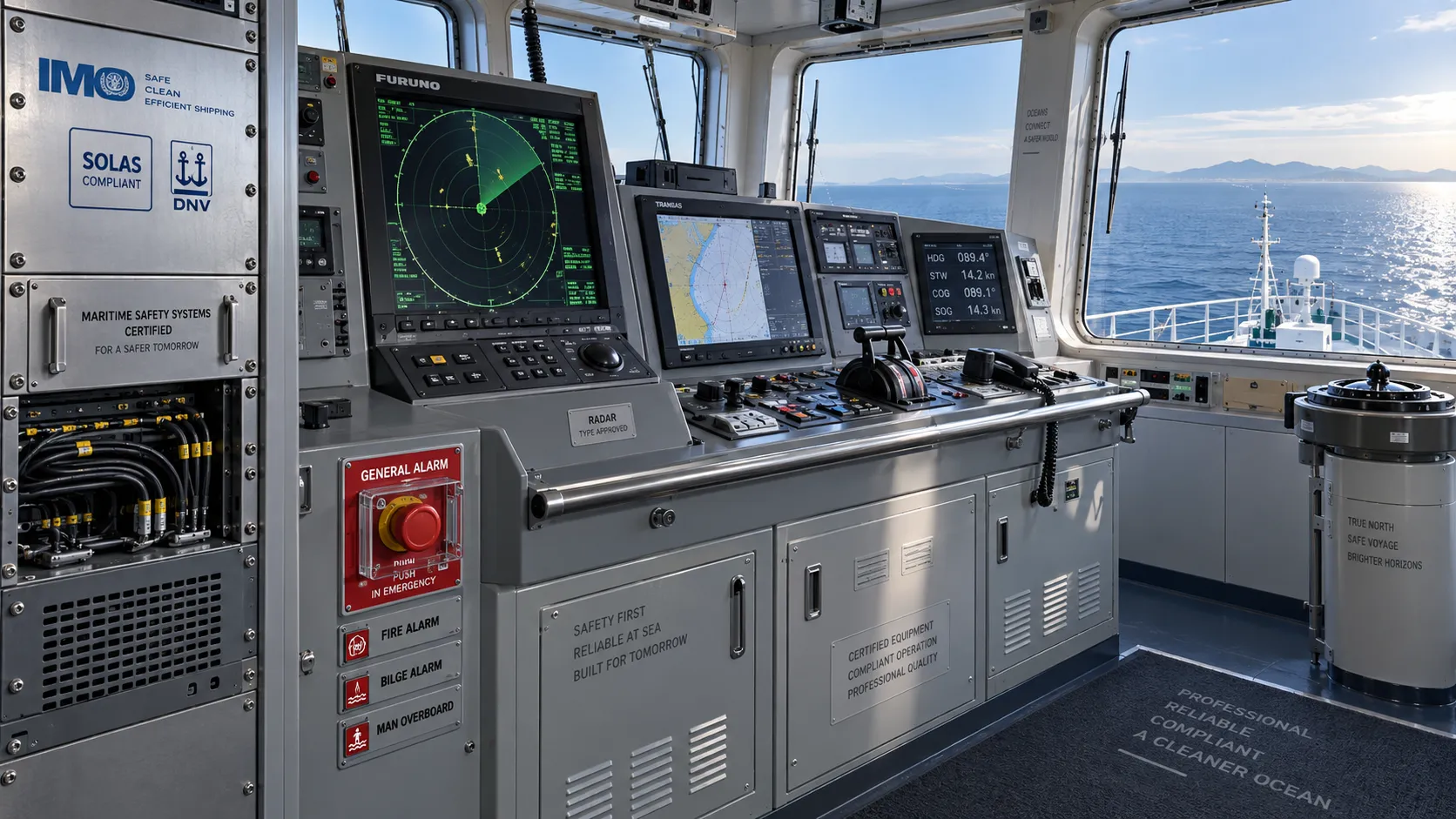
How to Evaluate a Marine Safety Systems Manufacturer for Vessel Compliance and Reliability
Marine safety systems manufacturer evaluation guide: verify compliance, engineering quality, lifecycle costs, and global service support for safer, reliable vessel operations.

Crash Test Regulations for Seatbelts: Key Compliance Requirements Explained
Crash test regulations seatbelts explained: explore FMVSS, UN rules, anchorage strength, and dynamic restraint testing for safer, compliant vehicle systems.

How to Calculate the Total Cost of Automotive Lightweighting for a Vehicle Program
Automotive lightweight solutions cost: learn how to calculate program-level costs, including materials, tooling, joining, validation, risk, and vehicle-level value.

How Automotive Seat Occupancy Sensing Improves Airbag Deployment Decisions
Automotive seat occupancy sensing helps optimize airbag deployment decisions, improving passenger classification, safety diagnostics, and compliance across real-world conditions.

What Drives Lightweight Body Component Costs in High-Volume Vehicle Programs?
Lightweight body components cost depends on material yield, forming, joining, tooling, validation, and logistics. Explore proven ways to optimize total vehicle program cost.
Related News
- 00
0000-00
ECDIS Systems for Ships: Compliance Requirements, Core Functions, and Buying Checklist - 00
0000-00
Navigation Compliance for Marine Systems: Key Rules, Certificates, and Approval Steps - 00
0000-00
How to Choose Marine Navigation Systems for Coastal, Offshore, and Port Operations - 00
0000-00
How Navigation Intelligence Affects Route Planning, Fuel Use, and Bridge Decisions - 00
0000-00
ECDIS Update Protocols: How to Manage Chart, Software, and Safety Data Correctly
Weekly Insights
Stay ahead with our curated technology reports delivered every Monday.