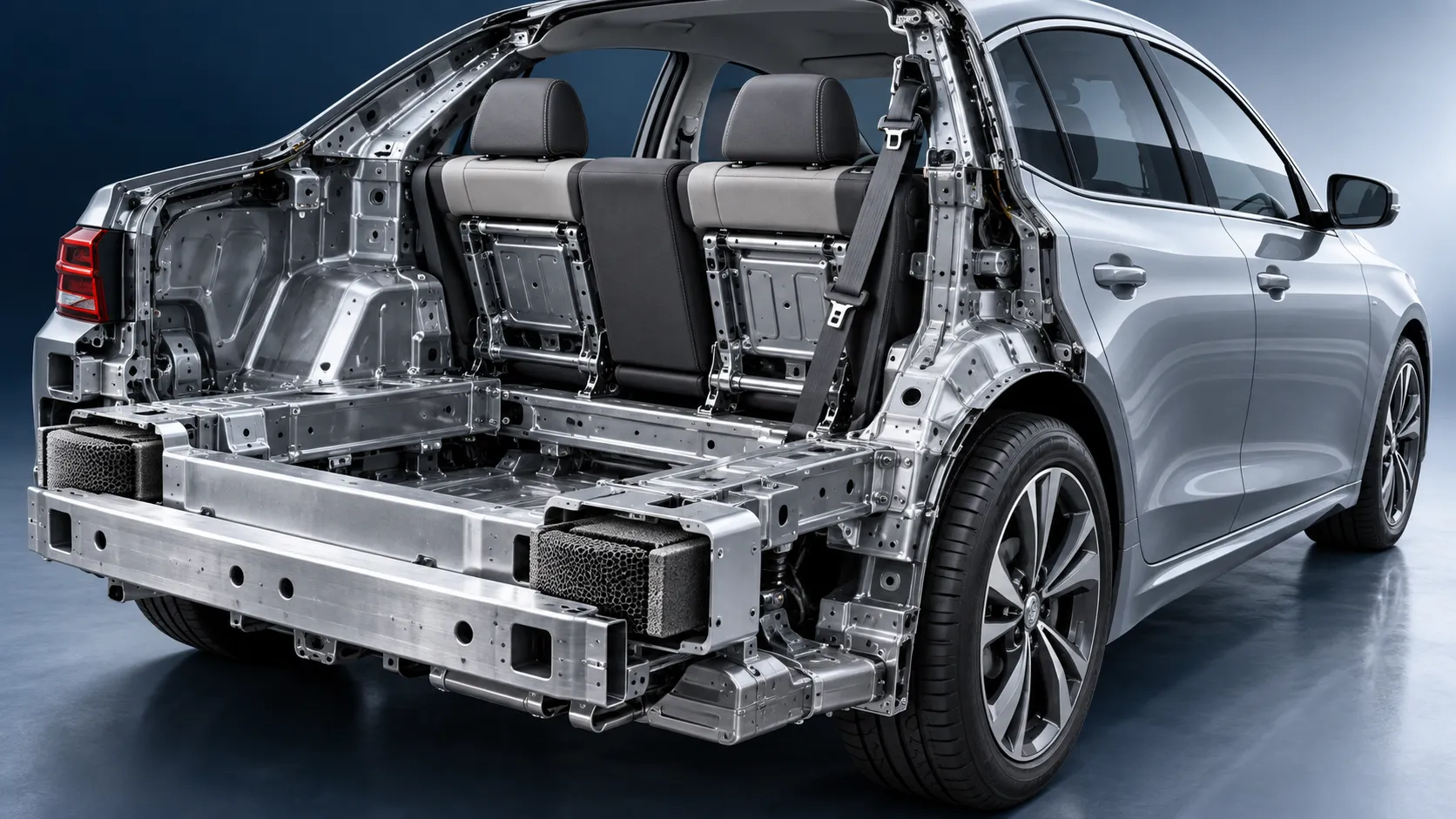
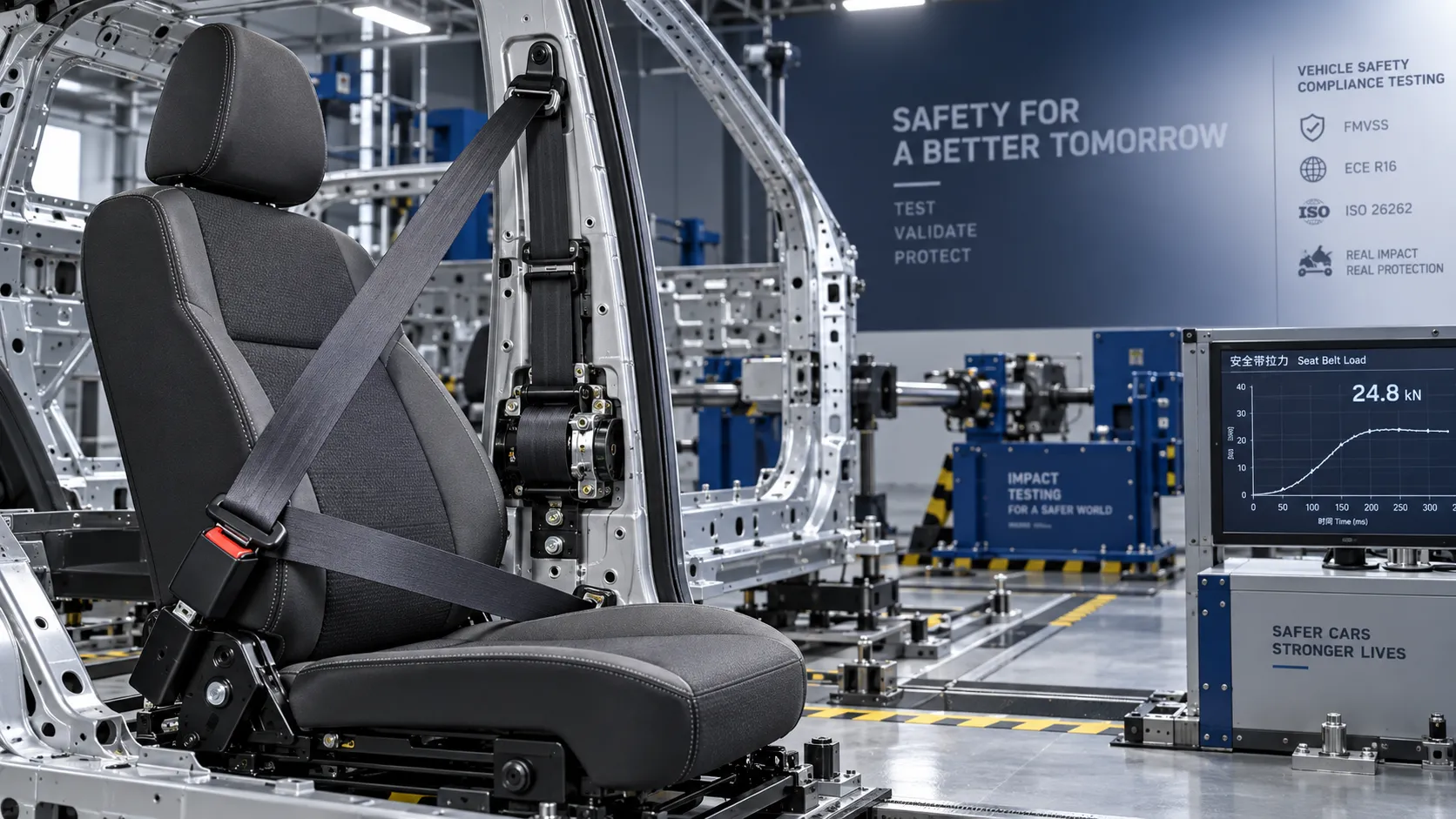
For technical evaluators, crash energy-absorbing design is not only a safety requirement. It is a cost-control strategy embedded inside engineering decisions.
Material selection, structural geometry, validation cycles, and compliance planning all influence whether safety performance is achieved efficiently or through expensive overdesign.
By directing collision loads through predictable deformation paths, manufacturers can reduce mass, prototype iterations, warranty exposure, and late-stage redesign risk.
Search Intent: What Evaluators Really Want to Know
When users search for crash energy-absorbing cost savings, they are usually not asking for a basic safety definition.
They want to know where design choices produce measurable savings, and whether those savings justify investment in engineering sophistication.
Technical evaluators often compare stamped body structures, restraint interfaces, seat systems, and validation strategies across suppliers or internal development proposals.
Their core concern is practical: which decisions reduce total vehicle cost without weakening crashworthiness or regulatory confidence?
The most useful answer therefore connects deformation performance with tooling cost, material utilization, testing efficiency, compliance margin, and lifecycle risk.
The Largest Saving Comes from Avoiding Overengineering
The first cost advantage appears when structures absorb energy predictably instead of resisting every load with excessive material thickness.
Traditional conservative design often adds steel gauge, reinforcements, brackets, or weld length because crash behavior is not fully controlled.
Crash energy-absorbing design changes the question from “how strong is it?” to “where should it deform, and how?”
Well-designed crush zones use progressive folding, bending, tearing, or buckling to manage impact energy before it reaches occupants.
This allows engineers to reserve ultra-high-strength materials for load paths that need stability, not everywhere in the structure.
For evaluators, the cost-saving signal is clear when a design achieves crash pulse targets with fewer parts or lower total mass.
Reduced overengineering also improves manufacturability because fewer reinforcements mean fewer stamping operations, weld points, fasteners, and dimensional stack-up issues.
Material Selection Saves Cost When It Is Function-Driven
Material choice is one of the most visible cost levers, but the cheapest material is rarely the lowest-cost solution.
In crash energy-absorbing structures, material value depends on how strength, ductility, strain-rate behavior, and formability support controlled deformation.
Hot-stamped boron steel may cost more per kilogram, yet reduce part count through high strength and geometry consolidation.
Aluminum can reduce mass, but requires careful joining, corrosion management, and section design to avoid unstable collapse modes.
Advanced high-strength steels often provide a balanced option where energy absorption, stamping feasibility, repairability, and cost must coexist.
Technical evaluators should avoid comparing materials only by purchase price, because crash performance is created by material-geometry interaction.
A lower-cost sheet that requires extra reinforcements, additional tooling, or repeated validation can become expensive at system level.
The better evaluation metric is cost per verified crash function, not cost per kilogram or cost per individual component.
Geometry Often Saves More Than Material Substitution
Structural geometry is sometimes the most underpriced source of savings in crash energy-absorbing design.
Beads, triggers, local embossments, tailored blanks, section transitions, and crush initiators can determine whether deformation is stable or chaotic.
A small change in section shape may reduce peak acceleration, prevent load-path collapse, or eliminate the need for a secondary bracket.
This matters because geometry-driven improvements are often achieved inside existing stamping or forming concepts with limited material premium.
Front rails, bumper beams, rocker panels, crossmembers, and seat structures all rely on geometric tuning for controlled energy dissipation.
For evaluators, the strongest proposals show why each feature exists and how it changes the force-displacement curve.
If a supplier cannot connect geometry to crash pulse behavior, manufacturing feasibility, and tolerance sensitivity, savings claims deserve caution.
Good geometry reduces cost by making performance repeatable, which lowers engineering uncertainty and late program intervention.
Fewer Prototype Loops Mean Direct Program Savings
Crash testing is expensive because it consumes vehicles, instrumentation, labor, schedule, and engineering attention with every physical iteration.
Energy-absorbing design saves cost when simulation, material cards, component testing, and subsystem correlation reduce full-vehicle trial dependency.
A predictable crush concept allows engineers to use finite element models with higher confidence during early design decisions.
That confidence prevents late discovery of unstable folding, excessive intrusion, seatbelt load mismatch, or airbag timing conflicts.
The financial benefit is not only fewer crash vehicles, but fewer emergency design changes near tooling freeze.
Late-stage changes are costly because they can affect dies, welding fixtures, assembly sequence, supplier contracts, and homologation schedules.
Evaluators should ask whether the design has component-level evidence, material test correlation, and sensitivity analysis under manufacturing variation.
A crash energy-absorbing concept that validates early is often cheaper than a nominally inexpensive concept that fails late.
Restraint Integration Prevents Expensive System Compensation
Body structures, airbags, seatbelts, and seats do not save occupants independently; they manage one connected crash event.
If the body pulse is too harsh, restraint systems may need more complex tuning, higher-cost inflators, or additional sensing strategies.
If structural deformation is uncontrolled, seatbelt pretensioners and load limiters may struggle to maintain occupant kinematics consistently.
Crash energy-absorbing design saves cost by giving restraints a more manageable pulse window and reducing compensation burden.
This is especially important in small-overlap, side-impact, rear-impact, and high-severity frontal scenarios where timing margins are narrow.
Seat frames and anchor points also influence cost because they must transfer occupant loads without excessive deformation or failure.
When the body, seat, and restraint architecture are tuned together, suppliers can avoid redundant strength additions across multiple subsystems.
Technical evaluators should therefore review crash pulse compatibility, not just component compliance in isolation.
Lightweighting Creates Savings Beyond Material Reduction
Crash energy-absorbing design and lightweighting are sometimes treated as conflicting goals, but mature designs align them.
The goal is not simply to remove mass, but to place mass where it contributes to controlled load management.
Weight reduction can lower propulsion energy demand, improve emissions compliance, extend electric vehicle range, and reduce suspension loading.
These downstream benefits often exceed the direct saving from using less sheet metal or fewer reinforcements.
However, lightweighting becomes costly when mass reduction weakens load paths and forces expensive corrections elsewhere.
A disciplined crash energy-absorbing approach prevents this by defining protected zones, sacrificial zones, and stable transfer paths.
Evaluators should ask whether mass reduction was achieved through functional optimization or through risky thinning of safety-critical areas.
The best designs show simultaneous improvement in crash metrics, manufacturability, and vehicle-level efficiency.
Manufacturing Cost Drops When Designs Are Robust
A design that performs only under ideal dimensions is not truly cost-efficient in real production.
Crash energy-absorbing features must tolerate variation in stamping springback, weld location, adhesive thickness, heat treatment, and assembly alignment.
Robust designs reduce scrap, rework, inspection burden, and field variability because they do not rely on fragile manufacturing precision.
For stamped components, this means evaluating draw depth, thinning, edge cracking risk, trimming complexity, and die maintenance implications.
For aluminum or mixed-material structures, joining method stability and repair complexity become important cost factors.
A theoretically efficient design may become expensive if it requires tight tolerances, rare processes, or low production yield.
Technical evaluators should therefore connect crash energy-absorbing performance with process capability indices and supplier production history.
The lowest total cost usually belongs to designs that are both physically efficient and industrially repeatable.
Compliance Planning Reduces Redesign and Market Risk
Regulatory and consumer crash-test requirements are moving targets, especially across regions and rating organizations.
Meeting a minimum legal threshold is rarely enough when vehicle programs must satisfy IIHS, Euro NCAP, China NCAP, or local protocols.
Crash energy-absorbing design saves cost by building performance margin before requirements shift or rating strategies become stricter.
This margin should not be created by indiscriminate strengthening, because that increases mass and may worsen occupant pulse.
Instead, margin comes from understood load paths, scalable structural modules, and restraint compatibility across test configurations.
Evaluators should favor architectures that can be adapted for different markets without complete redesign.
This is particularly valuable for global platforms where the same body-in-white must serve multiple vehicle variants.
Compliance flexibility protects program investment and reduces the probability of costly regional engineering exceptions.
Warranty, Recall, and Liability Exposure Are Hidden Cost Areas
Some savings from crash energy-absorbing design are not visible in the bill of materials.
They appear as lower recall probability, fewer safety-related investigations, reduced litigation exposure, and stronger brand trust.
Passive safety failures can be financially severe because they involve injury risk, regulatory scrutiny, and reputational damage.
A well-validated energy management strategy helps demonstrate due diligence in material selection, simulation, testing, and production control.
This does not eliminate risk, but it strengthens technical defensibility when failures, misuse cases, or severe accidents are reviewed.
For evaluators, supplier documentation quality is part of the cost equation, not a secondary administrative detail.
Traceable assumptions, validated models, test evidence, and change-control discipline reduce uncertainty throughout the vehicle lifecycle.
In safety-critical industries, the cheapest supplier is not always the supplier with the lowest quoted component price.
How Evaluators Should Compare Competing Designs
A practical evaluation should begin with the crash scenarios the design must manage, not with component cost alone.
Define target pulses, intrusion limits, occupant injury criteria, load-path behavior, and post-crash structural integrity requirements.
Then compare how each proposal achieves those outcomes through material, geometry, joining, manufacturing process, and restraint integration.
Cost models should include tooling, cycle time, yield, mass impact, validation needs, compliance flexibility, and expected redesign risk.
Evaluators should also examine sensitivity: what happens if material properties vary, welds shift, or impact conditions change?
A design with slightly higher unit cost may be preferable if it reduces prototype loops and supports global platform reuse.
Conversely, a low-cost part may create hidden expense if it demands restraint compensation or late structural reinforcement.
The best decision framework treats crash energy-absorbing design as a system investment, not a component feature.
Where the Savings Are Most Measurable
The most measurable savings usually appear in four areas: mass reduction, part consolidation, fewer validation loops, and lower redesign exposure.
Mass reduction is relatively easy to quantify through material usage, vehicle efficiency, and downstream component impacts.
Part consolidation can be measured through fewer dies, welds, fasteners, logistics steps, and assembly quality checks.
Validation savings appear when correlated simulations and subsystem tests reduce the number of destructive full-vehicle trials.
Redesign risk is harder to quantify, but it is often the largest cost when safety issues emerge late.
Technical evaluators should request evidence for each saving category instead of accepting general claims about lightweight safety.
Useful evidence includes force-displacement data, intrusion maps, crash pulse comparisons, CAE correlation reports, and manufacturing variation studies.
When these data sources align, crash energy-absorbing design becomes a credible cost-control method rather than a marketing phrase.
Conclusion: Safety Engineering Is a Cost Strategy
Crash energy-absorbing design saves cost wherever it turns uncertain collision behavior into predictable, validated, manufacturable deformation.
Its value appears in optimized material use, smarter geometry, fewer prototypes, better restraint integration, and stronger compliance resilience.
For technical evaluators, the key is to judge total system cost rather than the isolated price of a component.
A strong proposal should explain how energy flows, where deformation occurs, and why the design remains robust in production.
When those answers are supported by data, crash energy-absorbing design becomes both a safety advantage and a financial advantage.