Why does high-precision marine navigation fail offshore?
Why Does High-Precision Marine Navigation Fail Offshore?
Offshore failures in high-precision marine navigation rarely stem from a single weak component.
They emerge where satellite geometry, multipath reflections, ionospheric disturbance, sensor fusion drift, ECDIS update gaps, and harsh electromagnetic environments intersect.
For technical evaluators, understanding these failure modes is essential to judging whether a navigation system can maintain trustworthy positioning beyond controlled coastal conditions.
This article examines the offshore risk chain behind degraded accuracy and highlights what separates robust architecture from systems that only perform well on specification sheets.
Offshore Accuracy Is Becoming a Systems-Level Challenge
The marine sector is moving from assisted positioning toward continuous, verified, and decision-ready spatial awareness.
That shift raises expectations for high-precision marine navigation in offshore shipping, survey work, energy operations, and autonomous vessel development.
Nearshore accuracy can look impressive because correction services, landmarks, communications, and infrastructure support the vessel.
Offshore, the same equipment faces longer baselines, weaker redundancy, higher latency, and unpredictable atmospheric behavior.
This is why high-precision marine navigation must be evaluated as an integrated safety chain, not a standalone receiver feature.
GNCS views this challenge through precision spatial perception and physical containment protection.
The same discipline used in crash energy management also applies to positioning confidence under degraded offshore conditions.
Trend Signals Showing Why Failures Are More Visible
Failures are not always increasing, but operational dependence on precision is rising quickly.
A small positioning error now affects route optimization, collision avoidance, dynamic positioning, emissions reporting, and port arrival scheduling.
As vessels become more software-defined, high-precision marine navigation feeds more downstream decisions.
That makes hidden uncertainty visible earlier and more commercially expensive.
- Autonomous and remote vessel trials require auditable positioning integrity.
- Offshore wind, subsea inspection, and cable work demand stable centimeter-to-meter accuracy.
- Cybersecurity rules are pushing operators to verify satellite and correction sources.
- Cloud-connected ECDIS updates increase the need for synchronized chart, sensor, and route data.
- Insurance and compliance reviews increasingly ask how navigation integrity is demonstrated.
These signals explain why high-precision marine navigation is no longer judged only by nominal accuracy.
Availability, continuity, latency, fault detection, and recovery behavior are becoming equally important decision metrics.
Core Reasons High-Precision Marine Navigation Breaks Down Offshore
Offshore degradation usually develops through stacked weak signals rather than sudden total failure.
Each layer may remain within tolerance, while the combined effect produces unsafe confidence.
The strongest high-precision marine navigation platforms treat every input as conditional, time-sensitive, and verifiable.
The weakest platforms present a clean coordinate without explaining how fragile that coordinate has become.
Satellite Geometry and Atmospheric Disturbance Are Still Primary Risks
Satellite-based positioning depends on visibility, geometry, timing precision, and atmospheric predictability.
Offshore vessels may appear to have open sky, but open sky does not guarantee resilient geometry.
Low-elevation satellites are more exposed to atmospheric delay and signal blockage from superstructure.
Solar activity, equatorial scintillation, and polar ionospheric effects can undermine high-precision marine navigation without obvious warning.
The risk is especially serious when software displays accuracy as a static number.
Operational accuracy should instead be expressed as a confidence envelope that changes with signal health.
Multipath and Electromagnetic Noise Create False Confidence
Ships are difficult electromagnetic environments.
Radar, satellite communications, AIS, high-power drives, cranes, and metallic decks all interact with positioning equipment.
Multipath occurs when signals bounce before reaching the antenna.
The receiver may process delayed signals as valid measurements, producing subtle position bias.
For high-precision marine navigation, a stable but wrong position is more dangerous than an obvious outage.
Robust design uses antenna separation, ground planes, shielding, timing validation, and receiver-level multipath mitigation.
Sensor Fusion Can Drift When Trust Rules Are Weak
Modern marine navigation combines GNSS, INS, radar, sonar, speed logs, AIS, compasses, and chart data.
Fusion improves resilience only when each sensor receives the right trust weight.
A gyro may drift slowly, while a GNSS receiver may jump sharply after correction loss.
If the fusion engine lacks integrity logic, it can average conflict into a misleading answer.
High-precision marine navigation should therefore include fault isolation, timestamp discipline, and residual analysis.
The system must explain why one sensor is trusted more than another during abnormal conditions.
ECDIS, Charts, and Software Updates Can Amplify Positioning Errors
A correct position can still create a poor decision if the digital environment is outdated.
ECDIS updates, route databases, hydrographic corrections, and safety contour settings must align with sensor accuracy.
Cloud-based update protocols are improving distribution, but they also introduce version control challenges.
High-precision marine navigation fails operationally when chart confidence and positioning confidence are treated separately.
The offshore trend is toward integrated integrity dashboards.
These dashboards should show sensor status, correction age, chart update state, alarm history, and route risk together.
- Position accuracy without chart validity is incomplete safety evidence.
- Chart updates without sensor integrity still leave route risk unresolved.
- Alarm thresholds must reflect offshore operating context.
- Audit trails should preserve update timing and operator acknowledgment.
Impact Across Offshore Operations and Equipment Decisions
The consequences of weak high-precision marine navigation differ across operational scenarios.
However, the pattern is consistent: uncertainty moves from navigation screens into commercial, safety, and compliance outcomes.
Equipment selection is also changing.
Specification-sheet precision is losing power as a standalone purchasing argument.
Evidence of offshore performance, cybersecurity hardening, update discipline, and failure recovery now carries greater weight.
What Strong Offshore Navigation Architecture Must Prove
A capable high-precision marine navigation system should prove more than accuracy under ideal conditions.
It should prove how accuracy changes, how uncertainty is reported, and how degraded modes are controlled.
Core Points to Watch
- Multi-frequency, multi-constellation GNSS support with transparent signal health indicators.
- Correction service redundancy, including PPP, SBAS, DGNSS, or hybrid fallback options.
- Sensor fusion rules that identify conflict instead of hiding it.
- Cybersecure update channels for ECDIS, firmware, and correction data.
- Documented electromagnetic compatibility testing under realistic vessel loads.
- Clear alarms for correction age, drift, spoofing suspicion, and chart inconsistency.
- Operational logs that support compliance review and incident reconstruction.
These requirements reflect a broader equipment trend across the mobility industry.
Safety-critical systems must increasingly demonstrate integrity, traceability, and predictable behavior under abnormal stress.
Practical Response Strategy for Offshore Reliability
Improving high-precision marine navigation begins with treating offshore uncertainty as a design condition.
The response should combine hardware choices, software governance, operating procedures, and recurring validation.
The most useful offshore tests are not demonstrations of perfect conditions.
They are controlled failures that show how the system behaves when precision becomes uncertain.
Final Judgment: Precision Must Be Verified, Not Assumed
High-precision marine navigation fails offshore when confidence is built on isolated accuracy claims.
It succeeds when satellite inputs, correction services, sensors, ECDIS data, cybersecurity, and operational procedures are verified together.
The future direction is clear.
Navigation systems will be judged by integrity architecture, transparent uncertainty, and resilient degraded-mode performance.
GNCS will continue tracking this transition across marine perception, compliance intelligence, and high-reliability mobility equipment.
The practical next step is to review offshore navigation not as a receiver purchase, but as a full safety and perception ecosystem.
Start with signal integrity, correction resilience, fusion logic, update governance, and evidence from real offshore operating profiles.
Related News
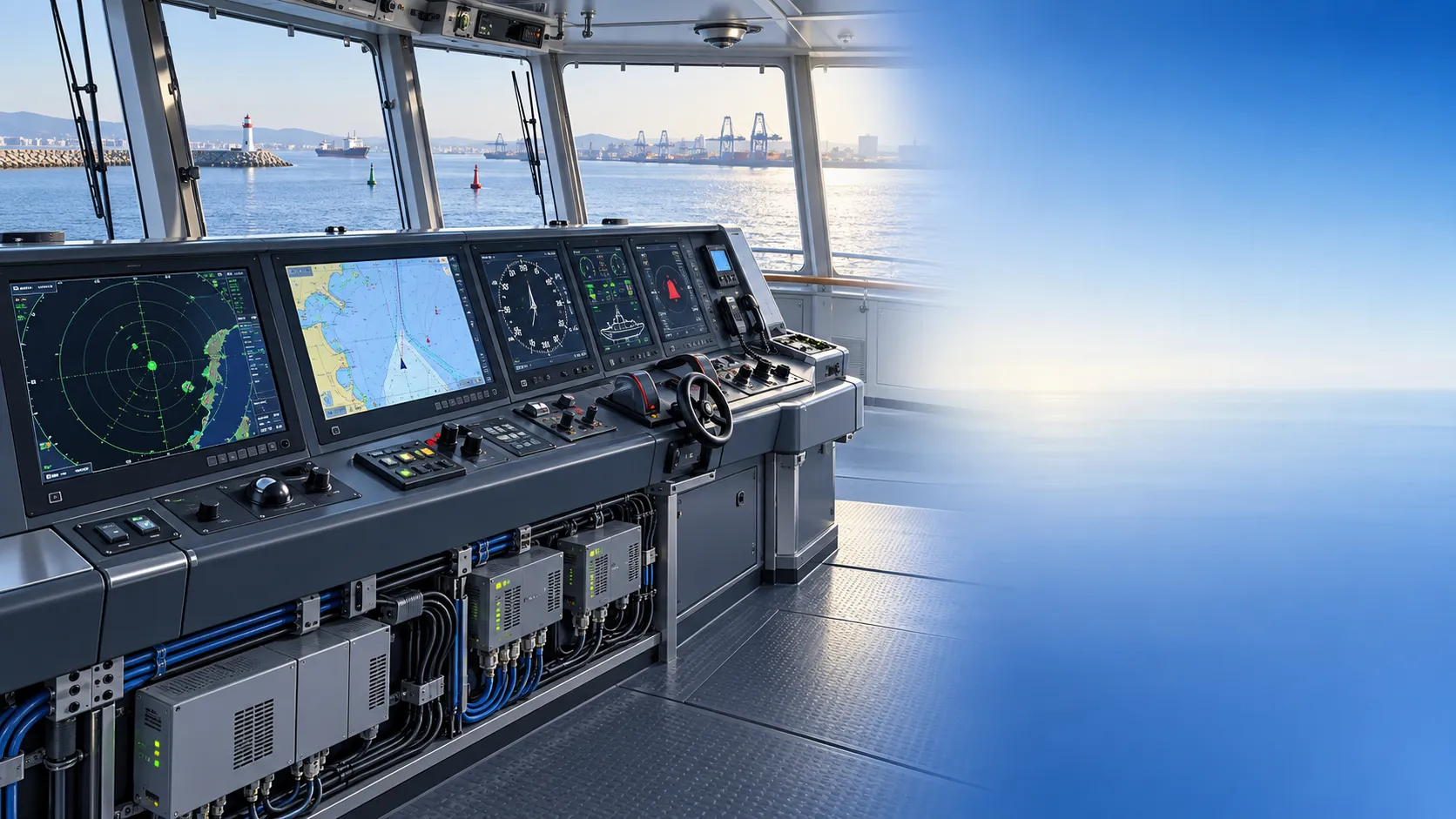
How to Specify Integrated Marine Electronics for Reliable Bridge Operations
Integrated marine electronics: learn how to specify reliable bridge systems with clear data flows, redundancy, alarm control, lifecycle interfaces, and operational testing.
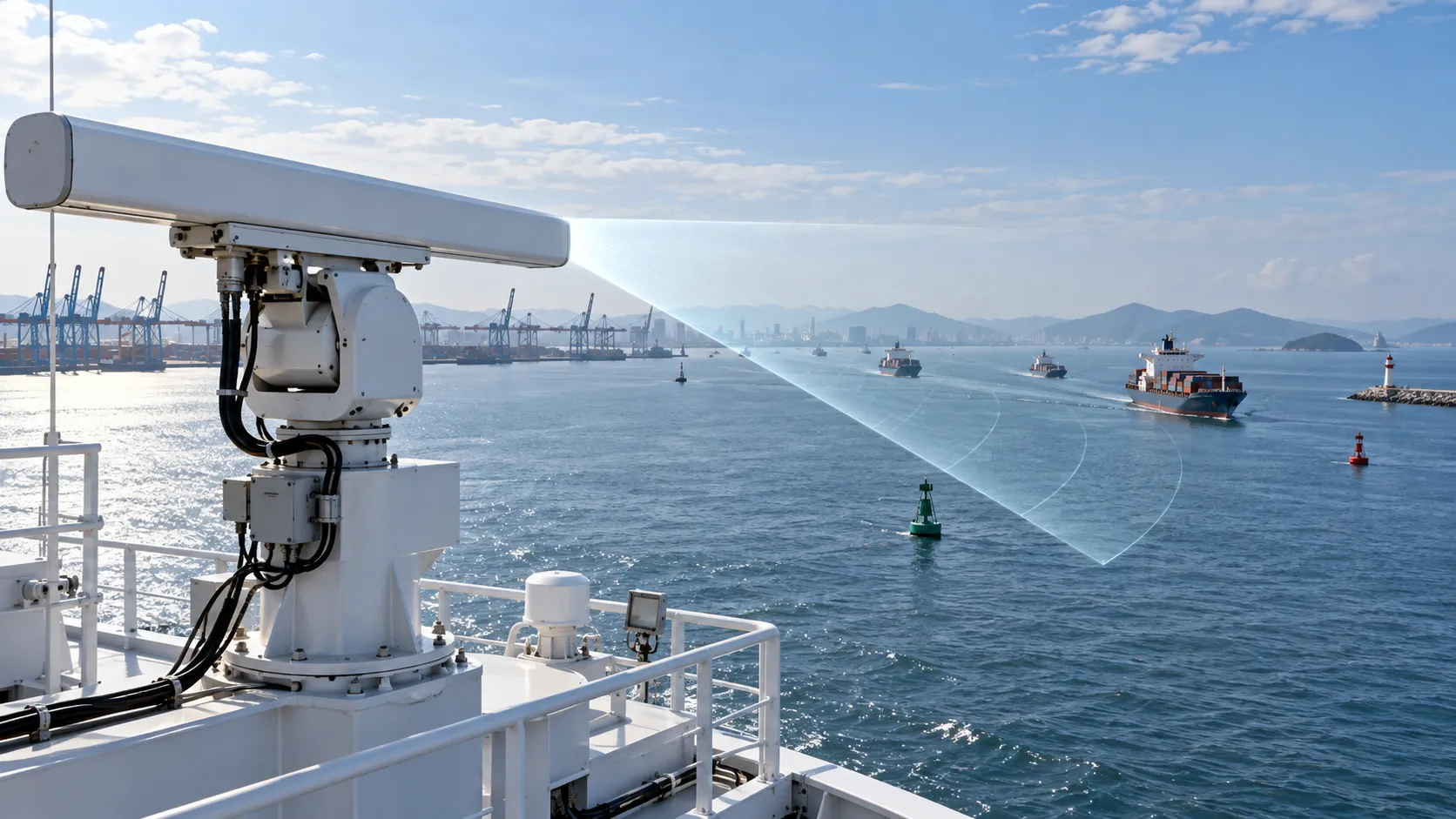
How to Evaluate Navigation Radar Manufacturers for Commercial Vessel Projects
Navigation radar manufacturers: learn how to compare performance, compliance, integration, support, and lifecycle cost for commercial vessel projects.

How Adjustable Cabin Ergonomics Reduce Operator Fatigue in Long-Shift Vehicles
Adjustable cabin ergonomics reduces operator fatigue through better seating, reach, visibility, vibration control, and climate comfort for safer long-shift vehicles.

How Rear-Impact Safety Components Work Together to Protect Vehicle Occupants
Explore how automotive safety components for rear impact work together—from crash structures and seats to head restraints and belts—to enhance occupant protection.
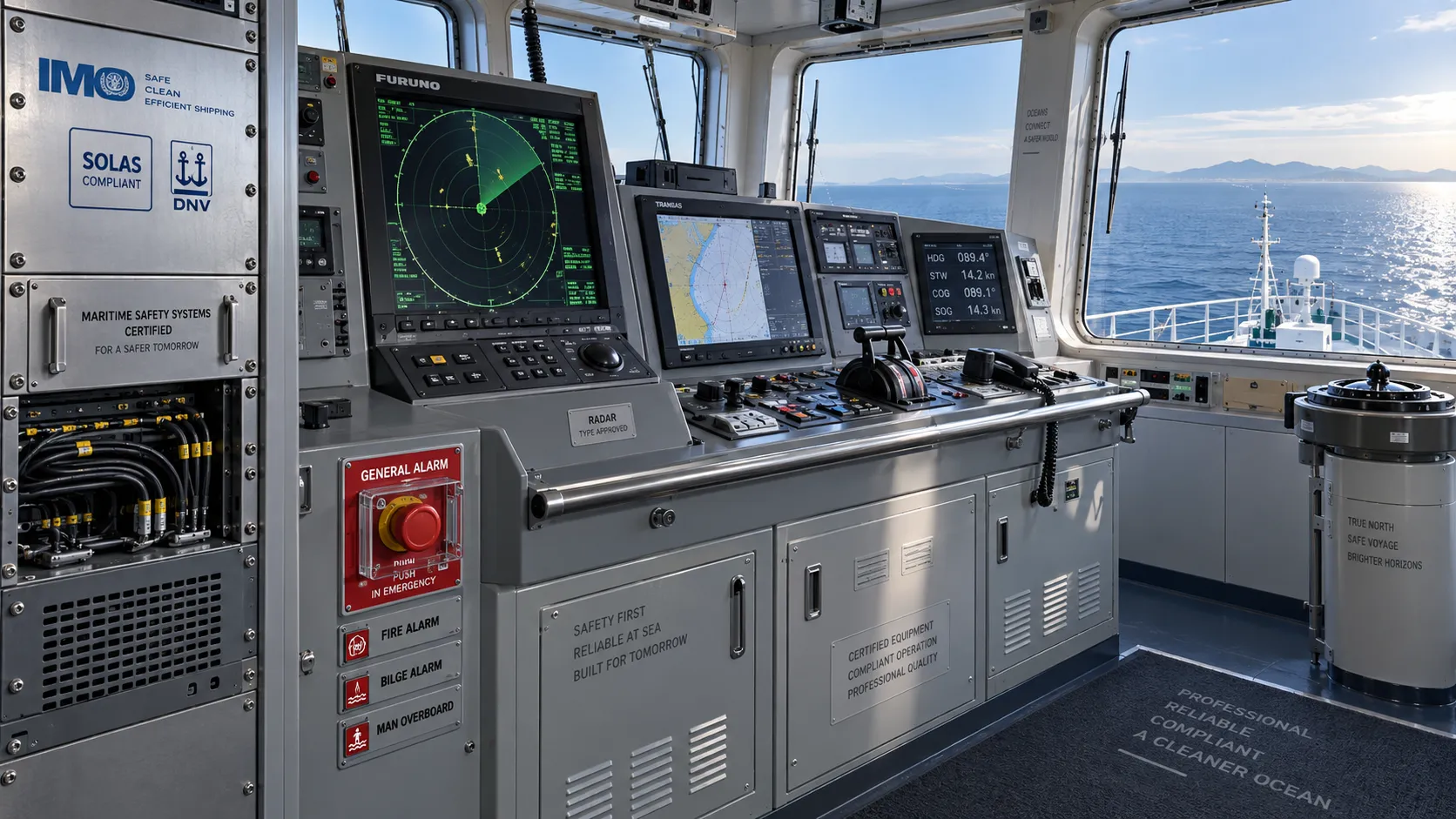
How to Evaluate a Marine Safety Systems Manufacturer for Vessel Compliance and Reliability
Marine safety systems manufacturer evaluation guide: verify compliance, engineering quality, lifecycle costs, and global service support for safer, reliable vessel operations.

Crash Test Regulations for Seatbelts: Key Compliance Requirements Explained
Crash test regulations seatbelts explained: explore FMVSS, UN rules, anchorage strength, and dynamic restraint testing for safer, compliant vehicle systems.

How to Calculate the Total Cost of Automotive Lightweighting for a Vehicle Program
Automotive lightweight solutions cost: learn how to calculate program-level costs, including materials, tooling, joining, validation, risk, and vehicle-level value.

How Automotive Seat Occupancy Sensing Improves Airbag Deployment Decisions
Automotive seat occupancy sensing helps optimize airbag deployment decisions, improving passenger classification, safety diagnostics, and compliance across real-world conditions.

What Drives Lightweight Body Component Costs in High-Volume Vehicle Programs?
Lightweight body components cost depends on material yield, forming, joining, tooling, validation, and logistics. Explore proven ways to optimize total vehicle program cost.
Related News
- 00
0000-00
How to Choose a Marine Positioning Solutions Supplier in Europe for Offshore and Port Operations - 00
0000-00
Marine Positioning Solutions Provider Comparison: GNSS, Accuracy, and Integration Factors - 00
0000-00
Marine Electromagnetic Navigation Accuracy vs GNSS: Which Performs Better Near Interference? - 00
0000-00
Marine Electromagnetic Navigation Accuracy: What Affects Position Stability at Sea? - 00
0000-00
Marine Positioning Systems Exporter Selection: What to Check in GNSS Accuracy, Compliance, and Support
Weekly Insights
Stay ahead with our curated technology reports delivered every Monday.