
Skeletal Mechanics in Seat Frame Design: How Load Paths Affect Strength and Fatigue Life
Skeletal Mechanics in Seat Frame Design: How Load Paths Affect Strength and Fatigue Life
In seat frame engineering, skeletal mechanics drives more than shape.
It decides how forces move, where stress builds, and how long a structure survives repeated use.
For seat programs facing stricter safety targets and weight limits, that matters early.
A light frame can still fail if the load path is indirect, interrupted, or overly local.
A heavier frame can also underperform when fatigue damage concentrates near joints.
That is why skeletal mechanics should be read as a performance system, not a drawing feature.
In practical evaluation work, the core question is simple.
Does the seat skeleton carry occupant, restraint, and crash loads through stable, efficient routes?
Why skeletal mechanics matters in seat frame decisions
Seat frames live between comfort requirements and severe mechanical events.
They support posture, absorb road input, react to recliner torque, and resist crash pulses.
This mix makes skeletal mechanics especially important.
A seat frame is not loaded once in one direction.
It sees vertical compression, rearward moment, torsion, side impact transfer, and vibration cycles.
When the skeletal mechanics is well resolved, these loads distribute smoothly across rails, cross members, side brackets, and recliner zones.
When it is poor, one bracket or weld line becomes the weak link.
That weak link usually appears first in durability rigs, then later in field complaints.
The main loads a seat skeleton must manage
- Static occupant loads during sitting, leaning, and entry or exit.
- Dynamic loads from road vibration and body movement over millions of cycles.
- Belt-induced loads transferred through anchor interfaces during braking or impact.
- Rear and frontal crash moments acting through the seatback and cushion frame.
- Local actuator and recliner reactions in powered or smart seating systems.
From a review standpoint, skeletal mechanics tells you whether these loads cooperate or conflict.
How load paths shape strength
Strength is not only about material grade.
It also depends on how directly force travels from the point of input to the point of support.
In skeletal mechanics, a clean load path usually means fewer bends, fewer eccentric offsets, and fewer abrupt stiffness changes.
That kind of path lowers peak stress and improves predictable deformation.
A poor path does the opposite.
Force detours around holes, bracket steps, asymmetric welds, or unsupported spans.
That raises local stress even when average section loads still look acceptable.
Signs of an efficient load path
- Continuous section transitions between cushion frame, seatback frame, and floor attachments.
- Balanced left and right side stiffness under occupant and crash loading.
- Reinforcement placed where force enters, not only where failure appeared last time.
- Short lever arms between restraint interfaces and primary structural members.
- Controlled joint geometry that reduces secondary bending.
This is where skeletal mechanics becomes a decision tool, not just an analysis topic.
Why fatigue life often fails before ultimate strength
Many seat frames pass peak load checks but still struggle in long-cycle durability.
That is a classic skeletal mechanics problem.
Fatigue cracks start where cyclic stress stays high enough for long enough.
Usually, that means weld toes, pierced features, recliner mounts, and rail transitions.
In recent programs, the stronger signal is not simply higher test severity.
It is the combination of lightweighting and multifunction integration.
As sections get thinner, load path quality matters even more than nominal strength values.
Common fatigue triggers in seat frame structures
- Eccentric loading caused by offset brackets or misaligned attachment planes.
- Stiffness jumps between high-strength stampings and softer connecting parts.
- Overconstrained joints that force unintended torsion into local members.
- Cutouts placed in zones already carrying combined bending and shear.
- Weld layouts that interrupt, rather than guide, the intended load path.
A practical fatigue review should ask where energy repeats, not only where force peaks once.
A workable evaluation method for seat frame programs
A useful assessment sequence starts with structure, then moves to detail.
This helps separate true skeletal mechanics risks from cosmetic design changes.
Step 1: Map the primary load routes
Trace occupant, belt, recliner, and crash loads from input to floor fixation.
If the route is unclear on paper, it will rarely behave well in test.
Step 2: Check section continuity
Look for abrupt changes in thickness, shape, or joining method.
These are common points where skeletal mechanics becomes unstable under repeated loading.
Step 3: Review joints as structural features
Do not treat welds, bolts, and rivets as simple connections.
In seat skeletal mechanics, the joint often defines local stiffness and fatigue behavior.
Step 4: Compare static and cyclic hotspots
The highest stress point in a crash case may differ from the worst durability location.
Good evaluation checks both before recommending any reinforcement or gauge increase.
Step 5: Link analysis with manufacturability
The best skeletal mechanics concept still fails if stamping springback or weld variation shifts the real load path.
Production capability should be part of every strength and fatigue judgment.
Design choices that improve skeletal mechanics without unnecessary mass
In many programs, the first reaction to failure is to add metal.
That can work, but it is often the most expensive and least elegant answer.
A better route is to improve skeletal mechanics before increasing mass.
- Realign brackets so loads enter through the member centerline.
- Use beads, ribs, or local geometry changes to stabilize thin sections.
- Redistribute stiffness so one side does not carry most rearward moment.
- Move cutouts away from combined load zones whenever packaging allows.
- Simplify joint stacks to reduce slip, bending offset, and tolerance accumulation.
These moves usually support lightweight goals better than blanket gauge increases.
They also make performance easier to explain during technical review and compliance discussions.
What to watch in future-facing seat systems
Smart seating is changing the boundary conditions of skeletal mechanics.
Integrated sensors, active comfort functions, and lighter mixed materials add new constraints.
More obvious now is the need to balance electronics packaging with structural continuity.
Openings for wiring, motors, and climate modules can fragment the intended load path.
That means seat frame evaluation can no longer focus only on metal sections.
It must consider how comfort, safety, and intelligence functions reshape the seat skeleton itself.
Closing view
Skeletal mechanics is the hidden logic behind seat frame strength and fatigue life.
When load paths are clear, balanced, and continuous, designs become lighter, stronger, and easier to validate.
When load paths are broken, even advanced materials and added reinforcements may only delay failure.
For seat frame decisions, the most reliable approach is straightforward.
Start with skeletal mechanics, verify the real load route, then judge strength, durability, and lightweight value together.
That approach leads to better design choices, fewer late surprises, and stronger lifecycle confidence.
Related News

How to Specify Integrated Marine Electronics for Reliable Bridge Operations
Integrated marine electronics: learn how to specify reliable bridge systems with clear data flows, redundancy, alarm control, lifecycle interfaces, and operational testing.

How to Evaluate Navigation Radar Manufacturers for Commercial Vessel Projects
Navigation radar manufacturers: learn how to compare performance, compliance, integration, support, and lifecycle cost for commercial vessel projects.
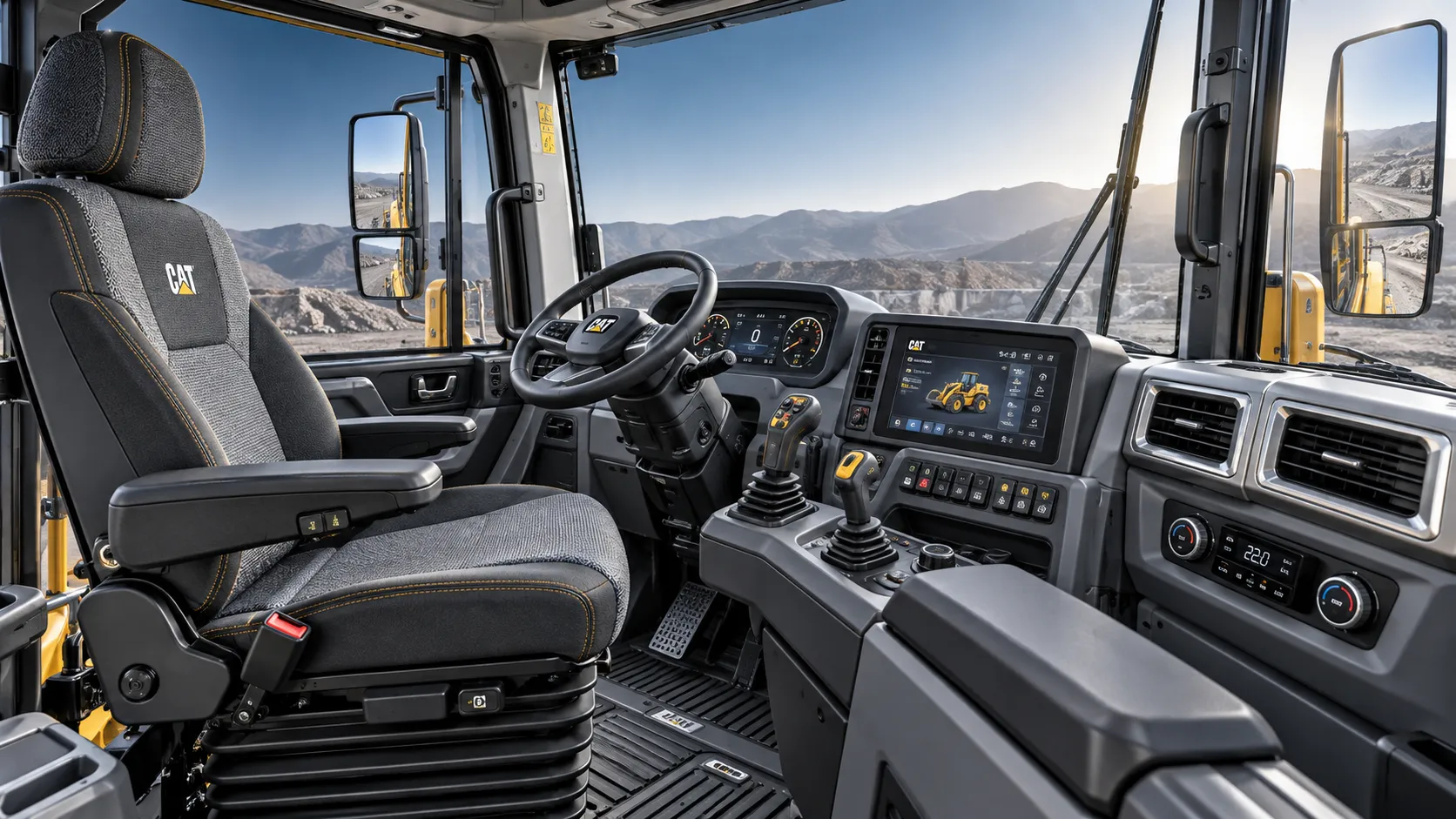
How Adjustable Cabin Ergonomics Reduce Operator Fatigue in Long-Shift Vehicles
Adjustable cabin ergonomics reduces operator fatigue through better seating, reach, visibility, vibration control, and climate comfort for safer long-shift vehicles.

How Rear-Impact Safety Components Work Together to Protect Vehicle Occupants
Explore how automotive safety components for rear impact work together—from crash structures and seats to head restraints and belts—to enhance occupant protection.
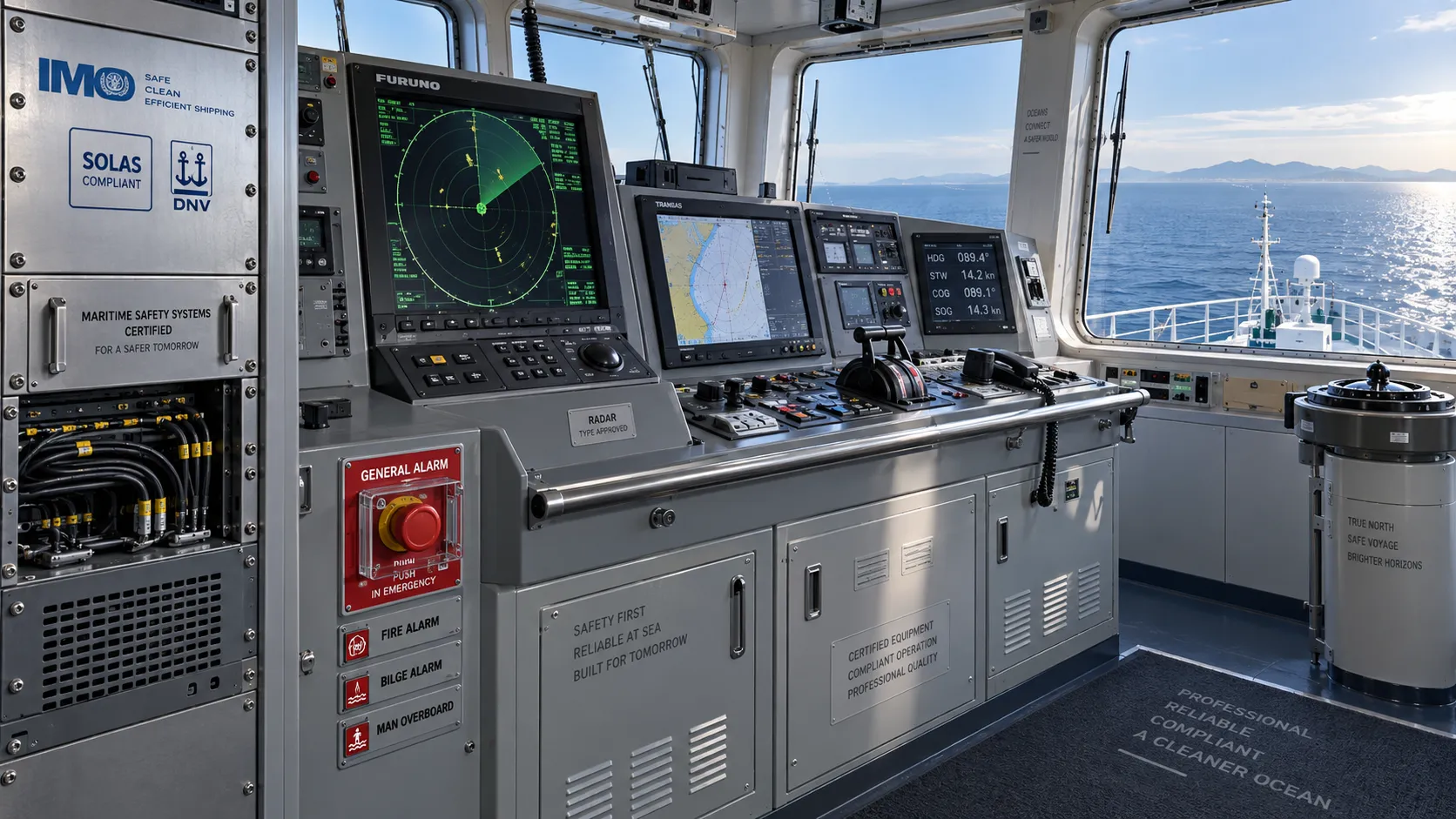
How to Evaluate a Marine Safety Systems Manufacturer for Vessel Compliance and Reliability
Marine safety systems manufacturer evaluation guide: verify compliance, engineering quality, lifecycle costs, and global service support for safer, reliable vessel operations.
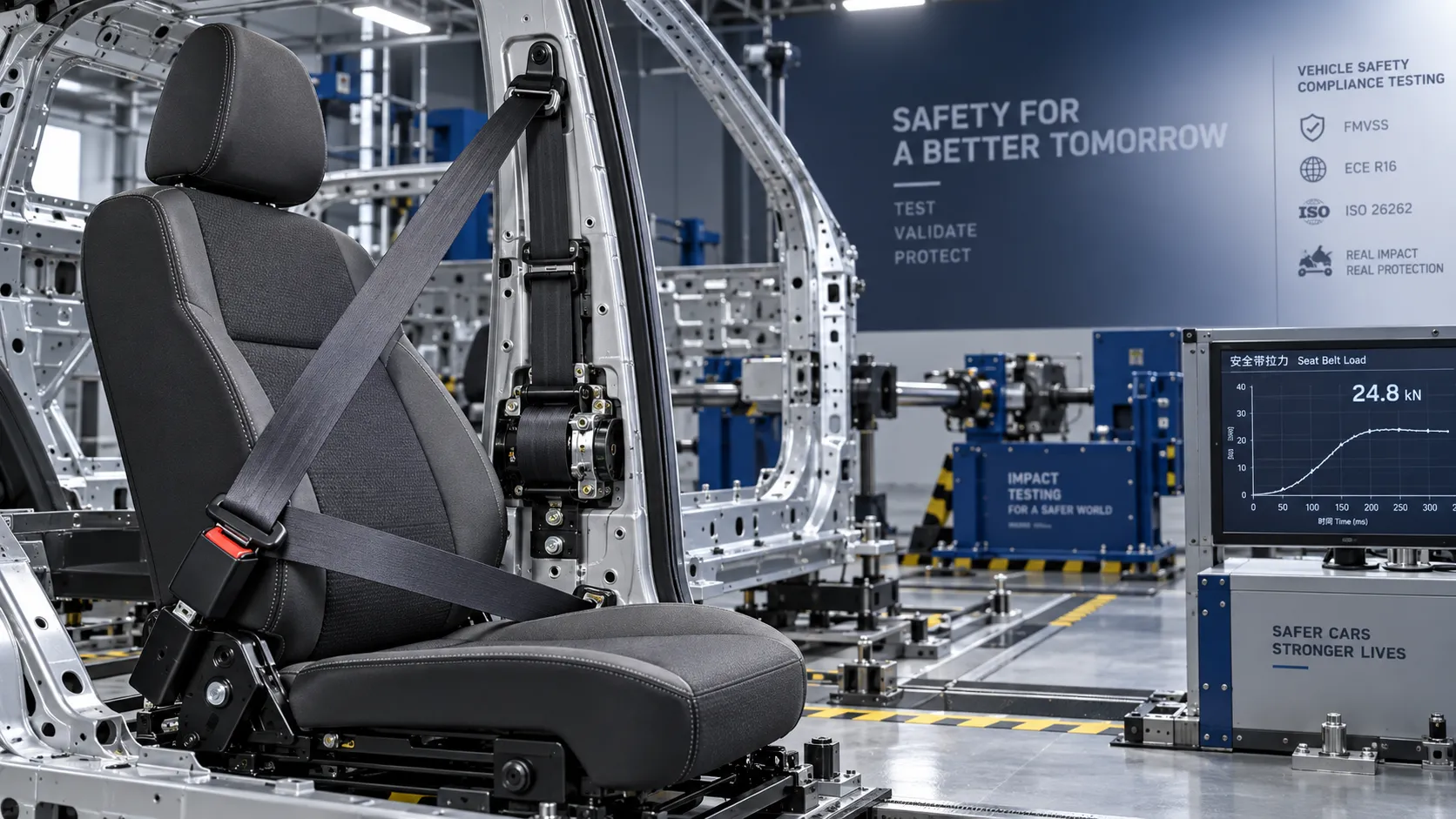
Crash Test Regulations for Seatbelts: Key Compliance Requirements Explained
Crash test regulations seatbelts explained: explore FMVSS, UN rules, anchorage strength, and dynamic restraint testing for safer, compliant vehicle systems.

How to Calculate the Total Cost of Automotive Lightweighting for a Vehicle Program
Automotive lightweight solutions cost: learn how to calculate program-level costs, including materials, tooling, joining, validation, risk, and vehicle-level value.

How Automotive Seat Occupancy Sensing Improves Airbag Deployment Decisions
Automotive seat occupancy sensing helps optimize airbag deployment decisions, improving passenger classification, safety diagnostics, and compliance across real-world conditions.

What Drives Lightweight Body Component Costs in High-Volume Vehicle Programs?
Lightweight body components cost depends on material yield, forming, joining, tooling, validation, and logistics. Explore proven ways to optimize total vehicle program cost.
Related News
- 00
0000-00
How to Define Component Specifications for Ergonomic Seating Systems - 00
0000-00
How to Evaluate Automotive Seat Assemblies for EVs by Weight, Safety, and Packaging - 00
0000-00
How to Evaluate a Seat Structures Exporter for OEM Programs: Capacity, Compliance, and Tooling - 00
0000-00
Sensor-Based Smart Seating Solutions: Key Features for Automotive Seat Design - 00
0000-00
What Drives Automotive Ergonomics Cost? Design Inputs, Testing Scope, and Tooling Factors
Weekly Insights
Stay ahead with our curated technology reports delivered every Monday.