
How to Evaluate a Force-Limiting Systems Supplier for Safety, Quality, and Cost
How to Evaluate a Force-Limiting Systems Supplier for Safety, Quality, and Cost
Selecting the right force-limiting systems supplier is a procurement decision with very little room for guesswork. If the part underperforms, the issue is not just warranty cost or delayed SOP. It can affect occupant injury performance, vehicle program timing, regulatory exposure, and your relationship with OEM or Tier 1 customers. Buyers usually know this in theory. The problem is that supplier reviews often drift toward price sheets and presentation decks, while the real risks sit in validation discipline, process control, and change management.
A good force-limiting systems supplier is not simply a company that can quote a retractor or load-limiting mechanism. You are looking for a manufacturer that can repeatedly deliver a safety-critical function within a narrow performance window, under production conditions, over years, and across changing raw material and logistics conditions. That is a different standard.
Here is the checklist procurement teams should work through before awarding business.
Start with the actual safety function, not the catalog
Force limiting is easy to describe and harder to execute. In a seatbelt system, it is there to manage chest loads by allowing controlled webbing payout once a defined load threshold is reached. That means your supplier evaluation should begin with a basic but important question: what exactly is the supplier controlling, and how stable is that performance from prototype to mass production?
Ask for the supplier's engineering explanation of its force-limiting mechanism. Torsion bar design, spool behavior, material consistency, and interaction with pretensioning all matter. If the discussion stays at a brochure level, procurement should slow down and bring engineering or quality into the room. A supplier that cannot explain performance drivers clearly will be difficult to manage once deviations appear.
One practical check: request sample validation data across multiple builds, not just one ideal test result. You are looking for repeatability, scatter, and whether the supplier openly discusses variation.
Check certification, but do not stop there
For automotive passive safety sourcing, IATF 16949 is usually the first gate. ISO 9001 alone is rarely enough for this category. Depending on scope and customer requirements, you may also need evidence of compliance support for applicable seatbelt and occupant restraint regulations, such as FMVSS or UNECE requirements relevant to the target market. The exact regulation path depends on system architecture, customer role, and region, so keep anything program-specific marked as 【待核实】 until your engineering and compliance teams confirm it.
What matters in supplier screening is not whether a certificate exists on the wall. It is whether the plant that will actually make your parts is in scope, whether recent audit findings were closed properly, and whether the supplier has experience supporting PPAP, traceability, and customer-specific requirements for safety components.
- Ask for current certificates tied to the manufacturing site, not just headquarters.
- Review the last external audit summary or at least the major nonconformity status.
- Confirm the plant has already handled safety-related launches with documented control plans and escalation procedures.
Look closely at process capability on the critical characteristics
This is where weak supplier selections usually show up. A force-limiting systems supplier may have decent assembly capability overall, but that does not mean it controls the characteristics that actually drive restraint performance. Procurement should ask quality and manufacturing teams to identify the few characteristics that really matter: load threshold consistency, torsion bar dimensions or material properties, webbing interaction, retractor torque behavior, heat treatment stability where applicable, and final assembly verification methods.
Then ask bluntly how those are monitored. Is it automated inspection, destructive sampling, torque verification, metallurgical control, or end-of-line functional testing? If the answer is heavy on manual judgment, count that as risk.
For existing production lines, capability data such as Cpk or Ppk may be available, but do not treat a single number as proof. Check whether the data is recent, tied to the same tooling and process route, and based on enough volume to be meaningful. A very polished capability slide built from a pilot run is not the same thing as a stable serial process.
Audit the change-control culture
If you have sourced safety components before, you already know the quiet danger: the supplier looks fine at nomination, but eighteen months later a sub-supplier changes steel source, lubrication, spring process, coating chemistry, or tooling maintenance practice, and nobody escalates it properly. The part still ships. The performance window starts drifting.
So ask to see the engineering change and supplier change process. Not the policy manual. Ask for an anonymized example of a recent change, what validation was repeated, who approved it, and how customers were notified. Serious suppliers can show this without much drama.
A practical warning sign is when commercial teams promise flexibility while the plant team cannot explain revalidation triggers. For a force-limiting systems supplier, unmanaged change control is usually a bigger long-term cost driver than a slightly higher piece price.
Do not separate engineering support from purchasing decisions
A low quote is less useful if the supplier needs months to answer design questions, tune performance, or troubleshoot test failures. Procurement should evaluate technical responsiveness early. During RFQ and sample stages, notice how the supplier handles tolerance questions, test requests, drawing clarifications, and interface issues with buckles, webbing, anchors, or seat architecture.
The best suppliers usually do three things well. They ask for missing inputs instead of making assumptions. They document open points. And they explain tradeoffs, especially when cost, package space, and crash performance pull in different directions.
If your target markets span North America, Europe, and other regions with different customer test expectations, the supplier also needs enough application engineering depth to support local validation paths. Do not assume one global platform answer covers every launch detail.
Break the cost review into visible and hidden cost
This is where procurement can add real value. Comparing unit price alone is not enough for a safety-critical mechanism. A cheaper offer may carry higher validation burden, more line-side sorting risk, expensive logistics buffers, or poor warranty containment response.
When you compare suppliers, put these cost buckets on one page:
This table usually changes the conversation. Some suppliers that look aggressive on quote are simply pushing cost into launch risk or operational overhead.
Test supply resilience at the component and sub-supplier level
A force-limiting system is only as stable as the lower-tier supply chain behind it. Buyers should map the key bought-out elements and special-process dependencies. You do not need every minor commodity at nomination stage, but you do need clarity on single-source elements, special alloys, heat treatment routes, springs, webbing interfaces, and any electronics if the broader seatbelt assembly includes smart functions.
Ask what happens if one critical sub-supplier fails. Is there an approved second source? How long would requalification take? Which tools are supplier-owned versus customer-funded? These are not abstract questions anymore. Logistics shocks and raw material instability have made them routine sourcing concerns.
A supplier that cannot discuss risk concentration in practical terms is probably managing it informally.
Review field quality behavior, not just defect counts
Many procurement teams ask for PPM and complaint history. That is fine, but incomplete. Low reported defects can mean strong quality, or it can mean limited transparency, low shipment base, or weak feedback loops. What you really want to know is how the supplier behaves when something goes wrong.
- How fast can they issue containment?
- Do they support 8D discipline with evidence, not just formatting?
- Can they trace affected lots back to material, machine, operator, and process date?
- Have they handled recalls, customer line stops, or campaign investigations before? If yes, what process changes followed?
You may not always get full customer history for confidentiality reasons. That is normal. But you should still be able to judge whether the supplier has a mature containment mindset.
Visit the plant if the program matters
Desktop assessments are useful, but they miss things. A short plant audit often tells you more than ten slide decks. Watch material flow, operator training, traceability labels, quarantine discipline, calibration control, and how the team reacts when you ask for a specific record. Good plants are usually calm, organized, and able to retrieve evidence quickly. Weak plants rely on explanations.
Pay attention to maintenance too. Force-limiting performance does not stay stable if tooling wear, test fixture drift, or special-process variation is handled late.
A short decision filter before award
Before sourcing approval, procurement should be able to answer yes to most of these:
- The supplier can explain the force-limiting mechanism and its key performance drivers clearly.
- Relevant plant certifications, customer quality processes, and program compliance support are in place.
- Critical characteristics are identified and controlled with evidence.
- Engineering change control and sub-supplier change notification are credible.
- Launch support and validation responsiveness are strong enough for your timeline.
- Total cost is competitive after adding quality, logistics, and risk exposure.
- Supply continuity risk is understood, with mitigation where needed.
If two suppliers are close on commercial terms, choose the one that is easier to trust under pressure. In passive safety sourcing, that usually means better process discipline, cleaner escalation, and fewer assumptions hidden inside the quote.
That is what separates a workable supplier from a force-limiting systems supplier you can keep on a platform for years without constantly paying for preventable surprises.
Related News
How to Specify Integrated Marine Electronics for Reliable Bridge Operations
Integrated marine electronics: learn how to specify reliable bridge systems with clear data flows, redundancy, alarm control, lifecycle interfaces, and operational testing.

How to Evaluate Navigation Radar Manufacturers for Commercial Vessel Projects
Navigation radar manufacturers: learn how to compare performance, compliance, integration, support, and lifecycle cost for commercial vessel projects.
How Adjustable Cabin Ergonomics Reduce Operator Fatigue in Long-Shift Vehicles
Adjustable cabin ergonomics reduces operator fatigue through better seating, reach, visibility, vibration control, and climate comfort for safer long-shift vehicles.
How Rear-Impact Safety Components Work Together to Protect Vehicle Occupants
Explore how automotive safety components for rear impact work together—from crash structures and seats to head restraints and belts—to enhance occupant protection.
How to Evaluate a Marine Safety Systems Manufacturer for Vessel Compliance and Reliability
Marine safety systems manufacturer evaluation guide: verify compliance, engineering quality, lifecycle costs, and global service support for safer, reliable vessel operations.
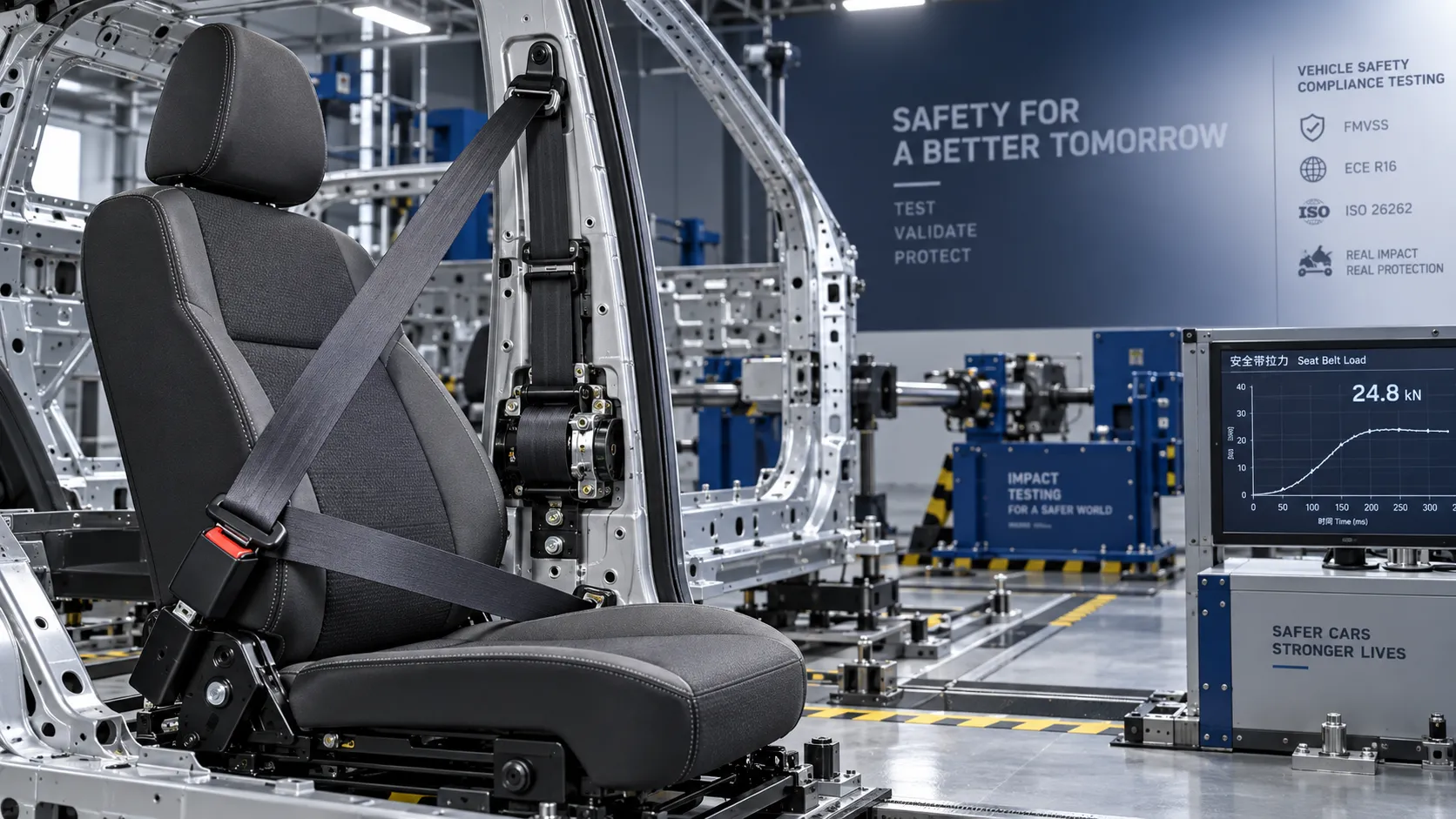
Crash Test Regulations for Seatbelts: Key Compliance Requirements Explained
Crash test regulations seatbelts explained: explore FMVSS, UN rules, anchorage strength, and dynamic restraint testing for safer, compliant vehicle systems.

How to Calculate the Total Cost of Automotive Lightweighting for a Vehicle Program
Automotive lightweight solutions cost: learn how to calculate program-level costs, including materials, tooling, joining, validation, risk, and vehicle-level value.
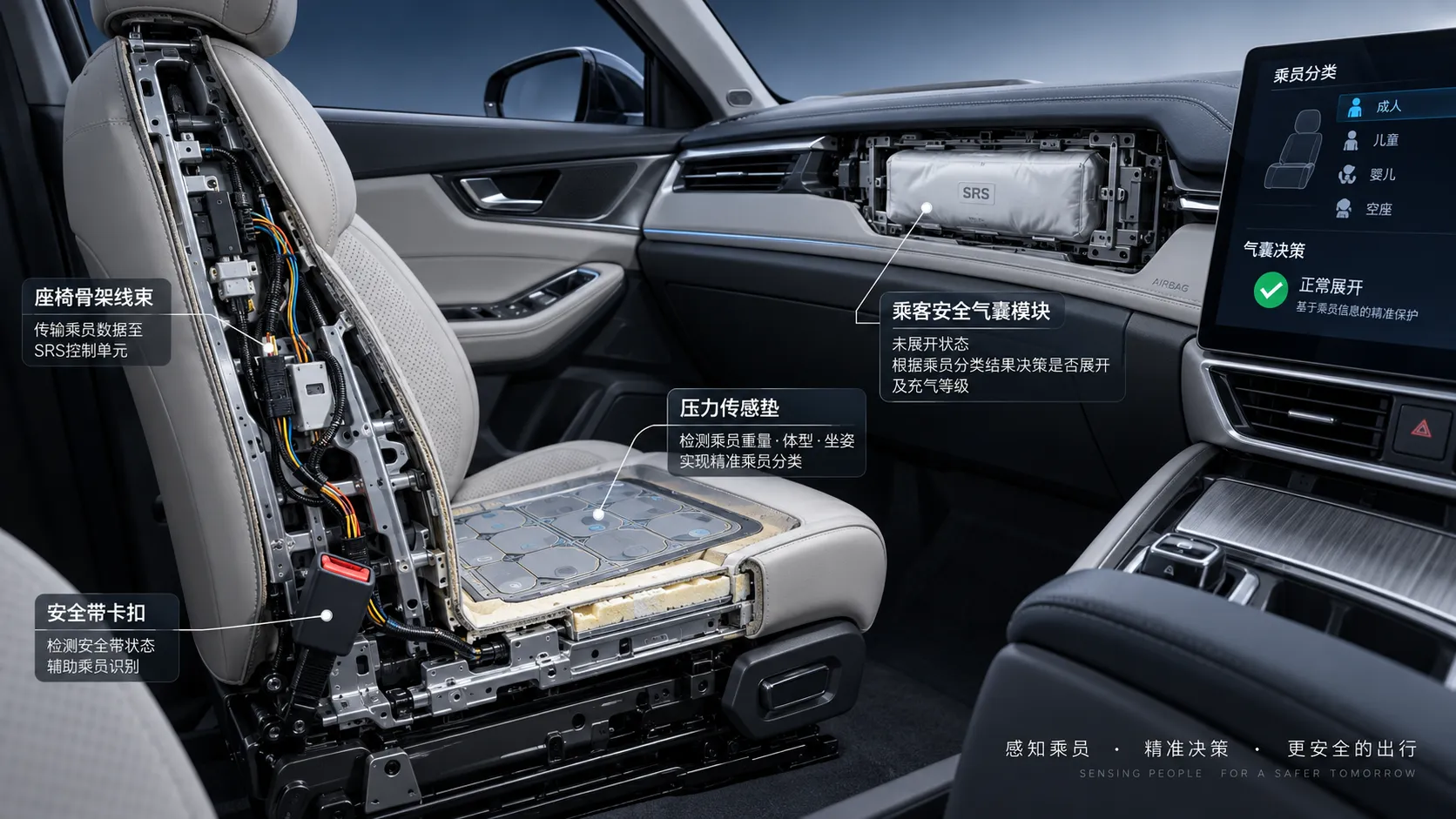
How Automotive Seat Occupancy Sensing Improves Airbag Deployment Decisions
Automotive seat occupancy sensing helps optimize airbag deployment decisions, improving passenger classification, safety diagnostics, and compliance across real-world conditions.
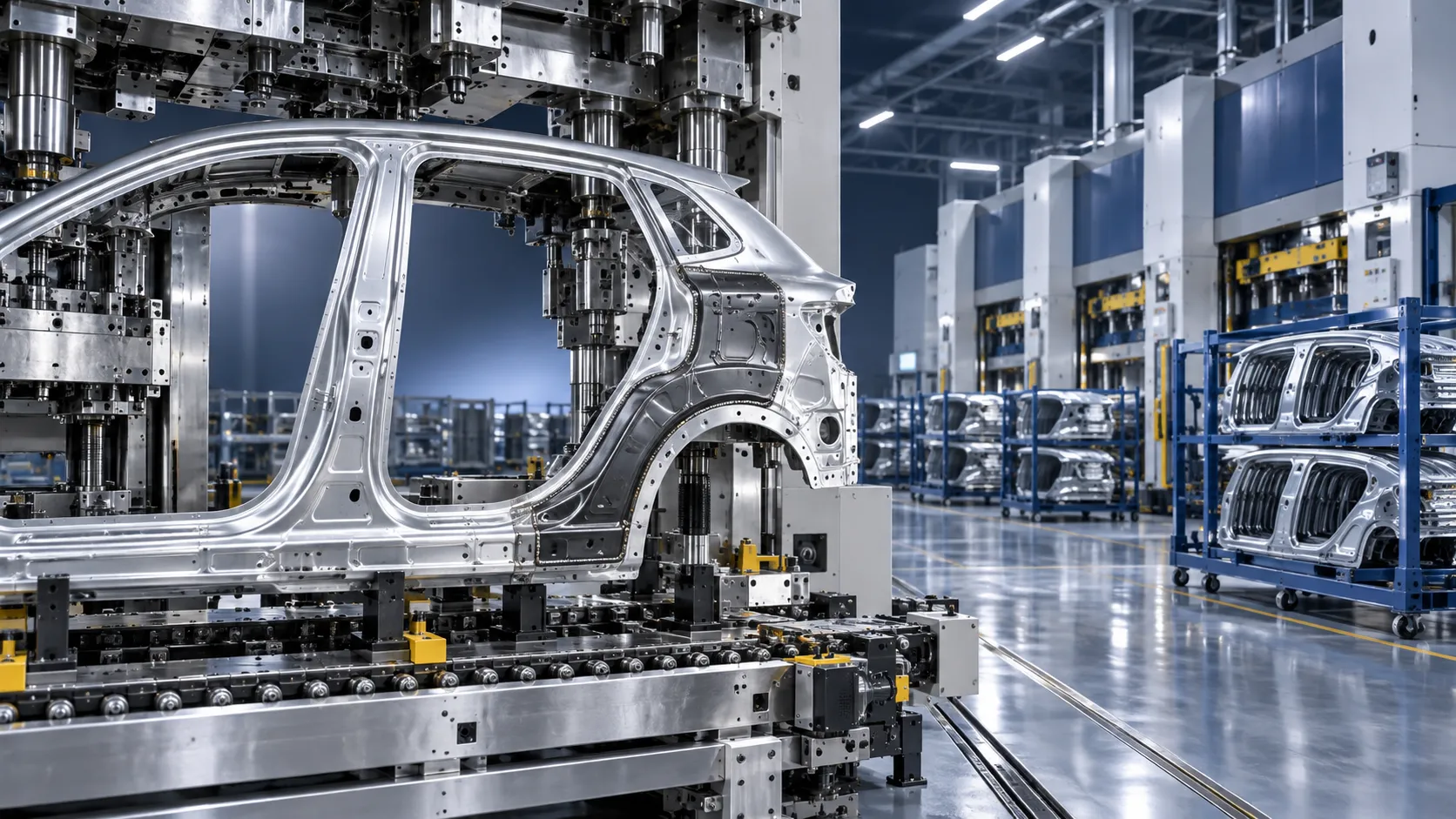
What Drives Lightweight Body Component Costs in High-Volume Vehicle Programs?
Lightweight body components cost depends on material yield, forming, joining, tooling, validation, and logistics. Explore proven ways to optimize total vehicle program cost.
Related News
- 00
0000-00
How to Specify Integrated Marine Electronics for Reliable Bridge Operations - 00
0000-00
How Adjustable Cabin Ergonomics Reduce Operator Fatigue in Long-Shift Vehicles - 00
0000-00
How to Evaluate a Marine Safety Systems Manufacturer for Vessel Compliance and Reliability - 00
0000-00
How to Calculate the Total Cost of Automotive Lightweighting for a Vehicle Program - 00
0000-00
What Drives Lightweight Body Component Costs in High-Volume Vehicle Programs?
Weekly Insights
Stay ahead with our curated technology reports delivered every Monday.