How to Evaluate Maritime Safety Compliance Equipment for Vessel and Port Operations
Start with the operating profile, not the product brochure
For technical evaluators, maritime safety compliance equipment is rarely a simple procurement line. The wrong choice shows up later as failed inspections, nuisance alarms, integration delays, or equipment that looks compliant on paper but struggles in salt, vibration, traffic density, or mixed-vendor control environments. A better evaluation process starts with the operating profile: what the vessel or port actually does, where it operates, which systems it must talk to, and which compliance obligations apply to that exact use case.
That means separating three things early: regulatory minimums, operational necessities, and owner preferences. They overlap, but they are not the same. If you mix them together, vendors can hide weak fit behind a long feature list. If you separate them, the decision gets cleaner.
Map the equipment to the actual compliance path
Before comparing models, define which approval path the equipment must satisfy. For vessel operations, that usually means checking the flag-state framework, classification society requirements, SOLAS-related obligations where applicable, and the technical standards referenced in the purchase specification. For port-side deployment, the picture can shift toward terminal operating rules, local authority requirements, electrical safety obligations, cybersecurity controls, and integration with shore-based traffic or monitoring systems.
Do not accept a broad claim like “meets international standards” as a usable answer. Ask for the exact certificates, declarations, test references, software version linkage where relevant, and equipment identity details that match the offered configuration. Many evaluation mistakes happen here: the approved base unit is real, but the delivered communication module, display unit, enclosure variant, or software build is different.
- Check the approval scope against the exact model, subassembly, and firmware or software release.
- Confirm whether the approval applies to shipboard use, shore use, or both.
- Review installation conditions stated in the documentation. A compliant unit can become noncompliant if mounted, cabled, grounded, or networked outside the approved conditions.
Define the failure consequence before you score the feature set
Not every piece of maritime safety compliance equipment deserves the same evaluation depth. A navigation sensor feeding position-dependent decisions, a bridge alert interface, a collision avoidance aid, or a port traffic surveillance element carries a different failure consequence than a standalone monitoring accessory. Score the equipment against what happens when it drifts, drops out, lags, or feeds bad data upstream.
This sounds obvious, but it changes purchasing behavior. Once you classify consequence properly, you stop overvaluing cosmetic interface features and start digging into redundancy behavior, alarm logic, diagnostics, and degraded-mode performance.
Check signal integrity and environmental fit in the same review
For equipment tied to navigation, detection, tracking, or communication, bench performance is only part of the story. The field questions are harsher: how does it behave around electromagnetic noise, radar overlap, reflective surfaces, mast shadowing, crane structures, wet connectors, corroded terminals, or inconsistent power quality?
A common mistake is evaluating environmental ruggedness and data performance in separate silos. In practice, they are linked. Poor enclosure sealing, unstable connectors, inadequate grounding provisions, or thermal management issues often show up first as signal instability, intermittent alarms, or data dropouts.
Ask the vendor to walk through the environmental assumptions behind the stated performance. Not just ingress protection or temperature range, but cable length sensitivity, antenna placement limits, vibration exposure, update intervals under load, and recovery behavior after power interruption.
Treat integration as a compliance issue, not just an engineering task
A lot of maritime safety compliance equipment fails expectations after purchase because the selection team treated integration as somebody else’s problem. For vessel and port operations, interface quality is part of safety performance. If alarms are not mapped correctly, timestamps drift, data sentences are filtered badly, or one subsystem cannot interpret another subsystem’s status flags, you can end up with technically installed equipment that operators do not trust.
During evaluation, get specific about:
- Supported interfaces and protocol versions
- Time synchronization method and drift handling
- Alarm prioritization, acknowledgment flow, and event logging
- Data ownership for diagnostics and remote support
- Behavior during partial network loss or sensor disagreement
If the vendor only shows happy-path architecture diagrams, keep pushing. The useful answers come from what the system does when one feed becomes stale, one node reboots, or one connected device sends malformed data.
Review the document set like an inspector would
Technical evaluators often focus on hardware first and documents second. Audits work in the opposite direction. If the document package is thin, inconsistent, or difficult to trace, your installation and maintenance teams will pay for it later.
Do not skip maintainability just because the equipment is “smart”
Modern equipment can look attractive because diagnostics are richer, interfaces are cleaner, and remote support is easier. That does not automatically mean lower operational friction. Some systems are easy to monitor but awkward to service. Others need proprietary tools, license-controlled access, or vendor-only intervention for routine resets and configuration changes.
Ask who can do what after handover. Can ship staff or terminal technicians run the required tests? Are spare modules field-replaceable? What happens to approval status if a board, sensor head, or software image is changed? These details matter more than the dashboard graphics once the equipment is in service.
Look for lifecycle traps in updates, obsolescence, and spares
The purchase decision is often made on compliance status at delivery. The harder question is whether the equipment stays supportable across refits, network changes, and regulatory inspections over the next several years. This is where many technically sound products become poor investments.
A practical shortlist review should include the following:
- How software updates are distributed, approved, and recorded.
- Whether cybersecurity patches interfere with validated configurations.
- Spare parts availability by module, not just by full unit.
- End-of-life notice practices and migration paths.
- Commissioning support for mixed fleets or mixed terminal infrastructure.
One warning sign: a vendor that is strong on initial delivery but vague on version support discipline. For maritime safety compliance equipment, that vagueness usually becomes your problem during the next audit or software refresh.
Separate proven interoperability from promised interoperability
There is a big difference between “supports standard interfaces” and “has been integrated cleanly in an environment like yours.” Technical evaluators should ask for evidence in the form of interface matrices, test procedures, known limitations, and exception handling notes. Not customer stories. Actual integration detail.
This is especially important in ports, where surveillance, access control, vessel traffic data, alarms, and maintenance platforms may come from different suppliers with different data assumptions. A compliant component that cannot maintain stable interoperability under live traffic conditions adds operational risk even if every individual box passed factory testing.
Use site acceptance thinking during preselection
A useful trick is to draft your acceptance criteria before you choose the vendor. That forces the evaluation team to translate abstract claims into testable conditions. For example: loss and recovery behavior after power interruption, alarm visibility under peak operator load, synchronization after network reconnection, accuracy retention after installation at the planned location, or audit traceability of configuration changes.
If a supplier struggles to support those preselection questions, expect pain during FAT, SAT, or commissioning. Good equipment tends to come with crisp answers because the vendor has already seen the same issues in real deployments.
Common selection mistakes worth catching early
- Choosing by certificate presence alone, without checking approved configuration and installation conditions.
- Accepting nominal compatibility without a version-specific interface review.
- Ignoring operator workflow and focusing only on technical capacity.
- Underestimating maintenance access, spares logic, and field replacement constraints.
- Treating vessel and port environments as interchangeable when power quality, interference sources, and integration stacks differ sharply.
A practical decision sequence
When the shortlist is close, keep the sequence disciplined. Start with compliance scope and configuration traceability. Then test environmental fit and interface behavior against the actual operating profile. After that, review maintainability, update control, and spares support. Price comes into clearer focus only when those risks are exposed; until then, it can distort the decision.
For technical evaluators responsible for vessel and port operations, the best maritime safety compliance equipment is not the unit with the longest datasheet. It is the one whose approval basis is clear, whose behavior under stress is predictable, whose interfaces survive real integration, and whose support model still works when the installation is no longer new. That is the standard worth buying against.
Related News
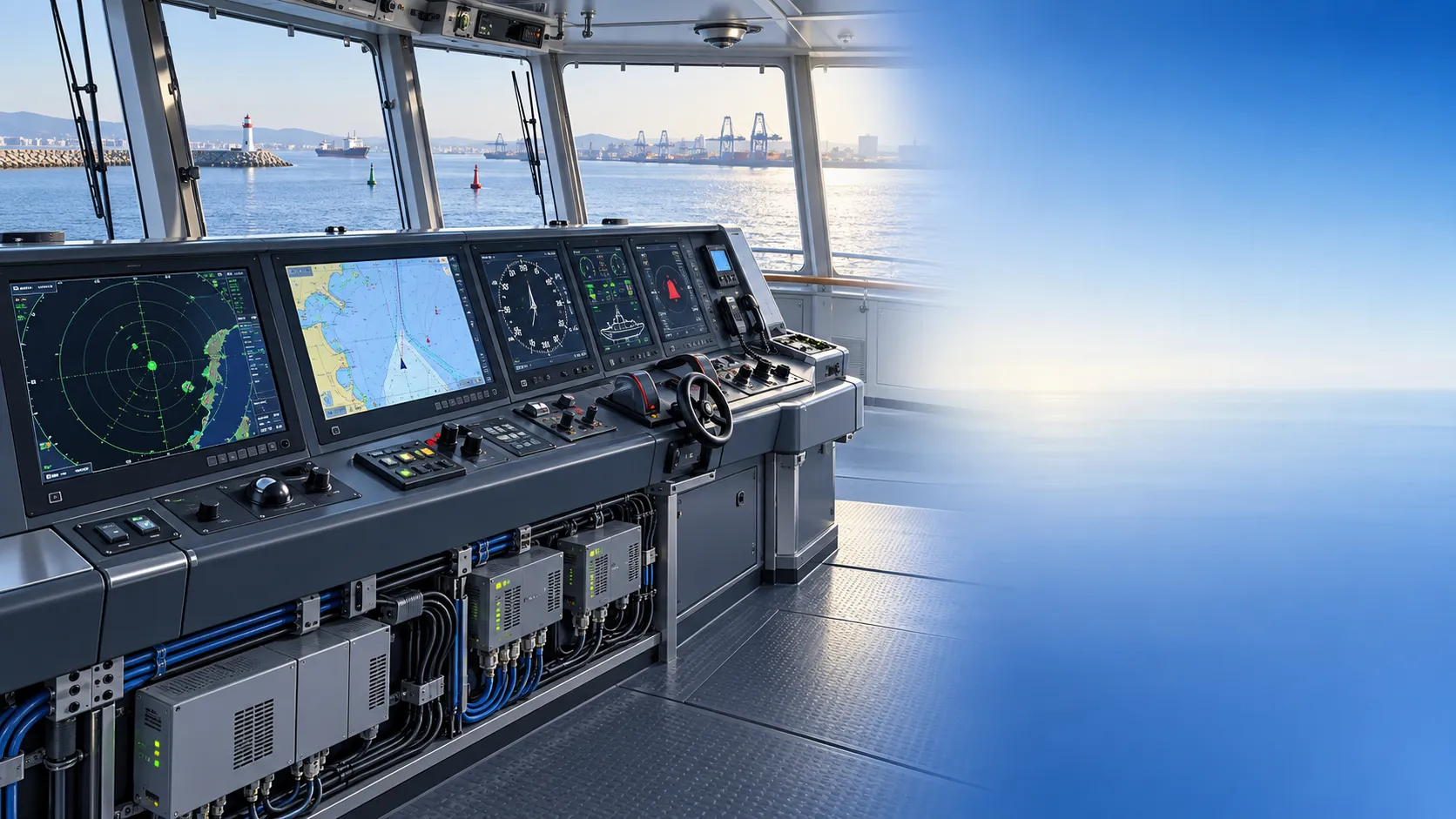
How to Specify Integrated Marine Electronics for Reliable Bridge Operations
Integrated marine electronics: learn how to specify reliable bridge systems with clear data flows, redundancy, alarm control, lifecycle interfaces, and operational testing.

How to Evaluate Navigation Radar Manufacturers for Commercial Vessel Projects
Navigation radar manufacturers: learn how to compare performance, compliance, integration, support, and lifecycle cost for commercial vessel projects.

How Adjustable Cabin Ergonomics Reduce Operator Fatigue in Long-Shift Vehicles
Adjustable cabin ergonomics reduces operator fatigue through better seating, reach, visibility, vibration control, and climate comfort for safer long-shift vehicles.

How Rear-Impact Safety Components Work Together to Protect Vehicle Occupants
Explore how automotive safety components for rear impact work together—from crash structures and seats to head restraints and belts—to enhance occupant protection.
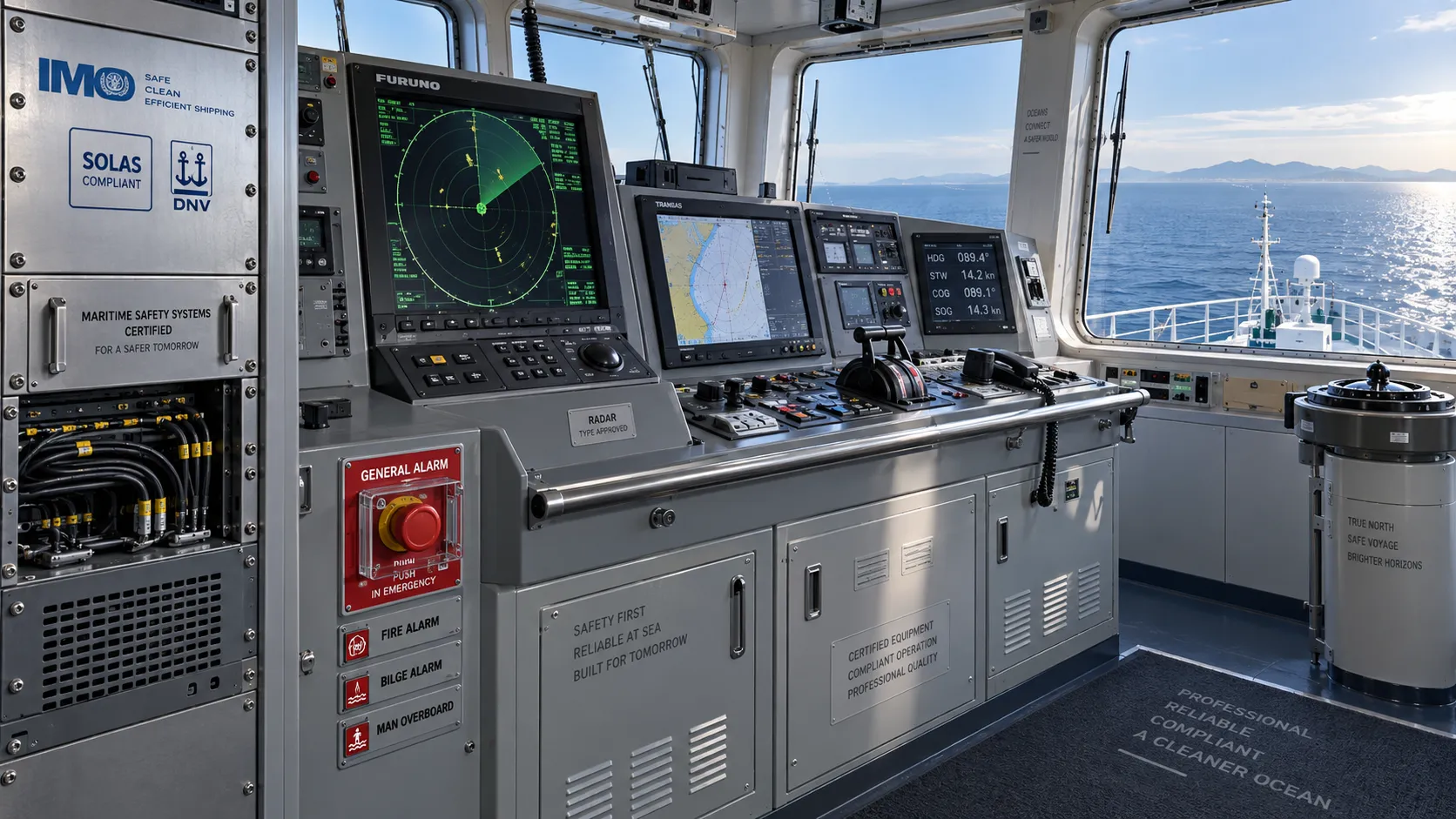
How to Evaluate a Marine Safety Systems Manufacturer for Vessel Compliance and Reliability
Marine safety systems manufacturer evaluation guide: verify compliance, engineering quality, lifecycle costs, and global service support for safer, reliable vessel operations.
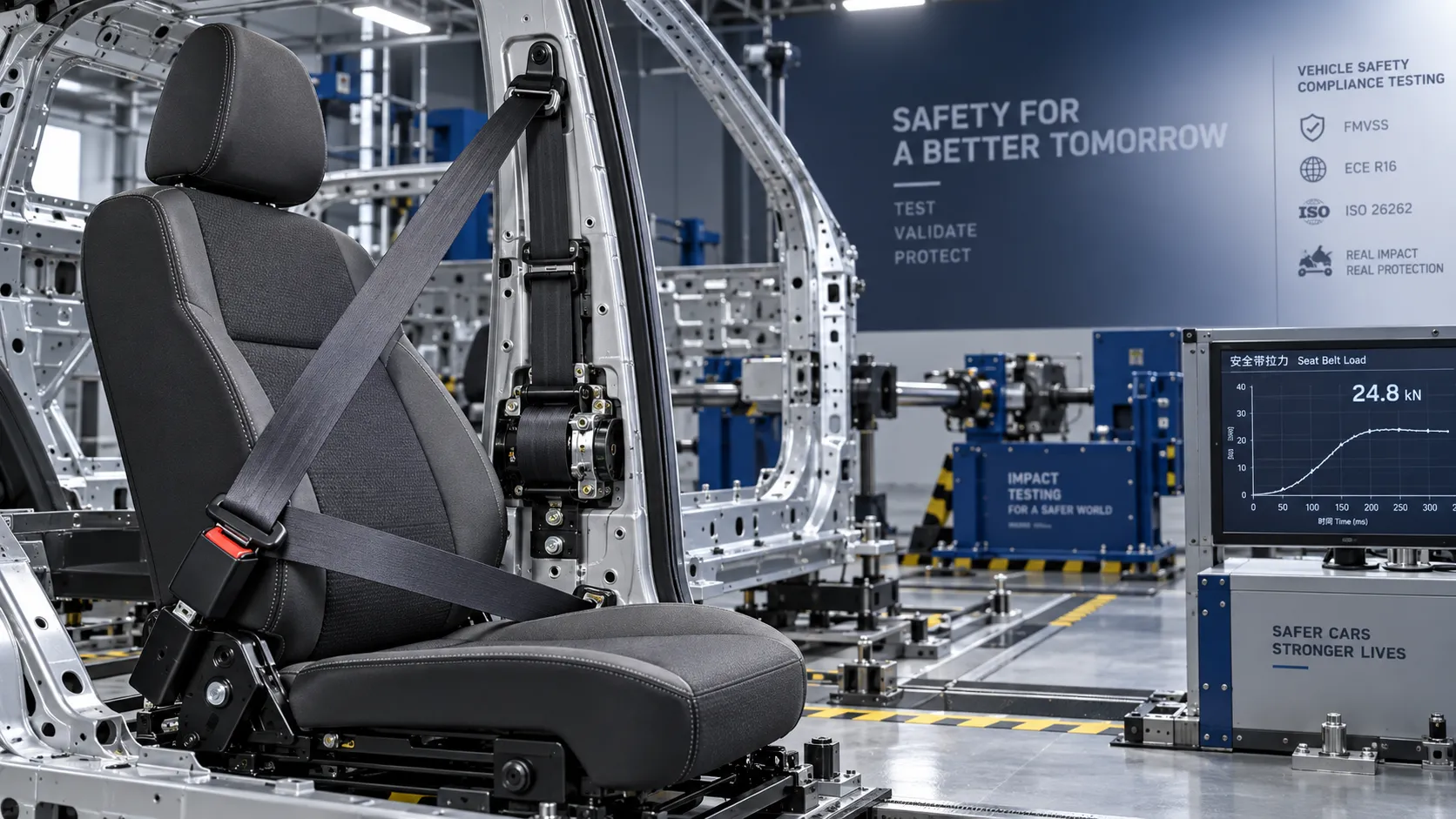
Crash Test Regulations for Seatbelts: Key Compliance Requirements Explained
Crash test regulations seatbelts explained: explore FMVSS, UN rules, anchorage strength, and dynamic restraint testing for safer, compliant vehicle systems.

How to Calculate the Total Cost of Automotive Lightweighting for a Vehicle Program
Automotive lightweight solutions cost: learn how to calculate program-level costs, including materials, tooling, joining, validation, risk, and vehicle-level value.

How Automotive Seat Occupancy Sensing Improves Airbag Deployment Decisions
Automotive seat occupancy sensing helps optimize airbag deployment decisions, improving passenger classification, safety diagnostics, and compliance across real-world conditions.

What Drives Lightweight Body Component Costs in High-Volume Vehicle Programs?
Lightweight body components cost depends on material yield, forming, joining, tooling, validation, and logistics. Explore proven ways to optimize total vehicle program cost.
Related News
- 00
0000-00
How to Specify Integrated Marine Electronics for Reliable Bridge Operations - 00
0000-00
How Adjustable Cabin Ergonomics Reduce Operator Fatigue in Long-Shift Vehicles - 00
0000-00
How to Evaluate a Marine Safety Systems Manufacturer for Vessel Compliance and Reliability - 00
0000-00
How to Calculate the Total Cost of Automotive Lightweighting for a Vehicle Program - 00
0000-00
What Drives Lightweight Body Component Costs in High-Volume Vehicle Programs?
Weekly Insights
Stay ahead with our curated technology reports delivered every Monday.