What drives marine positioning technology accuracy?
What Drives Marine Positioning Technology Accuracy?
The accuracy of marine positioning technology now defines more than vessel location. It influences voyage safety, compliance confidence, installation risk, and lifecycle value.
As vessels operate in denser waterways, harsher weather, and more digital fleets, positioning precision has become a strategic capability.
From satellite signal integrity to sensor fusion, every design decision affects how reliably a vessel understands its position.
High-performance marine positioning technology depends on hardware, software, correction data, electromagnetic discipline, and operational validation working together.
Accuracy Expectations Are Rising Across Maritime Operations
Marine positioning technology is moving from basic navigation support toward continuous spatial awareness for connected, automated, and safety-critical operations.
Traditional GNSS receivers once met many voyage requirements. Today, ports, offshore assets, and high-value cargo routes demand tighter margins.
Dynamic positioning, electronic chart navigation, collision avoidance, and autonomous assistance all depend on stable position data.
This shift changes how marine positioning technology is evaluated. Static accuracy alone is no longer enough.
Decision criteria now include integrity monitoring, continuity, latency, cyber resilience, and performance during signal disturbance.
GNCS observes this trend as part of a broader movement toward precision spatial perception in global mobility equipment.
Core Signals Show Why Precision Is Becoming Harder
The operating environment around marine positioning technology is becoming more complex, not simpler.
Satellite constellations are expanding, but coastal interference, spoofing threats, multipath reflections, and onboard electromagnetic noise are also increasing.
Large vessels carry more high-power electronics, communication systems, radar equipment, and automation controllers than before.
Each system can disturb sensitive navigation receivers if integration is poorly planned.
At the same time, regulatory expectations are tightening around traceability, alarm handling, and bridge system reliability.
This makes marine positioning technology a multidisciplinary engineering challenge rather than a single-device purchase.
Key Drivers Behind Marine Positioning Technology Accuracy
Several technical factors determine whether marine positioning technology performs reliably in real operations.
- Satellite geometry: Better sky visibility and constellation diversity improve position dilution of precision.
- Signal quality: Clean GNSS reception reduces pseudorange errors and tracking instability.
- Correction services: RTK, PPP, SBAS, and differential data can significantly reduce positioning error.
- Sensor fusion: IMU, gyrocompass, log, radar, sonar, and AIS data improve continuity.
- Time synchronization: Accurate timing supports coherent positioning, logging, and integrated bridge decisions.
- EMI control: Cable routing, grounding, shielding, and antenna placement protect signal integrity.
The strongest marine positioning technology architectures combine these drivers into a verified system, not isolated components.
Satellite Constellations Create the First Accuracy Layer
GNSS remains the foundation of most marine positioning technology because it offers global coverage and scalable deployment.
GPS, Galileo, GLONASS, BeiDou, and regional augmentation systems provide more satellites and better redundancy.
Multi-constellation receivers reduce dependence on a single orbital system and improve performance near obstructions.
However, more signals do not automatically guarantee accuracy.
Receiver design, antenna gain, filtering algorithms, and multipath suppression determine how useful those signals become.
Correction Data Turns Positioning Into a Precision Service
Correction services are central to advanced marine positioning technology because raw satellite positioning contains atmospheric and clock errors.
RTK can support centimeter-level positioning when baseline distance, link quality, and initialization conditions are favorable.
PPP provides wide-area precision without local base stations, although convergence time must be considered.
SBAS and DGNSS remain valuable for safety-focused navigation where robustness matters more than extreme precision.
The best correction model depends on route profile, required tolerance, connectivity, and operational risk.
Sensor Fusion Is Redefining Reliable Position Awareness
Marine positioning technology increasingly relies on sensor fusion to maintain accuracy when satellite signals degrade.
An inertial measurement unit can bridge short GNSS outages and stabilize heading-related calculations.
Gyrocompass data supports true heading accuracy, especially for maneuvering, docking, and dynamic positioning.
Speed logs, radar references, sonar inputs, and visual sensors add environmental context.
Fusion software then estimates vessel position by weighing sensor confidence in real time.
This approach makes marine positioning technology more resilient in ports, fjords, offshore fields, and congested channels.
Electromagnetic Discipline Often Separates Good From Exceptional
Many accuracy problems are not caused by satellite systems. They originate inside the vessel.
Radar pulses, VHF transmitters, high-current drives, switching power supplies, and poorly grounded equipment can affect receivers.
Antenna placement is especially important for marine positioning technology accuracy.
Clear sky view, separation from transmitters, low multipath exposure, and stable mounting improve signal consistency.
Cable selection also matters. Long runs, weak shielding, corrosion, and connector loss can degrade signal-to-noise ratio.
Accurate positioning requires electromagnetic compatibility planning during vessel design, retrofit, and commissioning.
Operational Impacts Extend Beyond the Navigation Console
When marine positioning technology becomes more accurate, the benefits spread across multiple operational layers.
Bridge teams receive more reliable chart overlays, route monitoring, and alarm references.
Offshore operations gain tighter station keeping, safer approach paths, and better asset protection.
Fleet operators can analyze track quality, fuel efficiency, route deviation, and compliance evidence with higher confidence.
Port operations benefit from predictable vessel movement, reduced berth risk, and improved traffic coordination.
Poor accuracy creates the opposite effect. It increases manual workload, alarm distrust, and incident exposure.
Accuracy Drivers and Business Consequences
This table shows why marine positioning technology must be assessed as a system-level capability.
Compliance and Integrity Are Becoming Accuracy Requirements
Accuracy is valuable only when the system can indicate whether its data should be trusted.
Integrity monitoring detects abnormal satellite behavior, signal spoofing, sensor disagreement, and correction failures.
Modern marine positioning technology must support transparent alerts, event logging, and integration with bridge systems.
This is increasingly important for ECDIS, AIS correlation, voyage data recording, and automated control functions.
A precise but unverified position can be more dangerous than a less precise position with clear integrity status.
What Should Be Evaluated Before System Selection?
The specification of marine positioning technology should begin with operational use cases, not only brochure accuracy figures.
- Define the required accuracy for open sea, coastal, port, and offshore modes.
- Confirm correction service availability along actual operating routes.
- Evaluate antenna locations before final equipment selection.
- Check compatibility with ECDIS, radar, AIS, autopilot, and DP systems.
- Require integrity alerts, diagnostic logs, and clear failure modes.
- Validate performance through sea trials, not only factory acceptance tests.
These checks reduce installation risk and improve lifecycle value for marine positioning technology investments.
Future Trends Point Toward More Intelligent Positioning
The next phase of marine positioning technology will be shaped by intelligence, redundancy, and cybersecurity.
Receivers will use more adaptive filtering to identify multipath, spoofing, and interference signatures.
Cloud-assisted diagnostics may compare vessel data against regional interference maps and correction performance.
Hybrid positioning will combine GNSS, inertial systems, radar mapping, visual references, and terrestrial radio signals.
As autonomy develops, marine positioning technology will need machine-readable confidence levels and predictive fault handling.
The competitive advantage will come from verified resilience, not only peak accuracy under ideal conditions.
Practical Response Framework for Higher Accuracy
This framework helps turn marine positioning technology selection into a measurable engineering process.
Final Outlook: Accuracy Comes From System Trust
The accuracy of marine positioning technology is driven by much more than receiver specifications.
It depends on signal availability, correction strategy, sensor fusion, electromagnetic discipline, integrity monitoring, and operational validation.
As maritime operations become more automated and compliance-driven, resilient precision will become a baseline requirement.
GNCS continues to observe this evolution through the lens of precision spatial perception and safety-critical equipment intelligence.
To improve outcomes, evaluate marine positioning technology against real routes, real interference, and real integration demands.
The next practical step is to audit current positioning performance, identify weak links, and build an upgrade roadmap based on verified risk.
Related News
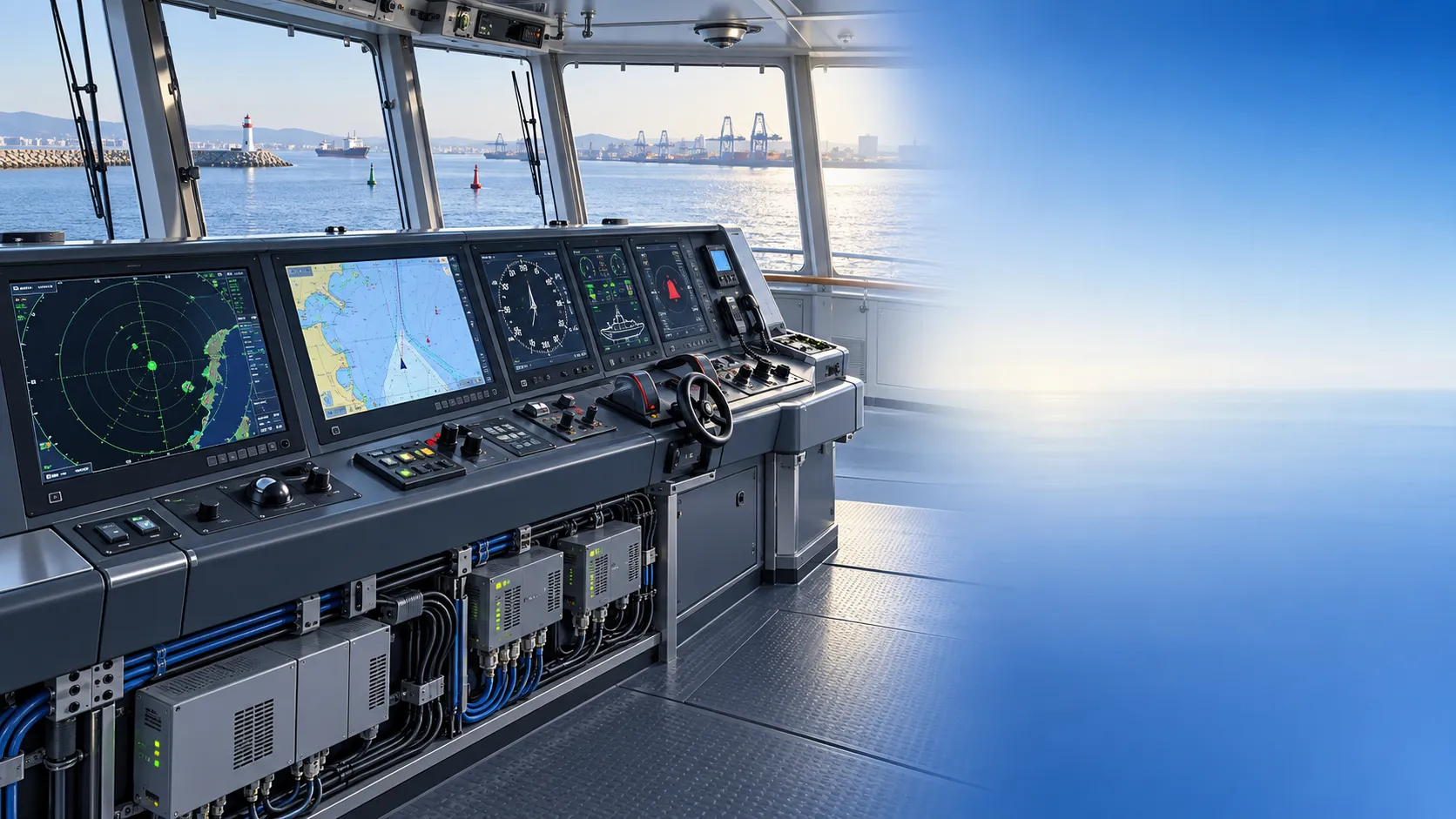
How to Specify Integrated Marine Electronics for Reliable Bridge Operations
Integrated marine electronics: learn how to specify reliable bridge systems with clear data flows, redundancy, alarm control, lifecycle interfaces, and operational testing.
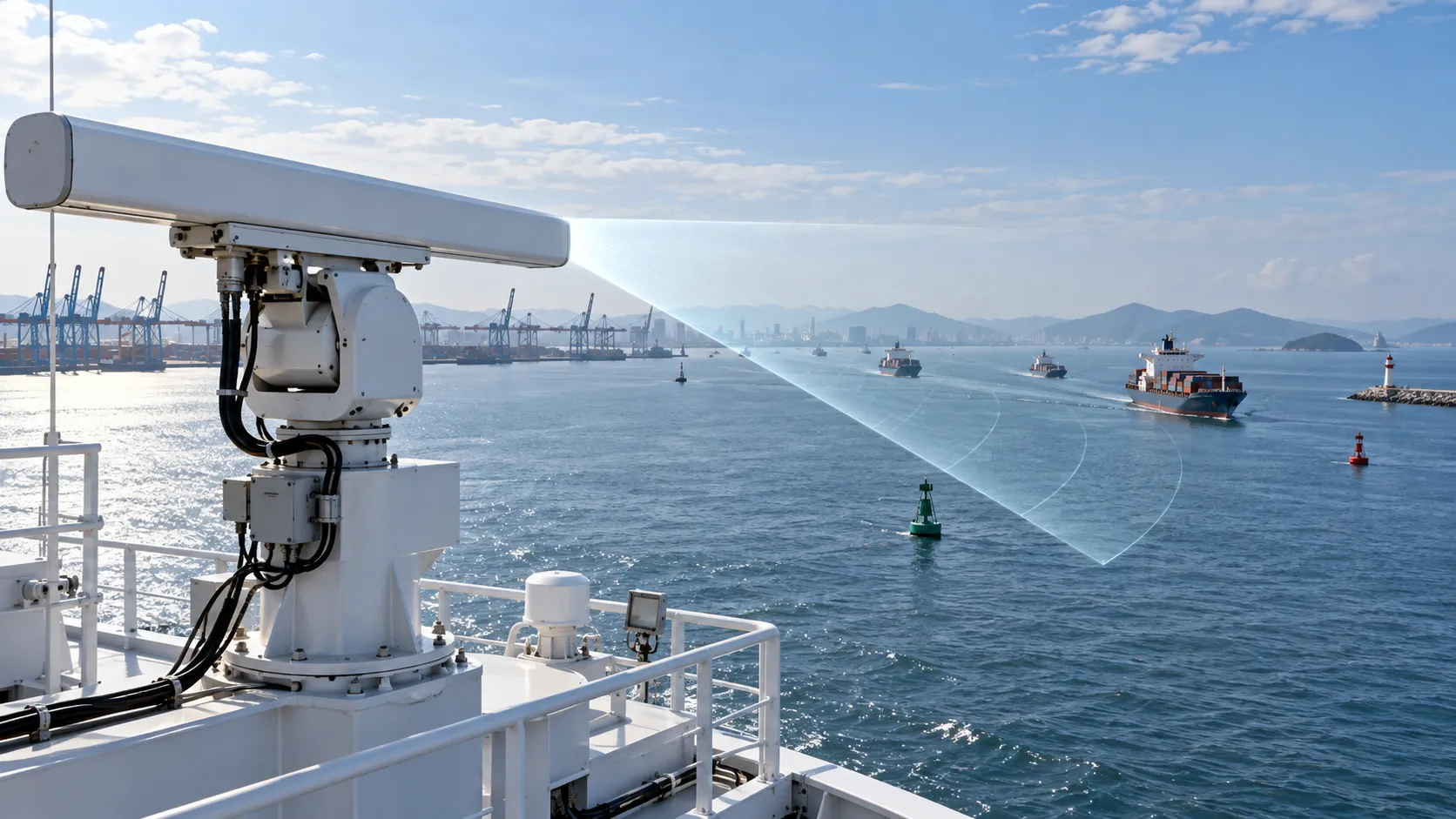
How to Evaluate Navigation Radar Manufacturers for Commercial Vessel Projects
Navigation radar manufacturers: learn how to compare performance, compliance, integration, support, and lifecycle cost for commercial vessel projects.

How Adjustable Cabin Ergonomics Reduce Operator Fatigue in Long-Shift Vehicles
Adjustable cabin ergonomics reduces operator fatigue through better seating, reach, visibility, vibration control, and climate comfort for safer long-shift vehicles.

How Rear-Impact Safety Components Work Together to Protect Vehicle Occupants
Explore how automotive safety components for rear impact work together—from crash structures and seats to head restraints and belts—to enhance occupant protection.
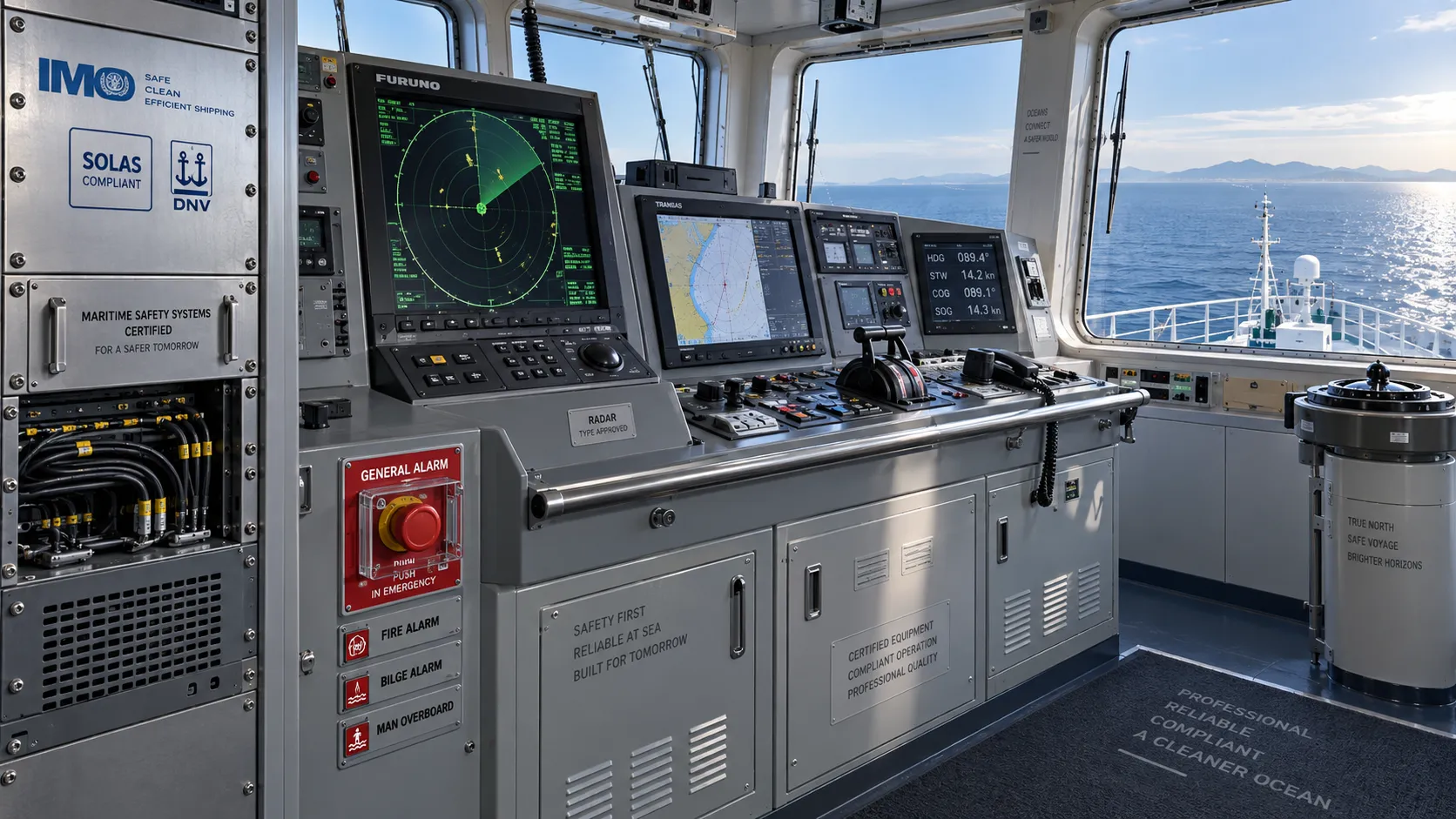
How to Evaluate a Marine Safety Systems Manufacturer for Vessel Compliance and Reliability
Marine safety systems manufacturer evaluation guide: verify compliance, engineering quality, lifecycle costs, and global service support for safer, reliable vessel operations.

Crash Test Regulations for Seatbelts: Key Compliance Requirements Explained
Crash test regulations seatbelts explained: explore FMVSS, UN rules, anchorage strength, and dynamic restraint testing for safer, compliant vehicle systems.

How to Calculate the Total Cost of Automotive Lightweighting for a Vehicle Program
Automotive lightweight solutions cost: learn how to calculate program-level costs, including materials, tooling, joining, validation, risk, and vehicle-level value.

How Automotive Seat Occupancy Sensing Improves Airbag Deployment Decisions
Automotive seat occupancy sensing helps optimize airbag deployment decisions, improving passenger classification, safety diagnostics, and compliance across real-world conditions.

What Drives Lightweight Body Component Costs in High-Volume Vehicle Programs?
Lightweight body components cost depends on material yield, forming, joining, tooling, validation, and logistics. Explore proven ways to optimize total vehicle program cost.
Related News
- 00
0000-00
How to Evaluate Navigation Radar Manufacturers for Commercial Vessel Projects - 00
0000-00
How to Evaluate Cargo Marine Sonar Systems for Detection Range and Vessel Fit - 00
0000-00
How to Evaluate Marine Signal Processing Software for Radar and Sonar Integration - 00
0000-00
How Do Automatic Identification Systems Improve Vessel Tracking and Collision Avoidance? - 00
0000-00
How to Choose Marine Navigation Systems for Patrol Boats in Coastal and Offshore Missions
Weekly Insights
Stay ahead with our curated technology reports delivered every Monday.