Maritime Safety Technology for Collision Avoidance: Radar, AIS, ECDIS
Maritime Safety Technology for Collision Avoidance: Radar, AIS, ECDIS
Maritime safety technology is rapidly reshaping collision avoidance by turning fragmented vessel data into actionable situational awareness.
For researchers tracking Radar, AIS, and ECDIS, the question is no longer whether ships can detect surrounding risks.
The deeper question is how accurately these systems integrate sensing, identity exchange, and chart intelligence under real operating pressure.
This trend matters across ports, offshore routes, inland waterways, and ocean passages where traffic density keeps rising.
Collision Avoidance Is Moving From Visual Judgment To Integrated Intelligence
Traditional navigation relied heavily on watchkeeping experience, visual observation, and bridge team discipline.
Those skills remain essential, but modern operating conditions demand faster, more data-driven decisions.
Maritime safety technology now connects Radar returns, AIS broadcasts, GNSS positioning, electronic charts, and alarm logic.
This creates a layered perception model rather than a single instrument view.
The change is visible in congested approaches, restricted visibility, high-speed ferry operations, and offshore energy zones.
In these environments, one missed target or delayed course assessment can quickly become a compliance and safety issue.
GNCS observes this shift as part of a wider movement toward precision spatial perception.
Marine navigation is becoming closer to intelligent mobility, where sensing, prediction, and physical protection share one safety logic.
Radar Remains The Baseline Sensor For Real-Time Risk Perception
Radar is still the foundation of maritime safety technology because it detects physical objects without depending on cooperative signals.
It can identify landmasses, buoys, vessels, rain clutter, and unexpected obstacles in poor visibility.
Modern marine Radar systems increasingly use digital signal processing to improve target discrimination.
Advanced filtering helps reduce sea clutter, weather interference, and false echoes near coastlines.
Automatic Radar Plotting Aid functions support collision avoidance by calculating closest point of approach and time to closest point.
These calculations help bridge teams judge whether a developing encounter is stable, crossing, overtaking, or head-on.
However, Radar has limits that should not be hidden behind interface confidence.
- Small craft may be weak targets in heavy sea states.
- Rain cells can mask relevant echoes.
- Shadow zones may appear behind large structures.
- Operator tuning still affects detection reliability.
The next phase of maritime safety technology will depend on better Radar interpretation, not simply brighter screens.
AIS Turns Nearby Traffic Into Identified Movement Patterns
Automatic Identification System data adds identity, voyage, and movement context to collision avoidance decisions.
AIS broadcasts can include vessel name, MMSI, course, speed, destination, navigation status, and position.
This makes maritime safety technology more transparent in dense traffic areas.
Instead of interpreting anonymous echoes only, bridge teams can understand who is moving where and at what speed.
AIS is especially valuable for vessel traffic services, port coordination, route planning, and long-range traffic analysis.
It also supports post-event reconstruction, compliance review, and operational intelligence.
Yet AIS is a cooperative system, so its information must be treated critically.
- Some vessels may not transmit AIS.
- Manual input fields can be outdated or incorrect.
- Signal congestion may reduce update reliability.
- Spoofing and abnormal data require monitoring.
Reliable maritime safety technology therefore cross-checks AIS with Radar and visual observation.
The key is not blind trust in any single data source, but disciplined correlation.
ECDIS Is Becoming The Digital Decision Layer Of The Bridge
Electronic Chart Display and Information System technology has changed how navigational risk is organized.
ECDIS combines official electronic navigational charts, vessel position, route plans, safety contours, and navigational warnings.
For maritime safety technology, this means collision avoidance is now connected with grounding prevention and route compliance.
A potential collision decision may be constrained by traffic separation schemes, depth limits, restricted areas, or no-go zones.
ECDIS helps make those constraints visible before emergency maneuvering becomes necessary.
The strongest value appears when ECDIS overlays AIS targets and supports Radar integration.
This creates a shared tactical view of charted hazards, moving traffic, and planned route geometry.
However, ECDIS also introduces new operational risks.
- Incorrect safety settings can hide shallow-water danger.
- Outdated charts can weaken route assurance.
- Alarm fatigue may reduce human response.
- Overreliance can damage traditional situational awareness.
The future of maritime safety technology requires smarter ECDIS configuration, update discipline, and bridge team training.
Why Integration Is Now The Main Trend Signal
The strongest trend in maritime safety technology is not the replacement of one device by another.
It is the integration of multiple imperfect systems into a more resilient operating picture.
Radar provides physical detection, AIS provides declared identity, and ECDIS provides chart-based context.
Together, they support earlier recognition of risk and more defensible navigation decisions.
This integration trend also reflects broader mobility safety logic.
Like automotive passive safety, maritime safety technology must manage uncertainty before impact energy becomes unavoidable.
Operational Impact Is Spreading Beyond The Bridge
Collision avoidance technology no longer affects only watch officers during a single voyage.
It influences fleet governance, insurance evaluation, port scheduling, training programs, and equipment lifecycle planning.
When maritime safety technology generates reliable records, organizations can review near-misses with greater precision.
This supports root-cause analysis involving sensor settings, bridge communication, route design, and traffic behavior.
Ports also benefit from cleaner vessel movement data and improved traffic coordination.
Offshore operations gain better protection around platforms, wind farms, survey vessels, and dynamically positioned assets.
For equipment ecosystems, the impact is equally significant.
- Radar suppliers face demand for stronger processing and clearer target presentation.
- AIS solutions need better anomaly detection and cybersecurity awareness.
- ECDIS platforms must simplify configuration without reducing navigational control.
- Training systems should simulate multi-sensor conflicts and realistic workload.
These changes make maritime safety technology a strategic infrastructure issue, not just a bridge equipment category.
Key Areas To Watch In The Next Upgrade Cycle
The next upgrade cycle will reward systems that reduce cognitive burden while preserving human authority.
Maritime safety technology should help bridge teams see conflicts earlier and understand why alerts are triggered.
- Target correlation: Radar and AIS matching should be transparent, stable, and easy to verify.
- Alarm quality: Alerts should prioritize meaningful risk, not produce constant low-value noise.
- Chart integrity: ECDIS updates, safety contours, and route checks must remain controlled.
- Human-machine interface: Displays should support fast interpretation under stress and fatigue.
- Cyber resilience: Navigation data exchange needs stronger protection against manipulation.
- Compliance evidence: Systems should support audits without turning crews into data clerks.
These priorities show why maritime safety technology is entering a more intelligent and accountable phase.
The winning solutions will combine precision sensing, practical usability, and regulatory alignment.
A Practical Response Framework For Safer Navigation
Better collision avoidance begins with assessing how Radar, AIS, and ECDIS are actually used during operations.
A formal review should include equipment capability, configuration discipline, training realism, and incident feedback.
This framework keeps maritime safety technology connected to operational reality.
It also prevents digital systems from becoming isolated screens rather than coordinated decision tools.
From Detection To Defensible Decisions
The direction of maritime safety technology is clear.
Collision avoidance is moving from detection toward integrated, explainable, and auditable decision support.
Radar, AIS, and ECDIS each solve a different part of the risk picture.
Their combined value depends on correlation quality, human interpretation, and disciplined system management.
GNCS will continue tracking how marine navigation systems evolve through precision perception, compliance pressure, and intelligent integration.
The next practical step is to map current navigation workflows against real collision scenarios.
Identify where maritime safety technology strengthens awareness, where it creates blind spots, and where training must close the gap.
Safer voyages will come from systems that do more than display data.
They must help people make earlier, clearer, and more defensible navigation decisions.
Related News
How to Specify Integrated Marine Electronics for Reliable Bridge Operations
Integrated marine electronics: learn how to specify reliable bridge systems with clear data flows, redundancy, alarm control, lifecycle interfaces, and operational testing.
How to Evaluate Navigation Radar Manufacturers for Commercial Vessel Projects
Navigation radar manufacturers: learn how to compare performance, compliance, integration, support, and lifecycle cost for commercial vessel projects.

How Adjustable Cabin Ergonomics Reduce Operator Fatigue in Long-Shift Vehicles
Adjustable cabin ergonomics reduces operator fatigue through better seating, reach, visibility, vibration control, and climate comfort for safer long-shift vehicles.

How Rear-Impact Safety Components Work Together to Protect Vehicle Occupants
Explore how automotive safety components for rear impact work together—from crash structures and seats to head restraints and belts—to enhance occupant protection.
How to Evaluate a Marine Safety Systems Manufacturer for Vessel Compliance and Reliability
Marine safety systems manufacturer evaluation guide: verify compliance, engineering quality, lifecycle costs, and global service support for safer, reliable vessel operations.
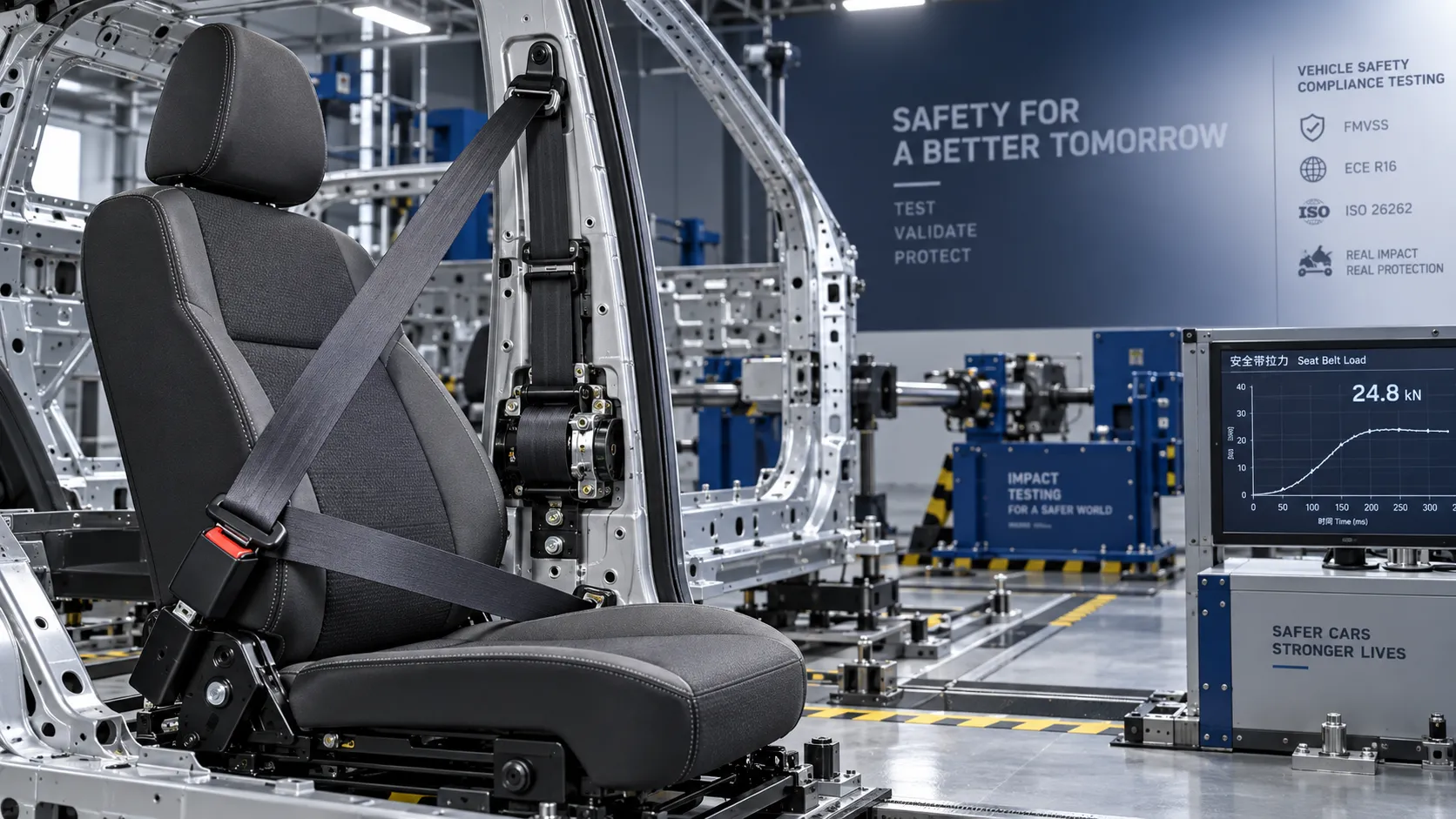
Crash Test Regulations for Seatbelts: Key Compliance Requirements Explained
Crash test regulations seatbelts explained: explore FMVSS, UN rules, anchorage strength, and dynamic restraint testing for safer, compliant vehicle systems.

How to Calculate the Total Cost of Automotive Lightweighting for a Vehicle Program
Automotive lightweight solutions cost: learn how to calculate program-level costs, including materials, tooling, joining, validation, risk, and vehicle-level value.

How Automotive Seat Occupancy Sensing Improves Airbag Deployment Decisions
Automotive seat occupancy sensing helps optimize airbag deployment decisions, improving passenger classification, safety diagnostics, and compliance across real-world conditions.

What Drives Lightweight Body Component Costs in High-Volume Vehicle Programs?
Lightweight body components cost depends on material yield, forming, joining, tooling, validation, and logistics. Explore proven ways to optimize total vehicle program cost.
Related News
- 00
0000-00
How to Evaluate Navigation Radar Manufacturers for Commercial Vessel Projects - 00
0000-00
How to Evaluate Cargo Marine Sonar Systems for Detection Range and Vessel Fit - 00
0000-00
How to Evaluate Marine Signal Processing Software for Radar and Sonar Integration - 00
0000-00
How Do Automatic Identification Systems Improve Vessel Tracking and Collision Avoidance? - 00
0000-00
How to Choose Marine Navigation Systems for Patrol Boats in Coastal and Offshore Missions
Weekly Insights
Stay ahead with our curated technology reports delivered every Monday.