
Force-Limiting Systems vs Standard Restraints: How They Reduce Chest Injury Risk
Chest injury risk remains one of the most sensitive measures in restraint performance. In the comparison between standard restraints and force-limiting systems, the real question is not simply whether the occupant is held back, but how crash energy is managed across the torso. That distinction matters across today’s mobility sectors, where lighter structures, smarter seats, and stricter crash protocols demand more precise control of occupant loads.
Within the broader safety landscape followed by GNCS, force-limiting systems sit at the intersection of passive safety, structural design, and cabin integration. They are especially relevant when seatbelt systems must work in concert with airbags, seat geometry, and lightweight body architectures. For evaluation work, the value lies in understanding the restraint trade-off: enough belt force to maintain containment, but not so much that the chest absorbs excessive loading.
Why the comparison matters now
Standard restraints are designed to restrain movement quickly during a crash. That basic function is essential, but a conventional belt system can allow belt forces to rise sharply as the occupant loads the webbing.
In lower-speed impacts, that may be acceptable. In higher-energy events, however, chest deflection, rib loading, and soft tissue injury become more important. This is where force-limiting systems change the performance profile.
Instead of letting belt force continue climbing without meaningful moderation, force-limiting systems are engineered to release or manage webbing load once a calibrated threshold is reached. The occupant still remains restrained, but peak chest loading can be reduced.
That is a major reason the topic has gained weight in current safety reviews. Regulatory frameworks and consumer crash programs increasingly reward balanced restraint behavior rather than raw stiffness alone.
What force-limiting systems actually do
A force limiter is not a comfort feature. It is a crash-energy management element built into the seatbelt system. Its job is to cap, shape, or progressively release belt load during occupant deceleration.
Simple descriptions often make force-limiting systems sound passive, but their performance is highly tuned. Load thresholds, webbing payout behavior, pretensioner timing, and airbag coordination all influence the outcome.
In practical terms, the chest is allowed to move slightly farther forward than with a very stiff standard restraint. That added ride-down distance helps reduce concentrated belt force on the sternum and ribcage.
The benefit depends on system calibration. If the limiter releases too early, forward excursion can grow too much. If it releases too late, chest injury metrics may remain unnecessarily high.
Standard restraint behavior versus controlled load management
Where chest injury reduction comes from
The chest is vulnerable because it becomes the main load path when the torso engages the shoulder belt. A rigid restraint strategy can prevent large movement, but it also transfers more force into a smaller anatomical region.
Force-limiting systems reduce this concentration by spreading deceleration over more time and more travel. In crash mechanics, even small increases in ride-down distance can lower peak force significantly.
That does not mean softer is always safer. The chest benefits only when the rest of the restraint environment is aligned. Airbag deployment, steering wheel position, seat stiffness, and occupant posture still shape final injury outcomes.
This is why GNCS tracks passive safety as a stitched system rather than isolated components. A seatbelt force limiter cannot be judged fairly without the surrounding body structure, inflator strategy, and seat architecture.
Why lightweight design increases the importance of force control
The move toward high-strength steel, aluminum, and magnesium in body and seat structures changes crash pulse behavior. Lighter vehicles and lighter cabin assemblies can produce different occupant kinematics than older, heavier platforms.
That makes force-limiting systems more than a refinement. They become part of the calibration strategy needed to match restraint loads with new structural responses.
A hot-stamped body may preserve survival space very effectively, yet chest loading can still rise if the restraint system is not tuned to the pulse. Likewise, a smart seat frame may improve posture and positioning, but poor belt load management can erase part of that advantage.
The same systems view appears across GNCS coverage, from navigation electronics that rely on precise signal interpretation to cabin safety hardware that relies on precise energy interpretation. Precision, in both cases, drives trust.
Evaluation points that matter in real programs
In assessment work, the headline claim that force-limiting systems reduce chest injury risk is only the starting point. The more useful question is under which crash conditions, occupant sizes, and seating postures that reduction is maintained.
- Review chest deflection, chest acceleration, and belt load together rather than in isolation.
- Check how the force limiter interacts with pretensioning timing and load onset.
- Compare results across frontal, small overlap, and oblique conditions where kinematics differ.
- Look at occupant excursion margins, especially relative to airbags and interior contact zones.
- Include seat position, recline angle, and seat frame compliance in the assessment model.
- Confirm that performance remains stable for smaller and older occupants, not only mid-size dummies.
These points are especially useful when comparing supplier proposals. Two systems may both advertise force-limiting behavior, yet their real-world protection value can differ sharply because of tuning quality.
Typical signs of a mature restraint calibration
A mature design usually shows reduced chest metrics without excessive forward excursion. It also remains consistent across variants, rather than producing good numbers only in one laboratory condition.
Another sign is integration discipline. When force-limiting systems are developed alongside airbags, body structures, and seats, trade-offs become visible early instead of appearing late in validation.
Common application contexts
Passenger cars remain the most familiar example, but the logic extends beyond one vehicle class. Any cabin environment exposed to high deceleration and strict injury criteria can benefit from better belt load management.
In mobility platforms with premium seating, advanced airbags, or lightweight frames, force-limiting systems support a more coherent safety package. They are also relevant where brand value depends on documented compliance with IIHS, Euro NCAP, or similar protocols.
The broad GNCS perspective is useful here. Passive safety no longer stands apart from cabin ergonomics, intelligent seating, or structural innovation. Restraint performance is increasingly a system-level decision.
How to move from comparison to decision
The best next step is to define the restraint target before comparing hardware. A force limiter should be judged against expected crash pulse, occupant package, seat design, and compliance roadmap.
If the goal is lower chest injury risk with minimal compromise, focus on calibrated force-limiting systems that show stable performance across multiple test conditions. If integration data is weak, the claimed benefit remains incomplete.
A practical review framework includes belt load curves, dummy injury metrics, excursion data, and subsystem interaction evidence. That makes the comparison between standard restraints and force-limiting systems more decision-ready and less dependent on marketing language.
As safety architectures continue to converge with lightweight structures and smart cabin systems, the most reliable judgments will come from connected analysis. That is where force-limiting systems deserve closer attention: not as isolated features, but as controlled energy tools within a wider protection strategy.
Related News
How to Specify Integrated Marine Electronics for Reliable Bridge Operations
Integrated marine electronics: learn how to specify reliable bridge systems with clear data flows, redundancy, alarm control, lifecycle interfaces, and operational testing.

How to Evaluate Navigation Radar Manufacturers for Commercial Vessel Projects
Navigation radar manufacturers: learn how to compare performance, compliance, integration, support, and lifecycle cost for commercial vessel projects.
How Adjustable Cabin Ergonomics Reduce Operator Fatigue in Long-Shift Vehicles
Adjustable cabin ergonomics reduces operator fatigue through better seating, reach, visibility, vibration control, and climate comfort for safer long-shift vehicles.
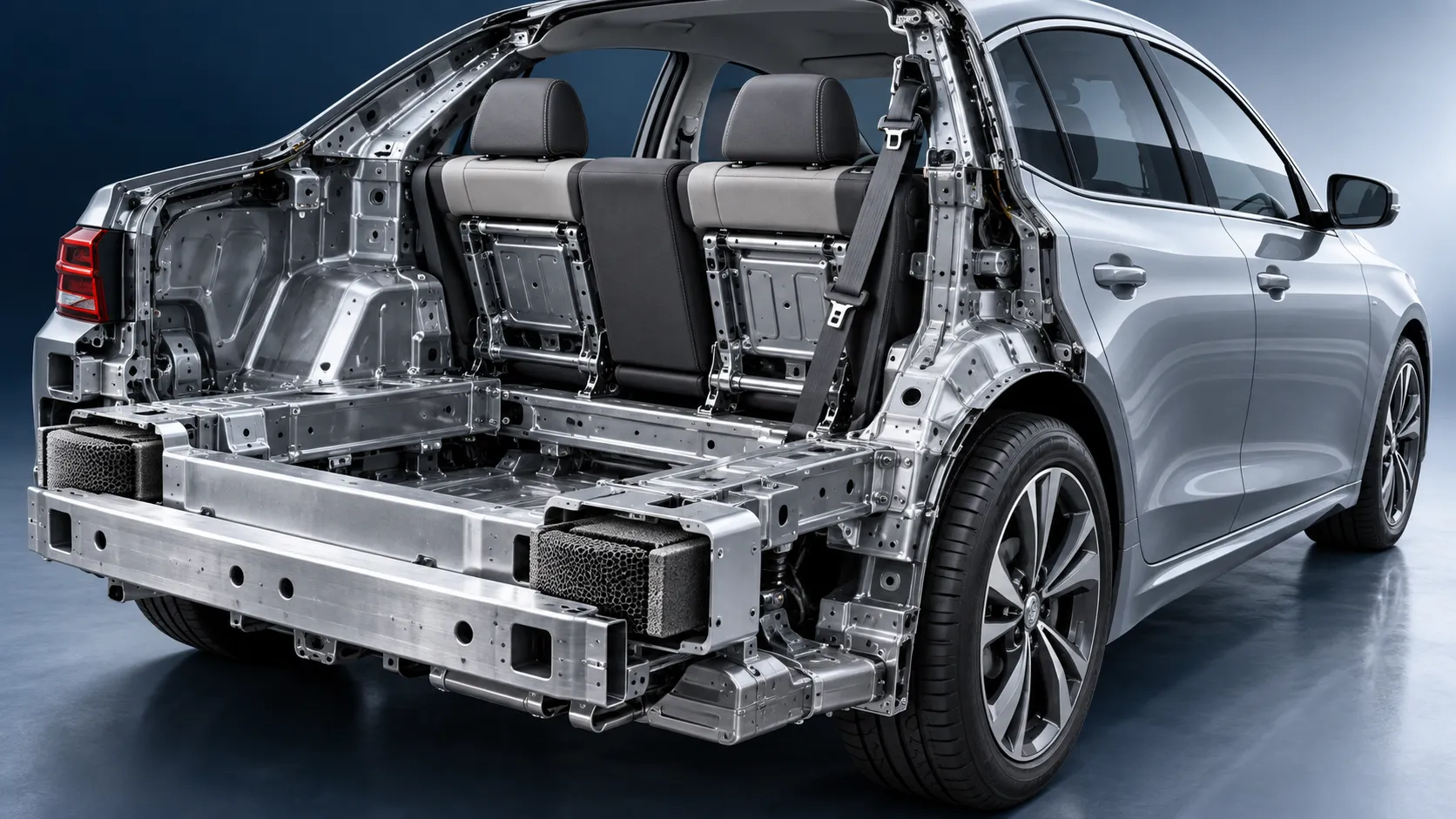
How Rear-Impact Safety Components Work Together to Protect Vehicle Occupants
Explore how automotive safety components for rear impact work together—from crash structures and seats to head restraints and belts—to enhance occupant protection.
How to Evaluate a Marine Safety Systems Manufacturer for Vessel Compliance and Reliability
Marine safety systems manufacturer evaluation guide: verify compliance, engineering quality, lifecycle costs, and global service support for safer, reliable vessel operations.
Crash Test Regulations for Seatbelts: Key Compliance Requirements Explained
Crash test regulations seatbelts explained: explore FMVSS, UN rules, anchorage strength, and dynamic restraint testing for safer, compliant vehicle systems.

How to Calculate the Total Cost of Automotive Lightweighting for a Vehicle Program
Automotive lightweight solutions cost: learn how to calculate program-level costs, including materials, tooling, joining, validation, risk, and vehicle-level value.

How Automotive Seat Occupancy Sensing Improves Airbag Deployment Decisions
Automotive seat occupancy sensing helps optimize airbag deployment decisions, improving passenger classification, safety diagnostics, and compliance across real-world conditions.

What Drives Lightweight Body Component Costs in High-Volume Vehicle Programs?
Lightweight body components cost depends on material yield, forming, joining, tooling, validation, and logistics. Explore proven ways to optimize total vehicle program cost.
Related News
- 00
0000-00
How Rear-Impact Safety Components Work Together to Protect Vehicle Occupants - 00
0000-00
Crash Test Regulations for Seatbelts: Key Compliance Requirements Explained - 00
0000-00
How Seat Belt Pretensioners for EVs Improve Crash Safety and System Response - 00
0000-00
How Do Seatbelt Systems with Pretensioner Improve Crash Protection? - 00
0000-00
How Seatbelt Technology for Buses Improves Passenger Safety and Meets Compliance Needs
Weekly Insights
Stay ahead with our curated technology reports delivered every Monday.