
How Navigation Intelligence Improves Route Planning, Risk Control, and Fleet Efficiency
Why navigation intelligence now shapes more than route planning
Navigation intelligence has moved beyond map guidance and vessel tracking.
It now influences how fleets assess exposure, verify compliance, and protect operating margins under changing transport conditions.
In practical use, the value appears when routes are no longer static.
Weather shifts, port congestion, signal interference, inland restrictions, and equipment status all reshape decisions in real time.
That is why navigation intelligence matters across marine operations and the wider mobility equipment chain.
It connects spatial perception, operational timing, and safety judgment instead of treating them as separate tasks.
This broader view aligns with GNCS, where marine navigation systems, passive safety insight, and cabin engineering are examined as connected decision layers.
The result is not just better route planning.
It is a clearer operating picture that improves risk control and fleet efficiency without ignoring long-term reliability.
Actual operating conditions change what navigation intelligence must solve
Different scenarios create different priorities, even when the same navigation intelligence platform is used.
Open-sea routing often prioritizes signal stability, weather layering, and fuel-aware course correction.
Nearshore and port approaches usually focus more on traffic density, sonar interpretation, pilotage support, and compliance logging.
Cross-industry transport adds another layer.
When high-value safety parts, lightweight body stampings, or smart seating systems move through multimodal routes, timing and handling risk become part of navigation logic.
A delayed shipment of airbag assemblies is not the same as a delayed bulk cargo movement.
The first affects production continuity, certification schedules, and downstream quality assurance windows.
So the real judgment point is not whether navigation intelligence exists.
It is whether the system reads the operating context well enough to support the right trade-off.
A route is only efficient when the risk model fits the cargo and environment
Shorter distance does not always mean lower total cost.
A route crossing unstable weather or electromagnetic disruption zones may create more delay, more fuel burn, and more operational stress.
In marine settings, navigation intelligence should combine AIS, radar, satellite positioning, ECDIS updates, and local traffic behavior.
In connected logistics settings, it should also reflect cargo sensitivity, handling constraints, and transfer-node reliability.
Where high-frequency scenarios reveal the strongest gains
The clearest gains usually appear in repetitive but variable operations.
These are the environments where navigation intelligence keeps learning from route outcomes instead of repeating fixed rules.
Ocean-going navigation under mixed visibility and signal complexity
Long-range voyages need more than position accuracy.
They need confidence in route decisions when visibility drops, traffic patterns shift, or regional interference affects perception quality.
Here, navigation intelligence improves route planning by merging live sensor data with historical route behavior.
It also supports risk control by identifying when a safe route should override a nominally faster one.
Port entry, channel transit, and congestion-heavy coordination
This is a more compressed decision environment.
Small timing errors can create berth conflicts, pilot delays, idle consumption, or unsafe spacing.
Navigation intelligence becomes valuable when it supports micro-adjustments rather than broad route redesign.
That includes dynamic ETA revision, traffic conflict alerts, and local-depth awareness tied to actual loading conditions.
Multimodal movement of safety-critical components
GNCS tracks sectors where timing, compliance, and handling quality are tightly linked.
Auto body stampings, seatbelt systems, airbag assemblies, and smart seating do not tolerate the same logistics assumptions as general freight.
For these flows, navigation intelligence supports fleet efficiency by preventing avoidable dwell time and unstable transfer decisions.
It also helps preserve traceability when regulatory or quality review depends on route records and timing integrity.
Different scenarios rarely share the same decision priorities
The table below shows why the same navigation intelligence tools must be configured differently across use cases.
This is where many implementation gaps begin.
Teams often buy for technical capability but deploy with generic thresholds that ignore scenario-specific tolerance levels.
What to confirm before scaling navigation intelligence across fleets
A useful rollout starts with decision conditions, not dashboards.
In actual deployment, several checks make a visible difference.
- Verify which routes need predictive correction and which only need monitoring accuracy.
- Map cargo sensitivity against route volatility, especially for safety and structural components.
- Check whether ECDIS, AIS, sonar, and telematics data update at compatible intervals.
- Define when the system should favor safety margin over shortest path logic.
- Link route records with compliance review, incident analysis, and maintenance planning.
GNCS has relevance here because route intelligence does not stand alone.
The same discipline used to assess crash energy absorption, smart seating integration, or non-toxic inflator evolution also supports better navigation decisions.
It is the discipline of linking sensor truth, material behavior, and regulatory expectations into one usable operating picture.
Common mistakes usually come from oversimplifying the scenario
One common mistake is evaluating navigation intelligence only by positioning precision.
Precision matters, but route planning quality also depends on timing logic, environmental interpretation, and alert relevance.
Another mistake is treating similar routes as identical operating environments.
Two coastal routes may share distance profiles yet differ sharply in signal clutter, tide response, or local traffic behavior.
Cost bias is also common.
A lower acquisition cost may look attractive until poor integration creates manual work, delayed updates, or weak risk visibility.
The same applies to fleet efficiency.
Efficiency should be measured through fewer avoidable deviations, steadier asset use, and cleaner compliance evidence.
It should not be reduced to average speed alone.
A practical way to turn navigation intelligence into measurable gains
A strong next step is to sort operations by scenario complexity before comparing systems or workflows.
Separate long-haul marine routing, port movement, and safety-component logistics rather than forcing one evaluation model on all three.
Then define the parameters that truly change outcomes.
These usually include update frequency, route deviation thresholds, cargo sensitivity, compliance traceability, and maintenance interaction.
From there, navigation intelligence becomes easier to judge on real operating value.
It improves route planning when conditions are fluid, strengthens risk control when exposure is hard to read, and raises fleet efficiency when asset decisions become more consistent.
That is the more useful standard.
Not whether the system looks advanced, but whether it fits the actual movement environment and supports better judgment over time.
Related News
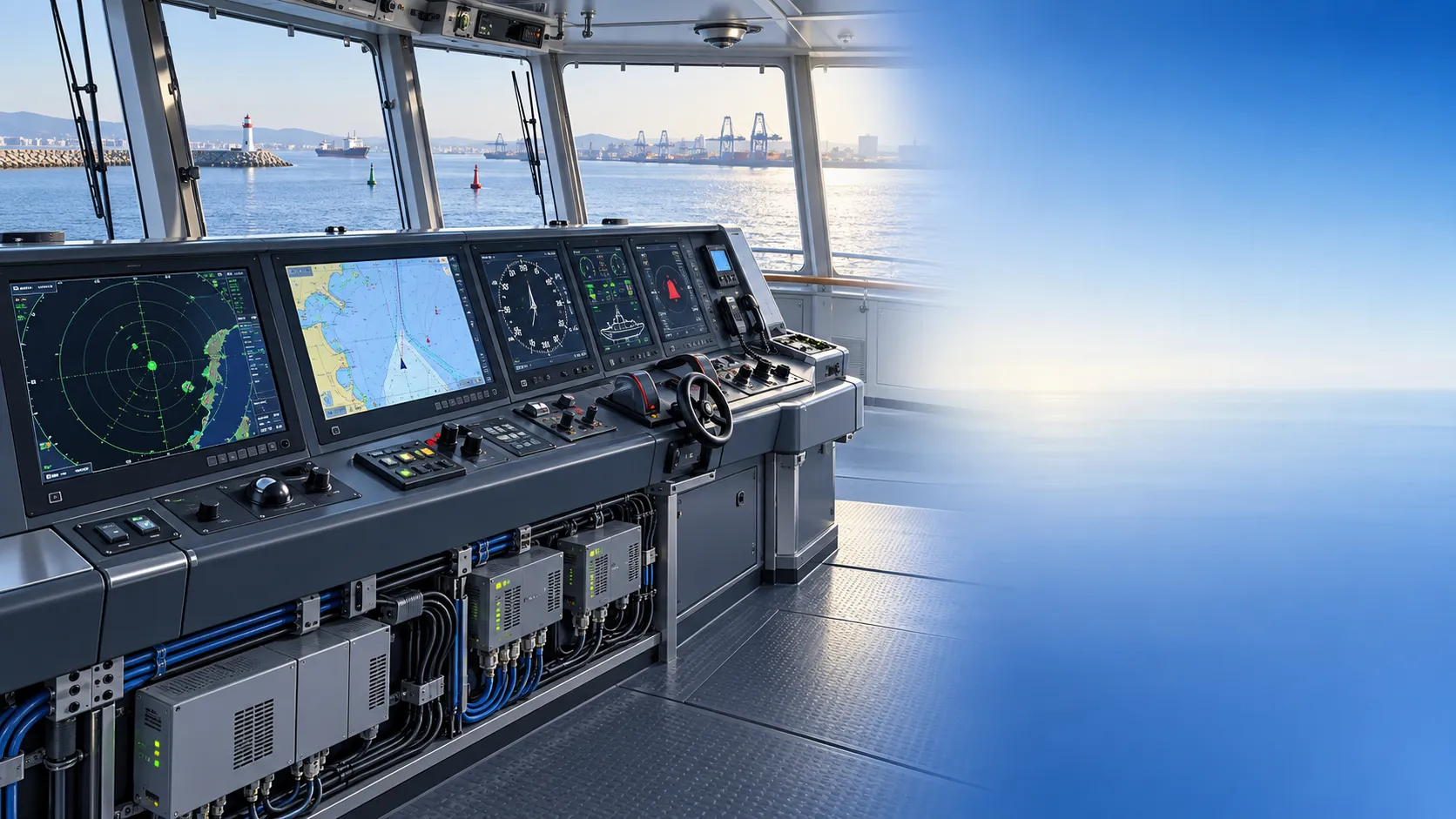
How to Specify Integrated Marine Electronics for Reliable Bridge Operations
Integrated marine electronics: learn how to specify reliable bridge systems with clear data flows, redundancy, alarm control, lifecycle interfaces, and operational testing.

How to Evaluate Navigation Radar Manufacturers for Commercial Vessel Projects
Navigation radar manufacturers: learn how to compare performance, compliance, integration, support, and lifecycle cost for commercial vessel projects.

How Adjustable Cabin Ergonomics Reduce Operator Fatigue in Long-Shift Vehicles
Adjustable cabin ergonomics reduces operator fatigue through better seating, reach, visibility, vibration control, and climate comfort for safer long-shift vehicles.

How Rear-Impact Safety Components Work Together to Protect Vehicle Occupants
Explore how automotive safety components for rear impact work together—from crash structures and seats to head restraints and belts—to enhance occupant protection.
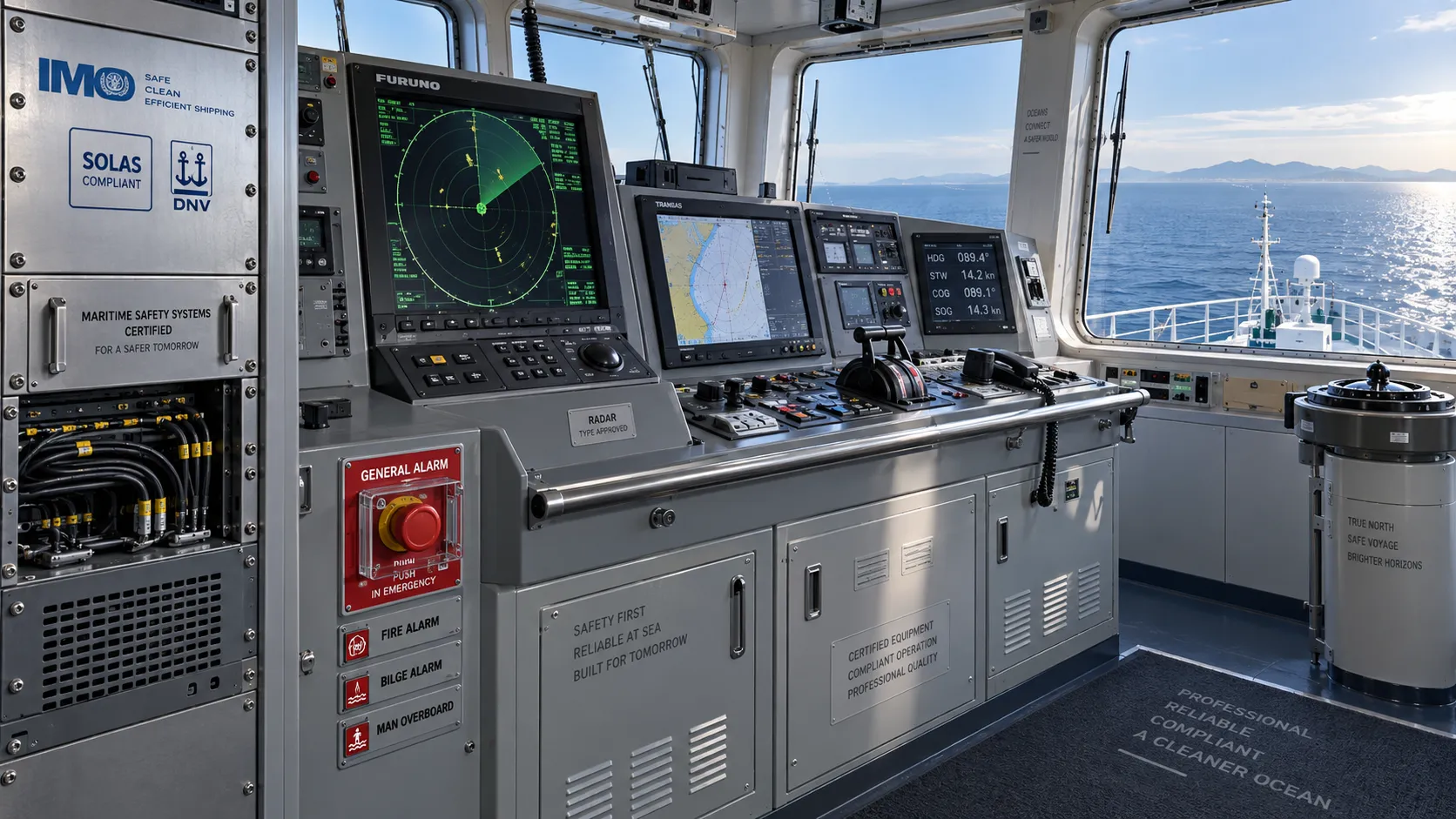
How to Evaluate a Marine Safety Systems Manufacturer for Vessel Compliance and Reliability
Marine safety systems manufacturer evaluation guide: verify compliance, engineering quality, lifecycle costs, and global service support for safer, reliable vessel operations.
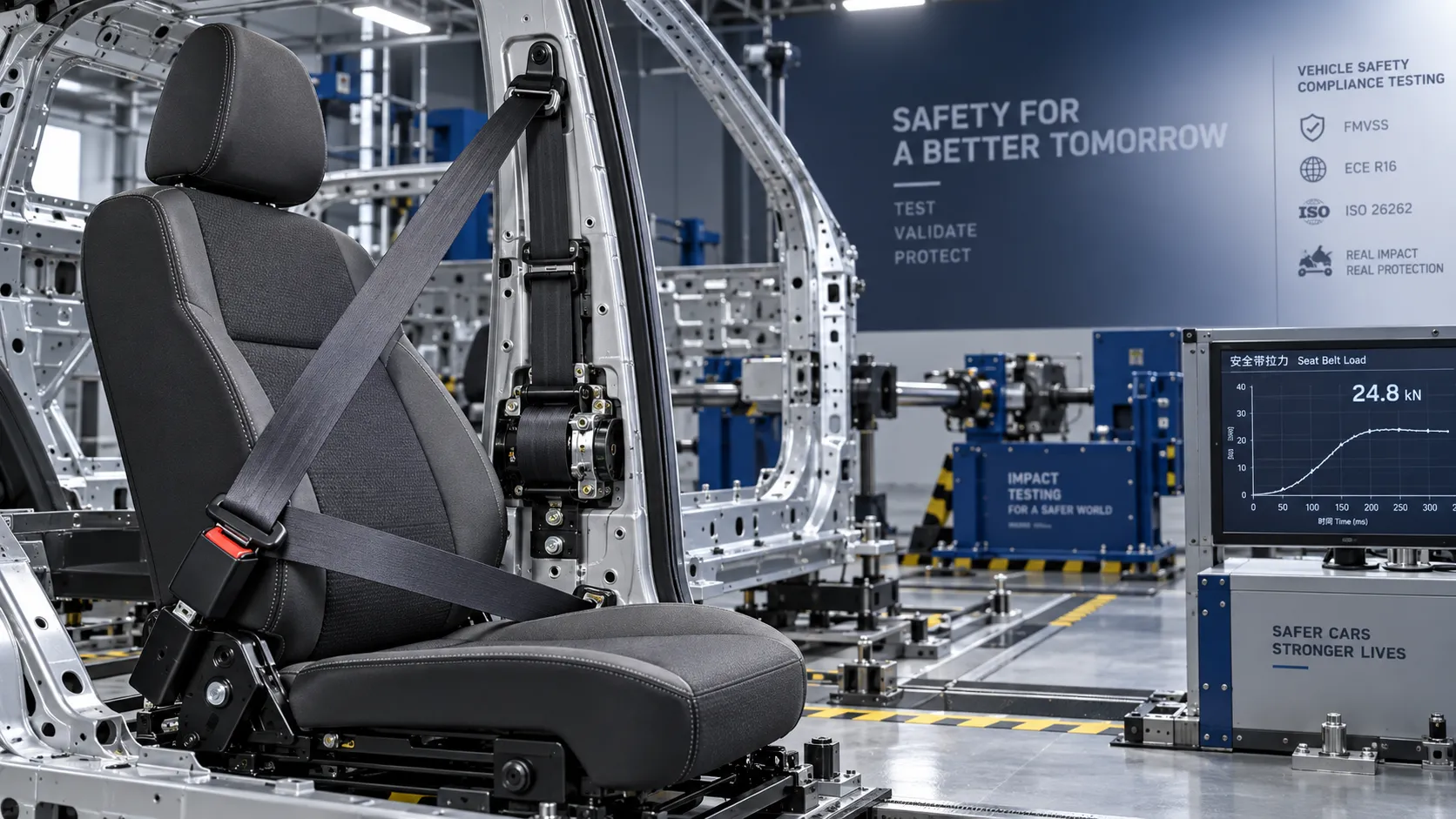
Crash Test Regulations for Seatbelts: Key Compliance Requirements Explained
Crash test regulations seatbelts explained: explore FMVSS, UN rules, anchorage strength, and dynamic restraint testing for safer, compliant vehicle systems.

How to Calculate the Total Cost of Automotive Lightweighting for a Vehicle Program
Automotive lightweight solutions cost: learn how to calculate program-level costs, including materials, tooling, joining, validation, risk, and vehicle-level value.

How Automotive Seat Occupancy Sensing Improves Airbag Deployment Decisions
Automotive seat occupancy sensing helps optimize airbag deployment decisions, improving passenger classification, safety diagnostics, and compliance across real-world conditions.

What Drives Lightweight Body Component Costs in High-Volume Vehicle Programs?
Lightweight body components cost depends on material yield, forming, joining, tooling, validation, and logistics. Explore proven ways to optimize total vehicle program cost.
Related News
- 00
0000-00
How to Evaluate Navigation Radar Manufacturers for Commercial Vessel Projects - 00
0000-00
How to Evaluate Cargo Marine Sonar Systems for Detection Range and Vessel Fit - 00
0000-00
How to Evaluate Marine Signal Processing Software for Radar and Sonar Integration - 00
0000-00
How Do Automatic Identification Systems Improve Vessel Tracking and Collision Avoidance? - 00
0000-00
How to Choose Marine Navigation Systems for Patrol Boats in Coastal and Offshore Missions
Weekly Insights
Stay ahead with our curated technology reports delivered every Monday.