
Inflator Technology Price Breakdown: What Drives Cost Across Materials, Output, and Certification
Inflator Technology Price Breakdown: What Drives Cost Across Materials, Output, and Certification
For procurement teams evaluating passive safety components, understanding inflator technology price is essential to balancing compliance, performance, and sourcing risk.
Costs vary sharply by material selection, gas output consistency, production precision, and certification demands across global markets.
This breakdown explains the cost logic behind inflator sourcing in a practical, decision-focused way.
It also helps compare suppliers beyond headline quotes, which is where many purchasing mistakes begin.
Why Inflator Technology Price Varies So Much
At first glance, many inflators look similar on a drawing or RFQ sheet.
In reality, inflator technology price reflects a dense stack of engineering and compliance variables.
The biggest drivers usually include propellant chemistry, housing material, sealing accuracy, ignition stability, gas output repeatability, and test certification scope.
A low quote can hide weaker process control, narrower validation, or less traceability in upstream materials.
That matters because passive safety components fail expensively, both financially and reputationally.
Cost is not just the part price
When buyers assess inflator technology price, unit cost is only one layer.
Tooling amortization, PPAP effort, logistics controls, hazardous goods handling, warranty exposure, and requalification costs often shift the real economics.
In practical sourcing, the cheapest inflator can become the most expensive program decision.
Material Selection and Its Direct Impact on Price
Material choice is one of the clearest inflator technology price drivers.
It affects not only raw cost, but also forming difficulty, corrosion resistance, burst performance, and long-term storage reliability.
Housing metals
Steel housings are common because they balance strength, process maturity, and cost.
However, higher-grade steels raise machining demands and inspection thresholds.
Aluminum options can reduce system weight, but they may require tighter thermal and pressure design control.
That usually pushes inflator technology price upward, especially in programs with strict durability targets.
Propellant and gas generant chemistry
Propellant chemistry is another major cost lever.
Legacy formulations may appear cost-effective, but newer non-toxic or cleaner-burning systems often carry higher material and validation expense.
The tradeoff is better regulatory acceptance and lower future substitution risk.
From a sourcing perspective, this is where short-term savings can conflict with platform longevity.
Seals, filters, and igniters
Smaller components also shape inflator technology price more than many buyers expect.
High-grade seals improve leak resistance during long storage cycles.
Filters influence particulate control and gas temperature behavior.
Igniter quality affects activation consistency, which directly impacts safety validation and supplier credibility.
Output Performance and Precision Manufacturing Costs
Not all price variation comes from materials.
A large share of inflator technology price comes from how precisely suppliers can manufacture and control gas output.
Gas output consistency
Output consistency is not a marketing detail.
It determines whether the airbag system behaves as modeled across temperatures, crash severities, and occupant conditions.
Tighter output tolerance usually means stricter dosing, cleaner assembly environments, better metrology, and more end-of-line verification.
All of that increases inflator technology price, but it also reduces downstream integration risk.
Automation and scrap control
Highly automated lines often support better repeatability, though they require more capital.
Suppliers usually recover that investment through pricing, especially on lower-volume programs.
Still, automation can reduce scrap, containment events, and lot variation.
For long production cycles, those gains can outweigh a slightly higher quoted inflator technology price.
Single-stage versus multi-stage designs
Design architecture also changes the cost structure.
Single-stage inflators are typically simpler and lower in cost.
Multi-stage designs introduce more components, more control logic, and more calibration work.
That raises inflator technology price, but it may be justified in platforms needing more adaptive restraint behavior.
Certification, Compliance, and Regional Cost Gaps
Certification is one of the most underestimated pricing factors in passive safety sourcing.
Different markets require different test evidence, reporting depth, and audit readiness.
That is why inflator technology price can diverge even for parts with similar dimensions.
Validation scope affects price
Programs targeting multiple regions often demand broader validation matrices.
This may include temperature cycling, vibration, humidity aging, corrosion exposure, storage life, and deployment repeatability.
Each added requirement increases test cost, engineering hours, and documentation work.
Suppliers with proven homologation capability usually quote higher, but they lower launch uncertainty.
Functional safety and traceability expectations
Traceability systems also influence inflator technology price.
Detailed batch control, serialized records, process alarms, and digital quality logs cost money to maintain.
But when field issues appear, strong traceability sharply reduces containment time and investigation costs.
That is a meaningful total-cost advantage, especially in highly regulated mobility programs.
How to Compare Supplier Quotes Without Missing Hidden Costs
The most useful way to compare inflator technology price is to separate visible cost from embedded risk.
A quote review should include at least these checkpoints:
- Material grade and source stability for housings, seals, and propellant inputs.
- Output tolerance bands across temperature and aging conditions.
- Certification coverage by target market, including renewal effort.
- Line automation level, scrap rate history, and change-control discipline.
- Traceability depth, recall readiness, and field issue response timing.
- Tooling ownership, MOQ terms, and hazardous logistics responsibilities.
This approach makes inflator technology price a measurable sourcing model instead of a simple line-item comparison.
A practical quote comparison table
Market Signals That May Change Inflator Technology Price
Recent market changes are making inflator technology price more dynamic than before.
One clear signal is tighter scrutiny on chemical composition and long-term storage behavior.
Another is the push for lighter vehicle systems without weakening passive safety performance.
More visibly, regional compliance expectations continue to diverge rather than converge.
This means global buyers need pricing visibility that is tied to technical scope, not just commodity movement.
A Smarter Buying Framework for Inflator Sourcing
A strong buying decision starts by defining the actual performance envelope before requesting quotes.
That includes deployment targets, environment range, validation expectations, and export market needs.
Then evaluate inflator technology price through three filters:
- Can the supplier prove stable output and process control at program scale?
- Does the quoted scope include the certification and traceability your market actually needs?
- Will the selected design still be compliant and supportable three to five years from now?
That framework usually produces better outcomes than negotiating only on annual piece-price reductions.
In the end, inflator technology price should be read as a signal of engineering depth, validation confidence, and supply resilience.
The best sourcing decision is rarely the lowest quote on day one.
It is the option that holds safety performance, compliance stability, and total cost together over the full program life.
Related News
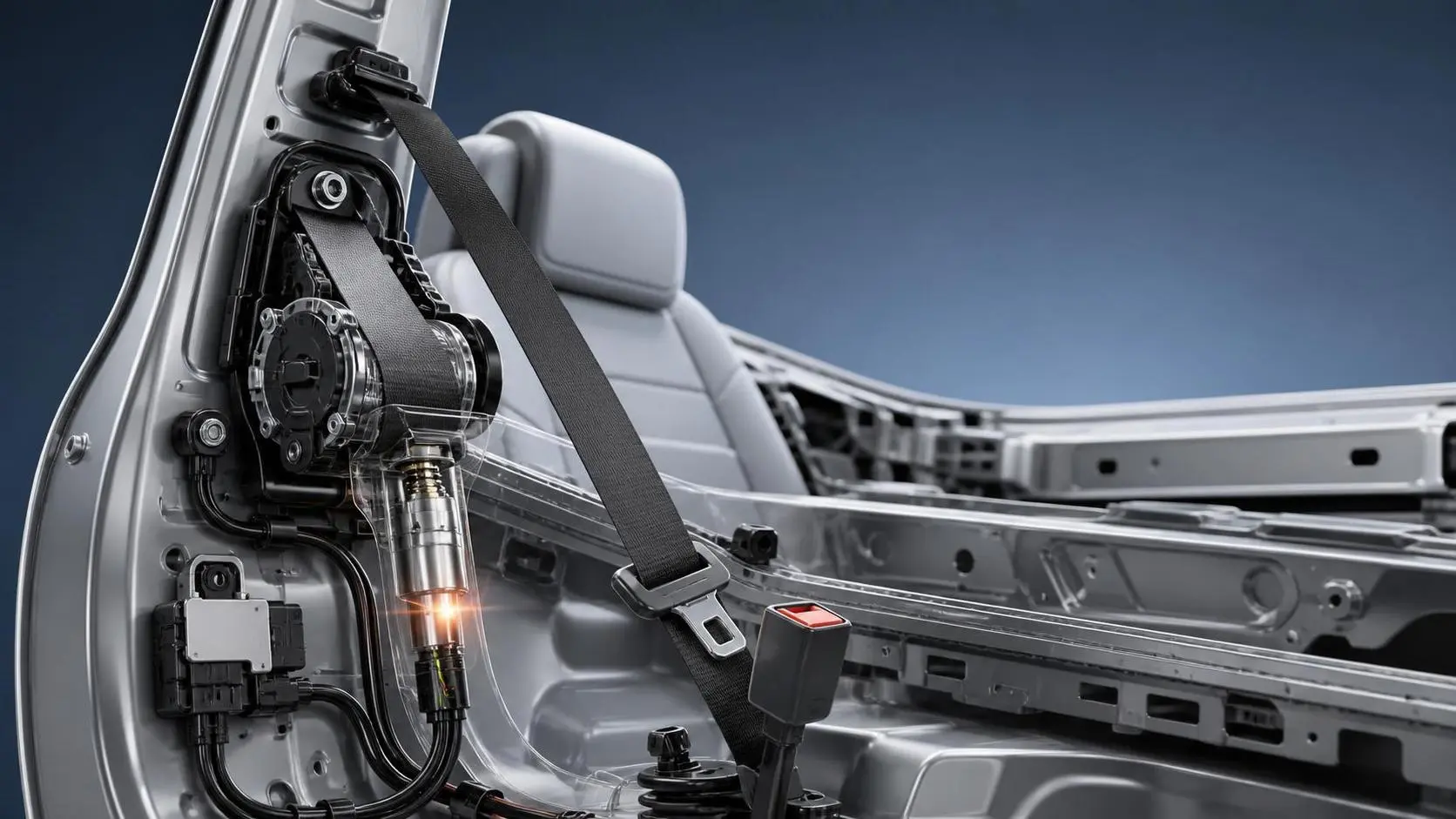
How Seat Belt Pretensioners for EVs Improve Crash Safety and System Response
Seat belt pretensioners for EVs improve crash timing, occupant control, and system response. Discover how smarter integration boosts EV safety performance.
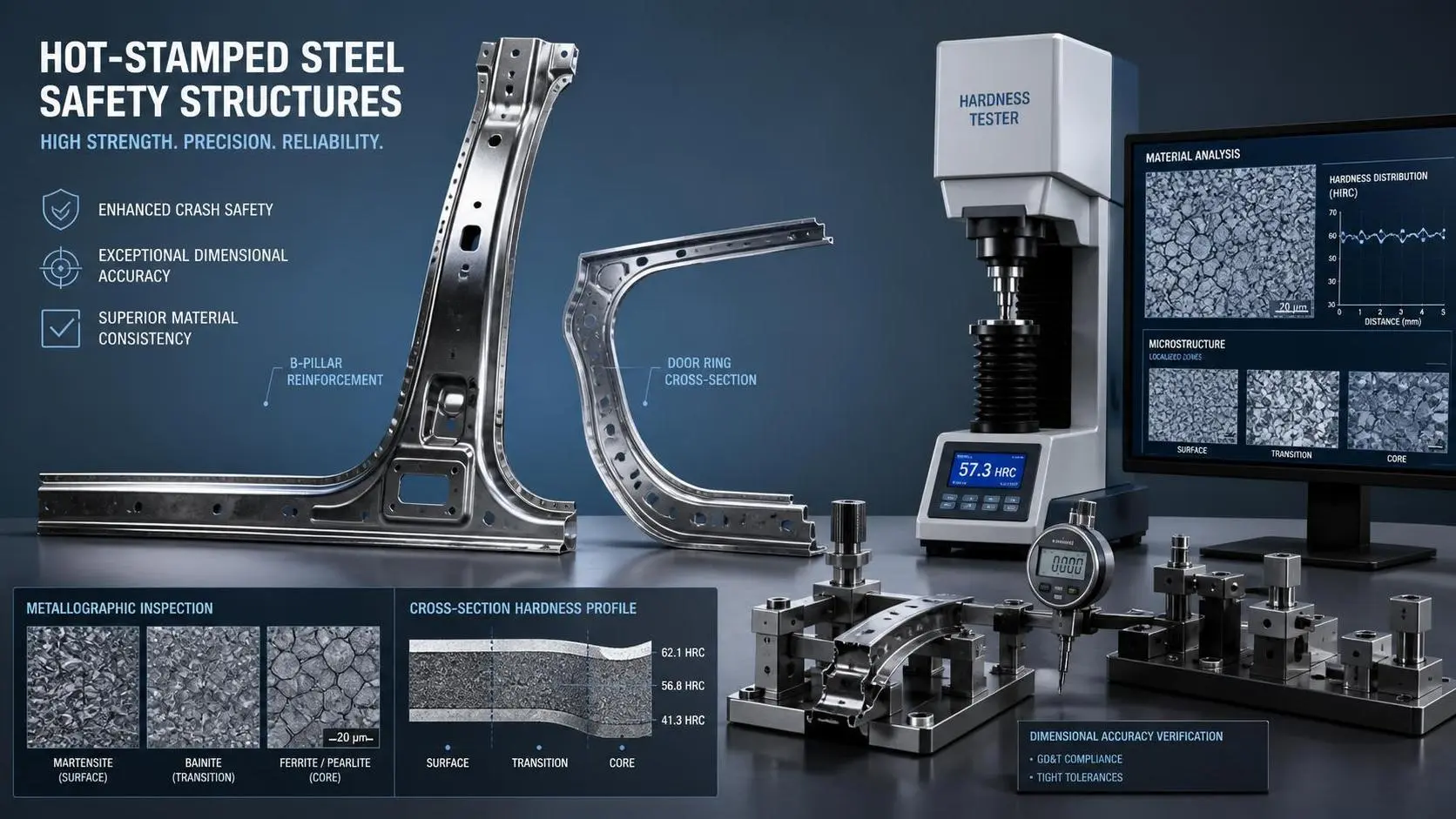
How to Evaluate High Strength Hot Stamped Steel Parts for Crash-Safety Applications
High strength hot stamped steel parts for crash-safety applications: learn how to assess strength, microstructure, dimensional accuracy, and process stability for safer sourcing decisions.
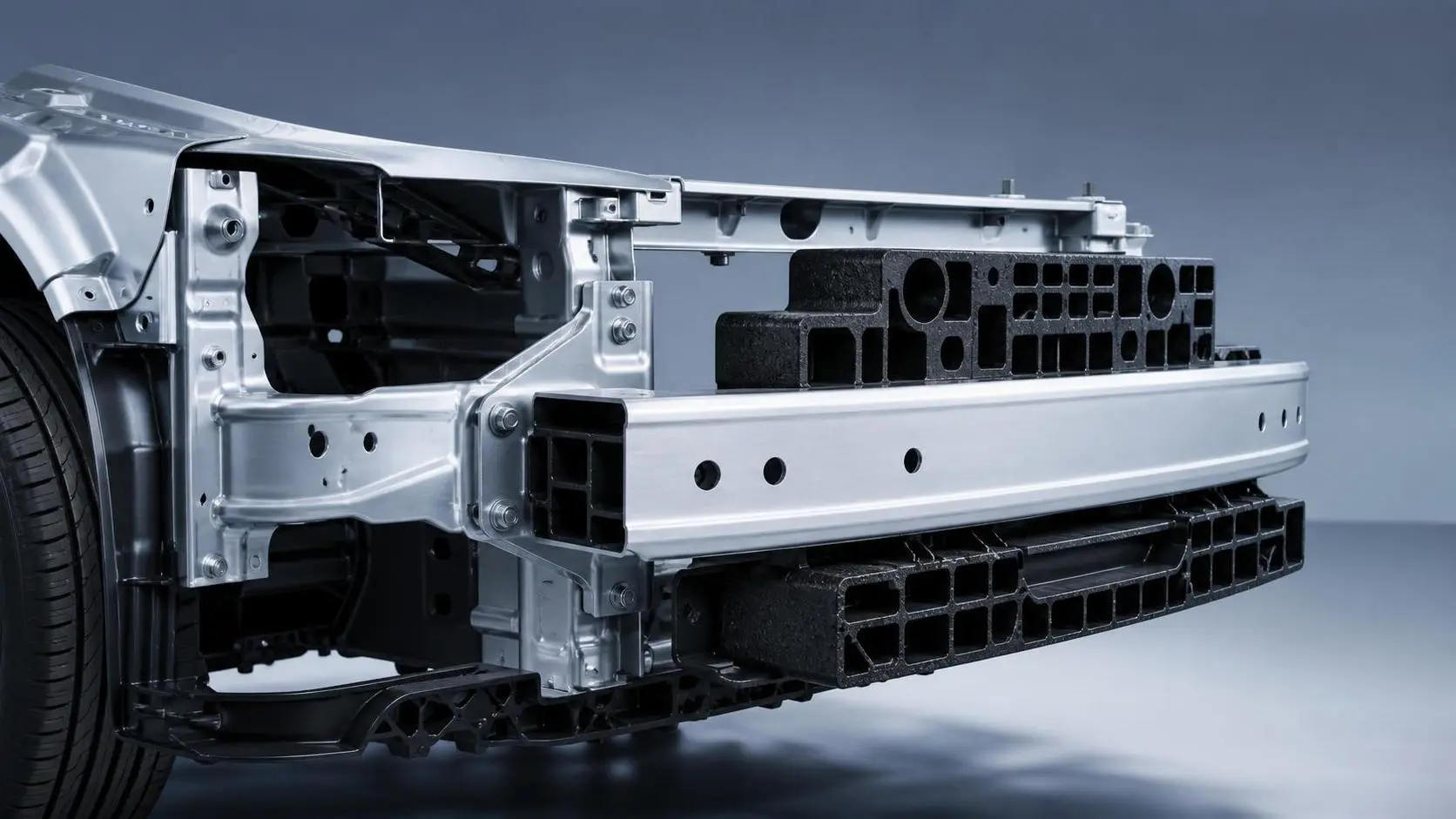
How Crash Management Components Reduce Repair Costs and Improve Impact Performance
Crash management components help reduce repair costs, protect critical vehicle structures, and improve impact performance. Learn how smarter design supports safer, more cost-efficient mobility programs.
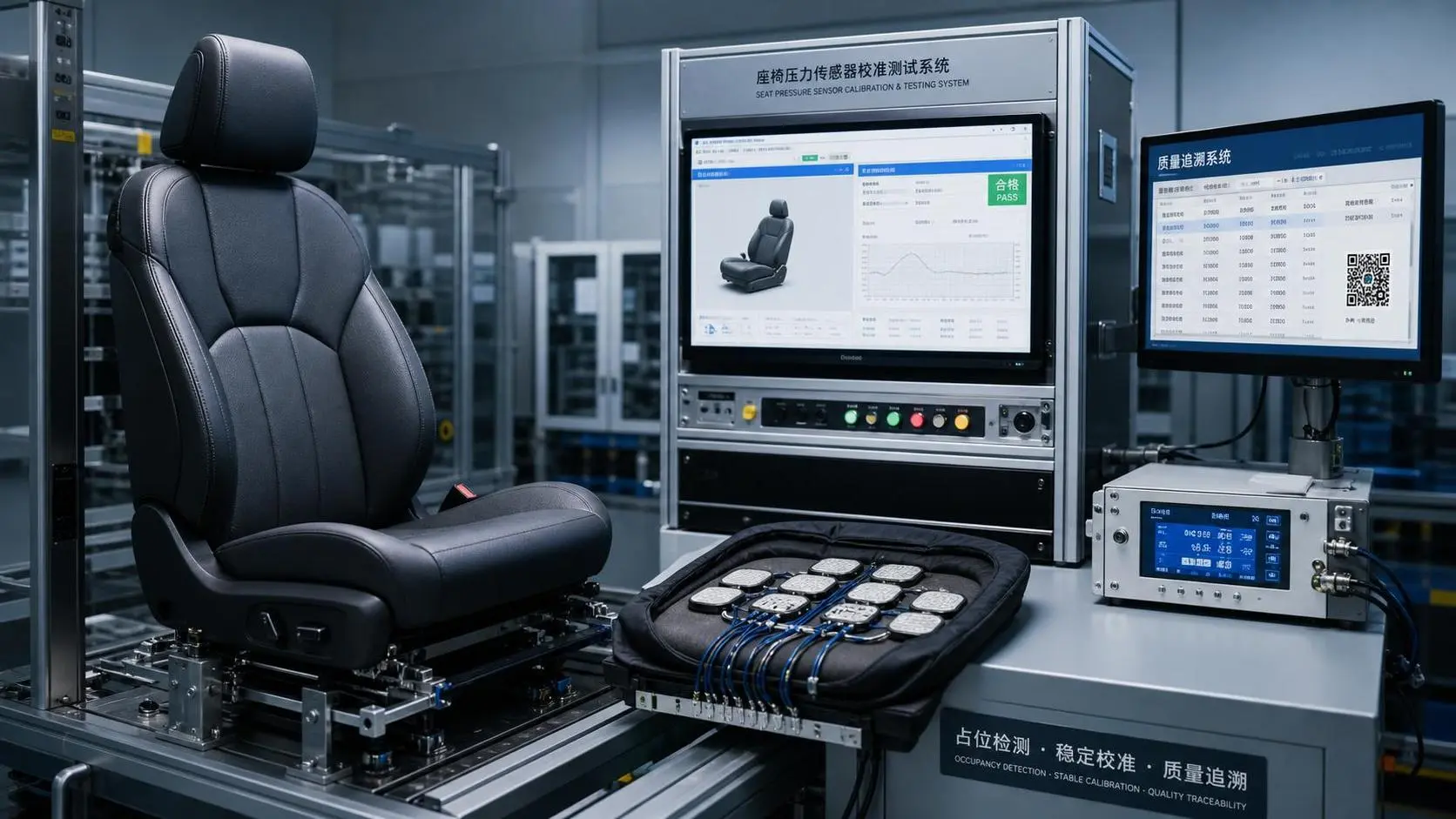
How to Evaluate a Seat Sensing Systems Factory for Automotive Safety Programs
Seat sensing systems factory selection goes beyond price. Learn how to assess quality control, validation, PPAP readiness, and long-term supply reliability for safer automotive programs.
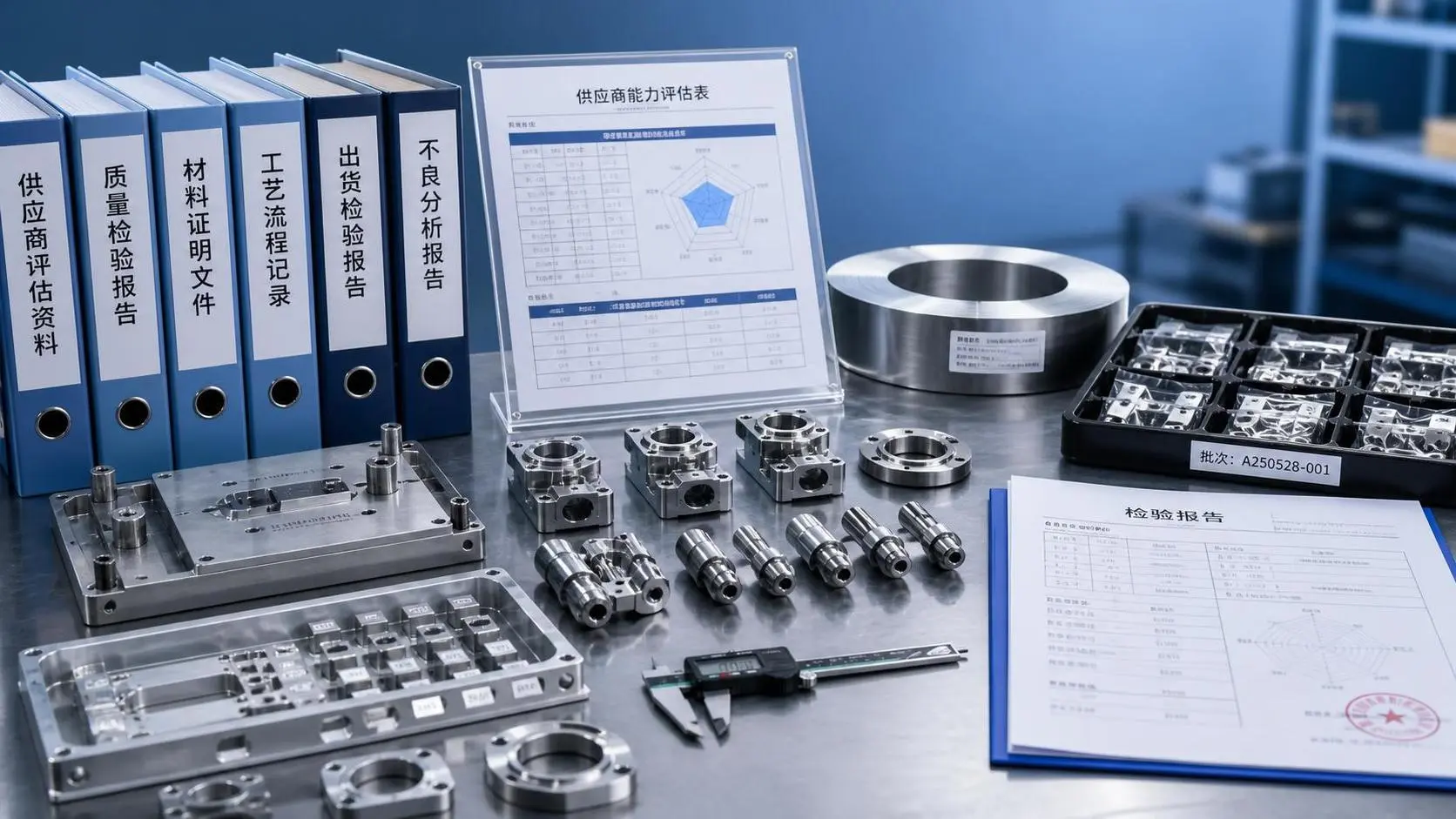
Supplier Capability Evaluation Process: Key Criteria for B2B Sourcing Decisions
Supplier capability evaluation process explained: learn the key criteria for B2B sourcing decisions, reduce supplier risk, and choose partners with confidence.
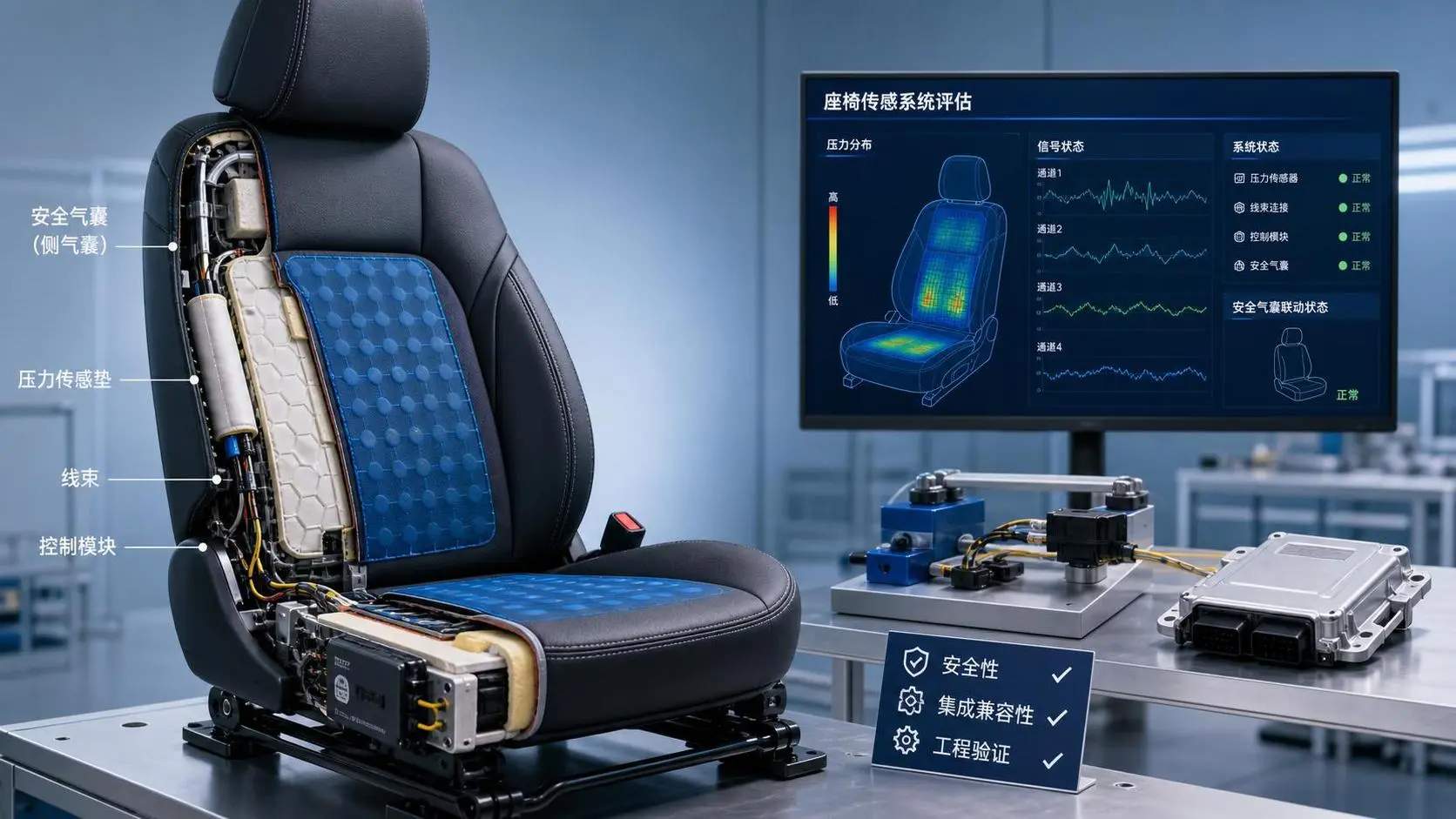
How to Evaluate a Seat Sensing Technology Supplier for Safety and Integration?
Seat sensing technology supplier evaluation guide: compare safety maturity, integration fit, algorithm reliability, and validation support to choose a partner that reduces risk.
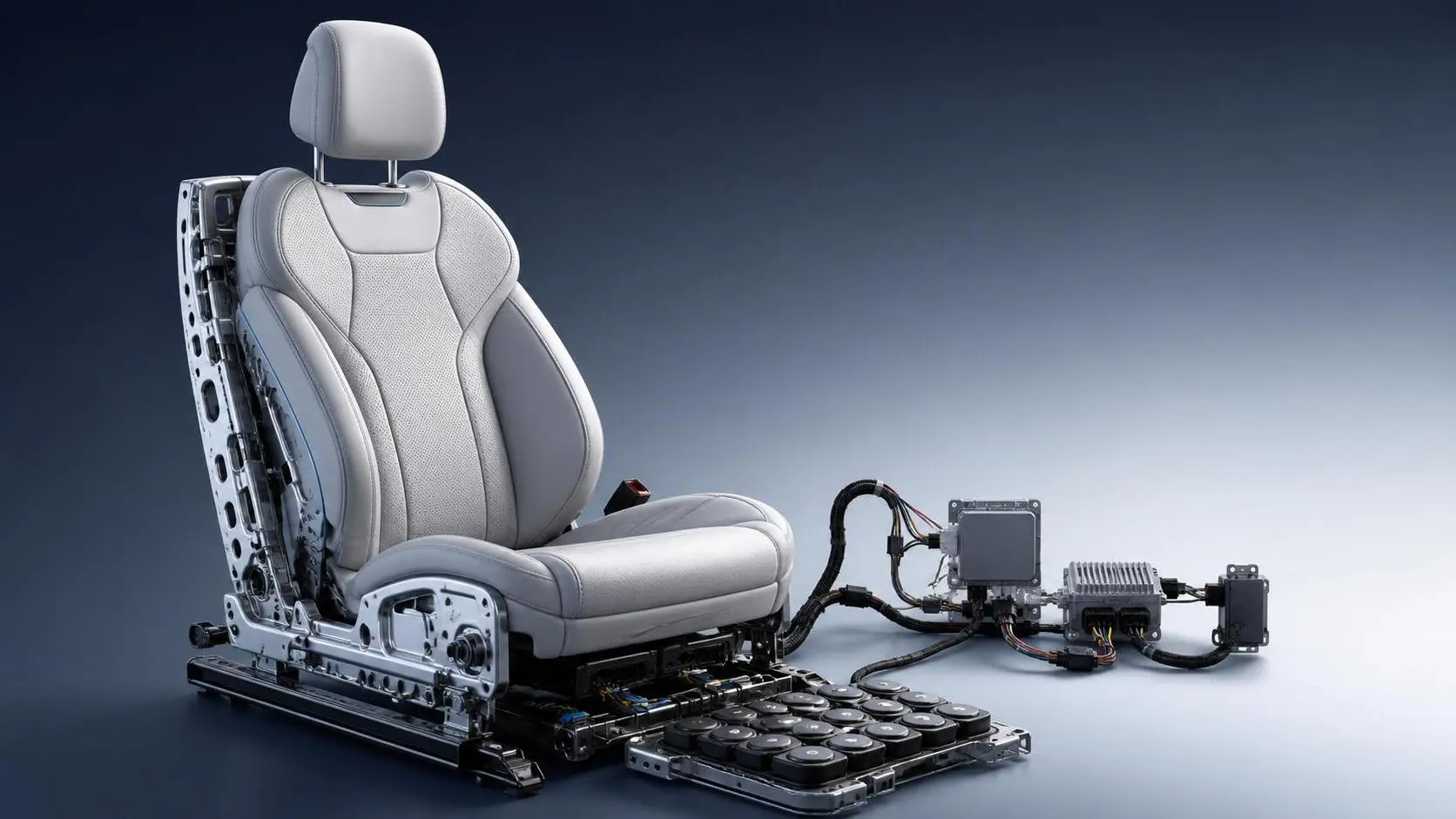
How to Evaluate Custom Smart Automotive Seating for Premium Vehicle Programs?
Custom smart automotive seating evaluation starts with safety, comfort, integration, and production readiness. Discover how premium vehicle teams choose smarter, lower-risk seat solutions.
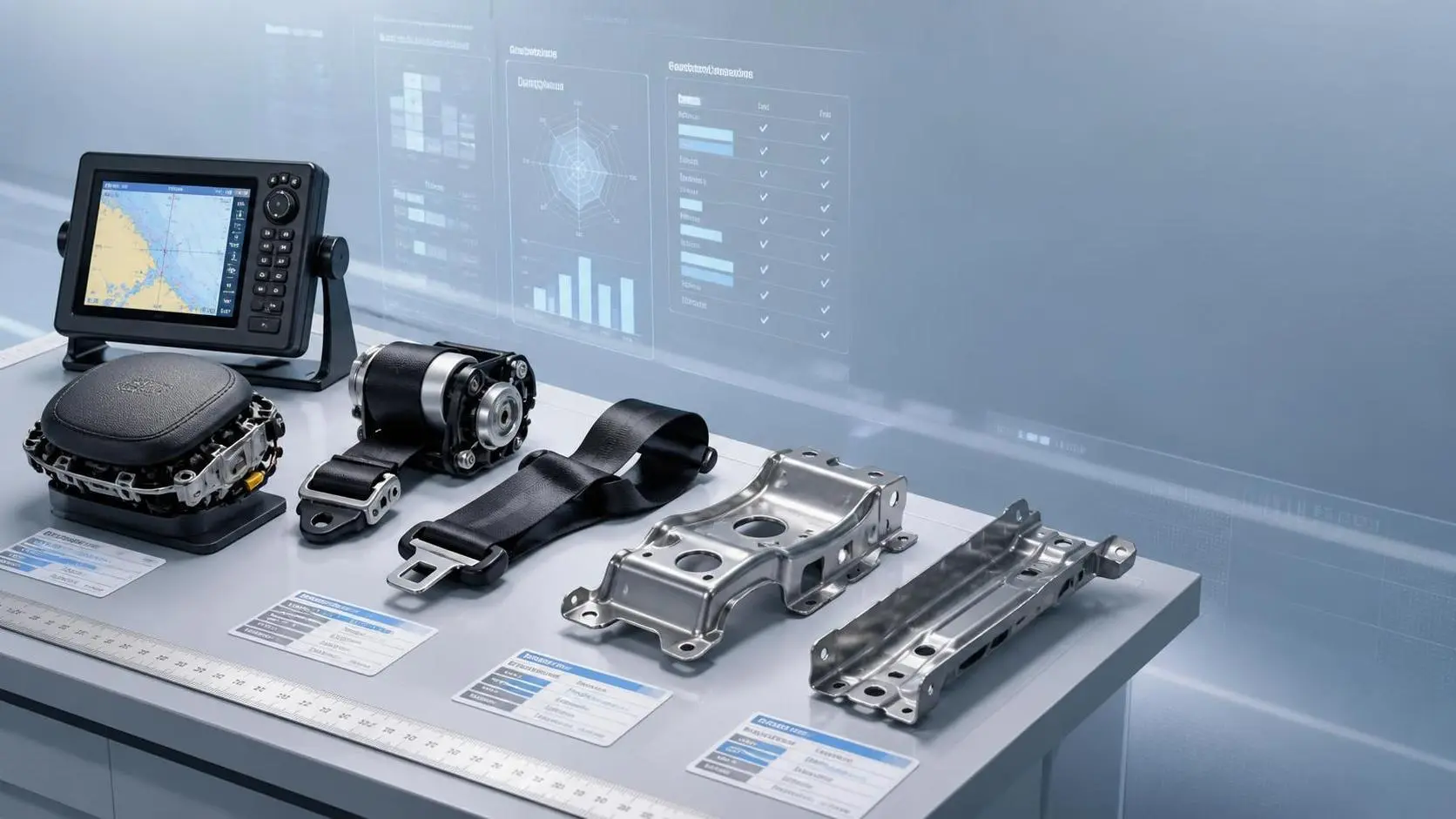
B2B Product Intelligence Platforms: How to Compare Features, Data Coverage, and ROI
B2B product intelligence platform comparison: learn how to evaluate data coverage, feature depth, compliance visibility, and ROI to choose a sourcing tool that reduces risk and speeds decisions.
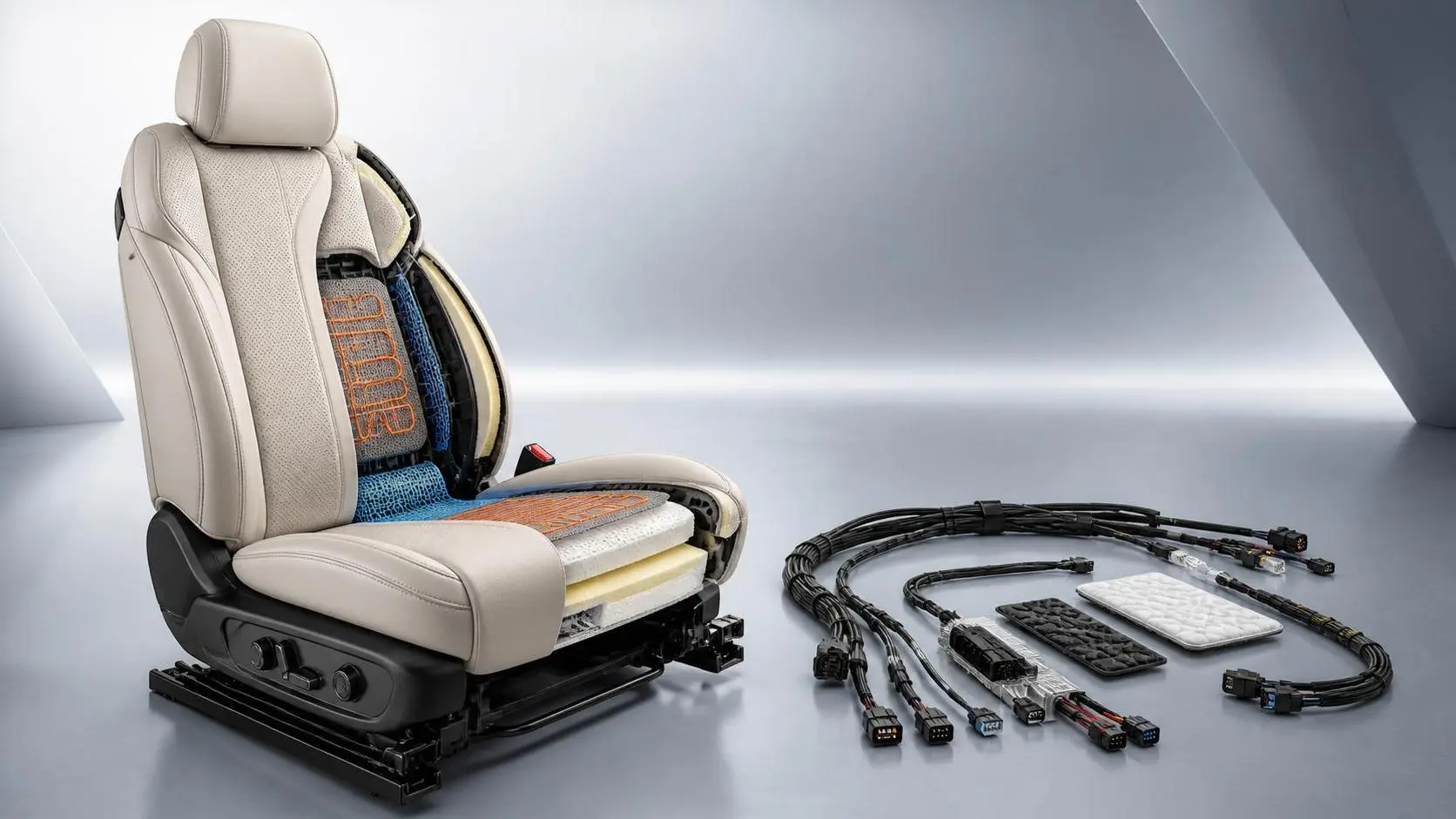
Climate Control Seats Cost: What Drives Price and Long-Term Ownership Value?
Climate control seats cost depends on materials, thermal tech, and integration. Learn what drives price and how to judge long-term value before you buy.
Related News
- 00
0000-00
Automotive Inflator Technology Price: What Drives Cost Across Types and Performance Levels? - 00
0000-00
Inflator Technology Price Breakdown: What Drives Cost Across Materials, Output, and Certification - 00
0000-00
How to Evaluate Certified Automotive Inflator Technology for Safety, Output, and Integration - 00
0000-00
Non-Toxic Propellants for Inflators: Key Types, Performance Trade-Offs, and Safety Standards - 00
0000-00
Airbag Inflators Manufacturer Comparison: Pyrotechnic vs Hybrid vs Stored Gas Designs
Weekly Insights
Stay ahead with our curated technology reports delivered every Monday.