
22MnB5 Hot Stamped Steel Parts: Key Properties, Forming Limits, and Typical Uses
22MnB5 Hot Stamped Steel Parts: Key Properties, Forming Limits, and Typical Uses
For lightweight safety structures, hot stamped steel parts 22MnB5 still set a practical benchmark. The material combines very high strength, stable geometry, and reliable crash behavior.
That matters when body engineers need thinner gauges without giving away intrusion resistance. It also matters when dimensional repeatability drives welding fit, assembly quality, and downstream cost.
In real programs, choosing hot stamped steel parts 22MnB5 is rarely just a material decision. It is a process decision, a tooling decision, and often a safety strategy decision.
The useful question is not whether 22MnB5 is strong. The better question is where its forming window, microstructure control, and cost profile make the most technical sense.
Why 22MnB5 Dominates Hot Stamped Safety Parts
22MnB5 is a boron-alloyed steel designed for press hardening. In the hot stamping route, the blank is heated, formed while austenitic, then quenched in the die.
After quenching, the microstructure becomes mostly martensitic. That transformation is the core reason hot stamped steel parts 22MnB5 achieve ultra-high tensile strength with relatively thin section thickness.
Compared with many cold-formed high-strength grades, 22MnB5 offers a better path to complex geometry at very high final strength. Springback is also much lower after die quenching.
From a production view, that combination supports crash structures that are light, compact, and easier to hold within tight dimensional tolerances.
Typical Chemical and Metallurgical Logic
The steel contains manganese for hardenability and boron for strong quench response. Silicon and chromium may also support oxidation control and transformation behavior.
In practical sourcing, coatings such as Al-Si are common. They help manage scale during furnace heating and support more stable surface quality after hot stamping.
Key Properties of Hot Stamped Steel Parts 22MnB5
For technical review, the key properties of hot stamped steel parts 22MnB5 should be read as a package, not as isolated numbers.
- Tensile strength often reaches around 1,500 MPa after proper quenching.
- Yield strength is typically very high, supporting strong anti-intrusion performance.
- Hardness rises sharply after martensitic transformation, which is useful for load path stability.
- Dimensional accuracy is usually better than cold forming at similar strength levels.
- Springback remains low, which reduces tuning effort in body shop integration.
- Crash energy management is strong when geometry and joining are well designed.
However, elongation after hardening is limited. That means the final part is strong, but not forgiving of poor edge quality, weak hole design, or late engineering changes.
This is one reason hot stamped steel parts 22MnB5 often belong in occupant cell reinforcement, where controlled stiffness and intrusion resistance are priorities.
Practical Forming Limits in Hot Stamping
The forming limits of hot stamped steel parts 22MnB5 are wider than cold stamping at comparable final strength. Still, the process has clear boundaries.
Most failures come from temperature loss, uneven material flow, local thinning, coating behavior, or quench conditions that miss the required cooling rate.
1. Heating Window
The blank must reach a stable austenitization range before transfer. If heating is too low, formability drops and hardening becomes inconsistent.
If heating is excessive, grain coarsening, surface oxidation, or coating defects can become visible. That usually creates avoidable quality variation.
2. Transfer Time
Transfer from furnace to press is a real process limit. Too much delay lowers blank temperature and narrows the safe forming window.
In production, even a sound die design can underperform if transfer control is weak. This is often missed during early line planning.
3. Draw Depth and Local Strain
Hot stamped steel parts 22MnB5 can handle shapes that would be difficult after cold hardening. Even so, local radii, embosses, and pierced regions remain sensitive areas.
Sharp transitions increase thinning risk. Tight radii also raise the chance of nonuniform cooling, which can shift hardness and crash response.
4. Quench Performance
The die must remove heat fast enough to form martensite through the full section. Cooling channel design, contact pressure, and surface condition all matter.
If quenching is uneven, hot stamped steel parts 22MnB5 may show soft zones, distorted strength maps, or unstable weld performance in later assembly stages.
Design and Evaluation Points That Matter Most
During technical evaluation, material data alone is not enough. The real decision quality comes from linking part geometry, process capability, and safety function.
- Check whether the load case truly needs ultra-high strength, or whether mixed-material design is more efficient.
- Review radii, beads, and hole locations against hot-forming strain paths, not only final CAD shape.
- Ask for hardness mapping and metallographic evidence, especially around corners and trimmed edges.
- Confirm coating choice and corrosion path, particularly for closed sections and welded assemblies.
- Validate joining compatibility with spot welding, laser welding, or rivet-based mixed-body strategies.
More importantly, evaluate the part as a system element. A strong pillar reinforcement can still disappoint if adjacent parts collapse too early.
Typical Uses of Hot Stamped Steel Parts 22MnB5
The most common uses of hot stamped steel parts 22MnB5 are in body-in-white zones where passenger survival space must be protected during severe impact.
A and B Pillar Reinforcements
These parts need high intrusion resistance in small packaging space. That is where hot stamped steel parts 22MnB5 usually perform very well.
Roof Rails and Roof Bows
For rollover and roof crush targets, high-strength press-hardened sections can support stiffness without adding excessive mass above the beltline.
Side Sills and Rocker Reinforcements
These components often see side impact and offset crash loads. Thickness reduction becomes possible when section efficiency and joining are well controlled.
Front and Rear Bumper Beams
In some architectures, hot stamped steel parts 22MnB5 are selected for beams or reinforcements needing stable shape, high strength, and compact packaging.
Door Impact Beams and Tunnel Reinforcements
These applications benefit from high load capacity in constrained space. That said, the right choice still depends on crash mode and joining path.
Common Risks and How to Read Them Early
Several risks repeat across programs using hot stamped steel parts 22MnB5. Early review usually saves more than late corrective tooling.
- Soft spots from poor quenching can weaken intrusion resistance.
- Edge cracking after trimming can reduce durability and crash consistency.
- Coating damage can create corrosion concerns in closed cavities.
- Overdesigned strength can shift energy to weaker neighboring structures.
- Supplier variation in thermal control can widen quality scatter.
A practical review method is to compare simulation claims with hardness data, section cuts, furnace records, and dimensional capability studies from actual runs.
Where 22MnB5 Makes the Best Technical Sense
Hot stamped steel parts 22MnB5 make the most sense when the structure needs very high strength, limited springback, and weight reduction in a compact safety zone.
They are less attractive when ductility after forming is the main need, when local repairability dominates, or when the supply chain cannot control the thermal process well.
For a grounded decision, assess hot stamped steel parts 22MnB5 through four lenses: final crash role, manufacturability, joining compatibility, and total system cost.
That approach keeps the discussion technical and useful. It also makes 22MnB5 selection less about trend following and more about measurable engineering fit.
Related News
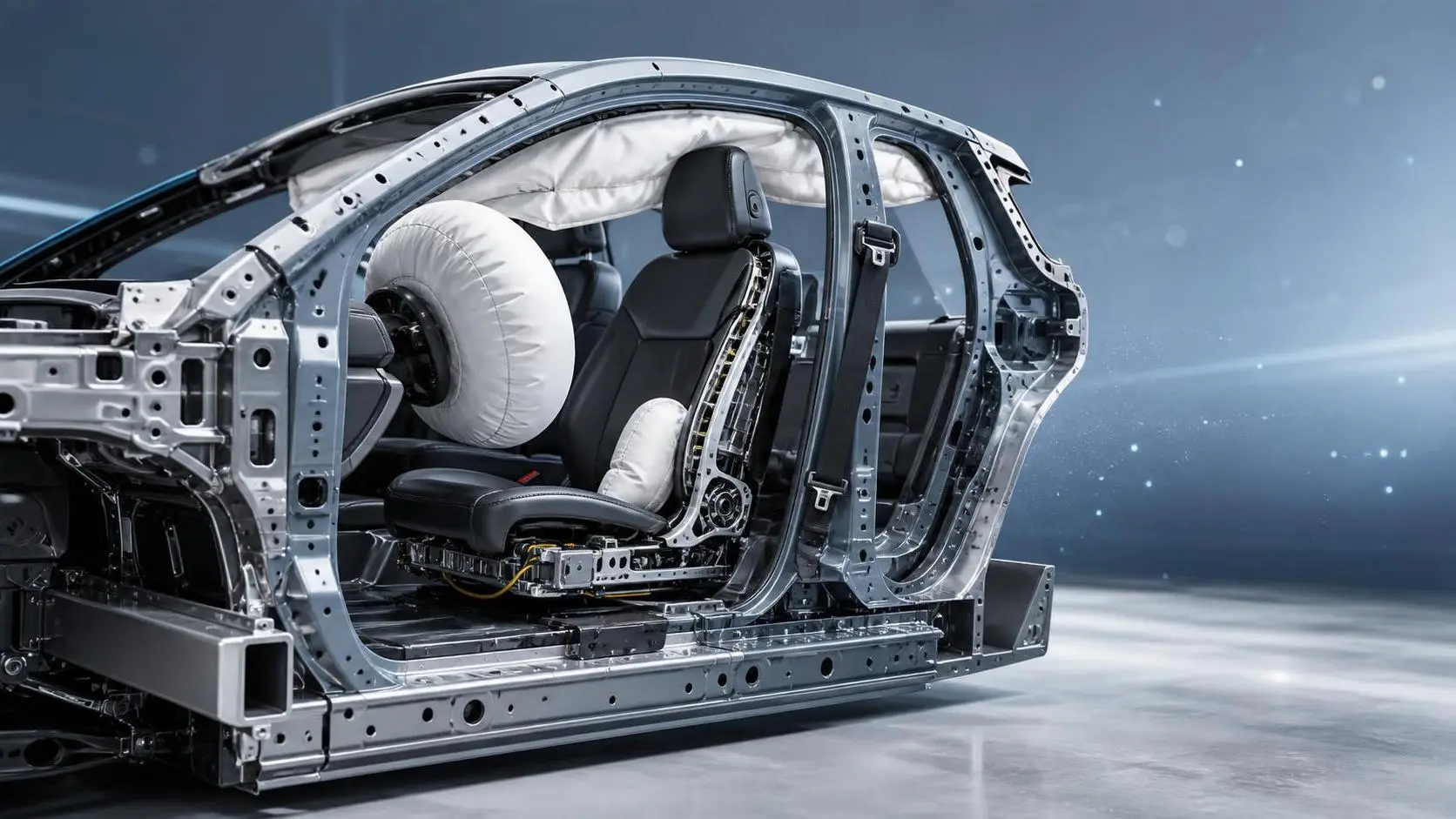
How to Evaluate Mobility Safety Systems for Safer Vehicle Platform Design
Mobility safety systems evaluation starts with platform architecture, crash energy management, and seat-restraint timing. Learn how to choose safer, validation-ready vehicle designs.
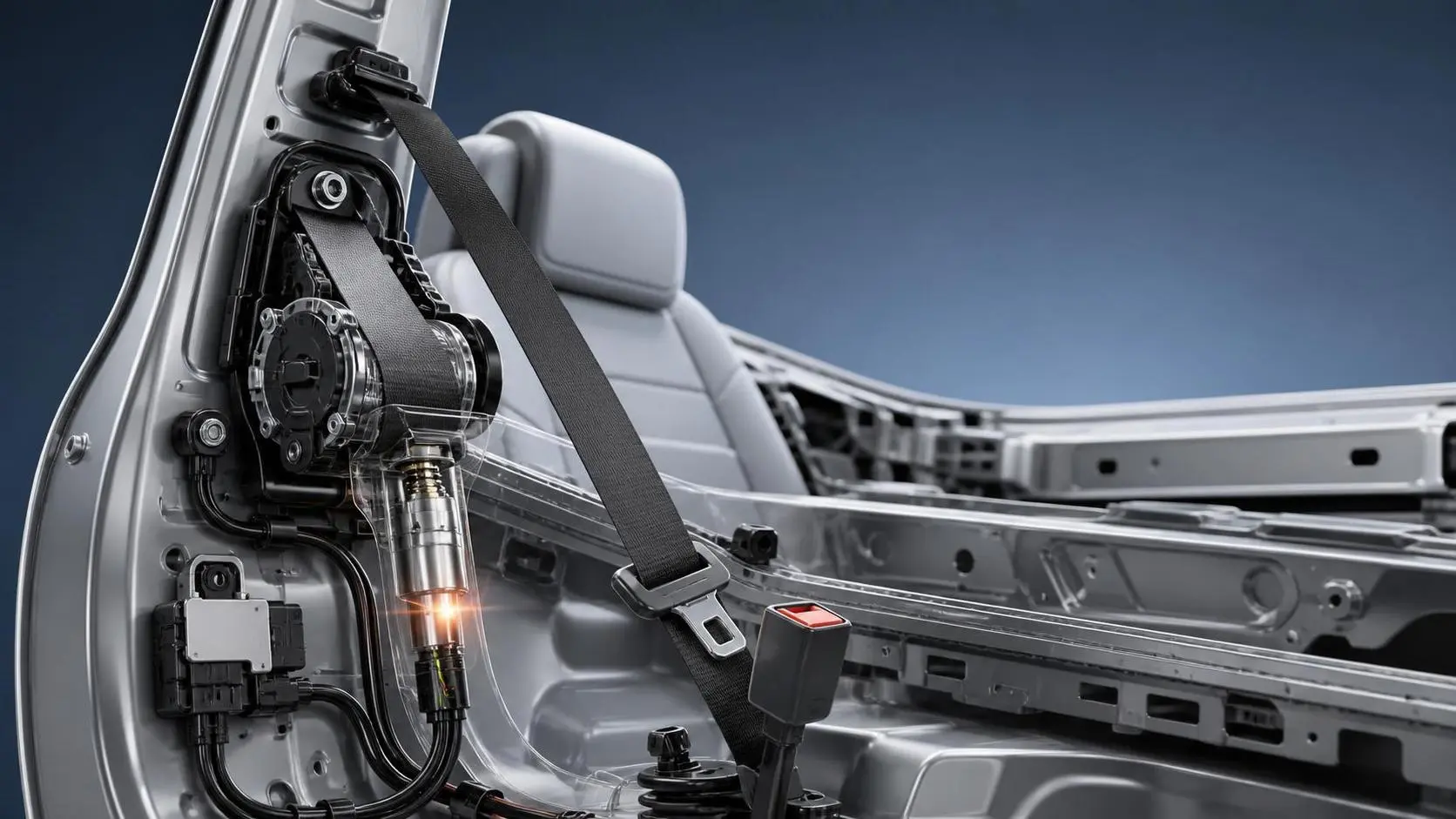
How Seat Belt Pretensioners for EVs Improve Crash Safety and System Response
Seat belt pretensioners for EVs improve crash timing, occupant control, and system response. Discover how smarter integration boosts EV safety performance.
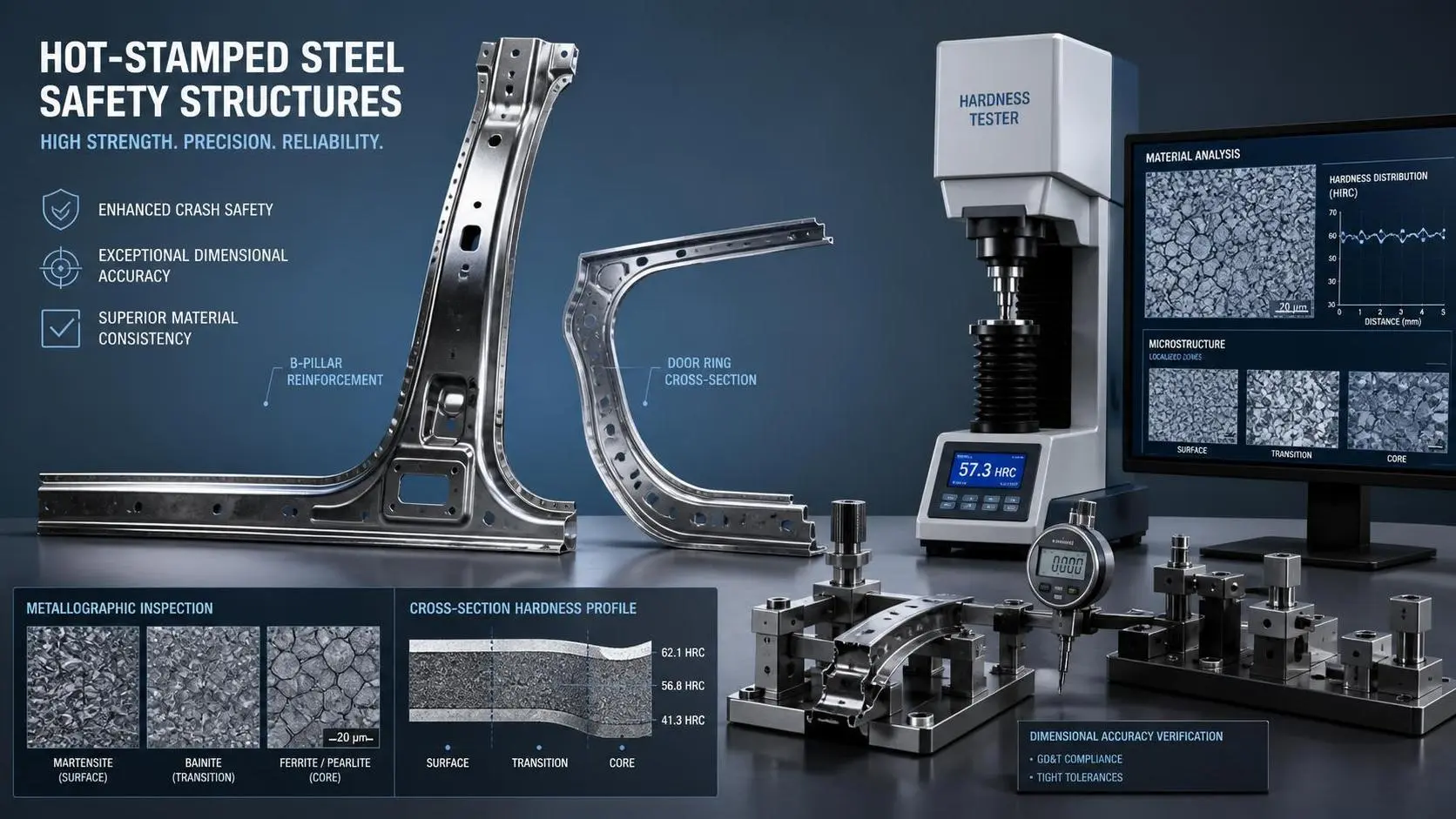
How to Evaluate High Strength Hot Stamped Steel Parts for Crash-Safety Applications
High strength hot stamped steel parts for crash-safety applications: learn how to assess strength, microstructure, dimensional accuracy, and process stability for safer sourcing decisions.
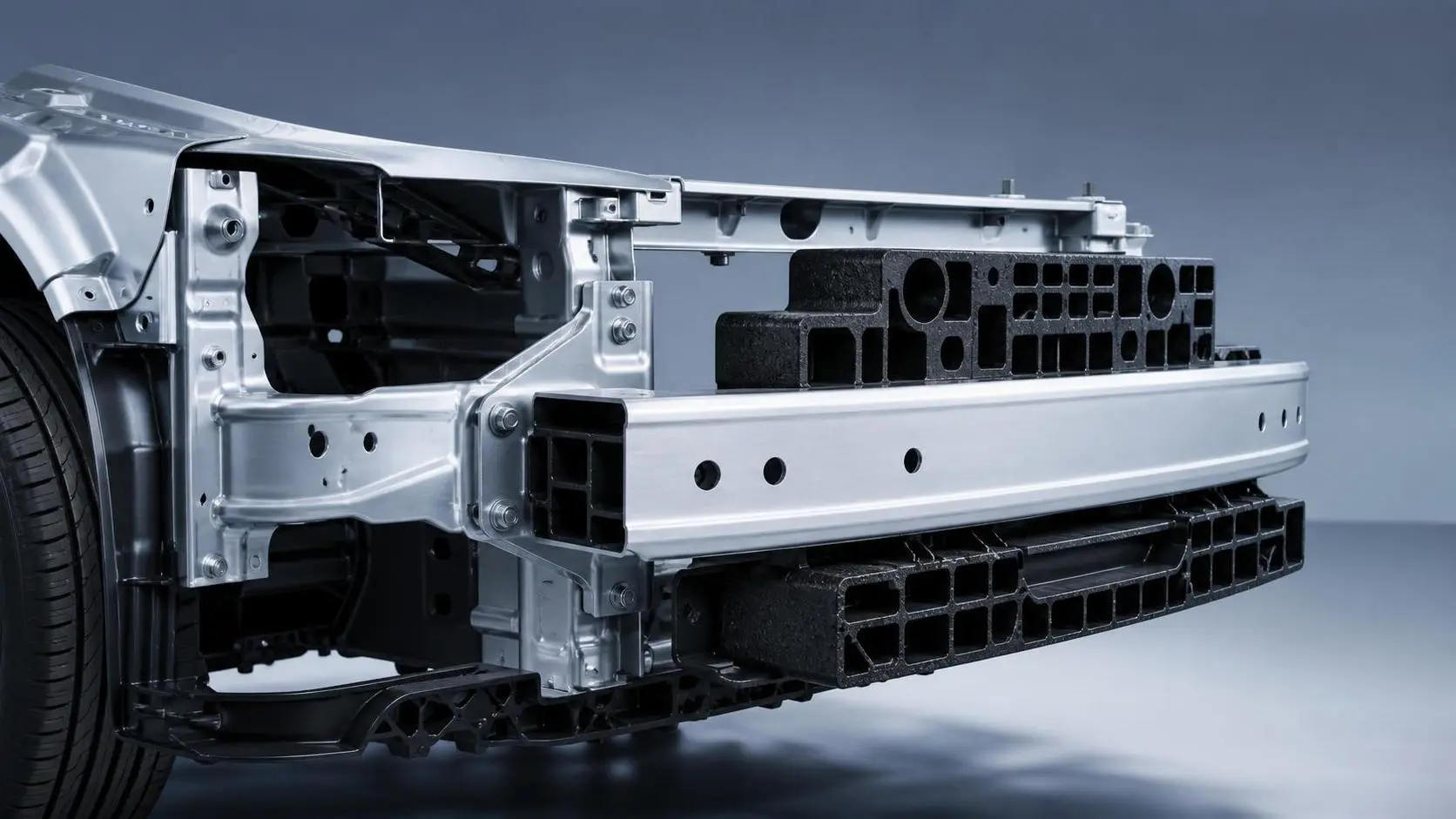
How Crash Management Components Reduce Repair Costs and Improve Impact Performance
Crash management components help reduce repair costs, protect critical vehicle structures, and improve impact performance. Learn how smarter design supports safer, more cost-efficient mobility programs.
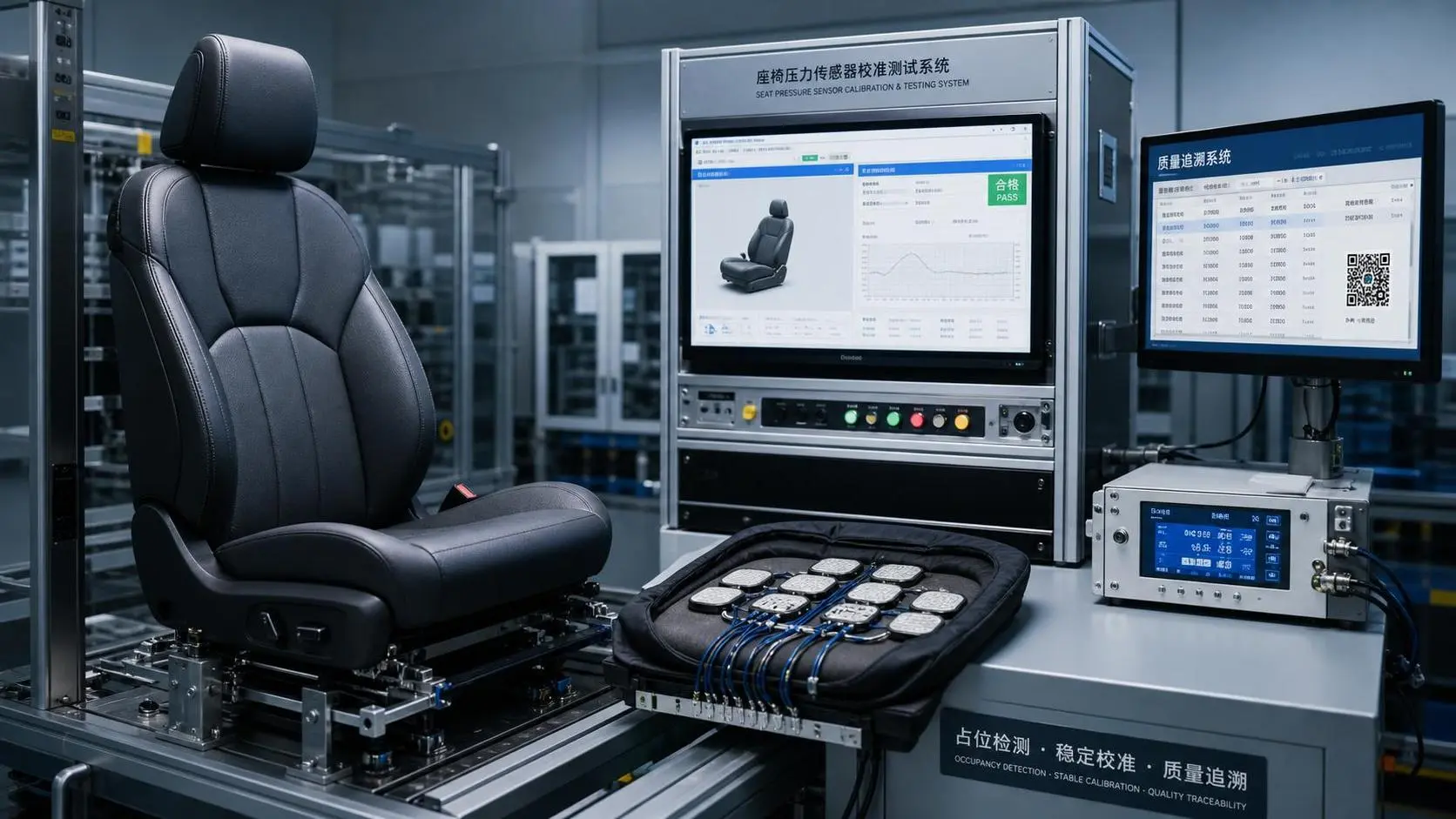
How to Evaluate a Seat Sensing Systems Factory for Automotive Safety Programs
Seat sensing systems factory selection goes beyond price. Learn how to assess quality control, validation, PPAP readiness, and long-term supply reliability for safer automotive programs.
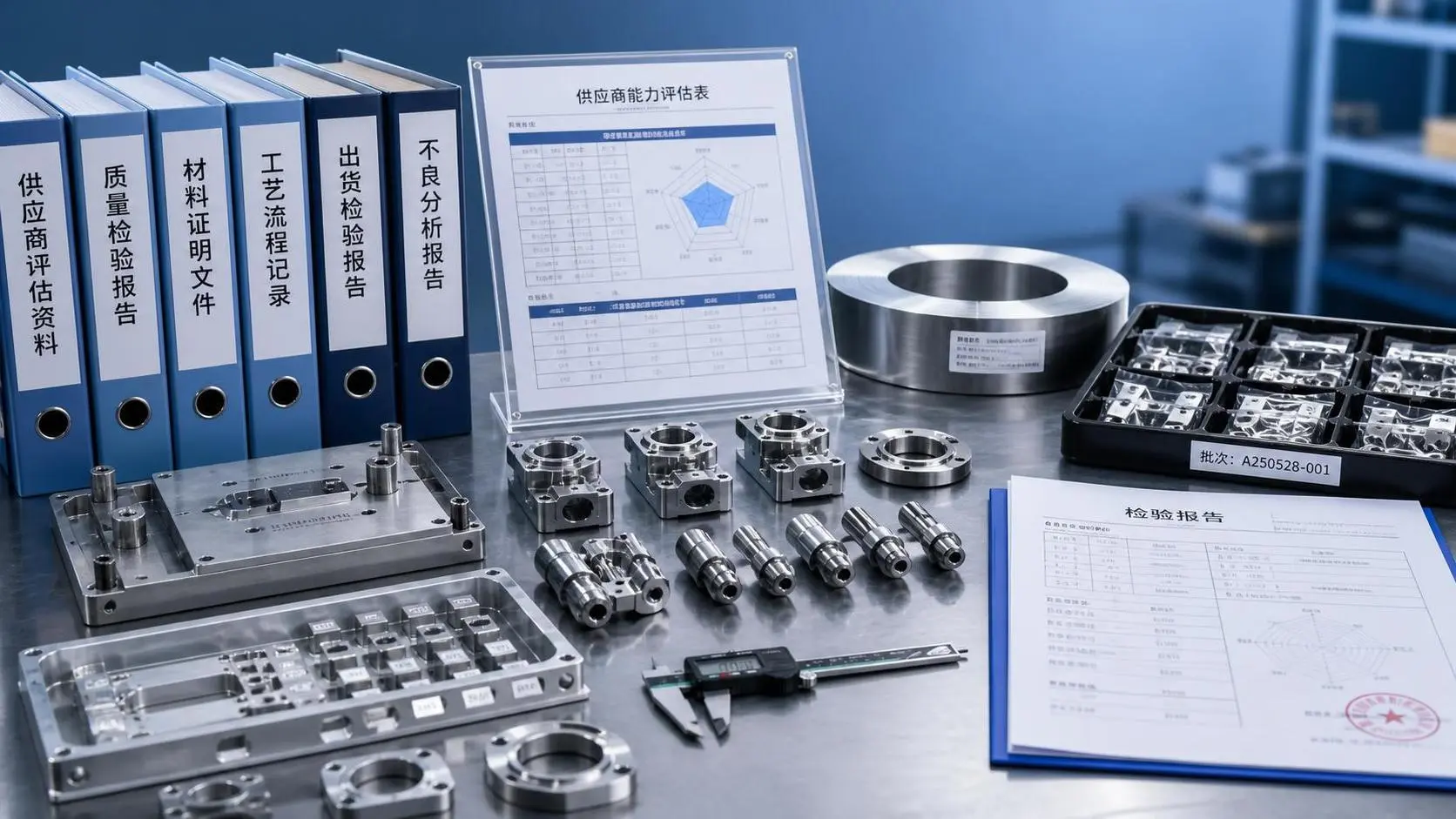
Supplier Capability Evaluation Process: Key Criteria for B2B Sourcing Decisions
Supplier capability evaluation process explained: learn the key criteria for B2B sourcing decisions, reduce supplier risk, and choose partners with confidence.
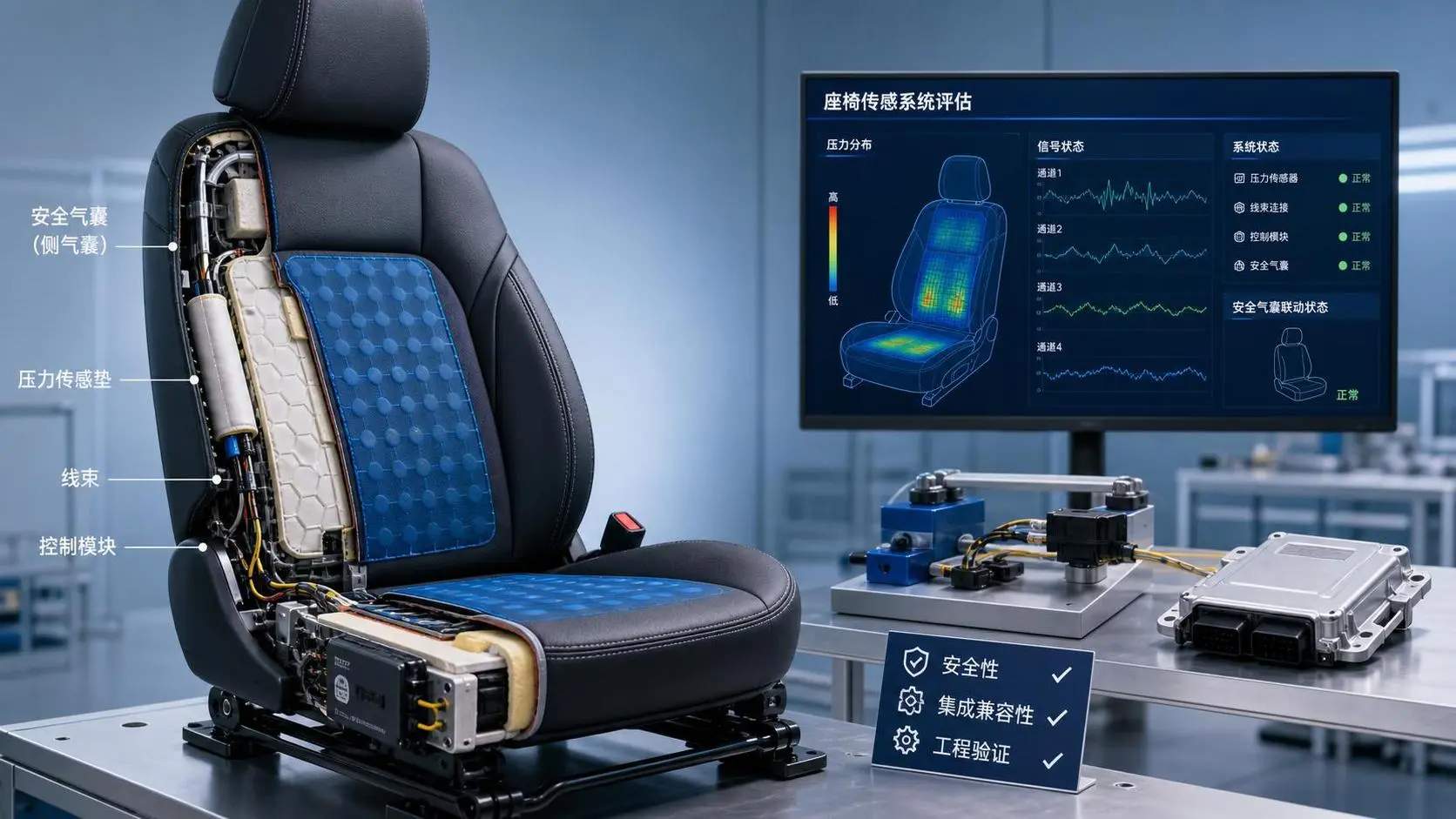
How to Evaluate a Seat Sensing Technology Supplier for Safety and Integration?
Seat sensing technology supplier evaluation guide: compare safety maturity, integration fit, algorithm reliability, and validation support to choose a partner that reduces risk.
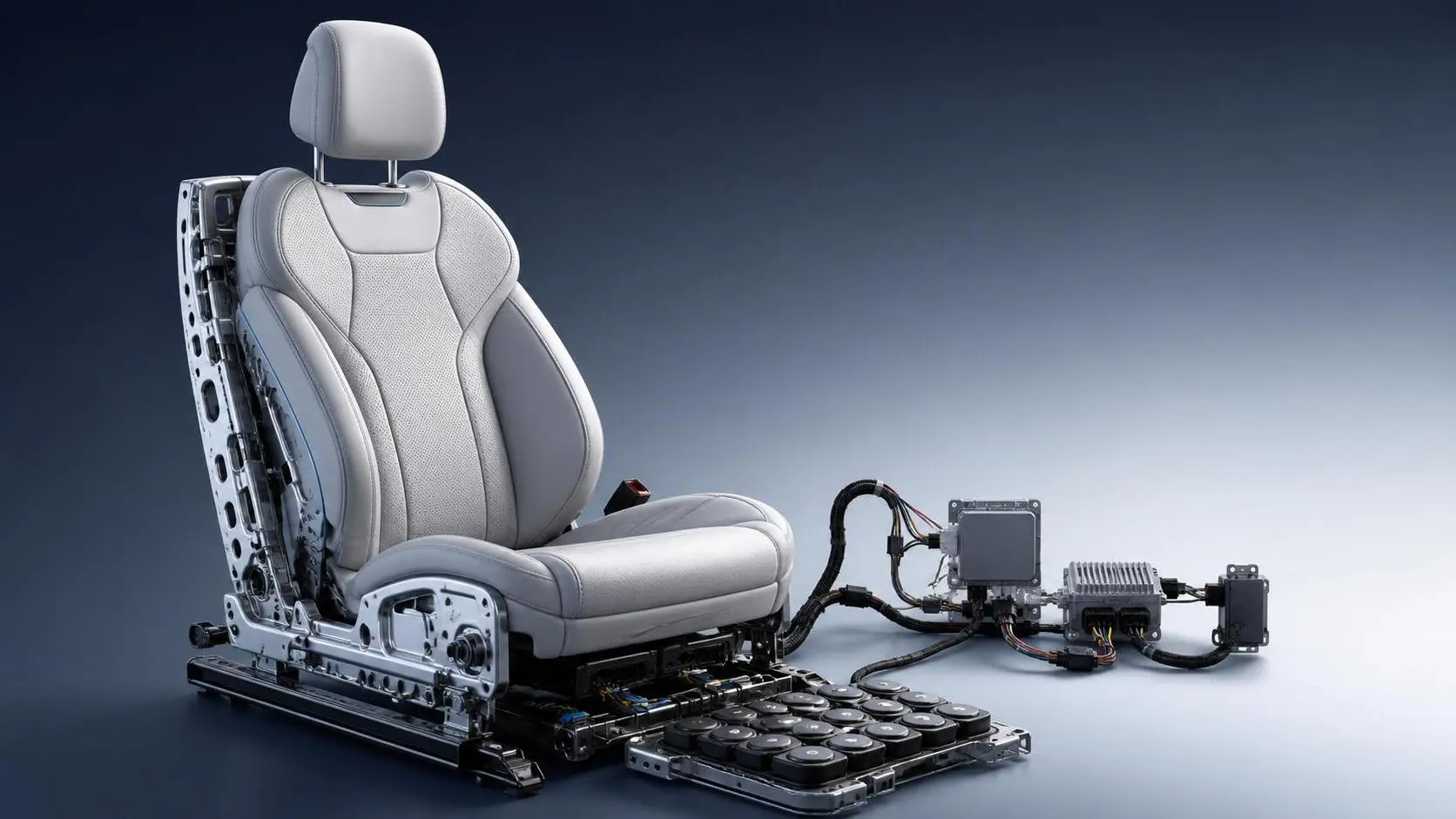
How to Evaluate Custom Smart Automotive Seating for Premium Vehicle Programs?
Custom smart automotive seating evaluation starts with safety, comfort, integration, and production readiness. Discover how premium vehicle teams choose smarter, lower-risk seat solutions.
B2B Product Intelligence Platforms: How to Compare Features, Data Coverage, and ROI
B2B product intelligence platform comparison: learn how to evaluate data coverage, feature depth, compliance visibility, and ROI to choose a sourcing tool that reduces risk and speeds decisions.
Related News
- 00
0000-00
22MnB5 Hot Stamped Steel Parts: Key Properties, Forming Limits, and Typical Uses - 00
0000-00
How to Evaluate Hot Stamped Steel Parts for Crash Performance and Weight Targets - 00
0000-00
Hot Stamping Processes Explained: Materials, Forming Steps, and Common Quality Defects - 00
0000-00
Hot Stamping Processes: Steps, Tooling, and Part Quality Factors That Matter - 00
0000-00
Passive Safety Components: Key Types, Functions, and Where They Matter Most
Weekly Insights
Stay ahead with our curated technology reports delivered every Monday.