
Crash Test Regulations for Seatbelts: Key Compliance Requirements Explained
Crash Test Regulations for Seatbelts: Key Compliance Requirements Explained
Seatbelt compliance is often discussed as if it were a single approval question: does the belt meet the applicable regulation or not? In practice, the answer sits across several connected systems. A three-point belt may satisfy its own webbing, buckle, retractor, and release requirements, yet still create a vehicle-level compliance problem because of anchorage geometry, seat deformation, pretensioner timing, occupant sensing logic, or poor interaction with an airbag.
That is why crash test regulations seatbelts should be reviewed as a restraint-system topic rather than a component checklist. Technical evaluation needs to follow the crash load path from the occupant, through the belt and buckle, into the anchorage points, seat structure, floor or pillar, and surrounding body-in-white. The relevant evidence may come from certification tests, sled tests, full-vehicle crashes, design records, material controls, and production-conformity processes.
For organizations working across lightweight body structures, passive safety components, and smart seating, this distinction matters early. A hot-stamped B-pillar, a magnesium seat frame, an integrated belt-in-seat design, and a conventional floor-mounted retractor do not present the same compliance risks, even when the visible belt layout looks similar.
The regulatory landscape: component approval is not the whole vehicle
The principal regulatory route depends on the market in which the vehicle will be approved. In the United States, the Federal Motor Vehicle Safety Standards are central. FMVSS No. 209 addresses seat belt assemblies, including requirements relevant to hardware, webbing, labeling, and performance. FMVSS No. 210 addresses seat belt assembly anchorages. FMVSS No. 208 covers occupant crash protection at the vehicle level, where belt performance is assessed in combination with airbags, seating positions, and crash-test conditions.
In markets using the United Nations regulatory framework, UN Regulation No. 16 covers safety belts, restraint systems, child restraint systems, and ISOFIX-related considerations within its defined scope. UN Regulation No. 14 addresses safety-belt anchorages, while UN Regulation No. 17 is relevant to seats, their anchorages, and head restraints. These regulations are frequently read together because a restraint system cannot be meaningfully separated from the structural points that support it.
Regional consumer programs such as Euro NCAP and organizations such as IIHS should be treated carefully in a compliance discussion. They are influential safety assessment programs, not substitutes for statutory type approval or self-certification obligations. Their test protocols can nevertheless expose practical weaknesses that a narrow component approval program may not reveal: marginal chest loading, excessive forward excursion, poor restraint of smaller occupants, or inadequate protection in far-side and oblique crash conditions.
A useful working rule is simple: determine the legal certification basis first, then identify the vehicle-level crash programs and internal targets that may be more demanding than the minimum legal threshold. Confusing these two layers causes expensive late-stage changes.
What a compliant seatbelt system must demonstrate
The belt is expected to restrain the occupant without releasing, rupturing, detaching, or creating unacceptable injury risk under defined test conditions. That broad statement translates into several very different technical questions.
Webbing, buckle, and retractor integrity
Webbing must maintain sufficient strength and controlled elongation after conditioning required by the applicable standard. Technical teams should not focus only on the supplier’s nominal tensile result. Moisture exposure, abrasion, contamination, heat aging, UV exposure where relevant, sewing patterns, and edge damage can alter performance. The stitched loop connecting webbing to a tongue or end fitting is often a critical detail because load transfer is concentrated there.
Buckles must latch reliably, remain locked under load, and release within the required conditions after testing. A buckle that works cleanly on a bench can behave differently when the latch plate is side-loaded by seat trim, twisted webbing, a bulky occupant, or a deformed seat cushion. These are not merely usability concerns. Misalignment can affect engagement depth, release access, and the repeatability of dynamic testing.
Retractors require similarly close attention. Emergency locking retractors must lock when the relevant vehicle or webbing-sensitive conditions are triggered. The mechanism also needs to manage webbing payout consistently. Excessive payout before lock-up can increase occupant forward movement; overly aggressive locking can create poor comfort and lead to user misuse. A belt that is routinely routed behind the occupant’s back has already failed in the real-world safety sense, even if its laboratory record is clean.
Anchorage strength and load path
Anchorages are frequently underestimated because they are often hidden behind trim. Yet a strong belt assembly is of little value if the load enters a thin local reinforcement, a poorly controlled weld zone, or a seat frame that rotates beyond the intended range. Regulations such as FMVSS No. 210 and UN R14 place specific attention on anchorage performance, but the engineering question goes beyond passing a prescribed pull test.
Evaluators should trace the load path through brackets, fasteners, reinforcements, welds, adhesive-bonded regions, seat tracks, and nearby body panels. Lightweighting can complicate this work. Mixed-material structures may need careful management of joint design, corrosion protection, stiffness transition, and crash deformation. A local reinforcement that looks adequate in a static calculation may behave differently when the body twists in an offset frontal collision or when the seat track sees combined fore-aft and vertical loading.
For belt-in-seat systems, the seat becomes a major restraint structure. Seatback recliner behavior, frame strength, track retention, and attachment to the floor must be assessed as part of the same system. Reviewing the belt module in isolation is not enough.
Dynamic crash performance: where pretensioners and load limiters are judged
Modern front-seat belts commonly use pretensioners and load limiters. Their purpose is not simply to “tighten the belt” or “reduce force.” They manage a time-sensitive compromise between occupant motion and belt loading. The pretensioner removes slack early in the crash event. The load limiter then permits controlled webbing payout at a designed force level, helping moderate thoracic loading while the airbag and vehicle crash pulse do their part.
That balance is vehicle-specific. A restraint calibration that performs well in one vehicle may be unsuitable in another because of different crash pulse characteristics, seating position, steering-wheel geometry, airbag deployment behavior, or body stiffness. It is especially risky to assume that a carryover belt can be validated by matching only retractor part numbers and nominal force-limiter settings.
Dynamic sled testing is valuable because it provides controlled, repeatable development evidence. It can be used to study pretensioner activation, webbing payout, dummy kinematics, buckle retention, and seat interaction before every full-vehicle test. But sled results are only as meaningful as the pulse, fixture, seat installation, restraint configuration, dummy setup, and boundary conditions. A favorable sled trace does not automatically prove full-vehicle compliance.
In full-vehicle testing, engineers watch more than peak injury criteria. Belt routing across the shoulder and pelvis, submarining tendency, head excursion, steering-wheel contact, seatback rotation, airbag engagement, and post-impact egress all deserve review. Video evidence matters here. Data channels can show that a threshold was met, while high-speed footage reveals a belt slipping off the shoulder or a buckle becoming difficult to access after structural deformation.
Test configuration errors that create misleading conclusions
The most frustrating restraint-test failures are often not caused by an obviously defective part. They come from small configuration differences that were not controlled or not documented. Seat fore-aft position, seatback angle, head restraint position, belt height adjustment, trim build state, fastener torque, and dummy posture can all affect results.
This is particularly important for smart seats. Occupant-position sensing, power adjustment, comfort layers, integrated airbags, and active bolsters introduce interfaces that older seat architectures did not have. A sensor fault strategy, for example, may influence airbag suppression or deployment decisions, which in turn changes the intended belt-airbag interaction. The compliance team therefore needs access to software configuration control as well as mechanical drawings.
Another recurring issue is using a development prototype that does not represent production intent. A manually reinforced bracket, prototype webbing batch, temporary seat fixture, or unrepresentative trim stack can conceal a production risk. When a test is used for formal evidence, the configuration record should make it possible to identify exactly what was tested and whether it matches the release-level design.
A practical compliance review sequence
An efficient review usually begins before physical testing. Map each seating position to the applicable regulatory requirements, vehicle categories, installation conditions, and markets. Then build a requirement matrix that separates belt-assembly obligations, anchorage obligations, seat-related obligations, and vehicle crash-protection obligations. This prevents a common gap: assuming a certificate for the belt module covers the installed vehicle.
The next stage is interface review. Confirm the geometry of D-rings, lower anchorages, buckle stalks, retractor orientation, seat structure, and body attachment points. Check changes in material grade, supplier process, coating, sewing, pyrotechnic initiator, electronics, and software calibration against the approval and change-control plan. A minor sourcing change may not be minor if it alters friction, tensile behavior, electrical resistance, deployment timing, or corrosion performance.
Finally, review the evidence as a connected file rather than a collection of pass reports. A robust file links drawings, bills of materials, test reports, calibration records, conditioning details, sample traceability, production controls, and any engineering justification for variation. This is where technical evaluators can distinguish a system that passed one event from a design that is genuinely ready for repeatable compliance.
Why restraint intelligence must follow the wider cabin architecture
Seatbelt regulation is increasingly connected to decisions made outside the belt supplier’s immediate scope. Lightweight body stampings alter anchorage behavior. Airbag inflator and electronic control strategies alter the restraint timing window. Smart-seat architecture changes occupant position and structural load transfer. Even the cabin’s comfort design can affect whether occupants wear and route the belt correctly.
This cross-system view is central to the work followed by Global Navigation & Cabin Safety. GNCS examines physical containment protection alongside the engineering transitions shaping modern mobility equipment, including the relationship between crash-energy management, seat structures, restraint technologies, and evolving assessment protocols. The useful question is not whether a component looks advanced, but whether its interfaces remain understandable, testable, and controlled under severe crash loading.
When reviewing crash test regulations for seatbelts, start with the legal standard that governs the intended market. Then test the assumptions around it: where the belt loads the body, how the seat moves, when the pretensioner fires, what the load limiter allows, and whether the production configuration is truly the one represented in the evidence. That is usually where compliance confidence is won or lost.
Related News
How to Specify Integrated Marine Electronics for Reliable Bridge Operations
Integrated marine electronics: learn how to specify reliable bridge systems with clear data flows, redundancy, alarm control, lifecycle interfaces, and operational testing.

How to Evaluate Navigation Radar Manufacturers for Commercial Vessel Projects
Navigation radar manufacturers: learn how to compare performance, compliance, integration, support, and lifecycle cost for commercial vessel projects.
How Adjustable Cabin Ergonomics Reduce Operator Fatigue in Long-Shift Vehicles
Adjustable cabin ergonomics reduces operator fatigue through better seating, reach, visibility, vibration control, and climate comfort for safer long-shift vehicles.
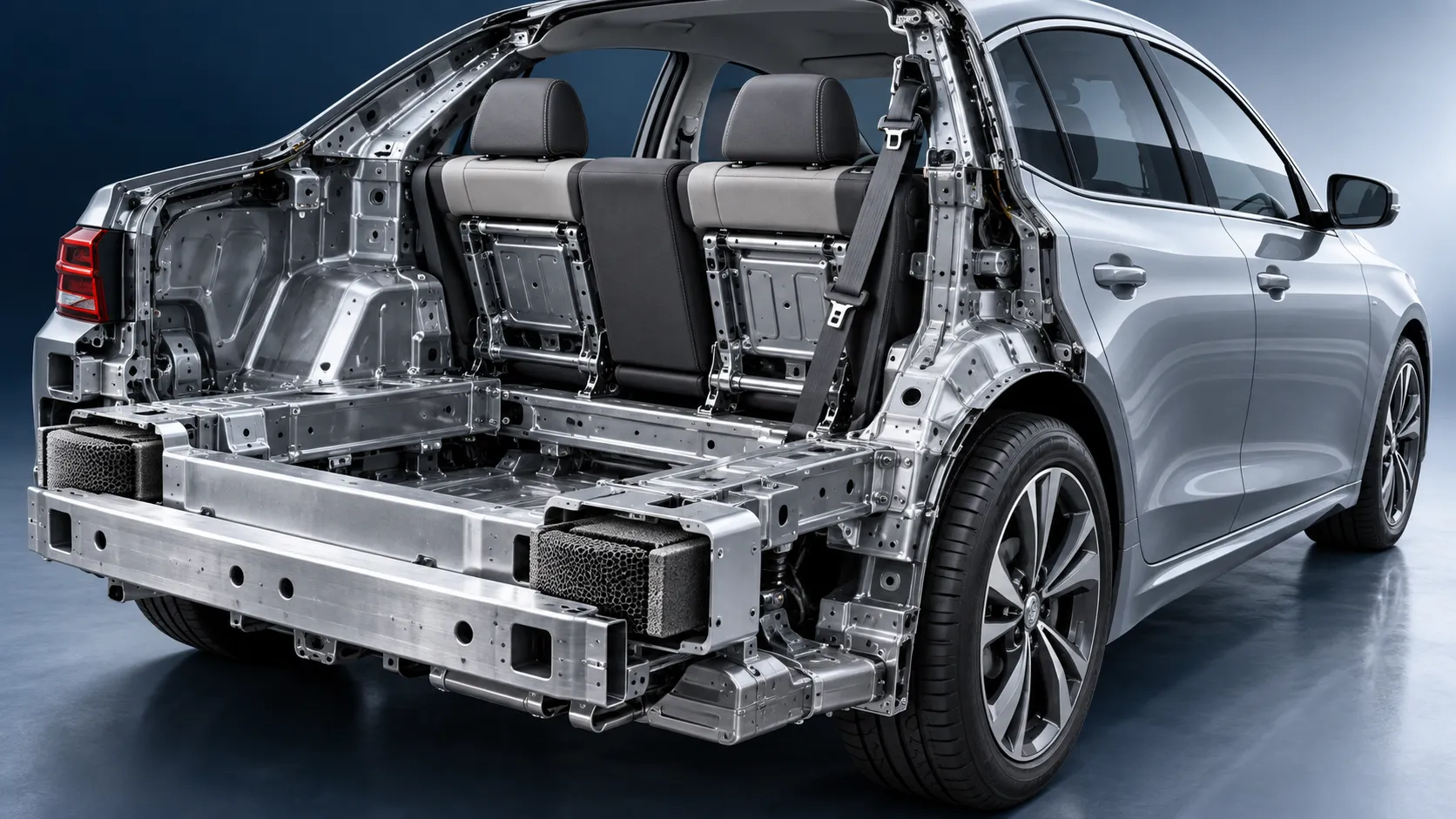
How Rear-Impact Safety Components Work Together to Protect Vehicle Occupants
Explore how automotive safety components for rear impact work together—from crash structures and seats to head restraints and belts—to enhance occupant protection.
How to Evaluate a Marine Safety Systems Manufacturer for Vessel Compliance and Reliability
Marine safety systems manufacturer evaluation guide: verify compliance, engineering quality, lifecycle costs, and global service support for safer, reliable vessel operations.

How to Calculate the Total Cost of Automotive Lightweighting for a Vehicle Program
Automotive lightweight solutions cost: learn how to calculate program-level costs, including materials, tooling, joining, validation, risk, and vehicle-level value.

How Automotive Seat Occupancy Sensing Improves Airbag Deployment Decisions
Automotive seat occupancy sensing helps optimize airbag deployment decisions, improving passenger classification, safety diagnostics, and compliance across real-world conditions.

What Drives Lightweight Body Component Costs in High-Volume Vehicle Programs?
Lightweight body components cost depends on material yield, forming, joining, tooling, validation, and logistics. Explore proven ways to optimize total vehicle program cost.
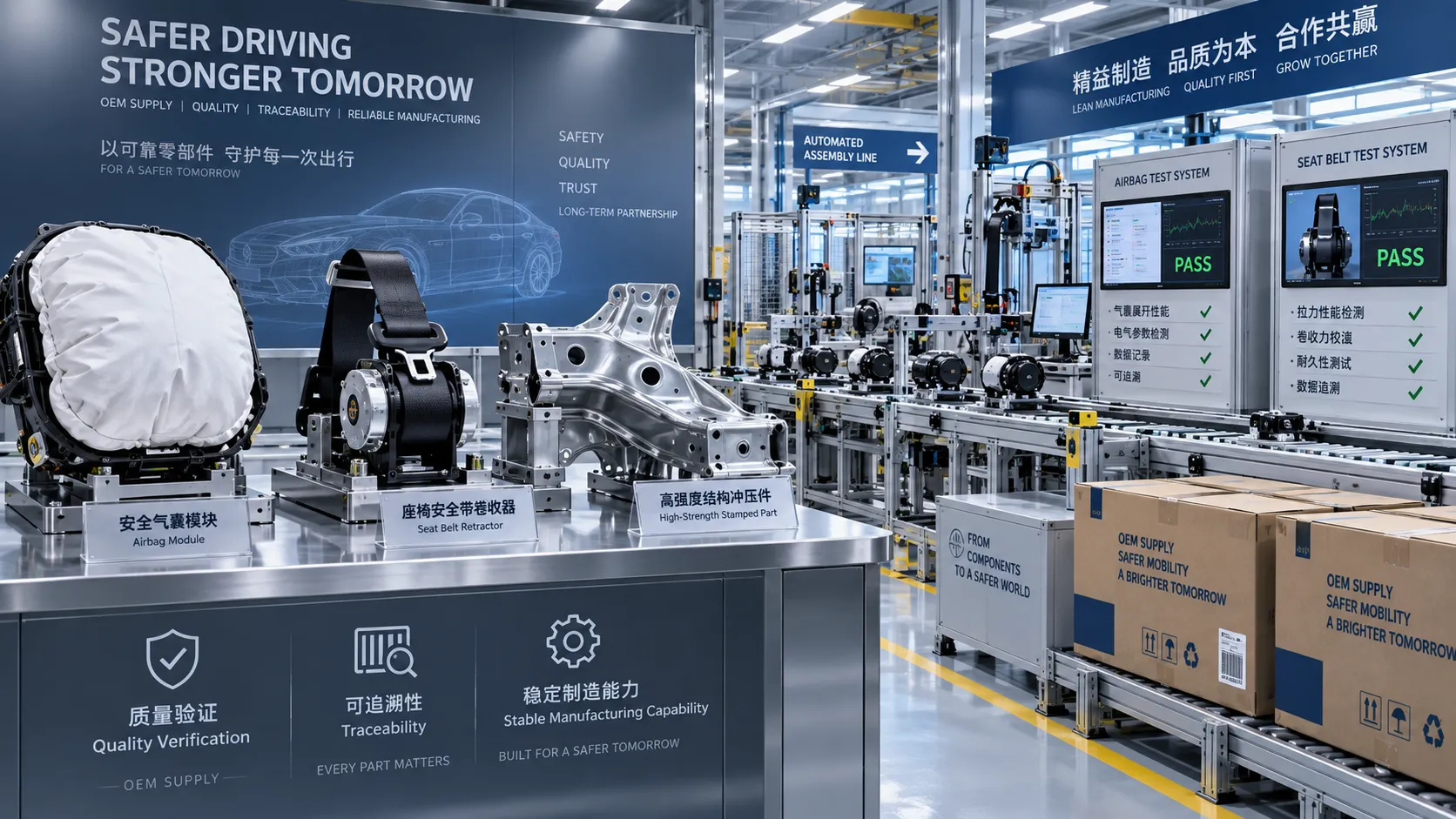
How to Evaluate a Crash Safety Components Exporter for Global OEM Supply Programs
Choose a crash safety components exporter with proven certification, traceability, testing, and OEM launch support. Use this guide to reduce global supply risk.
Related News
- 00
0000-00
How Rear-Impact Safety Components Work Together to Protect Vehicle Occupants - 00
0000-00
Crash Test Regulations for Seatbelts: Key Compliance Requirements Explained - 00
0000-00
How Seat Belt Pretensioners for EVs Improve Crash Safety and System Response - 00
0000-00
How Do Seatbelt Systems with Pretensioner Improve Crash Protection? - 00
0000-00
How Seatbelt Technology for Buses Improves Passenger Safety and Meets Compliance Needs
Weekly Insights
Stay ahead with our curated technology reports delivered every Monday.