
How to Evaluate Navigation Radar Manufacturers for Commercial Vessel Projects
Start with the vessel’s operating profile, not the radar brochure
Commercial vessel buyers evaluating navigation radar manufacturers should begin with a simple question: what decisions must the bridge team make with this radar, in which waters, and under what visibility conditions? A radar selected for a harbor tug, coastal cargo vessel, offshore service vessel, fishing fleet, or ocean-going tanker may share a product category, but the operational burden is very different.
Headline range is a poor starting point for comparison. A long maximum range does not establish useful close-range target definition, clutter handling, reliable tracking, or screen usability during rain, sea clutter, traffic density, and nighttime operations. For a vessel that spends much of its time near ports, channels, installations, or other working craft, the practical requirement may be short-to-medium-range awareness and stable target separation. For long-voyage vessels, reliability over extended operating cycles, integration with route monitoring, and worldwide technical support may carry more weight.
Procurement teams should write down the route and operating profile before approaching suppliers. This avoids a familiar failure mode: suppliers are invited to quote against a broad equipment description, then each proposes a technically valid but operationally different system. The resulting price comparison looks clear while the underlying scope is not.
- Vessel type, tonnage, flag, class requirements, and intended trade routes.
- Bridge layout, mast location, scanner mounting constraints, cable routes, and available power supply.
- Primary operating environments: open sea, congested coastal waters, rivers, ports, offshore fields, or ice-prone areas where applicable.
- Expected traffic density and the types of targets that matter, including buoys, small craft, floating objects, shore structures, and larger vessels.
- Whether the radar will be a stand-alone display or part of an integrated bridge with ECDIS, AIS, heading sensors, GNSS, autopilot, voyage data recording, and alert management.
- Maintenance access, crew skill level, planned drydock intervals, and the availability of shore support along the vessel’s service route.
This operating brief should become part of the request for quotation. It gives manufacturers a defined basis for proposing scanner type, display arrangement, interface scope, training, commissioning, and spares. It also gives buyers a stronger basis for rejecting exclusions that only become visible after the purchase order is issued.
Compare usable detection and tracking performance
A navigation radar is purchased to support safe navigation, not to achieve an attractive specification sheet. The evaluation should therefore focus on the quality of information available to the operator during demanding conditions. Buyers do not need to prescribe every technical design choice, but they should require suppliers to explain how the proposed equipment performs in the situations relevant to the vessel.
The first issue is target presentation. A bridge team must be able to distinguish useful targets from clutter without constantly re-tuning the system or losing small and slow-moving contacts. Ask how the radar manages sea clutter, rain clutter, sidelobe effects, interference from nearby radars, and false echoes around land or port infrastructure. These functions should be demonstrated in a manner that allows operators and technical representatives to judge the display, rather than simply described in product literature.
Target tracking deserves separate attention. Automatic tracking functions can reduce workload, but they depend on clean input data, appropriate settings, and predictable behavior when contacts merge, cross, disappear behind obstructions, or change course. A supplier should be able to describe tracking capacity, acquisition methods, target-loss behavior, alarm logic, and the operator actions needed to verify a tracked contact. Procurement specifications should also state whether radar tracking must work with externally supplied AIS information or whether the bridge requires radar-derived tracking independently of AIS.
Radar bands, scanner configurations, pulse techniques, and signal-processing features should be assessed through the vessel’s mission rather than through assumptions about which technology is universally superior. One configuration may offer advantages in certain detection conditions or ranges, while another may better suit installation restrictions, close-range work, redundancy philosophy, or budget. The proper supplier response explains the trade-offs and identifies any environmental or installation limits.
Buyers should request a structured technical response covering the following points:
- Detection and discrimination expectations at the operating ranges that matter to the vessel.
- Performance limitations in precipitation, rough seas, heavy traffic, and near large structures.
- Scanner rotation options, warm-up requirements, standby behavior, and recovery after interruption.
- Tracking and alarm functions, including their operating boundaries.
- Display readability in daylight and night conditions, menu logic, control arrangement, and alarm acknowledgement workflow.
- Requirements for heading, speed, position, and other sensor inputs to achieve the stated functionality.
Demonstration quality matters. A showroom demonstration is useful for interface familiarity but does not replace a vessel-specific factory acceptance test, harbor test, or sea trial. The acceptance plan should state what will be tested, which inputs and interfaces must be live, what documentation will be produced, and how non-conformities will be resolved. Without this detail, the buyer may receive equipment that powers up correctly but is not fully proven in the bridge configuration.
Certification is a project requirement, not a supplier claim
Navigation radar procurement sits within a wider regulatory and class framework. The exact obligations depend on vessel type, size, trade, flag administration, classification society, and whether the project is a newbuild, conversion, or replacement. Buyers should avoid treating a statement such as “type approved” as a complete answer.
The more useful question is whether the proposed model, software version, scanner arrangement, and connected bridge configuration satisfy the approvals and survey expectations applicable to the specific vessel. A manufacturer may have an approved product family, while the quoted configuration still requires careful review for interface choices, display arrangement, backup arrangements, documentation, or installation conditions.
At bid stage, ask each manufacturer to identify the approval documents and standards applicable to the offered equipment, along with any assumptions. The supplier should clarify responsibility for obtaining or supporting class approval, flag documentation, electromagnetic compatibility evidence, installation drawings, commissioning records, and test certificates. Where a shipyard, system integrator, and radar manufacturer are all involved, responsibility needs to be assigned line by line.
Compliance risk often appears at the edges of the package. A radar may meet its own equipment requirements while the complete bridge system has unresolved alarm, sensor, or recording interfaces. Software configuration changes can create another problem when updates are installed without preserving approved settings or test records. Buyers should include configuration control in the contract: who authorizes software changes, what documentation accompanies them, whether operational testing is required, and how the vessel retains its baseline configuration record.
Integration capability can determine the real project cost
The delivered price of the radar is only one component of cost. Integration work can become the larger commercial issue when interfaces are unclear, proprietary gateways are required, legacy sensors are incompatible, or the installer discovers late changes to cabling and mounting. This is particularly common in retrofit projects, where drawings may not reflect the vessel’s current bridge arrangement.
A capable manufacturer should provide an interface schedule early in the process. It should identify every required input and output, the communication method, data format, connector or terminal requirements, isolation needs, and ownership of interface testing. Generic assurances that the equipment “supports standard marine interfaces” are insufficient for a project decision. The buyer needs to know which specific ports will be used, what data is exchanged, and which party supplies any converter, software license, or gateway.
Integration should be assessed in practical terms:
- Can the radar exchange the required information with the existing or selected ECDIS, AIS, heading sensor, GNSS receiver, speed log, autopilot, and bridge alert functions?
- Does the system preserve usable radar operation if a non-essential connected system fails or produces invalid data?
- Are legacy serial connections, network protocols, or proprietary interfaces likely to require additional hardware or engineering?
- Who validates heading alignment, radar overlay where used, time synchronization, alarm transfer, and target display behavior?
- Can the supplier support a phased retrofit in which some bridge equipment remains in service while other components are replaced?
Physical installation must be reviewed with the same discipline. Scanner placement affects shadow sectors, interference, access for maintenance, and exposure to vibration or contamination. Cable runs may require fire-rated penetrations, segregation from power cables, additional junction boxes, or changes in the bridge console. A lower-priced radar package can lose its advantage quickly if its installation assumptions are not compatible with the vessel.
For newbuilds, the shipyard should receive approved drawings and interface data early enough to protect the construction schedule. For retrofits, a site survey should precede final design and pricing wherever possible. Allowances are sometimes necessary, but they should be visible rather than buried in a vague “as required” installation clause.
Evaluate the manufacturer’s support model as carefully as the equipment
Radar availability depends on more than component reliability. When equipment fails, the commercial impact may include delayed sailing, restricted operation, survey complications, extra port costs, and crew workload. A supplier’s post-delivery capability is therefore part of the procurement decision.
Buyers should distinguish between the manufacturer’s own support organization and an informal list of distributors. Both can work, but the coverage must fit the vessel’s trading pattern. Ask where qualified service technicians are located, how spares are stocked, whether remote diagnostics are available, and how escalation works when a local agent cannot resolve an issue. A support promise has little value without named service channels, response arrangements, and access to parts.
Spare-parts strategy should also be tied to the vessel’s maintenance plan. Some operators prefer an onboard critical-spares kit to reduce downtime; others rely on regional stockholding. The right approach depends on voyage pattern, port access, equipment redundancy, and the cost of delay. Ask manufacturers to identify recommended operational spares, consumables, software tools, and any parts subject to planned obsolescence or limited availability.
Training is often treated as an optional line item, yet it has a direct effect on usability. The crew needs more than a startup briefing. Training should cover operating modes, clutter adjustment, target acquisition and verification, alarm interpretation, sensor failure indications, and first-line fault reporting. Technical personnel may also require maintenance training that defines what can be handled on board and what must be referred to authorized service.
Build a lifecycle comparison instead of choosing the lowest initial quote
Price comparisons become meaningful only after the scope is normalized. One bid may include scanner, display, sensors, brackets, commissioning, documentation, training, and warranty support; another may quote only core hardware. Procurement teams should issue a common bid matrix and require suppliers to mark each item as included, optional, excluded, or supplied by another party.
Lifecycle cost should cover equipment price, design and integration engineering, installation materials, shipyard labor, commissioning, class or survey support, crew training, recommended spares, warranty terms, software support, service travel, and likely renewal or upgrade costs. It is not necessary to invent a precise long-term cost figure. The purpose is to expose the cost drivers and commercial assumptions before contract award.
Warranty language deserves close reading. Confirm the start date, covered components, exclusions related to installation or environmental damage, labor coverage, travel costs, replacement-part handling, and the process for diagnosing an intermittent fault. Also examine whether access to software updates, diagnostic utilities, or configuration files is controlled in a way that creates dependency on a single service channel.
Manufacturers should be judged on their willingness to make these boundaries explicit. A detailed response may appear more expensive at first because it includes work that competitors leave unstated. That can be a better commercial proposition than a low initial quote followed by variations, interface disputes, and costly service dependence.
A practical selection sequence
A disciplined procurement process usually narrows the field quickly. First, define the vessel operating profile and mandatory compliance conditions. Second, eliminate proposals that cannot meet the required approvals, interfaces, physical installation constraints, or service coverage. Third, compare the remaining systems against realistic operating scenarios, not only nominal specifications. Finally, normalize total project and lifecycle costs before negotiating commercial terms.
During final evaluation, involve the people who will carry the risk after purchase: the vessel operator, bridge representative, technical superintendent, shipyard or retrofit contractor, and the party responsible for class and commissioning coordination. Their questions will often reveal omissions that a hardware-only comparison misses.
The strongest choice among navigation radar manufacturers is rarely the supplier with the longest feature list. It is the one whose equipment, documentation, integration plan, acceptance tests, and service commitments form a credible fit for the vessel’s actual operating conditions. That standard gives procurement teams a defensible basis for balancing safety, compliance, delivery risk, and total cost.
Related News
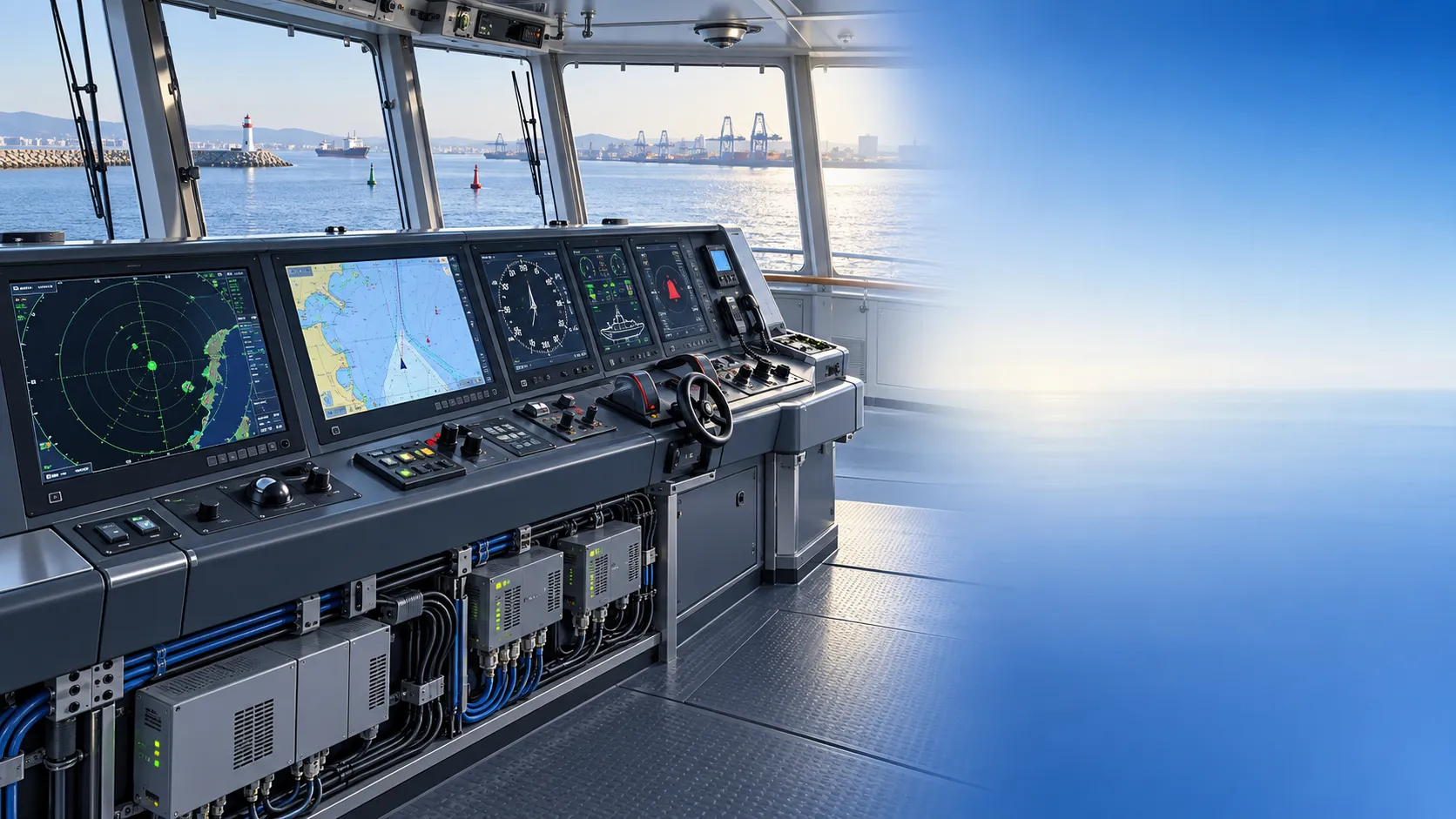
How to Specify Integrated Marine Electronics for Reliable Bridge Operations
Integrated marine electronics: learn how to specify reliable bridge systems with clear data flows, redundancy, alarm control, lifecycle interfaces, and operational testing.

How Adjustable Cabin Ergonomics Reduce Operator Fatigue in Long-Shift Vehicles
Adjustable cabin ergonomics reduces operator fatigue through better seating, reach, visibility, vibration control, and climate comfort for safer long-shift vehicles.

How Rear-Impact Safety Components Work Together to Protect Vehicle Occupants
Explore how automotive safety components for rear impact work together—from crash structures and seats to head restraints and belts—to enhance occupant protection.
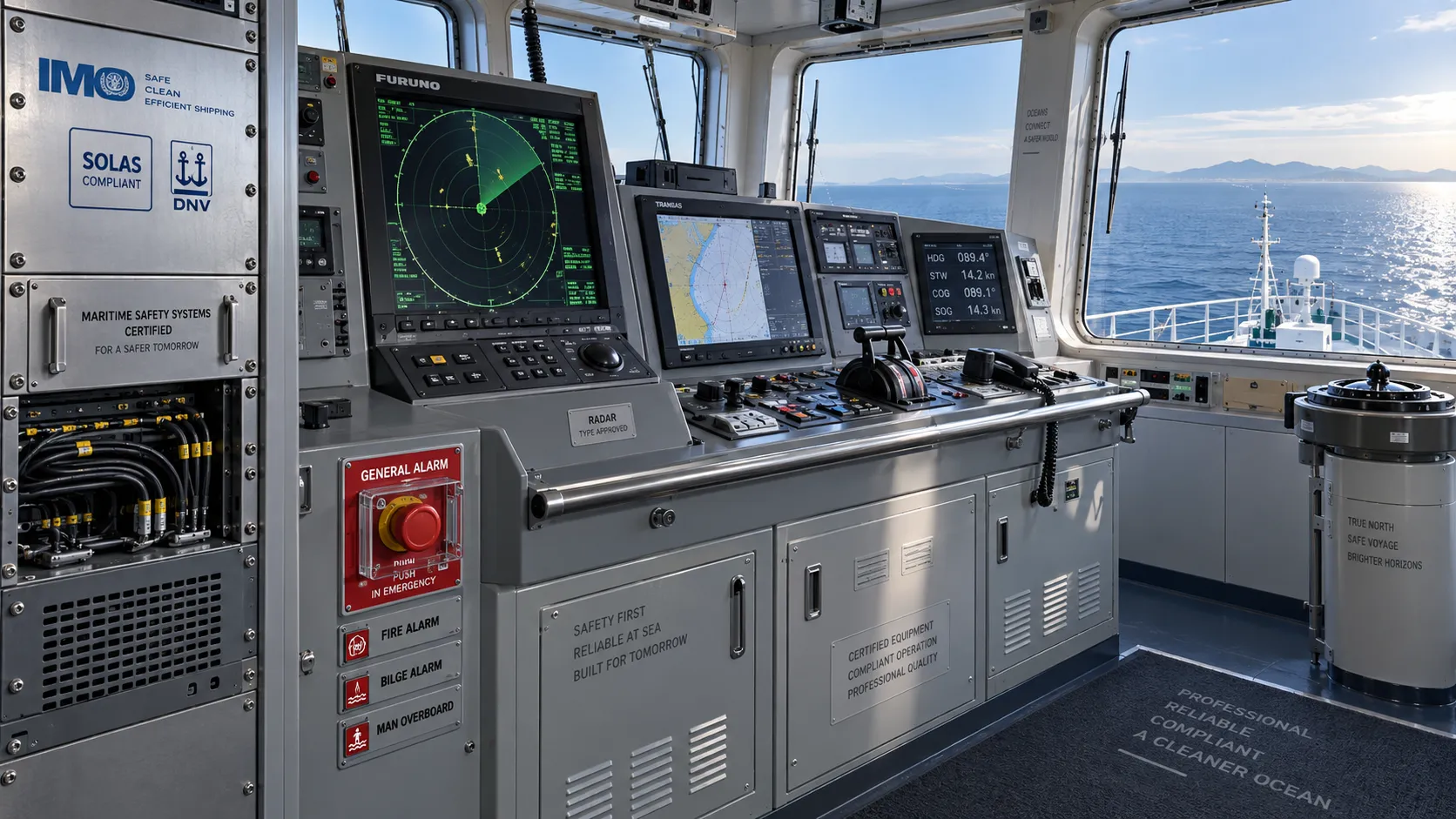
How to Evaluate a Marine Safety Systems Manufacturer for Vessel Compliance and Reliability
Marine safety systems manufacturer evaluation guide: verify compliance, engineering quality, lifecycle costs, and global service support for safer, reliable vessel operations.

Crash Test Regulations for Seatbelts: Key Compliance Requirements Explained
Crash test regulations seatbelts explained: explore FMVSS, UN rules, anchorage strength, and dynamic restraint testing for safer, compliant vehicle systems.

How to Calculate the Total Cost of Automotive Lightweighting for a Vehicle Program
Automotive lightweight solutions cost: learn how to calculate program-level costs, including materials, tooling, joining, validation, risk, and vehicle-level value.

How Automotive Seat Occupancy Sensing Improves Airbag Deployment Decisions
Automotive seat occupancy sensing helps optimize airbag deployment decisions, improving passenger classification, safety diagnostics, and compliance across real-world conditions.

What Drives Lightweight Body Component Costs in High-Volume Vehicle Programs?
Lightweight body components cost depends on material yield, forming, joining, tooling, validation, and logistics. Explore proven ways to optimize total vehicle program cost.

How to Evaluate a Crash Safety Components Exporter for Global OEM Supply Programs
Choose a crash safety components exporter with proven certification, traceability, testing, and OEM launch support. Use this guide to reduce global supply risk.
Related News
- 00
0000-00
How to Evaluate Navigation Radar Manufacturers for Commercial Vessel Projects - 00
0000-00
How to Evaluate Cargo Marine Sonar Systems for Detection Range and Vessel Fit - 00
0000-00
How to Evaluate Marine Signal Processing Software for Radar and Sonar Integration - 00
0000-00
How Do Automatic Identification Systems Improve Vessel Tracking and Collision Avoidance? - 00
0000-00
How to Choose Marine Navigation Systems for Patrol Boats in Coastal and Offshore Missions
Weekly Insights
Stay ahead with our curated technology reports delivered every Monday.