
How to Evaluate a Marine Safety Systems Manufacturer for Vessel Compliance and Reliability
The Manufacturer Decision Behind Safe, Compliant Voyages
Selecting a marine safety systems manufacturer is not a routine sourcing exercise. For procurement teams, the decision reaches far beyond the purchase price of a radar, emergency alarm, fire detection panel, life-saving appliance, communication unit, or bridge-integrated safety system. It affects whether a vessel can satisfy flag-state, class, port-state, and customer requirements—and whether its crew can rely on critical equipment when weather, distance, fatigue, or equipment failure make ordinary operations unforgiving.
The challenge is that many suppliers can provide a technically acceptable quotation. Fewer can demonstrate that their products, documentation, engineering support, spare-parts planning, and change-control processes will remain dependable throughout a vessel’s operating life. A low initial price can quickly lose its appeal when an approval gap delays delivery, a component becomes obsolete without notice, or a service technician cannot support a vessel in a remote port.
For buyers responsible for fleet reliability, newbuild projects, retrofits, or replacement programs, the right question is not simply, “Can this manufacturer supply the equipment?” It is, “Can this supplier help us keep the vessel compliant, operational, and supportable for years?”
Start With the Vessel’s Compliance Reality, Not the Product Catalogue
Marine safety requirements are never entirely generic. A product that suits one vessel may be unsuitable for another because of trade route, vessel type, tonnage, flag, class society, operating environment, hazardous-area requirements, passenger capacity, or client-specific specifications. Before comparing manufacturers, build a clear compliance baseline for the actual project.
This baseline should identify the applicable international framework—often including SOLAS and relevant IMO performance standards—alongside flag-state rules, classification society requirements, port or regional directives, and owner standards. Depending on the equipment and vessel market, buyers may also need to verify marine equipment approvals, wheelmark requirements, radio approvals, environmental testing expectations, or compatibility with approved bridge and emergency systems.
A credible manufacturer does not treat compliance as a vague statement on a brochure. It should be able to map a proposed system to the required approvals and clearly state where responsibility sits. For example, it should distinguish between product certification, system-level approval, installation compliance, commissioning requirements, and periodic inspection obligations.
That distinction matters. A certified component does not automatically create a compliant installation. Interfaces, cable routing, alarm logic, power supply redundancy, software configuration, mounting location, and onboard testing can all affect the final result.
Questions procurement teams should ask early
- Which approvals apply to this exact model, configuration, and intended vessel application?
- Are certificates current, traceable, and issued by recognized bodies where required?
- Will the delivered configuration match the approved configuration, including software and accessories?
- What installation, commissioning, and periodic test records are needed to maintain compliance?
- Has the manufacturer identified any limitations related to route, ambient temperature, EMC conditions, hazardous areas, or integration with third-party systems?
If a supplier’s answers remain broad—“fully compliant,” “international standard,” or “class accepted”—ask for the underlying documentation. Procurement does not need to become a certification authority, but it does need enough evidence to avoid buying compliance risk disguised as convenience.
Assess Engineering Depth Where It Counts: Interfaces, Failure Modes, and Real Operating Conditions
Marine equipment operates in a world that is hard on electronics and mechanics alike: vibration, salt-laden air, humidity, temperature cycling, power fluctuations, electromagnetic interference, and long intervals between port calls. The durability of a safety system is shaped not only by the primary device but also by enclosure design, connectors, cable glands, displays, power modules, sensors, batteries, software, and the quality of its integration.
When evaluating a marine safety systems manufacturer, ask how the company engineers for these conditions. A manufacturer with genuine application knowledge will usually discuss practical matters without being prompted: backup power behavior, alarm prioritization, sensor contamination, network redundancy, ingress protection, diagnostic access, false-alarm management, replacement intervals, and safe degradation when one subsystem fails.
For navigation and bridge-related safety equipment, evaluate interoperability as seriously as the individual device specification. Radar, ECDIS, AIS, GNSS receivers, depth sounders, voyage data systems, and alert-management functions may sit within an increasingly connected bridge environment. A system that is capable on paper can still create operational friction if alerts are poorly coordinated, interfaces are fragile, or firmware compatibility is unclear.
For fire, flooding, emergency communication, evacuation, and lifesaving systems, the focus may shift toward alarm integrity, response time, manual override capability, survivability of critical circuits, and inspection access. The most useful technical conversation is often not “What features does it have?” but “What happens when a sensor drifts, a network node is lost, the main power supply fails, or a crew member needs to operate the system under pressure?”
Certification Is Essential; Quality Discipline Determines Consistency
Certificates establish a threshold. Manufacturing discipline determines whether the hundredth delivered unit performs as predictably as the first approved sample.
Buyers should look for evidence of a controlled quality system across sourcing, assembly, calibration, testing, inspection, packaging, and shipment. This does not require an intrusive audit for every purchase, but higher-risk packages warrant deeper review. A manufacturer should be able to explain how it controls critical components, verifies incoming materials, prevents mixed revisions, manages serial-number traceability, and isolates nonconforming products.
Particular attention should be paid to design and production changes. In maritime service, an unnoticed substitution of a display module, battery, sensor, cable, processor, or communications chip may have consequences for approvals, spare-parts compatibility, training, and maintenance procedures. Ask whether the supplier has a formal engineering change notification process and whether customers are informed before changes affect supplied equipment.
Evidence that is more useful than polished sales claims
- Sample factory acceptance test procedures and test records
- Serial-number traceability and calibration documentation where relevant
- Quality inspection plans for critical assemblies
- Procedures for nonconformance, corrective action, and field-failure analysis
- Documented software version control and release notes
- Clear packing, preservation, and transport controls for sensitive equipment
A supplier does not need to disclose proprietary details to demonstrate discipline. What matters is whether its answers are structured, specific, and consistent across commercial, technical, and quality contacts. Conflicting information between departments is often an early warning sign of weak internal control.
Look Beyond Unit Price: Calculate the Cost of Keeping the System Available
Procurement pressure naturally brings attention to purchase cost. Yet for vessel safety equipment, the more meaningful comparison is total cost of ownership. A lower-priced system may require more frequent replacement parts, specialized service calls, costly software updates, longer crew familiarization, or large onboard spare holdings. It may also expose the operator to downtime if parts are unavailable in the region where vessels trade.
Ask each shortlisted manufacturer to provide a lifecycle view, not merely a supply price. The response should cover expected service activities, consumables, recommended spares, battery or sensor replacement intervals, software support, training requirements, warranty boundaries, lead times, and end-of-life policy. If a supplier cannot describe the support horizon for a system intended to remain onboard for many years, the buyer is being asked to accept uncertainty.
For fleet operators, standardization can produce major operational value. Choosing compatible platforms across multiple vessels may simplify crew training, documentation, spares, remote support, and maintenance planning. That does not mean selecting one manufacturer for every safety function regardless of capability. It means recognizing that a technically sound standardization strategy can reduce variation that crews must manage in an emergency.
A practical cost comparison framework
Build a procurement comparison that separates one-time and recurring costs. Include equipment, approved accessories, design support, installation supervision, commissioning, acceptance testing, crew training, recommended onboard spares, shore-side spares, maintenance kits, software or license costs, inspection support, and anticipated renewal activities. Then add the commercial effect of lead time and service coverage.
This approach makes hidden differences visible. A quotation that appears 10 percent cheaper can become substantially more expensive if it carries limited warranty terms, proprietary consumables, unclear repair pricing, or a support model dependent on a single distant service location.
Service Reach Is Part of the Product
In marine operations, equipment support cannot be evaluated only from the manufacturer’s headquarters address. A vessel may need assistance in Singapore, Rotterdam, Busan, Houston, Santos, or a smaller port where logistics are less predictable. The relevant question is whether the manufacturer has a credible service path where the fleet actually operates.
Review the company’s service network carefully. Is service performed by factory personnel, authorized partners, independent agents, or a mixture of all three? How are technicians trained? Can they perform commissioning, annual inspection, fault isolation, warranty repairs, and software updates? Is there a process for escalating a technical issue from local service personnel to product engineering?
Also ask about response expectations, but avoid relying on broad promises. Define what counts as a response: acknowledgement, remote diagnosis, technician dispatch, parts release, or issue resolution. These are very different commitments. For critical systems, procurement contracts should clarify escalation contacts, documentation language, reporting expectations, warranty claim procedures, and spare-parts delivery terms.
Remote support has become valuable, especially for connected bridge systems and digitally configurable safety platforms. Still, remote access should be governed responsibly. Buyers should understand who can access the system, what data may be collected, whether the vessel retains operational control, and how cybersecurity updates are assessed before deployment.
Use References to Test the Manufacturer’s Behavior Under Pressure
Reference checks are most valuable when they move past general satisfaction questions. A manufacturer can deliver equipment successfully in normal circumstances; procurement needs to know how it behaves when circumstances are not normal.
Where possible, speak with vessel owners, shipyards, integrators, or service partners who have used comparable systems on similar vessels. Ask whether documentation arrived on time, whether commissioning support was adequate, how the supplier handled interface problems, and whether spares remained available after the warranty period. Find out how it responded to a failure, an audit finding, a software issue, or a late project change.
One imperfect reference does not automatically disqualify a manufacturer. Maritime projects are complex, and failures can arise from installation, integration, operation, or logistics outside the manufacturer’s control. The important signal is accountability. Strong suppliers investigate, communicate, document corrective actions, and remain engaged until the issue is contained.
Watch for Procurement Red Flags
Some warning signs are easy to miss during a competitive tender, especially when delivery schedules are tight. Be cautious if a supplier is reluctant to provide current approval documents, quotes a model number that does not clearly match the certificate, or treats equipment configuration as an issue to be settled after the purchase order. Equally concerning are vague spare-parts commitments, unexplained differences between technical and commercial documents, and aggressive claims that no integration review is necessary.
Another common risk is purchasing an isolated device without confirming the responsibilities of the wider system. Who supplies interface modules? Who configures alarm logic? Who witnesses acceptance tests? Who provides updated drawings after commissioning? If those answers are divided among shipyard, integrator, owner, and manufacturer without a clear handover plan, compliance gaps can emerge at exactly the wrong stage of the project.
Turn Evaluation Into a Defensible Selection Process
A disciplined selection process protects both the vessel and the procurement team. Create a weighted evaluation matrix that reflects actual operating risk rather than giving price overwhelming influence. Compliance evidence, technical suitability, quality controls, lifecycle cost, service coverage, documentation quality, delivery reliability, and commercial terms should all have defined scoring criteria.
For high-consequence equipment, involve the people who will live with the decision: technical superintendents, marine operations, HSQE personnel, onboard users, system integrators, and, where appropriate, class or flag advisers. Procurement brings commercial discipline to the table; these stakeholders add operational context that a specification alone cannot capture.
The final decision should leave an audit trail: required certificates reviewed, exclusions clarified, change-control obligations agreed, service responsibilities defined, and lifecycle assumptions documented. This is not bureaucratic excess. It is the practical foundation for buying equipment that supports safe voyages instead of creating a future maintenance burden.
A Reliable Manufacturer Is a Long-Term Compliance Partner
The best marine safety systems manufacturer is rarely identified by the lowest bid or the longest feature list. It is identified by the ability to provide traceable compliance, robust engineering, stable production quality, realistic lifecycle support, and calm, competent assistance when a vessel is far from home.
For procurement teams navigating a crowded supplier market, the most valuable mindset is to evaluate the manufacturer as a long-term operating partner. Marine safety systems sit at the intersection of precise spatial perception, physical protection, and human decision-making under pressure. Buying them well requires the same discipline: verify the evidence, test the assumptions, and choose a supplier that can stand behind the system long after delivery.
Related News
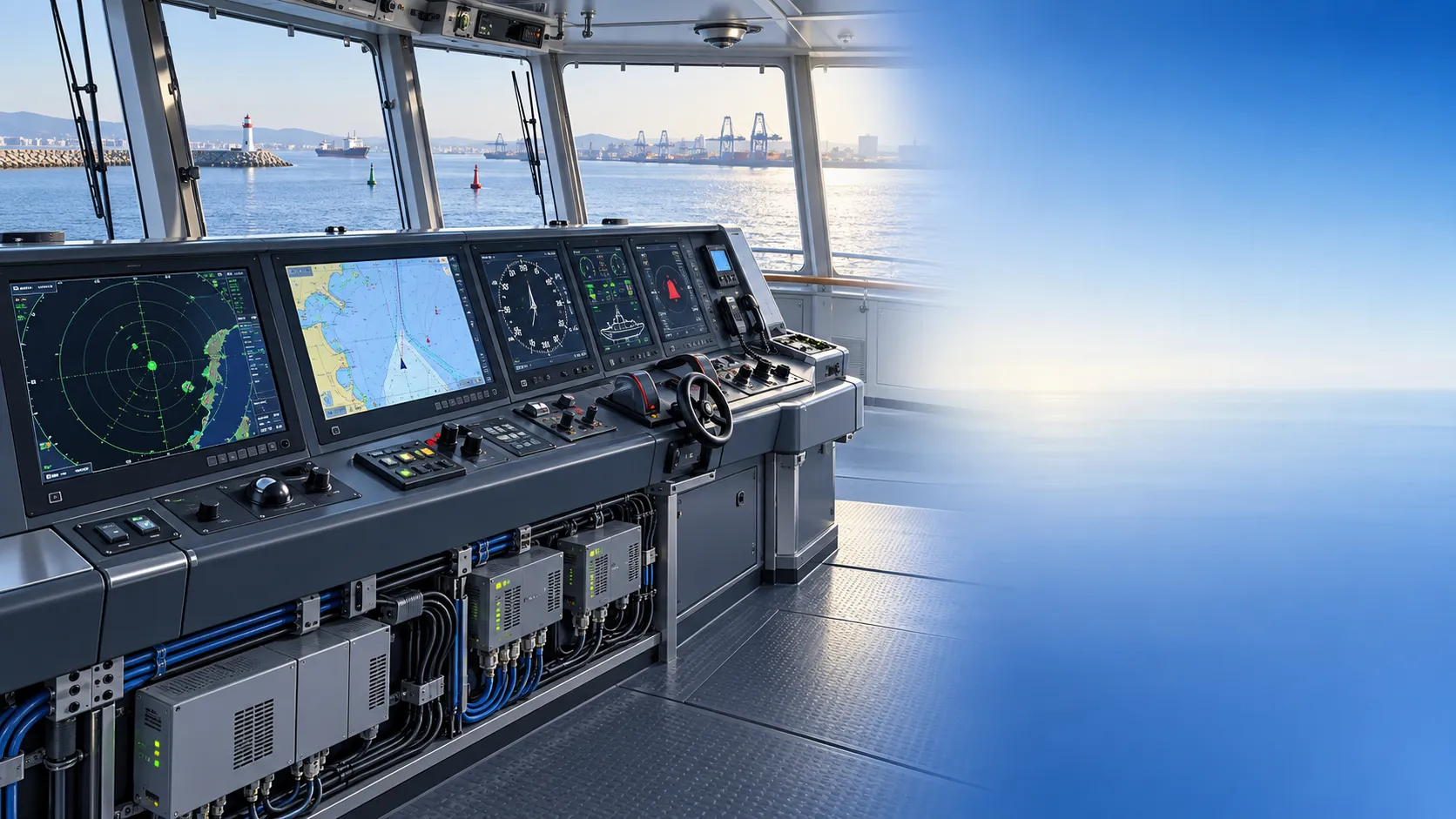
How to Specify Integrated Marine Electronics for Reliable Bridge Operations
Integrated marine electronics: learn how to specify reliable bridge systems with clear data flows, redundancy, alarm control, lifecycle interfaces, and operational testing.

How to Evaluate Navigation Radar Manufacturers for Commercial Vessel Projects
Navigation radar manufacturers: learn how to compare performance, compliance, integration, support, and lifecycle cost for commercial vessel projects.

How Adjustable Cabin Ergonomics Reduce Operator Fatigue in Long-Shift Vehicles
Adjustable cabin ergonomics reduces operator fatigue through better seating, reach, visibility, vibration control, and climate comfort for safer long-shift vehicles.

How Rear-Impact Safety Components Work Together to Protect Vehicle Occupants
Explore how automotive safety components for rear impact work together—from crash structures and seats to head restraints and belts—to enhance occupant protection.
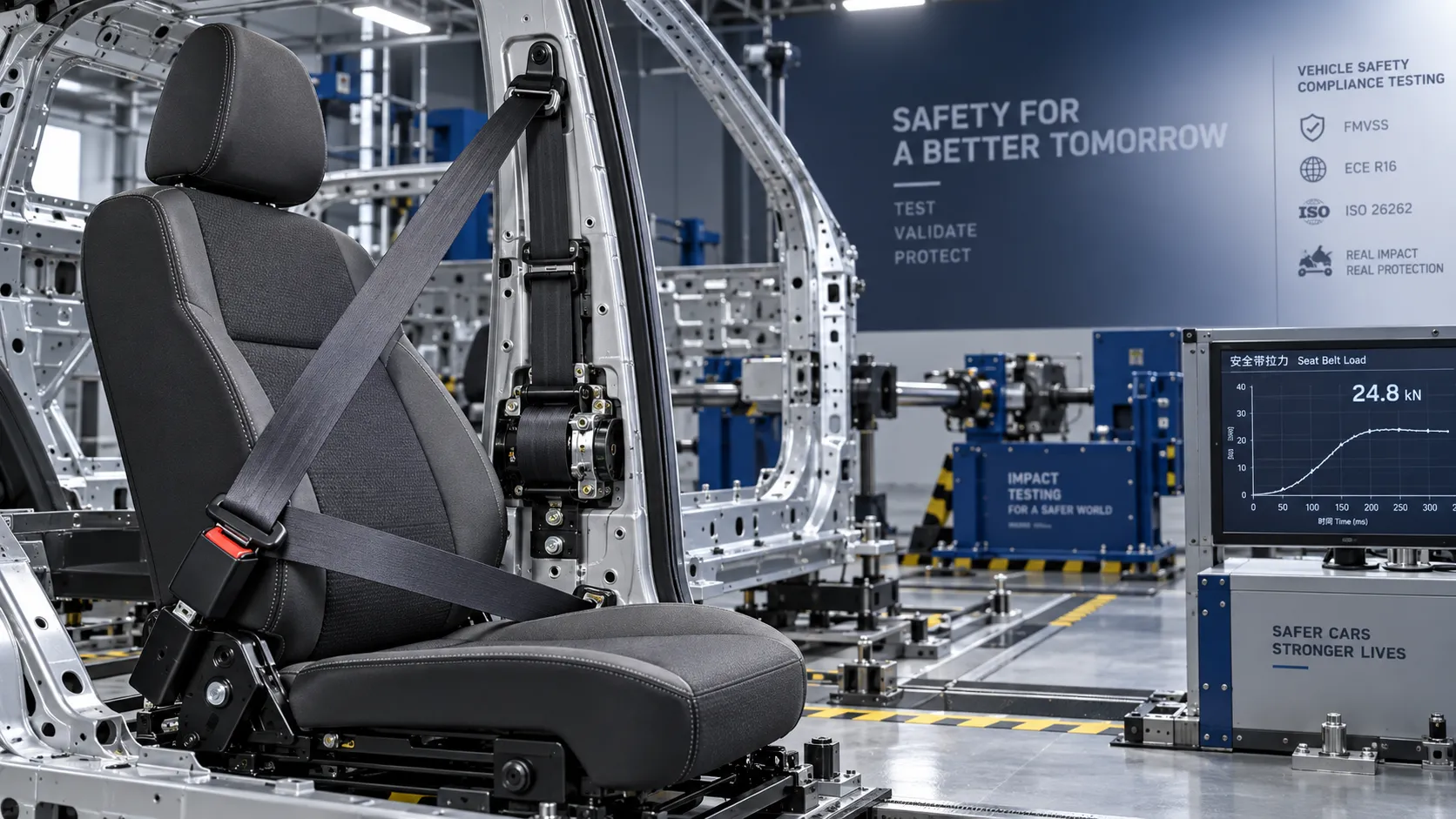
Crash Test Regulations for Seatbelts: Key Compliance Requirements Explained
Crash test regulations seatbelts explained: explore FMVSS, UN rules, anchorage strength, and dynamic restraint testing for safer, compliant vehicle systems.

How to Calculate the Total Cost of Automotive Lightweighting for a Vehicle Program
Automotive lightweight solutions cost: learn how to calculate program-level costs, including materials, tooling, joining, validation, risk, and vehicle-level value.

How Automotive Seat Occupancy Sensing Improves Airbag Deployment Decisions
Automotive seat occupancy sensing helps optimize airbag deployment decisions, improving passenger classification, safety diagnostics, and compliance across real-world conditions.

What Drives Lightweight Body Component Costs in High-Volume Vehicle Programs?
Lightweight body components cost depends on material yield, forming, joining, tooling, validation, and logistics. Explore proven ways to optimize total vehicle program cost.
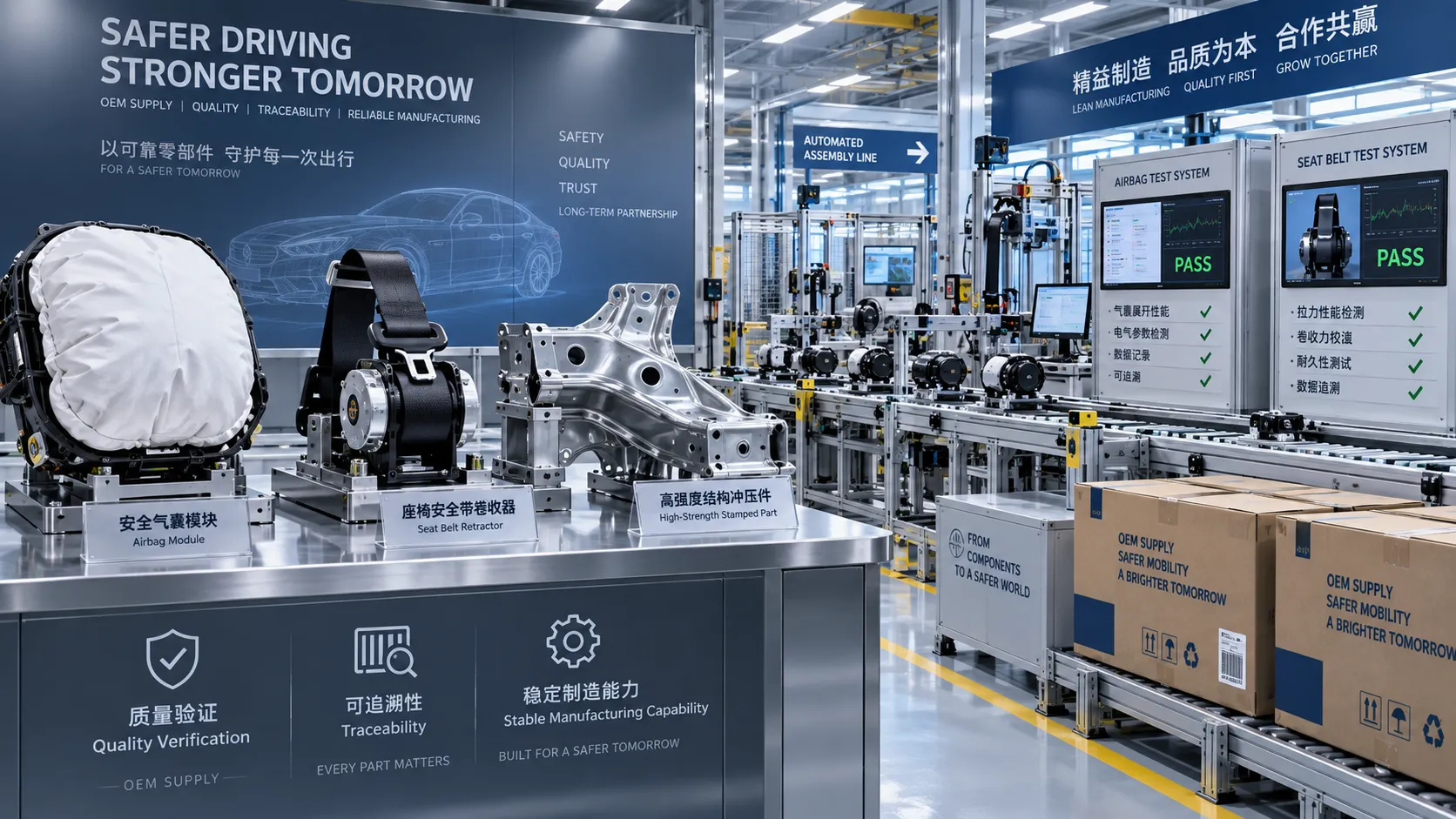
How to Evaluate a Crash Safety Components Exporter for Global OEM Supply Programs
Choose a crash safety components exporter with proven certification, traceability, testing, and OEM launch support. Use this guide to reduce global supply risk.
Related News
- 00
0000-00
How to Specify Integrated Marine Electronics for Reliable Bridge Operations - 00
0000-00
How Adjustable Cabin Ergonomics Reduce Operator Fatigue in Long-Shift Vehicles - 00
0000-00
How to Evaluate a Marine Safety Systems Manufacturer for Vessel Compliance and Reliability - 00
0000-00
How to Calculate the Total Cost of Automotive Lightweighting for a Vehicle Program - 00
0000-00
What Drives Lightweight Body Component Costs in High-Volume Vehicle Programs?
Weekly Insights
Stay ahead with our curated technology reports delivered every Monday.