
How to Evaluate a Crash Safety Components Exporter for Global OEM Supply Programs
How to Evaluate a Crash Safety Components Exporter for Global OEM Supply Programs
Introduction: Selecting a crash safety components exporter for a global OEM supply program requires more than comparing unit prices and production capacity.
Procurement teams must assess certification readiness, traceability, engineering support, testing capability, delivery resilience, and compliance with evolving crash regulations across international vehicle markets.
This guide explains how buyers can evaluate exporters of airbags, seatbelt systems, structural stampings, and related passive safety components with greater confidence and discipline.
Start With the Real Procurement Risk, Not the Quoted Price
For passive safety parts, the lowest quotation can become the most expensive option when quality escapes, launch delays, recalls, or certification failures occur.
A crash safety components exporter is not simply a parts vendor. It becomes part of the OEM's occupant-protection system and product-liability exposure chain.
Buyers should therefore evaluate the supplier against the intended vehicle program, target markets, annual volume, technical complexity, and expected model lifecycle.
An exporter suitable for aftermarket distribution may not be ready for an OEM platform requiring controlled changes, serial traceability, and documented validation evidence.
Begin by defining whether the supplier will provide production parts, subassemblies, prototypes, tooling support, engineering changes, or complete system integration support.
This scope determines which risks matter most. A stamped reinforcement requires different controls than a seatbelt retractor, airbag module, inflator, or electronic crash sensor.
Procurement teams should convert these risks into a weighted supplier scorecard before requesting quotations or conducting factory audits.
A practical scorecard usually gives greater weight to quality systems, validation capability, traceability, and supply continuity than to small unit-price differences.
Verify Automotive Quality Certification and Market Compliance
The first qualification gate is certification. For global OEM programs, IATF 16949 certification is generally more relevant than a basic ISO 9001 certificate.
IATF 16949 does not guarantee good parts, but it indicates that the exporter operates within automotive-specific quality management expectations.
Ask for the current certificate, scope statement, manufacturing site address, certification body, expiration date, and recent surveillance or recertification audit status.
Confirm that the certificate covers the actual plant producing the parts, rather than an affiliated office, trading company, or unrelated manufacturing location.
For export programs, buyers should also verify knowledge of destination-market requirements, including UNECE regulations, FMVSS requirements, CMVSS rules, and regional homologation processes.
Airbag assemblies and seatbelt systems require particular attention because regulations may define performance requirements, labeling obligations, testing protocols, and documentation responsibilities.
Structural stampings must also align with material specifications, corrosion requirements, welding compatibility, dimensional tolerances, and vehicle crash performance assumptions.
A capable crash safety components exporter should explain which regulations apply to each supplied component and how compliance evidence is maintained.
Do not accept broad statements such as “international standard compliant.” Request the exact standards, applicable revision levels, test reports, and product-family coverage.
Assess Product Engineering Capability Before Awarding Development Work
Global OEM programs frequently evolve after sourcing decisions. Suppliers must respond to packaging changes, crash-test findings, weight targets, and manufacturing feasibility issues.
Evaluate whether the exporter has in-house engineering resources or depends entirely on external design houses for technical decisions and corrective actions.
For stamped safety structures, review expertise in hot stamping, high-strength steel forming, aluminum forming, springback control, die design, and joining interfaces.
For airbags, investigate module architecture, fabric selection, cushion folding, inflator integration, deployment timing, and compatibility with steering wheels, seats, or instrument panels.
For seatbelt systems, examine competence in retractors, pretensioners, load limiters, webbing, buckles, anchors, and integration with occupant sensing systems.
Engineering capability should be demonstrated through controlled documentation, not only presentation slides or impressive laboratory photographs.
Request examples of DFMEA, PFMEA, design verification plans, tolerance stack-ups, material selection rationale, and lessons learned from comparable vehicle applications.
Suppliers should identify design assumptions clearly. They should also distinguish between validated performance, simulation predictions, and areas requiring OEM-level system testing.
A supplier that cannot explain its technical boundaries may create unmanaged risk during vehicle integration and later change-management activities.
Review Testing Resources and Validation Evidence in Detail
Passive safety components are only valuable when their performance is repeatable under defined crash conditions, environmental exposure, and manufacturing variation.
Testing capability should therefore be a central evaluation criterion, especially when the exporter provides a functional safety assembly rather than a simple metal part.
Ask which tests are performed internally, which are subcontracted, and which require OEM or independent laboratory confirmation.
Internal testing may include dimensional inspection, tensile testing, corrosion testing, deployment checks, dynamic sled testing, endurance cycling, and environmental conditioning.
For airbags and seatbelts, request representative validation summaries showing test conditions, sample size, acceptance criteria, failures, retests, and engineering dispositions.
For structural components, review material certificates, forming data, weld validation, fatigue evidence, coating performance, and crash correlation where available.
Laboratory accreditation matters. ISO/IEC 17025 accreditation, calibrated equipment records, and clear test-method control strengthen confidence in reported results.
However, buyers should avoid assuming that an advanced laboratory automatically proves production consistency. Validation and mass-production process control are related but separate subjects.
During an audit, inspect how test samples are selected, labeled, stored, prepared, and linked to specific lots, tools, operators, and process settings.
Traceability Must Support Containment, Not Just Documentation
When a field incident occurs, the OEM must quickly determine which vehicles contain potentially affected components and what production conditions were involved.
That requires traceability extending beyond cartons and shipping labels to raw materials, subcomponents, critical processes, inspection records, and final assembly lots.
Ask the exporter to demonstrate a reverse-trace exercise using an actual serial number or batch code from a previously shipped component.
The supplier should be able to identify production date, line, shift, operator, machine settings, incoming materials, inspection outcomes, and shipment destination.
For airbags and seatbelts, traceability should cover safety-critical bought-out parts such as inflators, webbing, electronic initiators, springs, and pyrotechnic devices.
For stampings, it should connect coil or blank identification, steel grade, heat treatment data, press parameters, die condition, and downstream joining information.
Evaluate whether the system can isolate a suspect population precisely. Broad containment actions can be financially damaging and operationally disruptive for OEM customers.
Traceability records must remain accessible for the contracted retention period, which may exceed typical commercial recordkeeping requirements for safety-related vehicle parts.
Examine Process Control and Special Characteristics
Safety performance is often sensitive to process variation that is invisible during routine visual inspection. Procurement teams should review how critical characteristics are controlled.
Ask for control plans identifying special characteristics, measurement methods, sampling frequencies, reaction plans, and escalation procedures for out-of-control conditions.
For seatbelt webbing, relevant characteristics can include strength, elongation, weave consistency, colorfastness, and attachment performance under prescribed loading.
For airbag modules, critical controls may include inflator identification, connector integrity, cushion folding geometry, assembly torque, deployment orientation, and leakage prevention.
For hot-stamped components, temperature profiles, transfer times, quench conditions, hardness, microstructure, trim quality, and dimensional repeatability may be critical.
Statistical process control is useful only when measurement systems are capable. Review gauge R&R studies, calibration controls, and operator training records.
The exporter should have defined reactions for nonconforming parts, including segregation, containment, root-cause analysis, corrective action, and customer notification thresholds.
Ask whether process changes require formal approval. Unauthorized tooling, material, software, or sub-supplier changes are unacceptable risks in global OEM programs.
Evaluate APQP, PPAP, and Launch Management Discipline
Global OEM sourcing decisions should favor suppliers that understand structured automotive launch methods rather than treating prototypes and serial production as unrelated activities.
Ask how the exporter manages Advanced Product Quality Planning, timing milestones, feasibility reviews, prototype builds, pilot runs, validation, and production readiness reviews.
For North American programs, Production Part Approval Process documentation is frequently expected. Other markets may use similar approval packages under different naming conventions.
A complete submission may include process flow diagrams, PFMEA, control plans, dimensional reports, material certifications, capability studies, test results, and sample parts.
Buyers should clarify the required PPAP level early. Late disagreement about evidence depth can delay program release and consume engineering resources unexpectedly.
Review the supplier's previous launch performance. Ask for examples involving delayed tools, failed validation, capacity shortfalls, engineering changes, or customer escalations.
The most useful reference is not a flawless success story. It is evidence that the exporter handled a difficult launch transparently and prevented recurrence.
Also evaluate program-management accessibility. Global OEM teams need responsive technical contacts across time zones, with clear ownership for decisions and escalations.
Confirm Capacity, Tooling Ownership, and Business Continuity
Nominal annual capacity is insufficient. Buyers need to understand available capacity, peak capacity, bottleneck operations, labor dependencies, and ramp-up assumptions.
Request a capacity model showing each critical production step, cycle time, uptime assumptions, planned maintenance, scrap rate, shift pattern, and contingency margin.
For high-volume programs, identify single points of failure such as one hot-stamping press, one inflator source, one critical mold, or one qualified subcontractor.
Tooling ownership must be contractually clear. The agreement should define ownership, location, maintenance responsibility, access rights, insurance, and transfer conditions.
Where production tools are customer-owned, verify that they are visibly identified, protected from unauthorized use, and maintained according to documented schedules.
Business continuity planning should address fire, flooding, cyber incidents, power interruption, labor disruption, geopolitical restrictions, and supplier insolvency scenarios.
Ask for recovery-time objectives, backup production options, alternate logistics routes, inventory policies, and evidence that contingency plans have been tested.
A crash safety components exporter serving multiple global OEM sites should also demonstrate experience with packaging validation, export documentation, and destination-country customs requirements.
Audit the Supply Chain Behind the Exporter
An exporter may assemble a reliable final product while relying on poorly controlled suppliers for materials, electronics, pyrotechnics, or precision mechanical components.
Assess sub-supplier management with the same seriousness applied to the direct manufacturer, especially for components affecting deployment or restraint performance.
Ask which sub-suppliers are approved, how they are qualified, whether second sources exist, and how changes are communicated through the supply chain.
Imported or hazardous materials can create additional risks. Inflators, propellants, electronic initiators, and chemical treatments may require specialized handling and export controls.
Review supplier agreements for material disclosure, restricted substances, conflict minerals reporting where relevant, and compliance with IMDS or equivalent reporting systems.
Procurement teams should verify that the exporter can provide timely declarations for REACH, RoHS, ELV, and customer-specific material restrictions.
Environmental compliance does not replace crash validation, but a late material-compliance failure can still prevent vehicle launch or shipment into a target market.
Use Commercial Terms to Protect Quality and Program Timing
Commercial negotiations should reinforce technical discipline. A purchase order that focuses only on price, volume, and delivery dates leaves major safety risks unmanaged.
Define quality agreements covering approved specifications, change notification, audit rights, defect reporting, containment timing, corrective-action expectations, and cost recovery responsibilities.
Specify who pays for validation after design changes, regulatory updates, tooling modifications, freight expedites, sorting activities, and field-action support.
Incoterms should match the buyer's logistics capability and risk appetite. They should not obscure responsibility for export packaging, dangerous goods documentation, or customs clearance.
Include service-part obligations where required. Safety components may need controlled replacement availability long after regular vehicle production ends.
Payment terms should not pressure the supplier into reducing inspection, maintenance, laboratory, or inventory investment needed for stable serial production.
A sustainable commercial model is preferable to an unrealistic price concession that later appears as chronic quality issues or repeated delivery expedites.
Build a Practical Exporter Qualification Process
A disciplined selection process begins with a request for information covering certification, technical scope, production locations, testing resources, and export-market experience.
Shortlisted suppliers should then complete a detailed technical questionnaire and provide evidence rather than unsupported claims about compliance and capability.
Next, conduct a cross-functional audit involving procurement, supplier quality, engineering, logistics, and regulatory specialists where program risk justifies it.
During the audit, follow the production flow from incoming material through assembly, testing, packing, storage, shipment, and customer complaint handling.
Use sample records to verify the supplier's statements. Review a shipped lot, a nonconformance report, a calibration record, and a completed engineering change.
Before final nomination, request prototype or pilot parts and assess quality, responsiveness, documentation accuracy, packaging, and delivery performance under realistic conditions.
Score each exporter against weighted criteria, but also record unresolved risks separately. A high average score can conceal one unacceptable safety-critical weakness.
Supplier approval should include a corrective-action plan with owners, evidence requirements, deadlines, and clear rules for conditional versus full production approval.
Conclusion: Choose Evidence, Control, and Resilience
The right crash safety components exporter is one that can prove repeatable performance, not merely promise low cost, fast lead times, or broad product coverage.
For global OEM supply programs, the strongest candidates combine automotive certification, rigorous engineering, validated processes, complete traceability, reliable logistics, and disciplined change control.
Procurement teams should treat airbags, seatbelt systems, structural stampings, and related components as program-critical safety products with long-term liability implications.
By evaluating evidence at the factory, process, supply-chain, and commercial-contract levels, buyers can reduce launch risk while building more dependable global supply relationships.
Ultimately, the best exporter is the partner that remains transparent under pressure, responds quickly to technical issues, and protects occupant safety throughout the program lifecycle.
Related News

How to Specify Integrated Marine Electronics for Reliable Bridge Operations
Integrated marine electronics: learn how to specify reliable bridge systems with clear data flows, redundancy, alarm control, lifecycle interfaces, and operational testing.

How to Evaluate Navigation Radar Manufacturers for Commercial Vessel Projects
Navigation radar manufacturers: learn how to compare performance, compliance, integration, support, and lifecycle cost for commercial vessel projects.
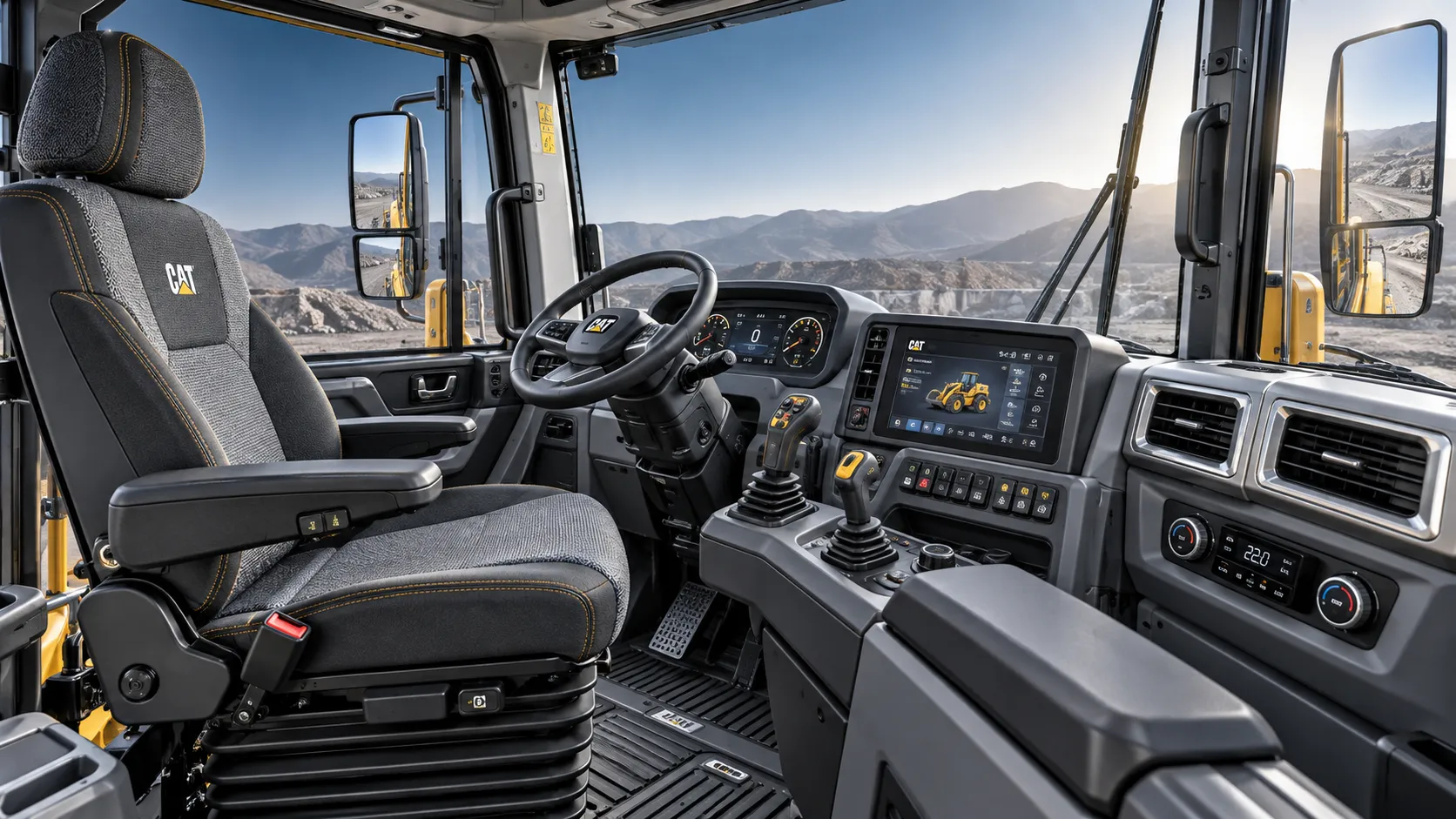
How Adjustable Cabin Ergonomics Reduce Operator Fatigue in Long-Shift Vehicles
Adjustable cabin ergonomics reduces operator fatigue through better seating, reach, visibility, vibration control, and climate comfort for safer long-shift vehicles.

How Rear-Impact Safety Components Work Together to Protect Vehicle Occupants
Explore how automotive safety components for rear impact work together—from crash structures and seats to head restraints and belts—to enhance occupant protection.
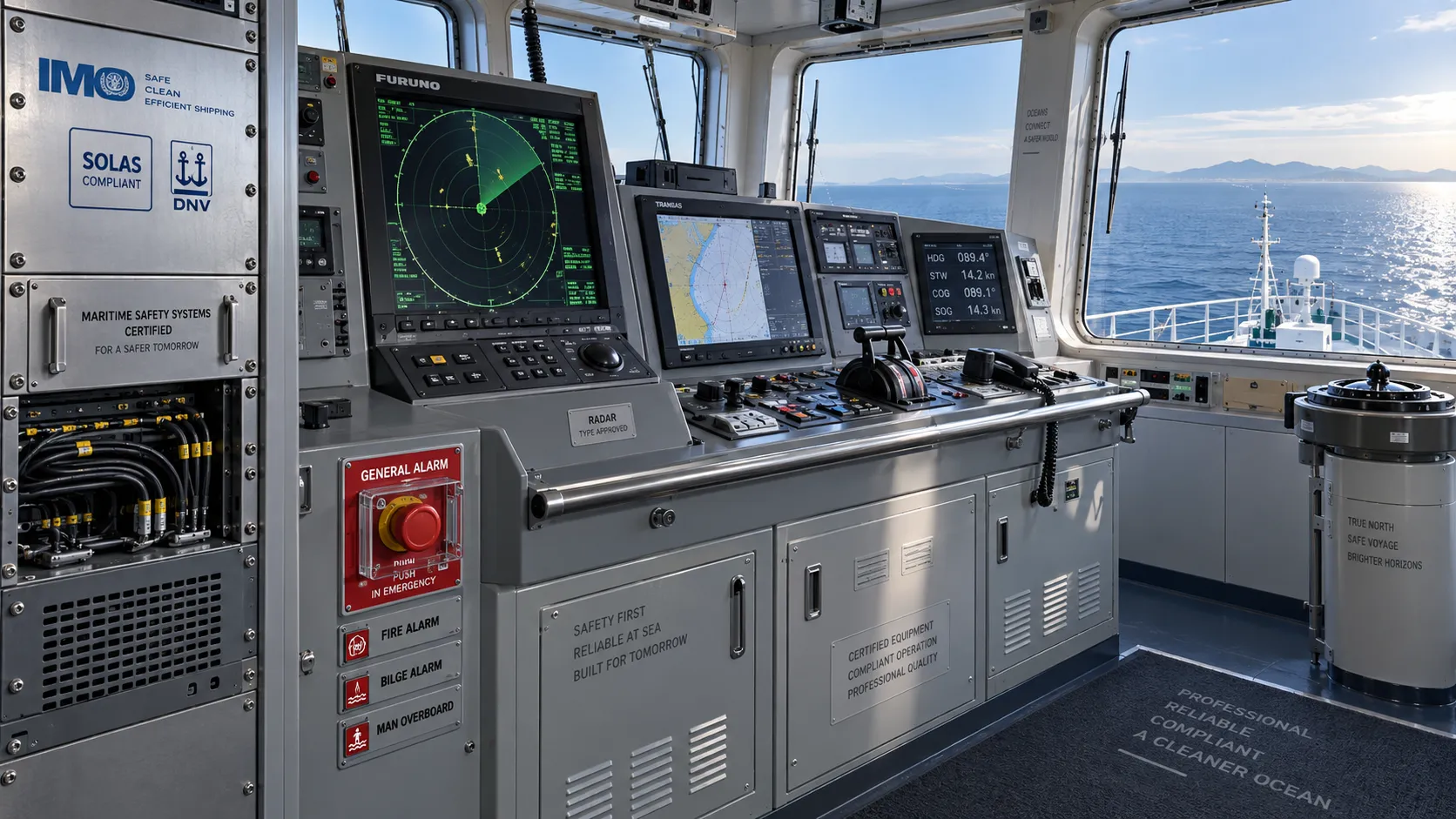
How to Evaluate a Marine Safety Systems Manufacturer for Vessel Compliance and Reliability
Marine safety systems manufacturer evaluation guide: verify compliance, engineering quality, lifecycle costs, and global service support for safer, reliable vessel operations.
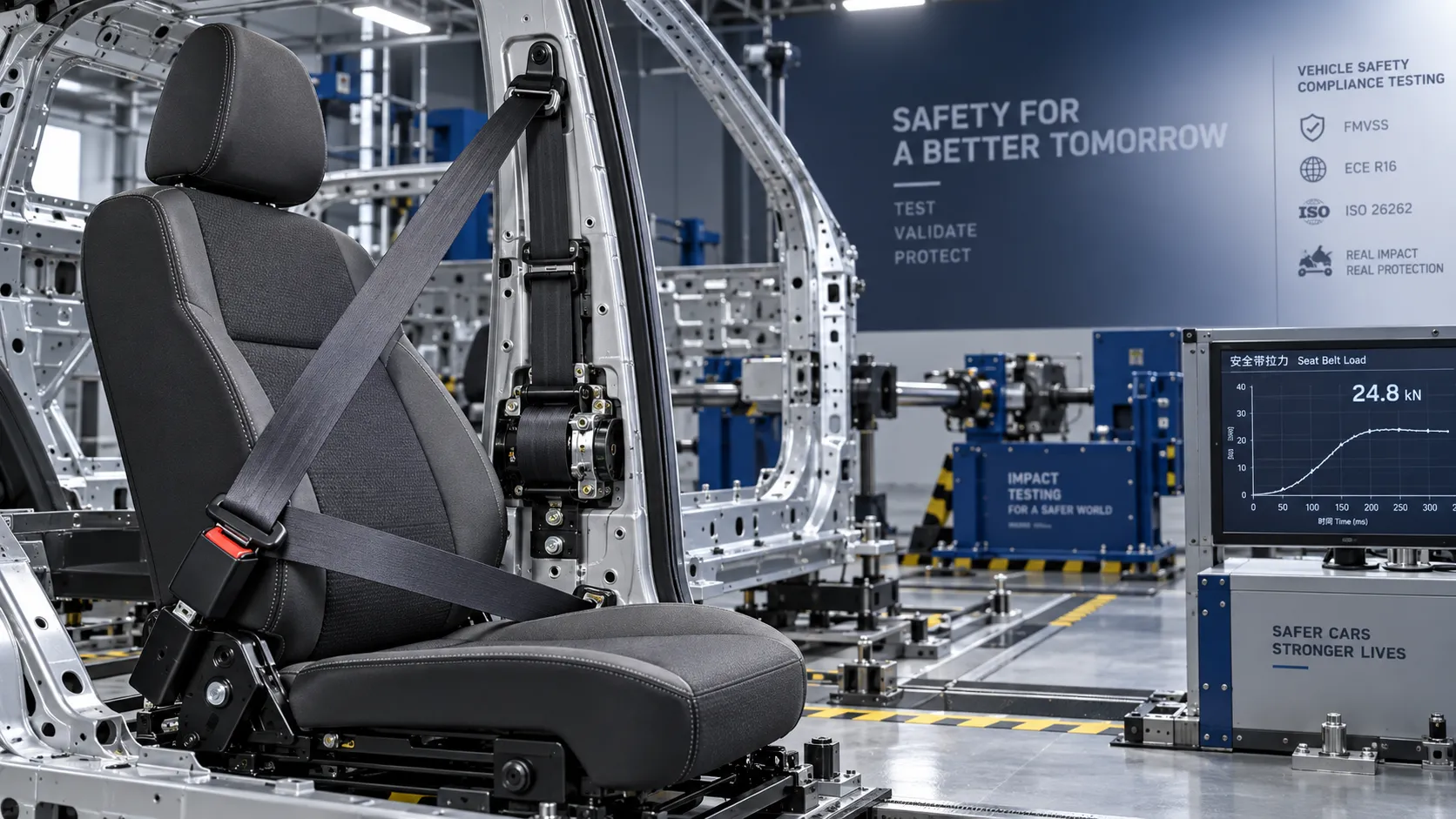
Crash Test Regulations for Seatbelts: Key Compliance Requirements Explained
Crash test regulations seatbelts explained: explore FMVSS, UN rules, anchorage strength, and dynamic restraint testing for safer, compliant vehicle systems.

How to Calculate the Total Cost of Automotive Lightweighting for a Vehicle Program
Automotive lightweight solutions cost: learn how to calculate program-level costs, including materials, tooling, joining, validation, risk, and vehicle-level value.

How Automotive Seat Occupancy Sensing Improves Airbag Deployment Decisions
Automotive seat occupancy sensing helps optimize airbag deployment decisions, improving passenger classification, safety diagnostics, and compliance across real-world conditions.

What Drives Lightweight Body Component Costs in High-Volume Vehicle Programs?
Lightweight body components cost depends on material yield, forming, joining, tooling, validation, and logistics. Explore proven ways to optimize total vehicle program cost.
Related News
- 00
0000-00
How to Specify Integrated Marine Electronics for Reliable Bridge Operations - 00
0000-00
How Adjustable Cabin Ergonomics Reduce Operator Fatigue in Long-Shift Vehicles - 00
0000-00
How to Evaluate a Marine Safety Systems Manufacturer for Vessel Compliance and Reliability - 00
0000-00
How to Calculate the Total Cost of Automotive Lightweighting for a Vehicle Program - 00
0000-00
What Drives Lightweight Body Component Costs in High-Volume Vehicle Programs?
Weekly Insights
Stay ahead with our curated technology reports delivered every Monday.