
How to Calculate the Total Cost of Automotive Lightweighting for a Vehicle Program
The total cost of lightweighting should be calculated at vehicle-program level, not as a material-price delta per kilogram. A lower-mass component can carry higher conversion cost, new joining requirements, longer validation work, altered scrap exposure, and a different repair path. Conversely, a part with a higher piece price can reduce the cost of adjacent brackets, fasteners, reinforcements, or vehicle-level compliance work. The useful question is: what is the fully loaded cost of achieving a verified mass reduction while preserving function, crash performance, manufacturability, and launch timing?
Start with a fixed baseline. Without a controlled reference design, the automotive lightweight solutions cost model will compare unlike conditions and produce a misleading saving or premium. Freeze the baseline part number, annual volume assumption, plant location, manufacturing route, mass, performance requirements, quality targets, and program timing. The proposed design must be evaluated against the same functional boundary. If an aluminum closure panel requires a different hinge reinforcement, corrosion isolation layer, and hem flange process, those items belong in the lightweighting boundary even if they sit outside the original panel bill of materials.
Build the Cost Model Around a Common Functional Unit
Use one functional unit for every alternative: one vehicle set, one body side assembly, one seat frame, or one completed closure system. Comparing raw sheet cost per kilogram with a finished stamped steel assembly is not valid. The unit must include all parts and operations required to deliver the same installed function.
A practical program-level equation is:
Total lightweighting cost = recurring vehicle cost + non-recurring program cost + risk allowance + lifecycle cost effect - verified vehicle-level value created
Each term needs a defined owner, source, assumption date, and confidence level. A model with visible uncertainty is more useful than a precise-looking estimate built from early concept assumptions.
Separate Mass Saved From Cost Paid
Mass reduction is an engineering output, not a cost result. Record both gross and net mass saved. Gross saving is the change in the target component. Net saving includes mass added elsewhere to maintain stiffness, attachment loads, corrosion protection, noise control, thermal behavior, and crash load paths. A lighter roof reinforcement, for example, can require local changes around spot weld locations, adhesive flanges, or curtain-airbag mounting features. The relevant figure is the installed vehicle mass change after these compensations.
Then calculate the incremental recurring cost per vehicle:
Incremental recurring cost = proposed finished-system cost - baseline finished-system cost
Finished-system cost should include purchased material, yield loss, press-shop or forming conversion, machining where applicable, joining, inspection, surface treatment, packaging, inbound freight, internal handling, and expected reject cost. It should not stop at the supplier quotation. A quotation may assume a stable process window that has not yet been proven at production speed.
Cost per kilogram saved is useful for comparing alternatives, but it should never be the only selection metric. A concept that appears expensive per kilogram can still be justified when it removes a larger assembly, prevents a battery-capacity increase, or resolves an axle-load constraint. The inverse also occurs: a low cost-per-kilogram proposal can consume scarce manufacturing capacity or create a validation burden that is disproportionate to the benefit.
Material Cost Needs a Process Yield Model
Raw material price is only the first input. The cost of aluminum, advanced high-strength steel, magnesium, fiber-reinforced polymer, or multi-material construction changes materially once the conversion route is included. A low-density material with poor nesting efficiency can generate expensive scrap. A high-strength grade can reduce gauge, yet demand more robust tooling, controlled forming conditions, or a different trimming method.
For stampings, use purchased blank mass rather than finished part mass when calculating material consumption. The difference captures trim scrap, carrier material, draw beads, edge allowance, and process-specific yield. Treat scrap separately from virgin material because its recovery value, segregation requirement, and remelt path can differ by alloy family and contamination level.
The material portion can be represented as:
Material cost per part = purchased blank mass × delivered material price - recoverable scrap value + material-specific handling and protection cost
Delivered price should reflect regional availability, minimum order commitments, packaging constraints, and currency or index exposure where relevant. A nominally available alloy is not equivalent to a production-ready supply source with the required coil width, surface condition, mechanical-property window, and release cadence.
Where Material Alternatives Change the Manufacturing Bill
- Hot-stamped steel may require dedicated heating, transfer control, die cooling capability, and a production plan that accounts for furnace and press throughput rather than press stroke rate alone.
- Aluminum panels often alter lubrication, surface protection, die wear behavior, springback compensation, and hemming practice. The issue is not simply whether the panel can be formed; it is whether dimensional stability remains acceptable across material batches and tool life.
- Magnesium structures can reduce mass sharply in localized applications, yet casting route, corrosion management, machining, and joining compatibility must be priced as part of the installed assembly.
- Composite parts may remove stamping operations but introduce cycle-time constraints, trim waste, curing infrastructure, inserts, paint compatibility work, and different repair procedures.
These routes should be costed with process assumptions that are specific enough to be challenged. “Existing equipment” is not a cost input. Identify whether existing equipment has spare capacity, whether it requires modification, and whether its capability has been demonstrated for the proposed material and geometry.
Amortize Tooling Without Hiding Timing Exposure
Non-recurring cost often determines whether a technically attractive lightweighting change belongs in the current program or a later derivative. Include dies, checking fixtures, welding or riveting fixtures, end-effectors, gauges, prototype tooling, software updates, plant utilities, and launch support. If the baseline process is reused while the alternative needs a new cell, the difference should be visible rather than spread invisibly into an averaged piece price.
Amortization should use the expected production volume for the relevant program period, not an optimistic lifetime volume adopted to make the result attractive. Keep the one-time investment separate from the recurring cost in the main model. This lets the program compare two legitimate but different questions: whether the part is economically sound over its expected life, and whether the program cash requirement is acceptable before revenue-producing production begins.
Timing has its own cost. A new joining method introduced late can force parallel development, extra prototype loops, temporary manual work, or a design freeze delay. Those are not theoretical concerns when the proposed architecture changes established body-shop sequence, sealant access, paint-shop behavior, or inspection logic.
Price Joining and Corrosion Control at the Assembly Level
Lightweight designs often move from homogeneous steel construction to mixed-material assemblies. This shifts cost into the interfaces. Resistance spot welding may remain suitable for some combinations and thicknesses, while other joints require self-piercing rivets, flow-drill screws, structural adhesive, laser welding, clinching, or hybrid methods. Every alternative affects equipment, consumables, access, cycle time, maintenance, inspection, and rework.
Joining cost should include the whole station effect. Adding adhesive changes dispense equipment, bead verification, cure conditions, cleaning requirements, and repair procedure. Adding mechanical fasteners creates consumable cost and may require access on both sides, driving geometry changes. A joint that works in a prototype fixture can be unsuitable for a production cell if tolerance stack-up prevents reliable insertion or if the line cannot recover from a misfeed without stopping.
Mixed-material contact also needs a corrosion-control cost path. Isolation layers, coatings, sealers, pretreatment, drainage design, and edge protection should be tied to the actual environmental exposure and paint process. Do not charge generic corrosion provisions to every concept; charge the provisions required by the selected material pairing and interface design. That distinction prevents both underestimation and unnecessary conservatism.
Put Crash, Durability, and Compliance Work in the Business Case
Mass reduction near the occupant cell, front rail, roof structure, seat anchorage, steering-column support, battery enclosure, or restraint mounting points cannot be treated as a local substitution. Changes in gauge, section geometry, joining stiffness, and material strain behavior influence how loads travel through the vehicle. A lighter component that meets a coupon strength target may still change intrusion, deceleration pulse, belt-load response, airbag timing sensitivity, or post-impact door operability.
Cost the validation plan in stages. Early analysis and material characterization are lower-cost filters, but they do not replace physical confirmation when the design affects structural performance. Include prototype material, sample tooling, subsystem tests, vehicle tests where necessary, instrumentation, teardown analysis, redesign loops, and engineering release effort. The model should distinguish planned validation from contingency validation triggered by a failed correlation or unexpected fracture mode.
Compliance cost must be based on the applicable vehicle markets and released requirements rather than a generic test allowance. A design shared across several vehicle derivatives may need different evidence because body styles, restraint configurations, powertrains, and local content rules alter the assessed system. Reuse of existing evidence is credible only when material, geometry, joining, load path, and manufacturing route remain within the established correlation boundary.
Convert Supply Risk Into Explicit Cost Assumptions
Supply-chain risk should not sit in a footnote. It changes the expected cost of the design. Record the number of qualified sources, regional production footprint, available capacity, lead time for material and tools, qualification status, and dependence on special conversion capability. A single source is not automatically unacceptable, but its exposure should be visible in the commercial model.
Capacity deserves particular attention when a lightweight material requires a specialized press line, furnace, casting cell, adhesive cure cycle, or finishing operation. The part price may be valid at nominal volume but fail when the supplier must reserve constrained capacity, run small batches, or add shifts. Freight also changes with packaging density, coil handling, damage protection, and the need to prevent surface contamination. Lower vehicle mass does not guarantee lower inbound logistics cost.
Use scenarios rather than one inflated contingency number. A base case can reflect released specifications and qualified sources. A constrained case can test lower yield, increased material cost, delayed tool maturity, or additional joining equipment. A third case can represent a design change after validation. The purpose is to reveal which assumption changes the decision, not to predict every future event.
Recognize Value Only Once and Only When It Is Realizable
The benefit side requires the same discipline as the cost side. A vehicle mass reduction has value when it enables a measurable downstream change: a smaller battery pack, reduced brake or suspension requirement, improved payload margin, lower energy consumption under the relevant duty cycle, or recovery of a compliance margin. If no subsystem is resized and no commercial or regulatory outcome changes, the benefit may remain strategic or future-facing rather than immediate cash value.
Avoid counting a mass reduction first as a range benefit, then again as a battery saving, and again as an emissions or fleet-value saving unless each benefit arises from a separate, substantiated mechanism. Link each benefit to a responsible subsystem calculation and record whether it is captured in the current vehicle release or only available to a later optimization cycle.
For electric vehicles, lightweighting and battery sizing are tightly coupled, but the timing matters. If battery capacity is frozen before the mass change matures, the program may receive range margin rather than a smaller battery. Both outcomes have value, yet they belong in different parts of the business case. For internal-combustion applications, fuel-use effects should likewise be tied to the intended operating cycle rather than a generic conversion factor.
Use a Release Gate, Not a Single Early Estimate
A robust cost model evolves with design maturity. At concept stage, use ranges for material, yield, tooling, joining, and validation. At feasibility stage, replace assumptions with supplier process proposals, forming studies, joining trials, and preliminary test plans. Before tooling release, update the model using frozen geometry, nominated sources, confirmed plant changes, and a traceable validation budget.
The final decision record should show net mass saved, recurring cost delta, non-recurring investment, payback volume where relevant, unresolved technical assumptions, and the cost consequence of each open item. It should also state which vehicle-level benefit is confirmed, which is conditional on another subsystem decision, and which is not yet monetized.
That discipline prevents a lightweighting proposal from being approved on a favorable material comparison and later absorbing unplanned cost through tooling revisions, line changes, or late structural work. The strongest program case is the one in which every kilogram saved has a defined engineering path, every cost is attached to a process or requirement, and every claimed value has a clear route to realization.
Related News

How to Specify Integrated Marine Electronics for Reliable Bridge Operations
Integrated marine electronics: learn how to specify reliable bridge systems with clear data flows, redundancy, alarm control, lifecycle interfaces, and operational testing.

How to Evaluate Navigation Radar Manufacturers for Commercial Vessel Projects
Navigation radar manufacturers: learn how to compare performance, compliance, integration, support, and lifecycle cost for commercial vessel projects.

How Adjustable Cabin Ergonomics Reduce Operator Fatigue in Long-Shift Vehicles
Adjustable cabin ergonomics reduces operator fatigue through better seating, reach, visibility, vibration control, and climate comfort for safer long-shift vehicles.

How Rear-Impact Safety Components Work Together to Protect Vehicle Occupants
Explore how automotive safety components for rear impact work together—from crash structures and seats to head restraints and belts—to enhance occupant protection.

How to Evaluate a Marine Safety Systems Manufacturer for Vessel Compliance and Reliability
Marine safety systems manufacturer evaluation guide: verify compliance, engineering quality, lifecycle costs, and global service support for safer, reliable vessel operations.
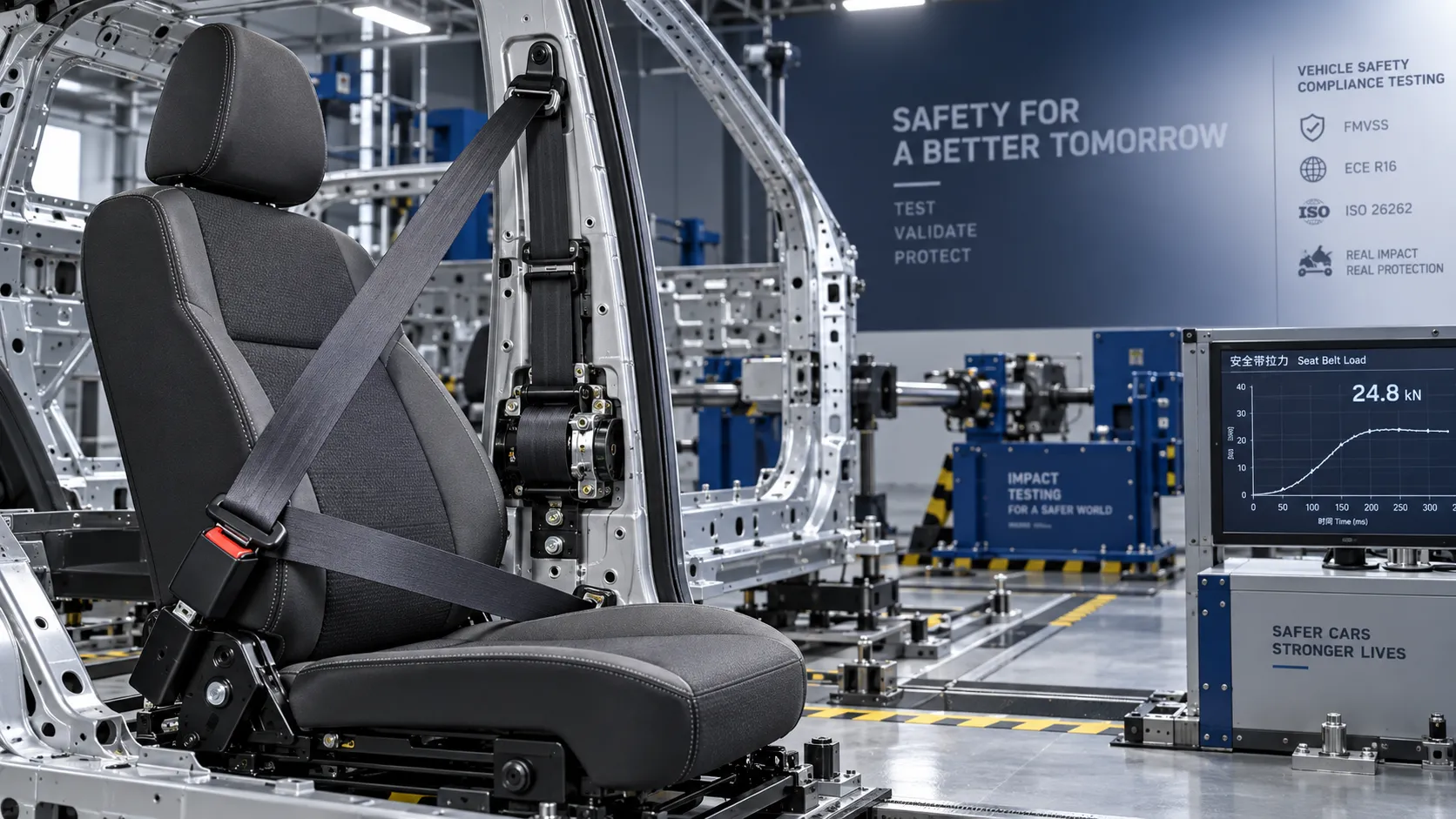
Crash Test Regulations for Seatbelts: Key Compliance Requirements Explained
Crash test regulations seatbelts explained: explore FMVSS, UN rules, anchorage strength, and dynamic restraint testing for safer, compliant vehicle systems.

How Automotive Seat Occupancy Sensing Improves Airbag Deployment Decisions
Automotive seat occupancy sensing helps optimize airbag deployment decisions, improving passenger classification, safety diagnostics, and compliance across real-world conditions.

What Drives Lightweight Body Component Costs in High-Volume Vehicle Programs?
Lightweight body components cost depends on material yield, forming, joining, tooling, validation, and logistics. Explore proven ways to optimize total vehicle program cost.
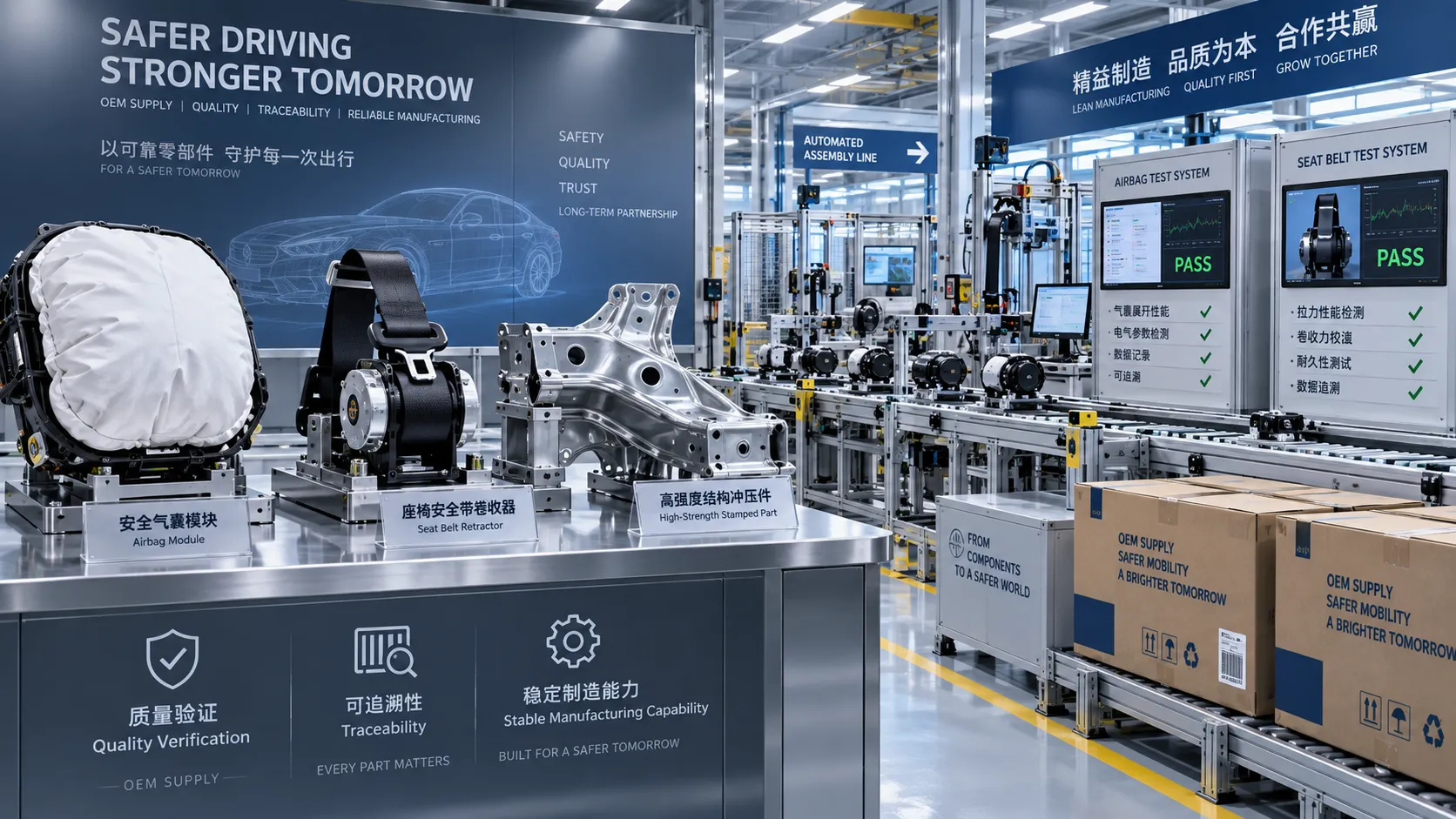
How to Evaluate a Crash Safety Components Exporter for Global OEM Supply Programs
Choose a crash safety components exporter with proven certification, traceability, testing, and OEM launch support. Use this guide to reduce global supply risk.
Related News
- 00
0000-00
How to Specify Integrated Marine Electronics for Reliable Bridge Operations - 00
0000-00
How Adjustable Cabin Ergonomics Reduce Operator Fatigue in Long-Shift Vehicles - 00
0000-00
How to Evaluate a Marine Safety Systems Manufacturer for Vessel Compliance and Reliability - 00
0000-00
How to Calculate the Total Cost of Automotive Lightweighting for a Vehicle Program - 00
0000-00
What Drives Lightweight Body Component Costs in High-Volume Vehicle Programs?
Weekly Insights
Stay ahead with our curated technology reports delivered every Monday.