
Why force-limiting systems matter in crash tests
In modern crash testing, force-limiting systems are no longer secondary seatbelt features—they are critical indicators of how well a vehicle manages occupant loads during high-G impacts.
For technical evaluators, these systems reveal the balance between restraint, controlled payout, airbag timing, and structural energy absorption.
Understanding their performance helps interpret chest deflection, head excursion, and injury criteria across IIHS, Euro NCAP, and global safety protocols.
That makes force-limiting systems essential to judging real-world crashworthiness, especially as cabins become lighter, smarter, and more tightly integrated.
Why force-limiting systems need checklist-based evaluation
Crash tests compress milliseconds of physics into measurable injury outcomes. Without a checklist, important restraint interactions can be missed.
Force-limiting systems release belt webbing in a controlled way after pretensioning. This reduces peak chest loads while keeping occupants positioned.
The challenge is balance. Too much belt force increases thoracic injury risk. Too much payout increases head excursion and contact risk.
A checklist helps connect belt load curves, dummy kinematics, airbag deployment, seat stiffness, and body-in-white deformation into one judgment.
For GNCS, this reflects a broader safety principle: precise perception must be matched by physical containment protection.
Core checklist for assessing force-limiting systems
Use the following checkpoints when reviewing crash test data, supplier validation reports, or comparative safety performance across vehicle platforms.
- Verify the load threshold where force-limiting systems begin payout, then compare it with dummy chest deflection and belt force traces.
- Check pretensioner timing against crash pulse onset, because delayed tightening can force the limiter to compensate under unstable occupant motion.
- Review payout length under frontal impact, ensuring force-limiting systems reduce chest load without allowing excessive head excursion.
- Compare driver and passenger responses, since different airbag volumes, seat positions, and dashboard clearances change restraint demand.
- Confirm compatibility with airbags, because belt load reduction must align with cushion inflation, venting, and occupant ride-down.
- Inspect shoulder belt geometry, as poor D-ring height or anchor placement can distort the measured value of force-limiting systems.
- Evaluate seat structure stiffness, because seat track deformation or recliner movement changes belt angles during peak loading.
- Use multiple dummy sizes, including small female and large male dummies, to reveal whether limiter calibration protects diverse occupants.
- Correlate chest acceleration, chest deflection, neck loads, and head injury criteria instead of judging force-limiting systems by one metric.
- Document environmental and aging effects, including webbing friction, retractor condition, and temperature sensitivity during repeated validation tests.
How crash protocols change the meaning of belt load control
IIHS, Euro NCAP, C-NCAP, and other programs do not measure restraint performance in identical ways.
A vehicle can perform well in one frontal configuration yet reveal weaknesses in small overlap or oblique impact conditions.
Force-limiting systems must therefore be interpreted against the crash pulse, overlap percentage, dummy placement, and scoring injury thresholds.
In rigid barrier tests, limiter behavior may look stable because deceleration is symmetrical and highly repeatable.
In offset crashes, structural intrusion and asymmetric rotation can produce harder restraint loading and less predictable occupant motion.
This is where force-limiting systems become diagnostic. They expose whether passive safety architecture works as an integrated system.
Frontal crash tests
In frontal crashes, the primary objective is controlled ride-down. The body should decelerate gradually with the vehicle structure, belt, and airbag.
Force-limiting systems reduce the sharp belt loading that can compress the rib cage during peak deceleration.
However, the limiter must not permit excessive forward travel before the airbag can support the head and torso.
Small overlap and oblique impacts
Small overlap crashes introduce rotation, lateral movement, and localized intrusion near the occupant compartment.
In these scenarios, force-limiting systems must cooperate with curtain airbags, steering column control, and seatbelt anchorage stiffness.
The best data review looks beyond straight-ahead motion. It studies yaw, shoulder slip, pelvic retention, and head contact paths.
Rear-seat restraint performance
Rear-seat safety is receiving greater attention because second-row occupants often lack the same restraint sophistication as front occupants.
Force-limiting systems in rear seats can reduce chest loading, especially for older occupants with higher thoracic injury vulnerability.
Evaluation should include cushion submarining risk, belt fit, seatback interaction, and the availability of pretensioners.
Scenario guide for interpreting test outcomes
Different vehicle programs require different weighting. A compact EV, a family SUV, and a commercial cabin face different packaging constraints.
Lightweight body platforms
Auto body stampings made from high-strength steel or aluminum can create highly tuned crash pulses.
When structures are lighter, force-limiting systems must be calibrated with greater precision to preserve occupant ride-down distance.
A strong passenger cell alone is not enough. Load management must happen through structure, belt, airbag, and seat together.
Smart seating systems
Smart seats introduce position sensing, occupancy detection, posture monitoring, and sometimes adaptive restraint logic.
Force-limiting systems can benefit from this data when algorithms adjust belt restraint strategies before a crash event.
Yet validation must prove that comfort features do not compromise belt geometry or emergency locking performance.
High-end global mobility equipment
Global platforms must satisfy regional crash regulations, consumer rating programs, and local occupant demographic differences.
Force-limiting systems should be reviewed through homologation data, sled testing, full-vehicle tests, and real-world claim feedback.
This supports technical credibility when safety components are positioned for premium international programs.
Common risks that distort force-limiting systems evaluation
Some errors look minor in a report, yet they can change the interpretation of restraint performance significantly.
Ignoring belt geometry: A favorable belt load curve may hide poor shoulder routing, clavicle loading, or abdominal belt migration.
Overvaluing one dummy result: Force-limiting systems that protect a midsize male dummy may not protect smaller or elderly occupants equally.
Missing airbag timing conflicts: If the airbag is late or vents too quickly, controlled payout can become excessive forward travel.
Separating seat and belt data: Seat cushion stiffness, recliner strength, and track movement influence belt loading during crash energy transfer.
Relying only on peak force: The shape of the force curve matters. Duration and ramp rate influence injury risk.
Neglecting production variation: Retractor friction, webbing material, assembly tolerance, and supplier process control can shift limiter behavior.
Practical execution steps for better restraint decisions
A disciplined review process turns crash results into engineering decisions, supplier comparisons, and safety strategy improvements.
- Map each injury metric to a physical event, including pretensioning, limiter payout, airbag contact, and occupant rebound.
- Compare sled tests with full-vehicle tests to identify where structural deformation changes force-limiting systems performance.
- Request belt force traces, payout curves, high-speed video, dummy sensor channels, and post-test restraint hardware inspection records.
- Review calibration across seat positions, occupant sizes, and crash pulses instead of accepting one optimized certification configuration.
- Connect restraint findings with body stamping strategy, airbag inflator output, seat frame design, and cabin packaging constraints.
- Track regulatory changes, because future rating programs increasingly reward rear-seat protection and advanced occupant diversity testing.
These steps make force-limiting systems easier to compare across suppliers, platforms, and crash programs.
They also prevent isolated component thinking, which often leads to attractive lab numbers but weaker real-world protection.
What strong performance looks like in the data
Strong force-limiting systems show a controlled force plateau rather than a violent peak followed by unstable belt release.
Chest deflection remains within target limits, while head excursion stays clear of steering wheels, instrument panels, and seatbacks.
The dummy loads should show coordinated energy management, not a tradeoff that simply moves injury risk from chest to head or neck.
High-speed video should confirm stable torso rotation, secure pelvis retention, and consistent airbag engagement.
Post-test inspection should reveal that the retractor, webbing, anchors, and seat structure performed as intended.
When this pattern repeats across crash modes, force-limiting systems become credible evidence of mature passive safety design.
Summary and action guide
Force-limiting systems matter because they translate crash energy into survivable occupant loads.
They are not simple comfort features, nor are they isolated seatbelt mechanisms. They are active participants in passive safety architecture.
The next step is to evaluate them through a complete evidence chain: crash pulse, belt force, payout, dummy motion, and injury criteria.
For a stronger review, place force-limiting systems beside airbag assemblies, auto body stampings, and smart seat structures.
That integrated view supports safer cabins, clearer compliance decisions, and more credible global mobility equipment development.
Use the checklist before approving a restraint concept, comparing test reports, or interpreting rating performance.
A well-calibrated limiter can be the difference between measured restraint and harmful compression during the most critical milliseconds of impact.
Related News

How to Specify Integrated Marine Electronics for Reliable Bridge Operations
Integrated marine electronics: learn how to specify reliable bridge systems with clear data flows, redundancy, alarm control, lifecycle interfaces, and operational testing.

How to Evaluate Navigation Radar Manufacturers for Commercial Vessel Projects
Navigation radar manufacturers: learn how to compare performance, compliance, integration, support, and lifecycle cost for commercial vessel projects.

How Adjustable Cabin Ergonomics Reduce Operator Fatigue in Long-Shift Vehicles
Adjustable cabin ergonomics reduces operator fatigue through better seating, reach, visibility, vibration control, and climate comfort for safer long-shift vehicles.

How Rear-Impact Safety Components Work Together to Protect Vehicle Occupants
Explore how automotive safety components for rear impact work together—from crash structures and seats to head restraints and belts—to enhance occupant protection.

How to Evaluate a Marine Safety Systems Manufacturer for Vessel Compliance and Reliability
Marine safety systems manufacturer evaluation guide: verify compliance, engineering quality, lifecycle costs, and global service support for safer, reliable vessel operations.
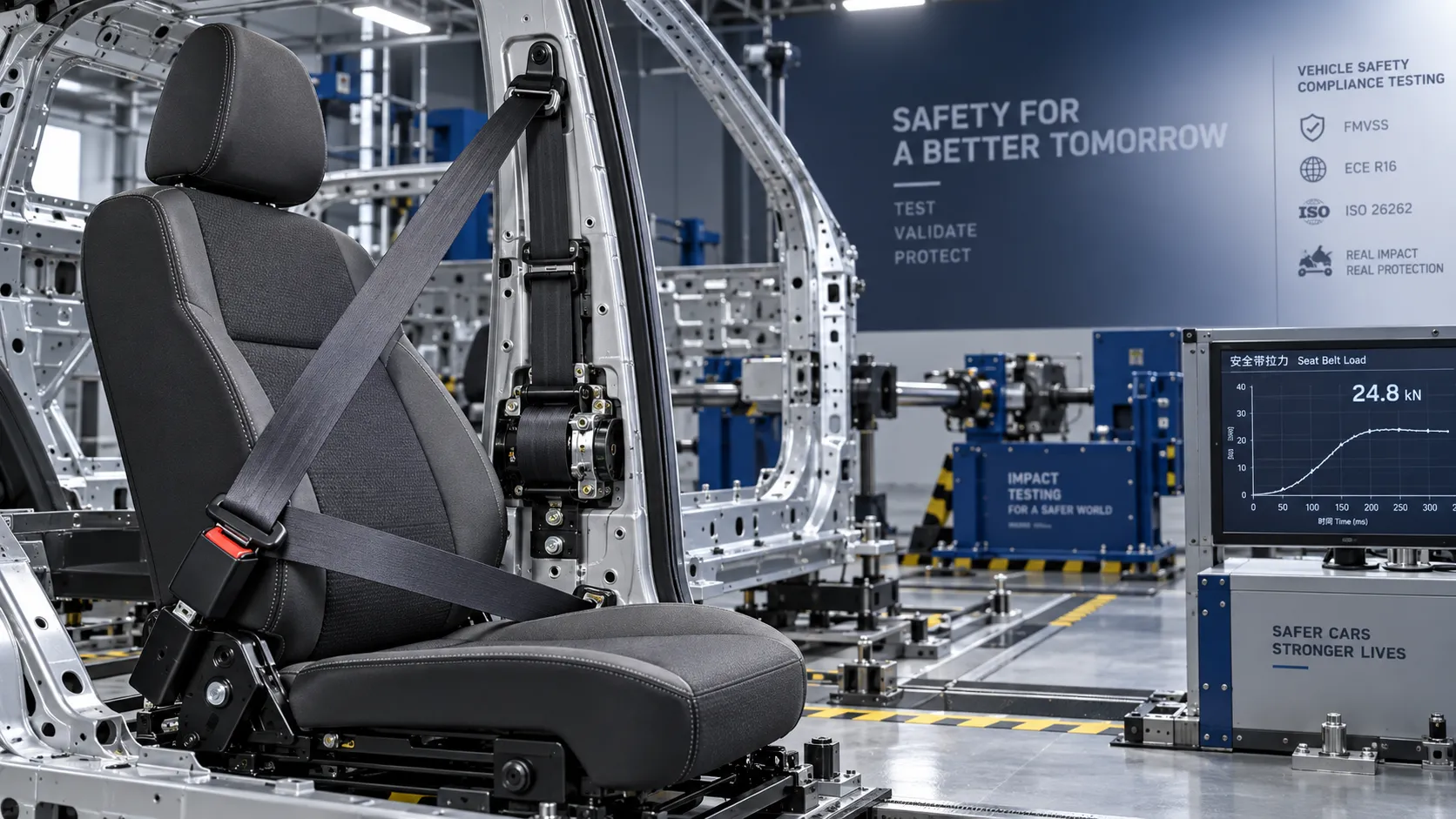
Crash Test Regulations for Seatbelts: Key Compliance Requirements Explained
Crash test regulations seatbelts explained: explore FMVSS, UN rules, anchorage strength, and dynamic restraint testing for safer, compliant vehicle systems.

How to Calculate the Total Cost of Automotive Lightweighting for a Vehicle Program
Automotive lightweight solutions cost: learn how to calculate program-level costs, including materials, tooling, joining, validation, risk, and vehicle-level value.

How Automotive Seat Occupancy Sensing Improves Airbag Deployment Decisions
Automotive seat occupancy sensing helps optimize airbag deployment decisions, improving passenger classification, safety diagnostics, and compliance across real-world conditions.

What Drives Lightweight Body Component Costs in High-Volume Vehicle Programs?
Lightweight body components cost depends on material yield, forming, joining, tooling, validation, and logistics. Explore proven ways to optimize total vehicle program cost.
Weekly Insights
Stay ahead with our curated technology reports delivered every Monday.