Precision Navigation in Survey and Offshore Work: Key Accuracy Factors and System Setup
Precision Navigation in Survey and Offshore Work: Key Accuracy Factors and System Setup
In survey and offshore operations, precision navigation shapes far more than a vessel track.
It affects data confidence, line keeping, fuel use, downtime, and audit readiness.
That is why precision navigation is usually treated as a system question, not a single-device purchase.
A strong result depends on positioning quality, timing, motion sensing, installation geometry, and correction delivery working together.
In practical marine work, small setup errors often create bigger losses than headline sensor specifications suggest.
This also means a technically sound setup can outperform a more expensive but poorly integrated package.
The sections below break down the main accuracy drivers and the setup priorities that matter most offshore.
Why Precision Navigation Matters Offshore
Offshore and hydrographic projects rarely fail because a receiver cannot calculate position.
They fail when position quality is unstable, unverified, or misaligned with the working sensor.
A subsea inspection line, dredging cut, geophysical tow, or cable route survey needs repeatable spatial control.
Without that, rework increases and confidence in the final deliverable falls quickly.
Precision navigation also supports collision avoidance, safe approach patterns, and regulated operating envelopes.
For crews working around platforms, wind assets, or crowded construction zones, that operational margin is critical.
From a technical review perspective, the key question is simple.
Can the precision navigation system maintain reliable accuracy under real vessel motion, interference, and correction loss scenarios?
The Main Accuracy Factors Behind Precision Navigation
1. GNSS Constellation Access and Signal Quality
Modern precision navigation benefits from multi-constellation tracking.
GPS alone is no longer the practical benchmark for demanding survey work.
Receivers using GPS, GLONASS, Galileo, and BeiDou generally provide stronger geometry and better resilience.
However, raw satellite availability does not guarantee stable performance.
Multipath from masts, cranes, and metal structures can distort signals near the antenna.
On offshore vessels, deck equipment layout often matters more than brochure sensitivity figures.
2. Correction Service Type and Continuity
Precision navigation depends heavily on the correction method being used.
RTK can deliver excellent accuracy, but coverage limits and communication dropouts remain real constraints offshore.
PPP and PPP-RTK services improve offshore reach, though convergence behavior must be understood in advance.
The best choice depends on project distance, update rate, fallback needs, and contractual tolerance.
A robust design always asks what happens when the primary correction stream becomes unstable.
3. Inertial Performance and Vessel Dynamics
Precision navigation at sea is never just about horizontal coordinates.
Heave, pitch, roll, yaw, and acceleration directly affect where the actual working point sits.
That is especially true for multibeam sonar, USBL, towfish, and subsea deployment operations.
A tightly integrated GNSS and IMU solution helps bridge outages and smooth short-term motion effects.
Still, inertial grade should match sea state, speed profile, and data quality objectives.
Overspecification raises cost, while underspecification quietly erodes survey confidence.
4. Antenna Placement and Installation Geometry
Installation geometry is one of the most underestimated precision navigation factors.
An accurate receiver cannot fix poor offsets, weak mounting, or incorrect lever-arm values.
Antenna separation, heading baseline alignment, and IMU orientation all influence final position quality.
Even a few centimeters of survey error can become significant at the working sensor face.
This is even more visible during turns, accelerations, and dynamic positioning maneuvers.
5. Time Sync and Data Integration
In high-precision marine work, timing errors can look like positioning errors.
If navigation, motion, sonar, and acquisition software are not synchronized, spatial mismatch appears quickly.
PPS, NMEA timing, network latency, and data logging configuration should be checked as a complete chain.
In many projects, consistent timestamps matter just as much as centimeter-level coordinates.
How to Set Up a Reliable Precision Navigation System
A reliable setup starts with the work task, not the equipment list.
The navigation architecture for pipe tracking differs from shallow-water multibeam or offshore construction support.
So the most useful approach is to define operational need before comparing brands or sensor grades.
Define the Required Working Point
Start by identifying which point must be positioned accurately.
It may be the GNSS antenna, a sonar head, a tow point, or a subsea tool reference.
This choice drives lever-arm measurement, latency control, and motion compensation strategy.
Match Correction Strategy to Offshore Reality
Choose correction services based on actual operating range and communication reliability.
Do not assume nearshore RTK performance will translate to remote offshore work.
Plan a fallback mode with known expected accuracy, re-convergence time, and operator response rules.
Build Around Motion and Sea State
If vessel motion is significant, integrated inertial support becomes essential for precision navigation.
Evaluate update rate, heading stability at low speed, heave behavior, and outage bridging performance.
A calm-sea demo does not fully represent offshore operating risk.
Control Geometry During Installation
Use a clear installation drawing and a repeatable measurement method.
Verify antenna phase center locations, sensor axes, heading baseline direction, and mechanical rigidity.
Then confirm all offsets inside acquisition and processing software.
Many precision navigation issues come from data entry, not hardware failure.
Validate Before Full Operations
A short harbor test is useful, but offshore validation should reflect the real task.
Run straight lines, turns, speed changes, correction interruptions, and timing checks.
Look for repeatability, not just isolated best-case accuracy.
Common Failure Modes and What They Usually Mean
- Cross-track jumps often point to correction instability, multipath, or poor antenna placement.
- Heading wander at low speed may indicate weak dual-antenna geometry or inertial limitations.
- Sensor mismatch during turns usually suggests wrong lever arms or timing offset.
- Different results between software platforms can reveal datum, projection, or logging configuration problems.
- Good static tests but poor dynamic results often mean the precision navigation chain lacks motion robustness.
These patterns are valuable because they shorten troubleshooting time.
Instead of replacing hardware first, trace the issue through signal, correction, motion, geometry, and timing.
A Practical Evaluation Checklist
- Confirm the required positional tolerance at the actual working point.
- Check supported constellations, frequencies, and correction compatibility.
- Review expected performance during outages and degraded correction periods.
- Inspect antenna and IMU placement against vessel structure and interference sources.
- Verify lever-arm survey method and installation documentation quality.
- Test time synchronization across navigation and payload sensors.
- Run dynamic acceptance checks in realistic sea and maneuver conditions.
- Document fallback procedures, alarm thresholds, and operator actions.
This kind of checklist keeps precision navigation decisions tied to measurable field performance.
It also helps separate marketing claims from operational fit.
Final Takeaway
Precision navigation in survey and offshore work is won through integration discipline.
Strong sensors matter, but setup quality, correction continuity, motion handling, and verified geometry matter just as much.
When those elements are aligned, precision navigation supports better data, safer operations, and fewer expensive surprises offshore.
For any upcoming system review, begin with the working point, test the failure modes, and validate the whole chain under real conditions.
That approach turns precision navigation from a specification line into a dependable operational capability.
Related News
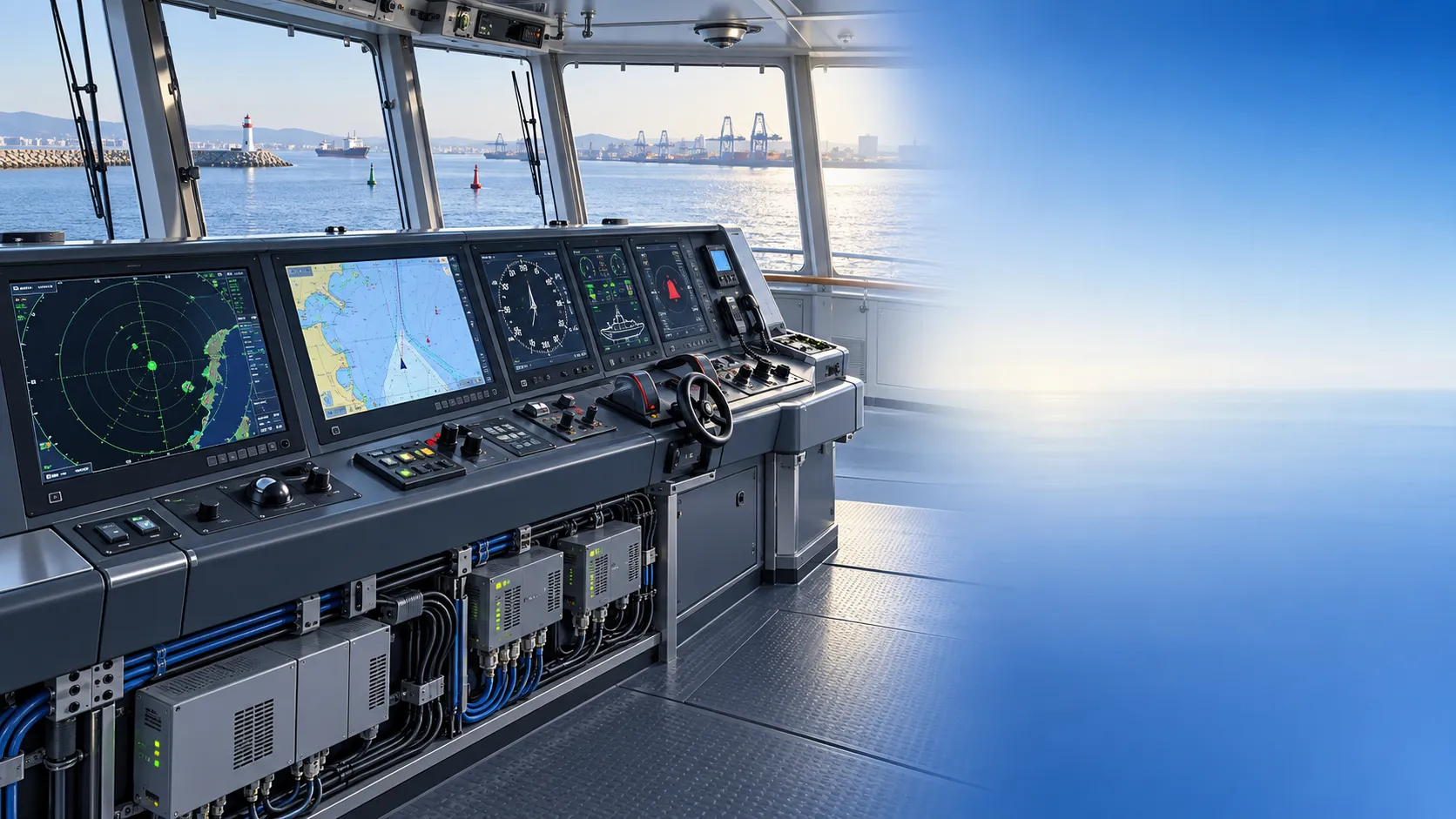
How to Specify Integrated Marine Electronics for Reliable Bridge Operations
Integrated marine electronics: learn how to specify reliable bridge systems with clear data flows, redundancy, alarm control, lifecycle interfaces, and operational testing.

How to Evaluate Navigation Radar Manufacturers for Commercial Vessel Projects
Navigation radar manufacturers: learn how to compare performance, compliance, integration, support, and lifecycle cost for commercial vessel projects.

How Adjustable Cabin Ergonomics Reduce Operator Fatigue in Long-Shift Vehicles
Adjustable cabin ergonomics reduces operator fatigue through better seating, reach, visibility, vibration control, and climate comfort for safer long-shift vehicles.

How Rear-Impact Safety Components Work Together to Protect Vehicle Occupants
Explore how automotive safety components for rear impact work together—from crash structures and seats to head restraints and belts—to enhance occupant protection.
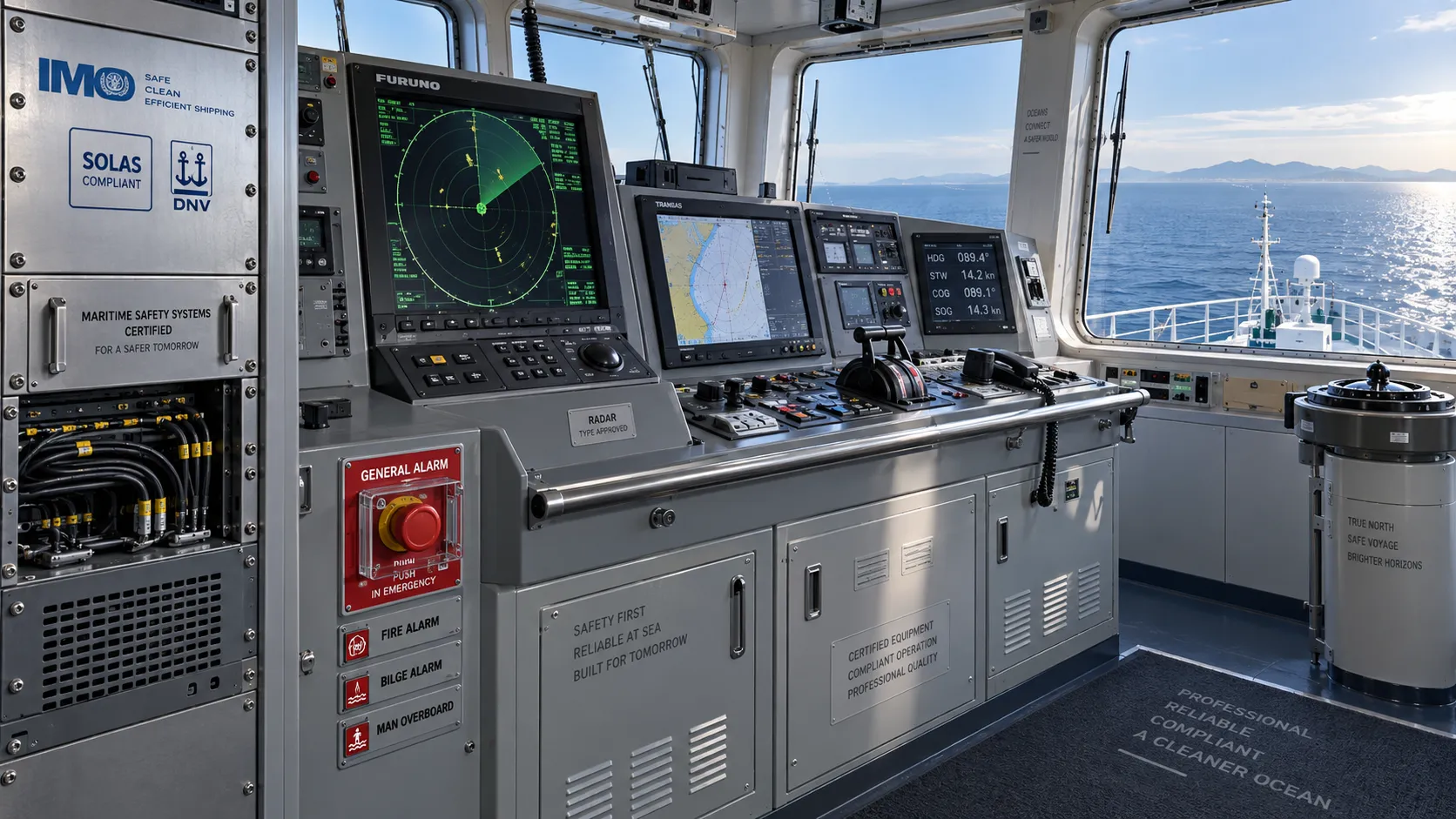
How to Evaluate a Marine Safety Systems Manufacturer for Vessel Compliance and Reliability
Marine safety systems manufacturer evaluation guide: verify compliance, engineering quality, lifecycle costs, and global service support for safer, reliable vessel operations.

Crash Test Regulations for Seatbelts: Key Compliance Requirements Explained
Crash test regulations seatbelts explained: explore FMVSS, UN rules, anchorage strength, and dynamic restraint testing for safer, compliant vehicle systems.

How to Calculate the Total Cost of Automotive Lightweighting for a Vehicle Program
Automotive lightweight solutions cost: learn how to calculate program-level costs, including materials, tooling, joining, validation, risk, and vehicle-level value.

How Automotive Seat Occupancy Sensing Improves Airbag Deployment Decisions
Automotive seat occupancy sensing helps optimize airbag deployment decisions, improving passenger classification, safety diagnostics, and compliance across real-world conditions.

What Drives Lightweight Body Component Costs in High-Volume Vehicle Programs?
Lightweight body components cost depends on material yield, forming, joining, tooling, validation, and logistics. Explore proven ways to optimize total vehicle program cost.
Related News
- 00
0000-00
How to Choose a Marine Positioning Solutions Supplier in Europe for Offshore and Port Operations - 00
0000-00
Marine Positioning Solutions Provider Comparison: GNSS, Accuracy, and Integration Factors - 00
0000-00
Marine Electromagnetic Navigation Accuracy vs GNSS: Which Performs Better Near Interference? - 00
0000-00
Marine Electromagnetic Navigation Accuracy: What Affects Position Stability at Sea? - 00
0000-00
Marine Positioning Systems Exporter Selection: What to Check in GNSS Accuracy, Compliance, and Support
Weekly Insights
Stay ahead with our curated technology reports delivered every Monday.