
What global maritime compliance risks are easy to overlook?
Global maritime compliance risks rarely begin with dramatic failures. They usually grow from routine gaps, silent software drift, incomplete logs, and supplier documents that no longer match reality.
As vessel systems become more digital and cross-border oversight becomes tighter, global maritime compliance now depends on operational detail as much as formal certification.
For intelligence platforms like GNCS, the real value lies in connecting navigation technology, safety assurance, traceability, and regulatory change before overlooked risks become enforcement events.
Why global maritime compliance is becoming harder to manage quietly
The compliance map is no longer stable. Rules move faster, inspections are more data-driven, and vessel operators face overlapping standards from flag states, ports, insurers, and classification societies.
At the same time, marine navigation systems, software updates, cyber controls, and maintenance records are increasingly interconnected. A small gap in one area can trigger questions in another.
This is why global maritime compliance risks are easy to overlook. Teams often focus on headline regulations while missing the weak signals hidden inside everyday workflows.
Trend signals worth watching now
- Electronic navigation records are being reviewed more closely during port state control.
- Cyber resilience expectations are expanding beyond basic IT policies.
- Supplier traceability is receiving more attention after safety and sanctions-related disruptions.
- Crew certification checks are increasingly compared against actual onboard responsibilities.
- Environmental, safety, and digital compliance are starting to merge during audits.
The overlooked weak points shaping global maritime compliance exposure
Many organizations assume compliance failures come from major violations. In practice, the most common issues are ordinary, repeated, and poorly escalated.
1. Navigation data currency is often treated as an IT task
ECDIS updates, chart corrections, radar integration settings, and backup data validation can slip when responsibilities are split between shipboard and shore teams.
A vessel may appear operationally sound, yet outdated navigation information can still create a serious global maritime compliance problem during inspection or incident review.
2. Recordkeeping remains fragmented across systems
Maintenance logs, safety drills, software revisions, spare-part approvals, and corrective actions often live in separate platforms, spreadsheets, or paper files.
When records are inconsistent, even compliant actions can become difficult to prove. In global maritime compliance, missing evidence can be nearly as damaging as missing action.
3. Crew competence gaps hide behind valid certificates
Certificates may be current, but practical familiarity with updated bridge systems, emergency procedures, or digital reporting tools may be uneven across crews.
This matters because regulators increasingly assess operational readiness, not just document presence. Global maritime compliance now includes demonstrated competence under realistic conditions.
4. Supplier paperwork may not support traceability demands
Marine electronics, safety components, structural materials, and replacement parts can pass through multiple suppliers before reaching a vessel or yard.
If origin, testing status, revision control, or restricted-party screening are weak, traceability breaks. That creates wider global maritime compliance risk than many teams expect.
5. Cross-border rule interpretation is rarely uniform
A practice accepted in one jurisdiction may face scrutiny in another. Port requirements, reporting expectations, and enforcement intensity vary more than policy summaries suggest.
This inconsistency is one of the most underestimated aspects of global maritime compliance, especially for fleets trading across diverse regulatory regions.
What is driving these hidden global maritime compliance risks
How overlooked global maritime compliance gaps affect wider operations
The impact extends beyond fines or detentions. Overlooked compliance gaps can reduce schedule reliability, weaken insurer confidence, delay class approvals, and complicate commercial negotiations.
They also affect technology adoption. Advanced navigation systems and connected safety platforms deliver value only when documentation, updates, training, and audit trails remain aligned.
Operational areas most exposed
- Bridge operations and navigation assurance
- Maintenance planning and spare-part control
- Crew onboarding, familiarization, and drills
- Procurement documentation and supplier screening
- Incident reporting and post-event defensibility
For broader mobility intelligence providers such as GNCS, this convergence is important. Compliance insight now connects marine electronics, safety systems, material reliability, and digital governance.
Where attention should shift first in global maritime compliance
The smartest response is not to create more paperwork. It is to identify the control points where hidden errors repeatedly enter the system.
- Map every compliance-critical data source linked to navigation, maintenance, and safety.
- Check whether record ownership is clear across vessel and shore functions.
- Test crew familiarity with updated systems, not only certificate validity.
- Review supplier files for revision history, approvals, and origin traceability.
- Compare internal procedures against the strictest likely inspection environment.
- Audit software and chart update routines as part of safety assurance.
A practical way to judge future global maritime compliance readiness
The next move is better intelligence, not just tighter control
Global maritime compliance will keep evolving with digital navigation, cyber oversight, safety regulation, and cross-border enforcement. Hidden risk will remain concentrated in the details between systems.
The most resilient approach is to treat compliance as an intelligence function. Monitor weak signals, connect operational evidence, and update assumptions before inspection pressure exposes the gap.
GNCS supports that direction by tracking the technical, regulatory, and safety intersections shaping maritime and mobility equipment decisions. When details are stitched early, exposure falls sharply.
Start with one focused review this quarter: navigation updates, crew readiness, supplier traceability, and record consistency. That single diagnostic can reveal the most overlooked global maritime compliance risks.
Related News

How to Specify Integrated Marine Electronics for Reliable Bridge Operations
Integrated marine electronics: learn how to specify reliable bridge systems with clear data flows, redundancy, alarm control, lifecycle interfaces, and operational testing.

How to Evaluate Navigation Radar Manufacturers for Commercial Vessel Projects
Navigation radar manufacturers: learn how to compare performance, compliance, integration, support, and lifecycle cost for commercial vessel projects.

How Adjustable Cabin Ergonomics Reduce Operator Fatigue in Long-Shift Vehicles
Adjustable cabin ergonomics reduces operator fatigue through better seating, reach, visibility, vibration control, and climate comfort for safer long-shift vehicles.

How Rear-Impact Safety Components Work Together to Protect Vehicle Occupants
Explore how automotive safety components for rear impact work together—from crash structures and seats to head restraints and belts—to enhance occupant protection.
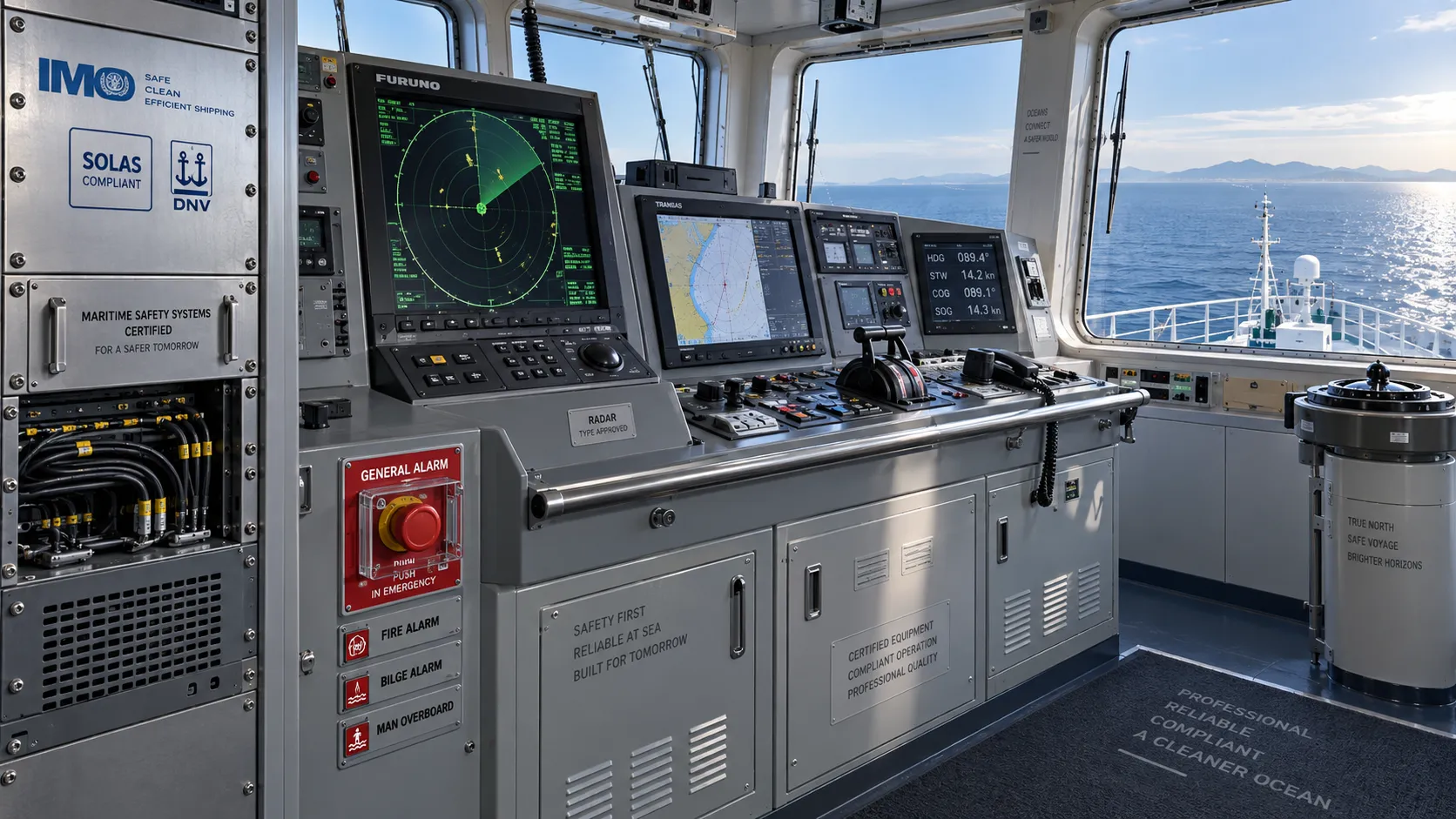
How to Evaluate a Marine Safety Systems Manufacturer for Vessel Compliance and Reliability
Marine safety systems manufacturer evaluation guide: verify compliance, engineering quality, lifecycle costs, and global service support for safer, reliable vessel operations.

Crash Test Regulations for Seatbelts: Key Compliance Requirements Explained
Crash test regulations seatbelts explained: explore FMVSS, UN rules, anchorage strength, and dynamic restraint testing for safer, compliant vehicle systems.

How to Calculate the Total Cost of Automotive Lightweighting for a Vehicle Program
Automotive lightweight solutions cost: learn how to calculate program-level costs, including materials, tooling, joining, validation, risk, and vehicle-level value.

How Automotive Seat Occupancy Sensing Improves Airbag Deployment Decisions
Automotive seat occupancy sensing helps optimize airbag deployment decisions, improving passenger classification, safety diagnostics, and compliance across real-world conditions.

What Drives Lightweight Body Component Costs in High-Volume Vehicle Programs?
Lightweight body components cost depends on material yield, forming, joining, tooling, validation, and logistics. Explore proven ways to optimize total vehicle program cost.
Related News
- 00
0000-00
How to Specify Integrated Marine Electronics for Reliable Bridge Operations - 00
0000-00
How Adjustable Cabin Ergonomics Reduce Operator Fatigue in Long-Shift Vehicles - 00
0000-00
How to Evaluate a Marine Safety Systems Manufacturer for Vessel Compliance and Reliability - 00
0000-00
How to Calculate the Total Cost of Automotive Lightweighting for a Vehicle Program - 00
0000-00
What Drives Lightweight Body Component Costs in High-Volume Vehicle Programs?
Weekly Insights
Stay ahead with our curated technology reports delivered every Monday.