Maritime Compliance Standards for Fleets: Key Rules, Documents, and Audit Risks
Maritime Compliance Standards for Fleets: Key Rules, Documents, and Audit Risks
For fleet operations, maritime compliance standards are not only legal checkpoints. They decide whether vessels sail safely, pass inspections, and avoid detention.
From SOLAS and MARPOL to crew certificates, navigation logs, and maintenance evidence, every record affects risk, cost, and commercial reliability.
A practical compliance system connects vessel condition, crew readiness, digital navigation, environmental controls, and audit-ready documentation.
When Maritime Compliance Standards Become a Scenario-Based Decision
Maritime compliance standards change meaning across operating scenarios. A coastal ferry, container vessel, tanker, and offshore service vessel face different inspection pressures.
The same rule can create different actions. A navigation requirement may demand ECDIS updates, bridge procedure checks, or crew familiarization records.
GNCS views compliance through precision spatial perception and physical containment protection. Safe navigation and verified onboard protection must work together.
This approach helps fleets translate maritime compliance standards into daily controls, not last-minute paperwork before port state control.
Scenario 1: Ocean-Going Vessels Facing SOLAS and Navigation Audit Pressure
Deep-sea vessels usually face strong scrutiny under SOLAS, ISM Code, STCW, and flag-state requirements.
For these vessels, maritime compliance standards focus heavily on lifesaving appliances, fire protection, bridge equipment, emergency drills, and documented procedures.
Navigation systems must show more than installation. Inspectors expect updated charts, corrected publications, alarm management, and evidence of operational familiarity.
ECDIS, AIS, GNSS, radar, gyrocompass, and voyage data recorder records should align with bridge procedures and voyage planning.
The core judgment is simple. If a digital navigation system guides the vessel, its configuration, updates, and user competence must be provable.
Scenario 2: Tankers and Bulk Carriers Under Environmental Compliance Control
Tankers and bulk carriers often carry higher environmental and cargo-related audit risks.
MARPOL compliance, ballast water control, garbage management, oil record books, and emission documentation become central evidence.
In this scenario, maritime compliance standards depend on disciplined records and physical system integrity.
Oily water separators, sewage treatment units, incinerators, and ballast water management systems need maintenance proof and operational logs.
Audit failure often begins with small inconsistencies. Tank soundings, discharge entries, spare part records, and maintenance dates must tell one story.
Environmental compliance is therefore not a separate department task. It is a vessel-wide evidence chain.
Scenario 3: Passenger and Cabin-Critical Operations Requiring Higher Safety Readiness
Passenger vessels, ferries, and mixed-use mobility assets carry intense public safety expectations.
Here, maritime compliance standards emphasize evacuation readiness, fire drills, passenger control plans, emergency communication, and cabin safety conditions.
Safety equipment must be accessible, inspected, and clearly assigned. Lifejackets, liferafts, fire doors, alarms, and muster signage need reliable status control.
The cabin environment also matters. Seating, restraint concepts, escape routes, and protective materials affect real emergency outcomes.
GNCS links these risks to broader mobility safety thinking. Passive protection principles apply wherever people must survive impact, fire, or evacuation stress.
Scenario 4: Offshore, Workboat, and Special-Purpose Vessels With Mixed Requirements
Offshore and special-purpose fleets operate between maritime rules, client standards, class requirements, and project-specific safety controls.
In these cases, maritime compliance standards often extend beyond statutory certificates.
Dynamic positioning documentation, lifting equipment certification, permit-to-work systems, toolbox talks, and contractor interface records may be reviewed.
The key judgment is operational exposure. A vessel supporting offshore energy work needs evidence that marine and industrial risks are controlled together.
A clean certificate file cannot compensate for weak maintenance history or missing operational risk assessments.
Different Fleet Scenarios and Compliance Demand Gaps
This comparison shows why maritime compliance standards should be interpreted by scenario, not copied as a single checklist.
The best compliance plans separate statutory obligations, class rules, company procedures, and charterer requirements before assigning owners.
Essential Documents That Make Maritime Compliance Standards Audit-Ready
Documentation is the visible layer of vessel control. It proves that equipment, crew, and procedures are managed continuously.
Core certificate files usually include registry, class status, safety construction, safety equipment, radio certificates, load line, and pollution prevention certificates.
Operational records should include planned maintenance, defect reports, drill schedules, risk assessments, voyage plans, bridge checklists, and safety meeting minutes.
Crew compliance evidence includes licenses, medical certificates, training records, familiarization forms, hours of rest, and role-specific competence records.
For maritime compliance standards, document control must answer four questions:
- Is the document valid and applicable to the vessel?
- Is the latest revision available onboard?
- Does the record match actual vessel condition?
- Can the crew explain and use the procedure?
A certificate may satisfy a legal requirement, but a complete evidence trail satisfies an auditor.
Navigation Equipment Logs as a High-Risk Compliance Point
Navigation equipment is a frequent weak point because modern systems update faster than traditional document routines.
Maritime compliance standards increasingly require proof that digital systems are current, correctly configured, and tested during normal operations.
ECDIS chart permits, software versions, backup arrangements, alarm settings, and route validation should be traceable.
Radar performance checks, AIS data accuracy, compass errors, and GNSS reliability should be recorded in consistent formats.
A practical control is to connect every bridge equipment task to a responsible role, evidence type, and review frequency.
This prevents navigation compliance from becoming dependent on memory or informal habits.
Scenario Adaptation Checklist for Fleet Compliance Control
A scenario-based checklist helps translate maritime compliance standards into reliable operational action.
- Map each vessel by trade route, cargo, crew profile, and inspection exposure.
- Separate statutory, class, flag, port, and charterer requirements.
- Assign document owners for certificates, logs, maintenance, and training records.
- Link critical equipment to inspection frequency and failure response plans.
- Review navigation data updates before every high-risk voyage.
- Run internal audits before renewal surveys or port state inspections.
- Track corrective actions until physical verification is completed.
This checklist supports both large fleets and mixed-asset operations.
It also keeps maritime compliance standards connected to business continuity, not only inspection survival.
Common Audit Misjudgments That Create Detention Risk
Many deficiencies appear minor before inspection. During an audit, they may indicate a weak safety management system.
One common mistake is treating expired certificates as the only serious issue.
Auditors also examine whether records are credible, equipment is working, and crew behavior matches written procedures.
Another error is keeping perfect office files while onboard records remain incomplete or outdated.
Maritime compliance standards require alignment between shore management and vessel execution.
Commonly overlooked risks include:
- Unclosed non-conformities after previous inspections.
- Maintenance marked complete without supporting evidence.
- ECDIS updates performed but not recorded.
- Drills repeated on paper with weak practical evidence.
- Crew certificates valid but not matching assigned duties.
- Safety equipment accessible in theory but blocked in practice.
These gaps are avoidable when compliance is treated as a continuous control loop.
How Digital Intelligence Strengthens Maritime Compliance Standards
Digital tools improve compliance when they reduce uncertainty, not when they only store documents.
A strong platform connects certificate validity, maintenance alerts, navigation updates, crew competence, and audit findings.
For GNCS, the value lies in intelligence stitching. Navigation safety data and equipment reliability evidence should support one decision picture.
This mirrors advanced mobility safety practices, where sensors, structures, and protective systems are assessed as integrated safeguards.
In maritime compliance standards, integration helps identify weak signals before they become deficiencies.
Examples include repeated radar defects, delayed chart updates, recurring rest-hour violations, or overdue fire system maintenance.
Action Plan for Building a Fleet-Level Compliance Routine
The next step is to convert maritime compliance standards into a visible operating rhythm.
Start with a vessel-by-vessel gap review. Compare certificates, actual equipment status, crew records, and recent audit findings.
Then build a risk-ranked compliance calendar. High-risk items should receive shorter review intervals and stronger evidence requirements.
Finally, test the system through internal audits. Ask whether the vessel can prove readiness without emergency document chasing.
Maritime compliance standards protect people, assets, routes, and reputation when they are embedded into daily fleet control.
GNCS continues to track regulatory shifts, navigation technology evolution, and safety intelligence for reliable global mobility operations.
A fleet that understands its scenario, evidence gaps, and audit exposure is better prepared to sail safely and commercially without interruption.
Related News
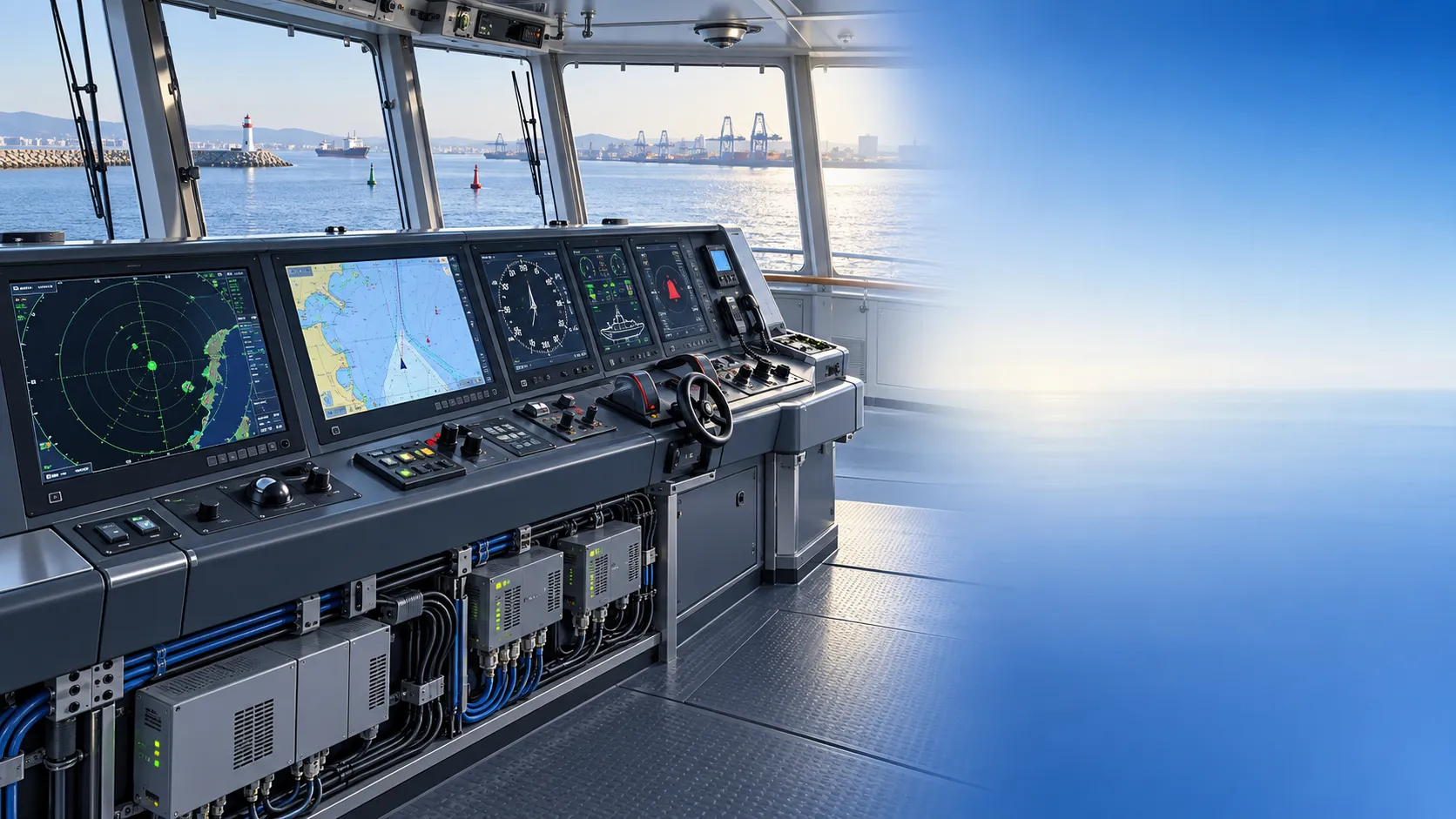
How to Specify Integrated Marine Electronics for Reliable Bridge Operations
Integrated marine electronics: learn how to specify reliable bridge systems with clear data flows, redundancy, alarm control, lifecycle interfaces, and operational testing.

How to Evaluate Navigation Radar Manufacturers for Commercial Vessel Projects
Navigation radar manufacturers: learn how to compare performance, compliance, integration, support, and lifecycle cost for commercial vessel projects.

How Adjustable Cabin Ergonomics Reduce Operator Fatigue in Long-Shift Vehicles
Adjustable cabin ergonomics reduces operator fatigue through better seating, reach, visibility, vibration control, and climate comfort for safer long-shift vehicles.

How Rear-Impact Safety Components Work Together to Protect Vehicle Occupants
Explore how automotive safety components for rear impact work together—from crash structures and seats to head restraints and belts—to enhance occupant protection.
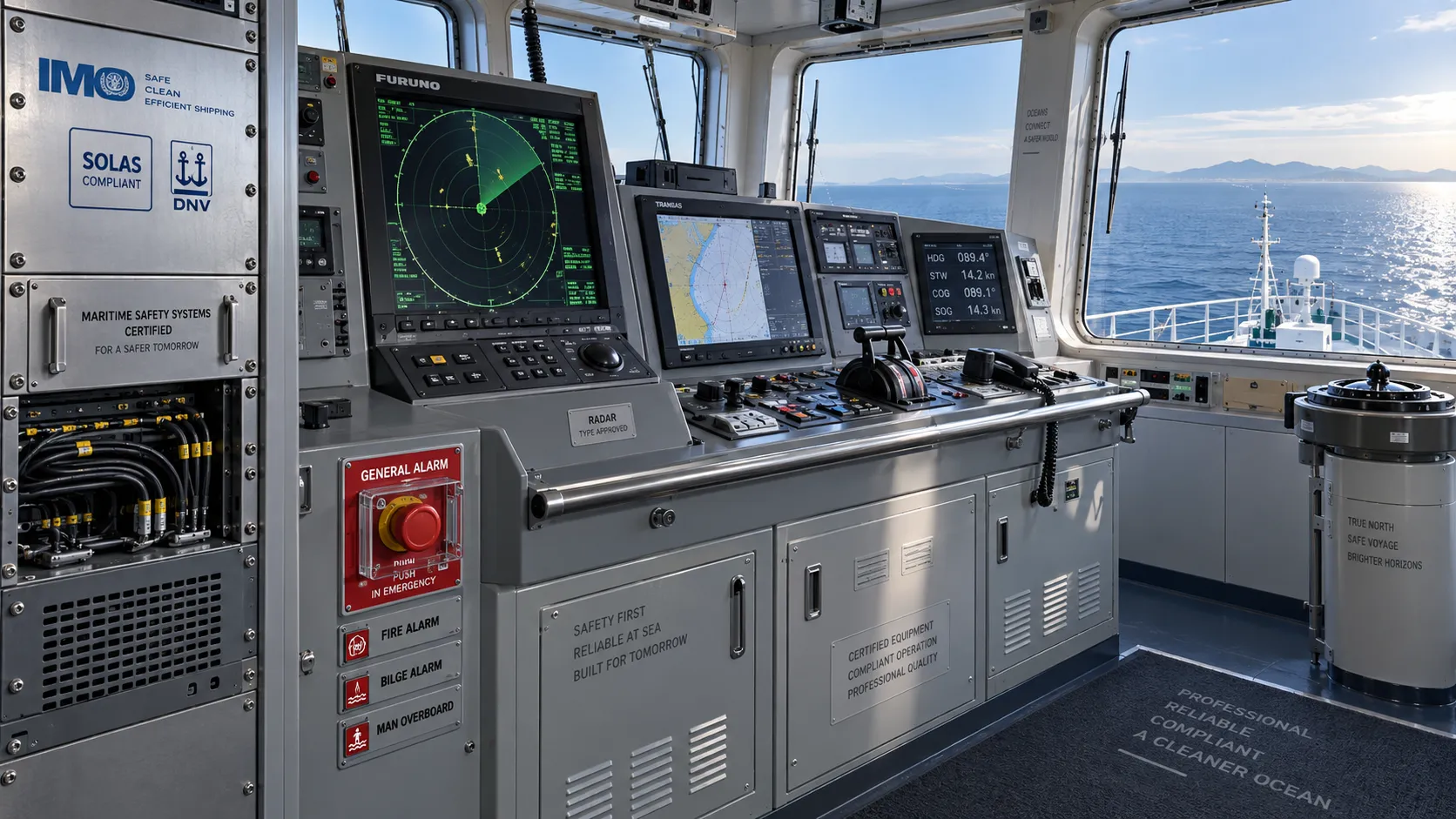
How to Evaluate a Marine Safety Systems Manufacturer for Vessel Compliance and Reliability
Marine safety systems manufacturer evaluation guide: verify compliance, engineering quality, lifecycle costs, and global service support for safer, reliable vessel operations.

Crash Test Regulations for Seatbelts: Key Compliance Requirements Explained
Crash test regulations seatbelts explained: explore FMVSS, UN rules, anchorage strength, and dynamic restraint testing for safer, compliant vehicle systems.

How to Calculate the Total Cost of Automotive Lightweighting for a Vehicle Program
Automotive lightweight solutions cost: learn how to calculate program-level costs, including materials, tooling, joining, validation, risk, and vehicle-level value.

How Automotive Seat Occupancy Sensing Improves Airbag Deployment Decisions
Automotive seat occupancy sensing helps optimize airbag deployment decisions, improving passenger classification, safety diagnostics, and compliance across real-world conditions.

What Drives Lightweight Body Component Costs in High-Volume Vehicle Programs?
Lightweight body components cost depends on material yield, forming, joining, tooling, validation, and logistics. Explore proven ways to optimize total vehicle program cost.
Related News
- 00
0000-00
How to Specify Integrated Marine Electronics for Reliable Bridge Operations - 00
0000-00
How Adjustable Cabin Ergonomics Reduce Operator Fatigue in Long-Shift Vehicles - 00
0000-00
How to Evaluate a Marine Safety Systems Manufacturer for Vessel Compliance and Reliability - 00
0000-00
How to Calculate the Total Cost of Automotive Lightweighting for a Vehicle Program - 00
0000-00
What Drives Lightweight Body Component Costs in High-Volume Vehicle Programs?
Weekly Insights
Stay ahead with our curated technology reports delivered every Monday.