
Crash Test Regulations by Market: What OEM and Tier Suppliers Need to Check Before Launch
Before a launch program crosses into a new region, crash test regulations often become the real gatekeeper of timing, cost, and design stability. A body structure that performs well in one market may still need different restraint tuning, seat behavior, or documentation elsewhere. For programs involving lightweight stampings, airbags, seatbelt systems, and smart seating, market-specific compliance is no longer a late validation item. It shapes architecture decisions early, especially when platform sharing and global sourcing are part of the business case.
That is why crash test regulations deserve close attention beyond the certification team. They influence CAE targets, prototype schedules, supplier interfaces, and even material choices. From the GNCS perspective, this topic sits at the intersection of structural energy management, occupant containment, and the broader intelligence needed to move safely across global mobility markets.
Why market differences matter more than many launch plans expect
The phrase crash test regulations sounds straightforward, but the reality is layered. Some rules are legal requirements tied to homologation. Others come from consumer rating programs that strongly influence market acceptance, insurance cost, and brand reputation.
In practice, a launch can fail in more than one way. A program may pass mandatory tests yet underperform in a major NCAP rating. It may meet frontal impact criteria but miss whiplash, side impact, or pedestrian expectations that buyers and fleet operators now treat as baseline.
This creates a familiar tension. Engineering wants design freeze discipline. Market teams want broad regional coverage. Suppliers want stable requirements. Crash test regulations sit exactly in that tension, because they convert policy differences into hardware and software changes.
What crash test regulations actually cover
A useful starting point is to separate the topic into four layers. That makes regional comparison far easier and prevents teams from treating every market issue as a single checklist item.
- Test configuration, including impact speed, overlap, barrier type, and occupant setup.
- Injury metrics, such as head, chest, neck, femur, and lower leg limits.
- System scope, covering airbags, seatbelts, seats, head restraints, body structure, and post-crash functions.
- Administrative evidence, including reports, traceability, technical files, and certification sequence.
When these layers are reviewed together, regional differences become clearer. A seat supplier, for example, may not fail because of seat strength alone. The issue may come from head restraint geometry, sled pulse assumptions, or interaction with pretensioner timing.
Regional patterns that usually affect launch readiness
No serious team should assume that one validation recipe fits every destination. The broad pattern is easy to see: the United States, Europe, China, Japan, Korea, and other key markets often align on safety intent, but not on every protocol detail.
The point is not that every market is radically different. The point is that small differences inside crash test regulations can trigger expensive redesign when discovered too late.
The components most exposed to regulatory variation
Body-in-white teams usually focus first on load paths, intrusion control, and energy absorption. That remains essential, especially as lightweight materials and mixed-metal joining strategies become more common. But launch risk often spreads beyond structure.
Airbag and seatbelt systems
Inflator output, venting strategy, deployment thresholds, pretensioner timing, and force limiting all respond to market expectations. A legal pass in one region may not deliver the desired dummy readings in another protocol.
Seat assemblies and occupant kinematics
Seat frame stiffness, recliner integrity, head restraint geometry, and sensor integration can affect frontal, rear, and side outcomes. Smart seating adds another layer because electronics and packaging choices can influence both comfort and compliance.
Stamped structures and joining methods
Hot-stamped steel, aluminum solutions, tailor-welded blanks, and local reinforcements are often optimized for global platforms. Still, crash test regulations may push different reinforcement strategies depending on overlap conditions and side pole severity.
This is where GNCS-style intelligence becomes practical rather than abstract. The value lies in connecting passive safety architecture with material behavior, test evolution, and supplier capability in one decision flow.
What to check before committing a market launch
A useful review starts long before physical tests begin. The most effective teams build a launch screen that compares regulatory intent, test method, and product maturity at the same time.
- Map mandatory regulations separately from consumer rating targets.
- Confirm which vehicle variants, seat options, and restraint packages apply in each market.
- Review dummy selection, seating position, and injury criteria differences.
- Check whether local authorities require witness tests, reports, or designated labs.
- Validate CAE correlation against the exact market pulse and barrier conditions.
- Assess whether supplier PPAP or change control covers region-specific tuning.
These checks sound procedural, yet they often reveal strategic gaps. A program may discover that a globally approved seat frame still needs local head restraint adjustment, or that a side airbag calibration change affects another rating scenario.
Why timing and cross-functional alignment decide the outcome
Most launch delays linked to crash test regulations are not caused by a lack of technical skill. They usually come from sequence problems. Requirements are frozen late. Rating expectations are added after tooling. Supplier assumptions are never fully matched to target markets.
A better approach is to treat market compliance as a systems issue. Structural design, restraint logic, seat package, electronics, and documentation should move through a shared review rhythm. That is especially important when one platform supports multiple brands or export plans.
The same lesson appears across mobility sectors. Whether dealing with marine navigation compliance or cabin safety validation, the challenge is rarely just meeting a rule. It is aligning technical evidence, field conditions, and market-specific acceptance criteria before commercial exposure begins.
A practical way to use regulatory intelligence
The strongest launch teams do not read crash test regulations only when a test date is scheduled. They use regulatory intelligence as an early filter for architecture trade-offs, sourcing choices, and platform commonization.
That means watching for updates in IIHS, Euro NCAP, UNECE, FMVSS, and local market frameworks, then translating those signals into engineering priorities. It also means linking crash behavior with adjacent trends such as seat sensing, lighter structures, and non-toxic inflator evolution.
Before the next launch review, it is worth building a market-by-market matrix for every safety-critical module. Compare legal pass criteria, rating ambitions, supplier readiness, and validation evidence in one place. That simple discipline usually exposes where crash test regulations are manageable, and where they are about to become a launch risk.
Related News
How to Specify Integrated Marine Electronics for Reliable Bridge Operations
Integrated marine electronics: learn how to specify reliable bridge systems with clear data flows, redundancy, alarm control, lifecycle interfaces, and operational testing.

How to Evaluate Navigation Radar Manufacturers for Commercial Vessel Projects
Navigation radar manufacturers: learn how to compare performance, compliance, integration, support, and lifecycle cost for commercial vessel projects.

How Adjustable Cabin Ergonomics Reduce Operator Fatigue in Long-Shift Vehicles
Adjustable cabin ergonomics reduces operator fatigue through better seating, reach, visibility, vibration control, and climate comfort for safer long-shift vehicles.

How Rear-Impact Safety Components Work Together to Protect Vehicle Occupants
Explore how automotive safety components for rear impact work together—from crash structures and seats to head restraints and belts—to enhance occupant protection.
How to Evaluate a Marine Safety Systems Manufacturer for Vessel Compliance and Reliability
Marine safety systems manufacturer evaluation guide: verify compliance, engineering quality, lifecycle costs, and global service support for safer, reliable vessel operations.
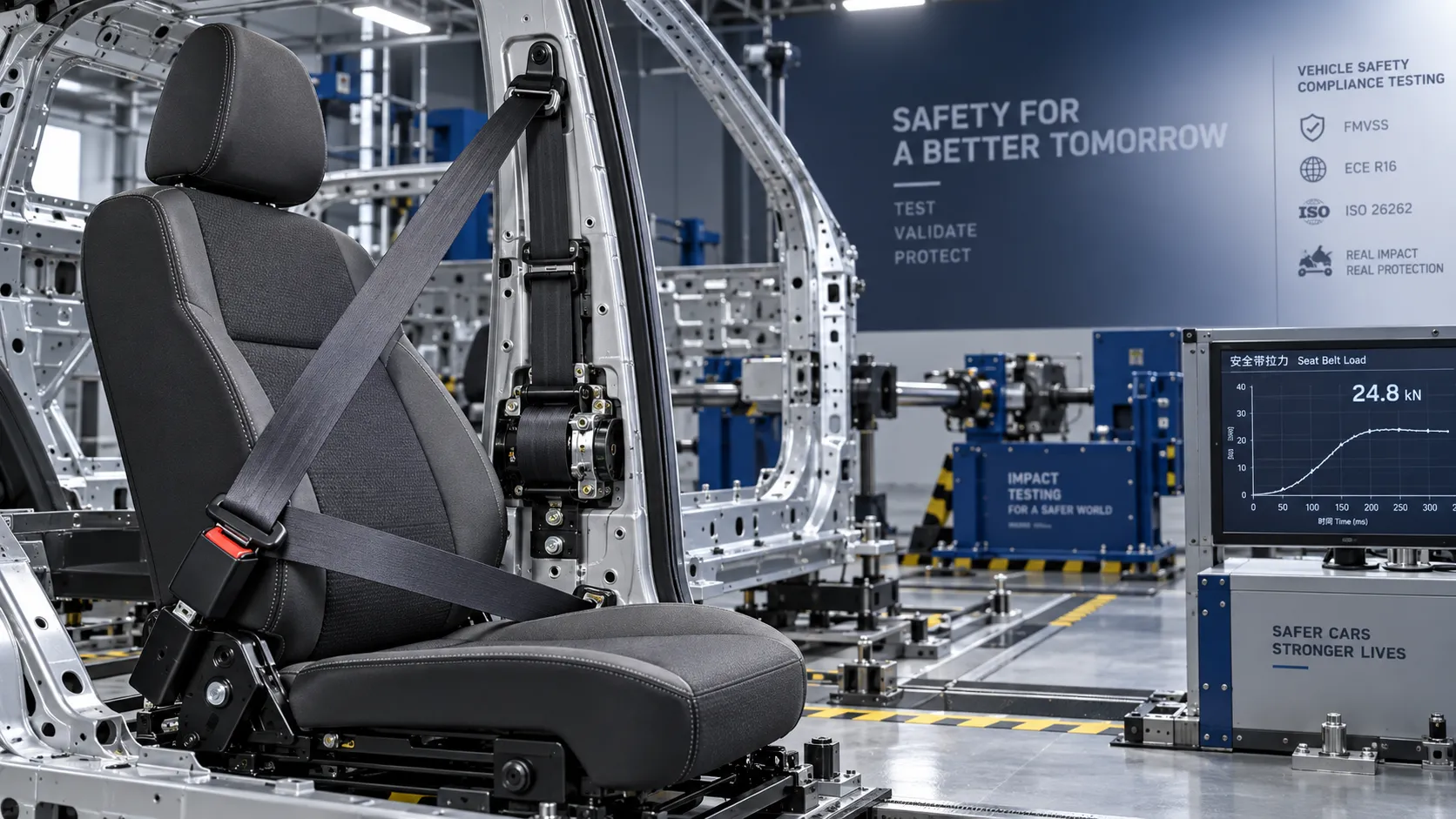
Crash Test Regulations for Seatbelts: Key Compliance Requirements Explained
Crash test regulations seatbelts explained: explore FMVSS, UN rules, anchorage strength, and dynamic restraint testing for safer, compliant vehicle systems.

How to Calculate the Total Cost of Automotive Lightweighting for a Vehicle Program
Automotive lightweight solutions cost: learn how to calculate program-level costs, including materials, tooling, joining, validation, risk, and vehicle-level value.

How Automotive Seat Occupancy Sensing Improves Airbag Deployment Decisions
Automotive seat occupancy sensing helps optimize airbag deployment decisions, improving passenger classification, safety diagnostics, and compliance across real-world conditions.

What Drives Lightweight Body Component Costs in High-Volume Vehicle Programs?
Lightweight body components cost depends on material yield, forming, joining, tooling, validation, and logistics. Explore proven ways to optimize total vehicle program cost.
Related News
- 00
0000-00
How to Specify Integrated Marine Electronics for Reliable Bridge Operations - 00
0000-00
How Adjustable Cabin Ergonomics Reduce Operator Fatigue in Long-Shift Vehicles - 00
0000-00
How to Evaluate a Marine Safety Systems Manufacturer for Vessel Compliance and Reliability - 00
0000-00
How to Calculate the Total Cost of Automotive Lightweighting for a Vehicle Program - 00
0000-00
What Drives Lightweight Body Component Costs in High-Volume Vehicle Programs?
Weekly Insights
Stay ahead with our curated technology reports delivered every Monday.