
How to Choose Navigation Intelligence for Commercial Fleets: Key Functions and Integration Points
How to Choose Navigation Intelligence for Commercial Fleets: Key Functions and Integration Points
Choosing the right navigation intelligence for commercial fleets is no longer just a technology decision. It is a project-critical investment in safety, efficiency, and compliance.
The pressure is rising across shipping, logistics, service fleets, and mixed mobility operations. Routes are more dynamic. Regulations are tighter. Downtime is more expensive.
That is why navigation intelligence now sits closer to the center of operational planning. It shapes dispatch quality, driver support, asset visibility, and incident response.
In practical terms, the best navigation intelligence does more than suggest a route. It connects location accuracy, traffic context, safety logic, and platform integration into one reliable workflow.
For teams evaluating solutions, the real question is not which vendor looks most advanced. The real question is which system fits your operating model without creating hidden complexity.
Why Navigation Intelligence Has Become a Fleet-Level Decision
Commercial fleets now run in environments where route quality directly affects fuel use, schedule reliability, and compliance risk. Small errors scale quickly across dozens or hundreds of vehicles.
From recent market shifts, one signal is especially clear. Static navigation tools are losing value. Operators need navigation intelligence that reacts to changing conditions in near real time.
This also means selection criteria must go beyond map coverage. A decision-grade system should support commercial constraints, such as vehicle height, hazardous cargo limits, delivery windows, and geofenced access rules.
For GNCS, this shift reflects a broader mobility trend. Precision perception and operational protection increasingly depend on connected intelligence rather than isolated hardware performance.
Core Functions That Matter Most
When comparing navigation intelligence platforms, focus on functions that change outcomes in the field. A long feature list is less useful than a short list of dependable capabilities.
1. High-Accuracy Positioning
Reliable navigation intelligence starts with dependable positioning. If location data drifts in dense urban zones, ports, tunnels, or remote corridors, every downstream decision weakens.
Look for multi-source positioning support, strong GNSS handling, and stable fallback logic. Accuracy should remain useful when signals are partially blocked or degraded.
2. Commercial Route Intelligence
A consumer-grade route engine is not enough for fleet operations. Navigation intelligence should account for vehicle dimensions, weight restrictions, road class, stop patterns, and access regulations.
This matters even more for specialized fleets. Heavy vehicles, field service units, shuttle fleets, and marine-linked logistics all face route constraints that generic apps often miss.
3. Real-Time Traffic and Hazard Awareness
Strong navigation intelligence continuously updates route decisions using live traffic, incidents, road closures, weather effects, and localized disruptions.
The key is not simply receiving alerts. The platform should turn those alerts into operational choices, such as rerouting, ETA revision, and dispatcher notification.
4. Driver Guidance and Human-Machine Clarity
Even advanced navigation intelligence fails if instructions are confusing. Voice prompts, lane guidance, visual hierarchy, and alert timing need to support fast decisions under pressure.
Cabin usability matters here. GNCS often sees this as the connection point between perception technology and real-world safety performance.
5. Historical Analytics and Learning Loops
Good navigation intelligence should improve over time. Historical route performance, delay patterns, idle behavior, and deviation analysis reveal whether the system actually supports better operations.
This makes post-project review far easier. Teams can compare planned routes with real execution and identify recurring sources of cost or risk.
Integration Points That Define Long-Term Value
In many evaluations, the largest risks do not come from missing features. They come from weak integration. Navigation intelligence only delivers full value when it works inside existing operational systems.
Fleet Management Platforms
The first integration point is the core fleet platform. Navigation intelligence should exchange live position, route status, ETA updates, stop completion, and exception events without manual re-entry.
Telematics and Sensor Systems
A better navigation intelligence stack connects with telematics, onboard diagnostics, fuel data, driver behavior inputs, and safety sensors. This creates a fuller picture of route context and vehicle condition.
ERP, TMS, and Dispatch Tools
If the system cannot connect with transport management, work order scheduling, or enterprise planning tools, planners often fall back to spreadsheets and duplicate workflows.
That weakens adoption. It also hides the true value of navigation intelligence because performance data remains fragmented.
Compliance and Audit Reporting
Navigation intelligence should support traceable records for route choice, driver adherence, geofence events, and incident timelines. That becomes essential during audits, claims review, and safety investigations.
API and Update Architecture
Open APIs and stable update processes are major selection factors. They determine how quickly a solution can scale, adapt to new workflows, and absorb future data sources.
This is especially relevant for fleets operating across regions. Mapping changes, compliance updates, and localization rules must be handled without disrupting daily operations.
How to Evaluate Navigation Intelligence During Selection
A practical evaluation framework keeps decision-making grounded. It also prevents teams from choosing navigation intelligence based on demo polish rather than operational fit.
- Define route-critical use cases first, including normal runs, peak disruptions, and high-risk exceptions.
- List operational constraints by fleet type, vehicle profile, geography, and compliance requirement.
- Score each navigation intelligence option on data accuracy, route logic, interface clarity, and integration maturity.
- Run a limited pilot using real dispatch conditions, not ideal test scenarios.
- Measure adoption, ETA stability, route deviation, alert quality, and implementation effort.
This process usually reveals gaps that sales presentations hide. For example, a platform may offer rich maps but weak commercial restrictions, or strong routing but limited API flexibility.
Common Selection Mistakes to Avoid
- Choosing navigation intelligence based only on interface design, without testing field accuracy.
- Ignoring integration effort until late-stage deployment.
- Assuming consumer navigation logic will work for commercial fleet restrictions.
- Overlooking offline performance and degraded-signal resilience.
- Failing to involve dispatch, compliance, and operations stakeholders early enough.
In real projects, these mistakes usually increase rollout friction more than software price does. They also slow trust in the system, which is much harder to recover later.
What Strong Navigation Intelligence Looks Like in Practice
The strongest navigation intelligence platforms share a simple trait. They make operations calmer, not noisier.
Routes become more predictable. Exceptions are easier to spot. Drivers receive clearer guidance. Dispatch teams spend less time correcting preventable issues.
At the strategic level, navigation intelligence also supports safer scaling. As fleets expand into new corridors or mixed operating environments, the system keeps decision quality consistent.
That is where GNCS sees the broader value. Precision navigation, cabin safety logic, and connected operational intelligence increasingly move together as one mobility capability.
Final Decision Guide
When choosing navigation intelligence, prioritize outcome quality over feature volume. Ask whether the system improves route decisions, integrates cleanly, and stays reliable under operational stress.
A sound decision usually comes from three checks. First, validate route intelligence against real constraints. Second, confirm integration readiness. Third, test whether users can trust it every day.
If those three areas hold up, navigation intelligence becomes more than a routing tool. It becomes a practical control layer for safer, leaner, and more resilient commercial fleet operations.
The next smart step is to build a short evaluation matrix, run a live pilot, and compare vendors on measurable operational impact. That approach leads to better decisions with fewer surprises after deployment.
Related News
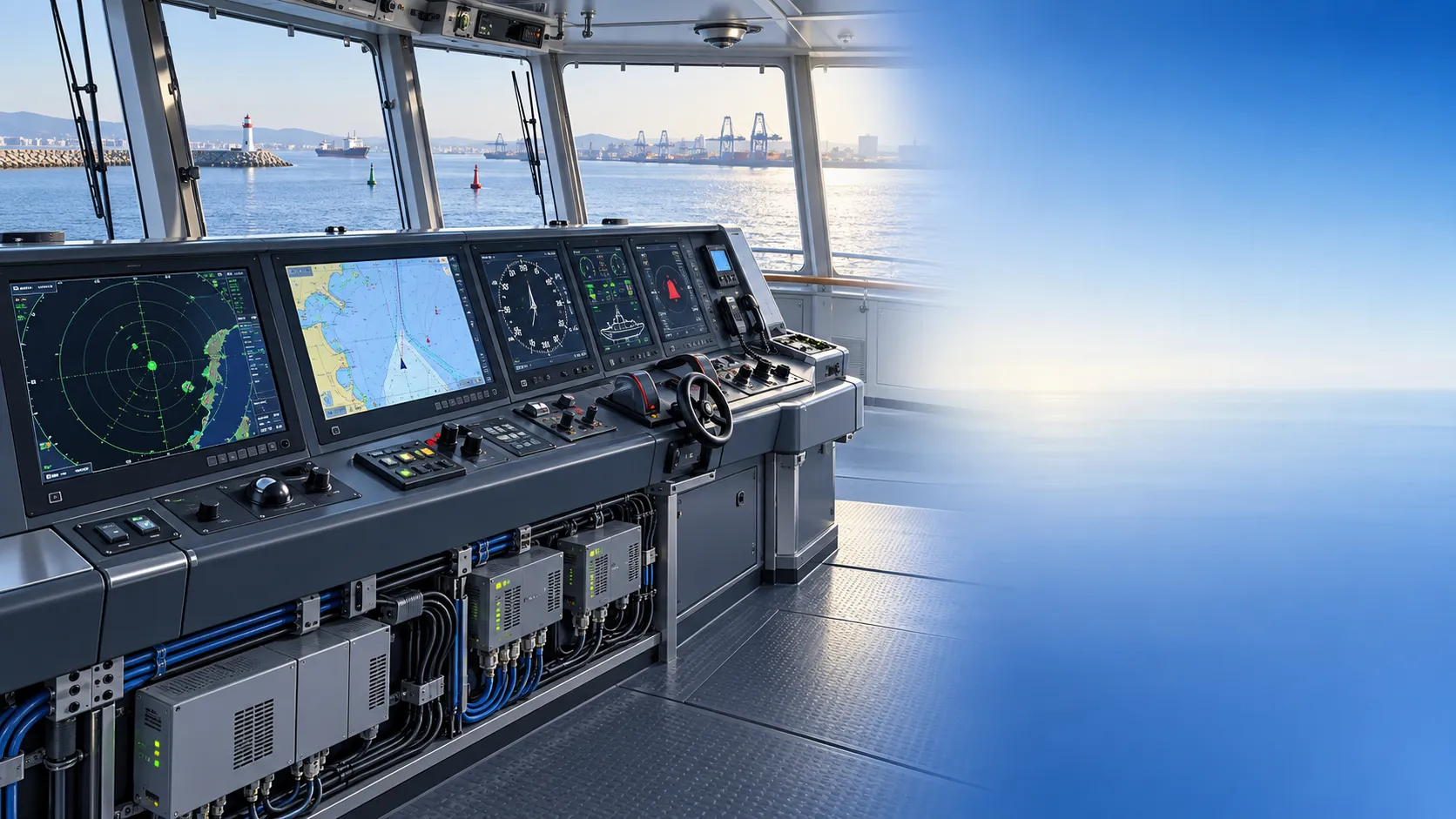
How to Specify Integrated Marine Electronics for Reliable Bridge Operations
Integrated marine electronics: learn how to specify reliable bridge systems with clear data flows, redundancy, alarm control, lifecycle interfaces, and operational testing.

How to Evaluate Navigation Radar Manufacturers for Commercial Vessel Projects
Navigation radar manufacturers: learn how to compare performance, compliance, integration, support, and lifecycle cost for commercial vessel projects.

How Adjustable Cabin Ergonomics Reduce Operator Fatigue in Long-Shift Vehicles
Adjustable cabin ergonomics reduces operator fatigue through better seating, reach, visibility, vibration control, and climate comfort for safer long-shift vehicles.

How Rear-Impact Safety Components Work Together to Protect Vehicle Occupants
Explore how automotive safety components for rear impact work together—from crash structures and seats to head restraints and belts—to enhance occupant protection.
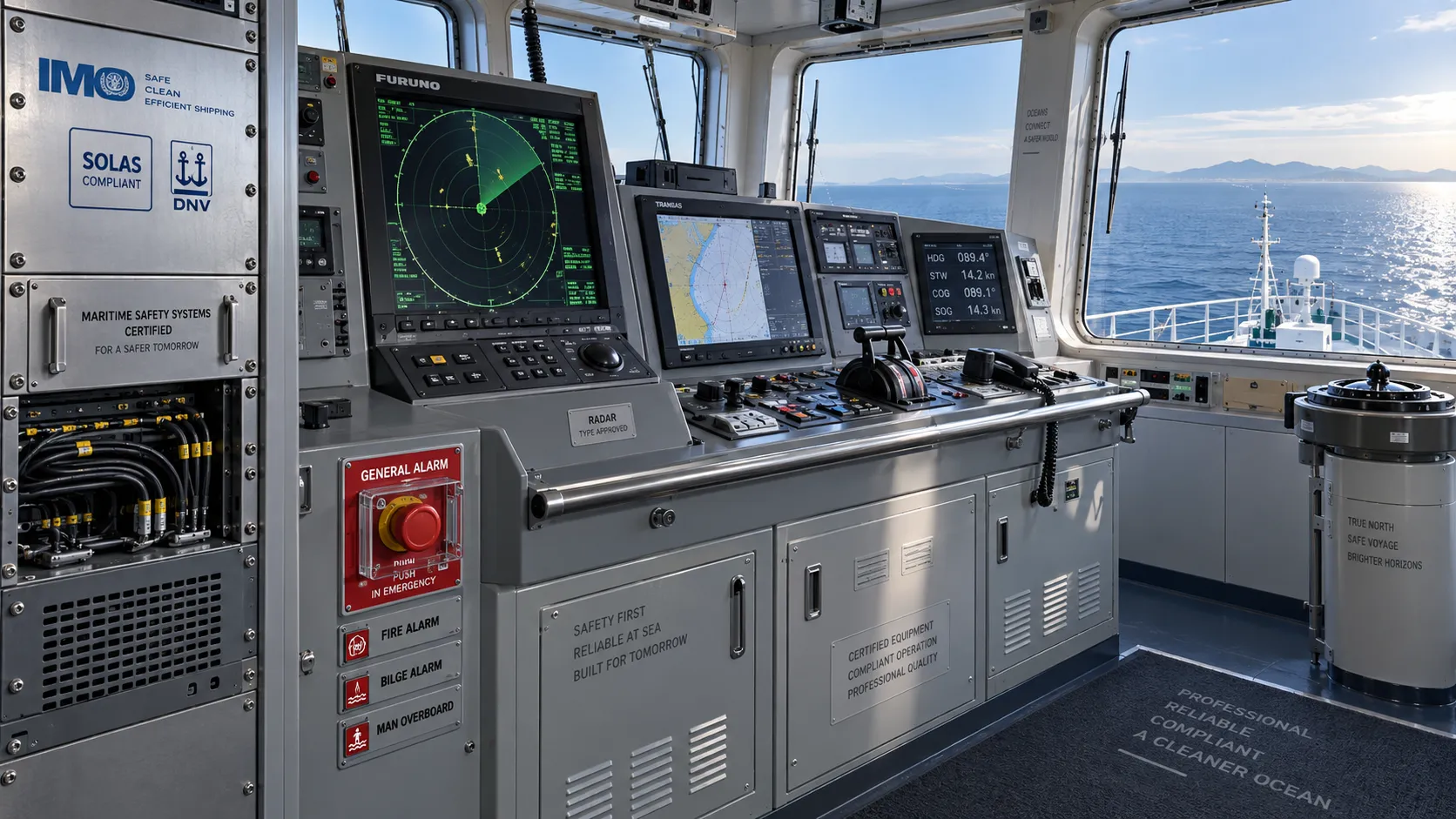
How to Evaluate a Marine Safety Systems Manufacturer for Vessel Compliance and Reliability
Marine safety systems manufacturer evaluation guide: verify compliance, engineering quality, lifecycle costs, and global service support for safer, reliable vessel operations.

Crash Test Regulations for Seatbelts: Key Compliance Requirements Explained
Crash test regulations seatbelts explained: explore FMVSS, UN rules, anchorage strength, and dynamic restraint testing for safer, compliant vehicle systems.

How to Calculate the Total Cost of Automotive Lightweighting for a Vehicle Program
Automotive lightweight solutions cost: learn how to calculate program-level costs, including materials, tooling, joining, validation, risk, and vehicle-level value.

How Automotive Seat Occupancy Sensing Improves Airbag Deployment Decisions
Automotive seat occupancy sensing helps optimize airbag deployment decisions, improving passenger classification, safety diagnostics, and compliance across real-world conditions.

What Drives Lightweight Body Component Costs in High-Volume Vehicle Programs?
Lightweight body components cost depends on material yield, forming, joining, tooling, validation, and logistics. Explore proven ways to optimize total vehicle program cost.
Related News
- 00
0000-00
How to Specify Integrated Marine Electronics for Reliable Bridge Operations - 00
0000-00
How Adjustable Cabin Ergonomics Reduce Operator Fatigue in Long-Shift Vehicles - 00
0000-00
How to Evaluate a Marine Safety Systems Manufacturer for Vessel Compliance and Reliability - 00
0000-00
How to Calculate the Total Cost of Automotive Lightweighting for a Vehicle Program - 00
0000-00
What Drives Lightweight Body Component Costs in High-Volume Vehicle Programs?
Weekly Insights
Stay ahead with our curated technology reports delivered every Monday.