
Can an aluminum car body meet side-impact safety requirements
An aluminum car body can meet side-impact safety requirements, but the result is determined by the complete body-in-white design rather than by aluminum’s strength in isolation. A compliant structure must preserve occupant survival space, manage intrusion at the struck side, control acceleration transferred through the cabin, and support the restraint system throughout the impact event. Aluminum can satisfy these demands when its alloys, section geometry, joints, and load paths are developed as one crash system.
Side impact is particularly demanding because the distance between an exterior impact point and an occupant is limited. There is less crush space than in a frontal collision, so a body structure cannot rely solely on progressive deformation far from the passenger compartment. The door system, B-pillar, sill, roof rail, floor cross-members, seat attachments, and battery enclosure where applicable must share load before local intrusion reaches an unacceptable level. An aluminum car body can perform well in this environment, but a lightweight panel substitution program is rarely enough. The architecture needs to be designed around side-load management from the start.
What side-impact performance actually requires
Regulatory and consumer crash assessments commonly examine a combination of structural intrusion, occupant injury criteria, door retention, and restraint performance. A vehicle may have a stiff-looking door beam and still perform poorly if the sill collapses locally, the B-pillar rotates inward, or the seat mounting structure shifts relative to the cabin. Conversely, a structure with controlled deformation may protect occupants effectively when the deformation occurs outside the intended survival space and maintains a stable restraint geometry.
For aluminum structures, the central question is not whether aluminum absorbs energy. It does. The more relevant questions are where it absorbs that energy, whether the collapse mode remains stable under off-axis loading, and whether joints continue to transfer load after local deformation begins. Side impact loads are rarely clean or perfectly centered. A pole strike, a moving barrier, a higher-riding vehicle, and a curb-induced secondary event can load different portions of the door and pillar system. The same body section can respond differently under each condition.
A sound evaluation therefore separates four linked outcomes:
- Intrusion control: the struck-side door, pillar, sill, and floor must limit inward movement near the occupant torso, pelvis, and head zones.
- Load distribution: force needs credible paths into the roof rail, opposite-side floor structure, cross-car members, and underbody rather than concentrating at one joint.
- Restraint compatibility: seat position, belt anchorage motion, side airbags, curtain airbags, and trim deployment space must remain within their intended operating envelope.
- Post-impact integrity: doors, electrical isolation features, fuel-system protection where relevant, and battery containment must retain the required level of function after the structural event.
Material selection is only the starting point
Aluminum alloys used in body structures differ substantially in yield response, elongation, strain-rate behavior, corrosion sensitivity, joining tolerance, and heat-affected-zone response. Sheet alloys are commonly selected for stamped closures and outer panels, while stronger extrusions, cast nodes, and formed reinforcements carry more concentrated structural loads. Treating all aluminum parts as interchangeable because they share a base metal leads to poor predictions of crush behavior and manufacturing robustness.
Extrusions are especially useful in side structures because their internal webs can be designed to buckle progressively. A multi-cell sill extrusion can resist initial lateral loading while directing later deformation into controlled folds. Its benefit depends on wall thickness distribution, corner radii, temper condition, and how it joins to the floor and B-pillar. A nominally high-strength extrusion with abrupt section changes may initiate a crack or buckle prematurely. In contrast, a slightly lower-strength section with stable folding characteristics may absorb more useful energy before intrusion reaches the cabin.
Cast aluminum nodes can consolidate complex connections between the sill, A- or B-pillar, floor rails, and cross-members. They also introduce issues that must be addressed explicitly: casting quality, local porosity limits, heat treatment consistency, and joint access. A node that works in simulation using idealized material properties may become a weak location when production variability is not represented. Material cards for crash analysis should reflect relevant directional behavior and failure limits, rather than only tensile coupon values.
Strength figures alone are often misread. Higher yield strength can reduce early deformation, but it can also reduce usable ductility or move the failure location to a joint or adjacent sheet. Side-impact performance comes from a controlled sequence: the outer door and local reinforcements engage first, the sill and pillar network distribute the load, and the cabin boundary remains stable long enough for restraints to manage occupant motion.
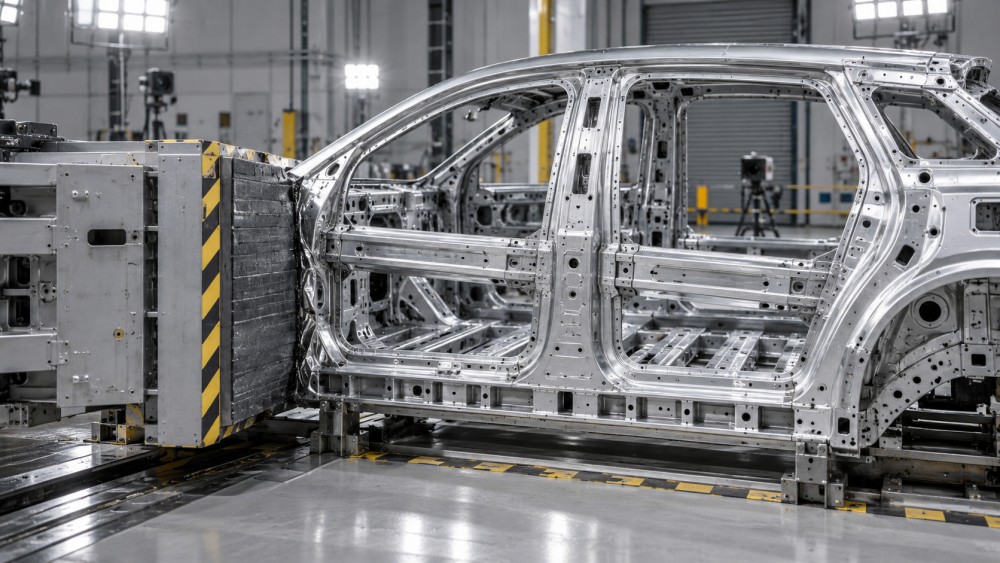
The load path through the door opening
The door opening is structurally discontinuous, which makes its surrounding ring critical. A robust aluminum side structure usually relies on interaction between the rocker or sill, B-pillar, roof rail, lower floor, and cross-car members. The B-pillar cannot be assessed as an isolated vertical beam. Under a lateral strike, it may bend, shear, rotate, and transfer force into the roof and floor simultaneously. Its response changes with striker height and the stiffness of the adjacent door assembly.
The sill has a particularly important role because it is close to the pelvis load zone and often provides a route for spreading force toward the underbody. In an electrified vehicle, the relationship between sill, battery tray, and floor cross-members becomes more constrained. A battery enclosure should not be assumed to be a substitute for the body’s side-impact structure. It may contribute to stiffness, but its load transfer must be defined so that cell protection, enclosure sealing, serviceability, and crash deformation objectives do not conflict.
Door intrusion beams, inner panels, beltline reinforcements, and hinge or latch reinforcements also need to engage in the intended order. A strong beam with flexible attachments can rotate instead of transmitting its load into the door ring. A beam placed too low may offer limited protection at the torso zone; one placed too high may not support lower-body intrusion control. Door trim, glass guides, speakers, wiring modules, and window mechanisms need packaging clearance because local contact with these parts can alter trim deformation or airbag deployment.
Joining strategy can decide the crash result
Aluminum body programs commonly use a mixture of self-piercing rivets, flow-drill screws, structural adhesives, clinching, laser welding, friction-based methods, and mechanical fastening. The correct method depends on stack-up, access, alloy grades, required corrosion protection, cycle time, and expected crash loading. A joint specification cannot be approved only on static lap-shear data. Side impacts impose peel, shear, bending, and rapidly changing local deformation, often at elevated strain rates.
Adhesive bonding can improve stiffness and distribute force across a flange, reducing the local stress concentration associated with discrete fasteners. Its contribution depends on bond-line thickness control, surface preparation, cure profile, flange geometry, and environmental durability. Adhesive should be treated as a structural element with a defined process window, not as a gap-filling measure after dimensional variation has already occurred.
Mechanical fasteners provide immediate holding strength and can be valuable where access or mixed-material joining prevents conventional welding. Yet fastener pitch, edge distance, local sheet thickness, and the order of joint separation matter. If a flange peels open before the intended structural member engages, a simulation may overstate load transfer. Joining trials should include representative coatings, sealers, adhesive cure conditions, and corrosion-protection steps because those details affect both fit-up and long-term joint condition.
Restraint systems set structural boundaries
Body performance and passive safety components must be developed together. Side and curtain airbags require predictable clearance, deployment timing, and trim behavior. A structural change that reduces intrusion but pushes the interior trim inward sooner can reduce deployment space around an occupant. Likewise, seat-mounted side airbags depend on seat-frame stiffness, seat track retention, and the relative movement between seat and body.
Seatbelt effectiveness is also connected to body deformation. When upper belt anchorage is integrated into the B-pillar, pillar movement can alter belt geometry during the impact. Pretensioner and load-limiter calibration should be considered with the body’s actual intrusion pulse, not with a generic acceleration trace. The seat, floor attachments, and belt anchors form a local containment system. If the floor rail tears or shifts, nominally correct airbag and belt hardware cannot fully compensate for the resulting occupant motion.
Door trim design is not merely an interior styling matter in this context. Energy-absorbing padding, armrest geometry, intrusion padding, and hard-component placement influence the contact environment after the outer structure has begun to deform. The appropriate balance varies with occupant size, seating position, and impact configuration. Structural stiffness that produces a sharp local intrusion profile can create a different injury risk from a broader, more gradual displacement, even where the maximum measured intrusion is similar.
Validation must follow the manufacturing route
Early finite-element analysis is necessary for finding weak load paths and comparing section concepts, but correlation quality governs its value. The model should represent realistic material failure, thickness transitions, adhesive behavior, fastener failure, contact definitions, and the boundary conditions introduced by closures, seats, glazing, and underbody assemblies. Simplifying a door as a rigid shell or treating a battery enclosure as an infinitely stiff block can hide the very mechanisms that determine side-impact intrusion.
Component tests are useful when they answer a specific structural question. A sill crush test can reveal fold stability. A pillar-to-sill assembly test can expose joint rotation. A door intrusion test can show whether the beam, latch zone, and beltline engage as designed. These tests do not replace a complete vehicle impact evaluation because full-vehicle behavior includes load redistribution, restraint timing, and interactions across the cabin. Their value lies in reducing uncertainty before the final system-level event.
Production-intent bodies need dimensional verification before crash results are interpreted. Small changes in flange gap, adhesive squeeze-out, rivet setting quality, or local heat input can shift joint behavior. Repair procedures also deserve attention. Aluminum structures often require controlled isolation from incompatible materials, defined corrosion restoration, and restrictions on heating or straightening near heat-treated members. A repairable outer panel is different from a repairable side-load path; the latter must not be restored with an unvalidated joint arrangement.
Where aluminum programs tend to lose margin
A frequent failure mode is a localized weak transition between a stiff extrusion and a thinner stamped panel. The extrusion remains intact, but the adjacent sheet tears or the joint flange peels, allowing the load path to collapse at its connection. Another is over-stiffening the door without ensuring that its force can enter the sill and pillar ring. The door then transfers a high local load into an area that lacks sufficient support, producing undesirable intrusion elsewhere.
Mixed-material structures require further care. Steel reinforcements can be effective where local strength or package constraints justify them, but their connection to aluminum must address galvanic corrosion, thermal expansion, coating compatibility, and crash separation behavior. Adding a stronger insert without accounting for interface stiffness can create a notch effect. The structure becomes stronger at one location while becoming less tolerant of deformation just beside it.
Mass reduction can remain compatible with side-impact protection when material is removed from low-value areas and retained or redistributed in load-bearing paths. The target should be structural efficiency, not a minimum mass figure for an individual part. Reducing the thickness of a broad panel may have little effect until it changes a buckling mode, at which point intrusion can rise sharply. Such transitions are often missed when decisions rely on static stiffness alone.
An aluminum car body therefore meets side-impact safety requirements through an integrated, validated architecture: stable crash sections, continuous load paths, joints that survive realistic deformation, and restraint components operating within preserved occupant space. Aluminum is fully capable of supporting that outcome, provided the vehicle is assessed as a connected protection system rather than as a collection of lightweight parts.
Related News

How to Evaluate Supplier Solution References Before Signing a Contract
Evaluate supplier solution references with confidence. Learn how to verify technical evidence, identify delivery risks, and close gaps before signing a contract.
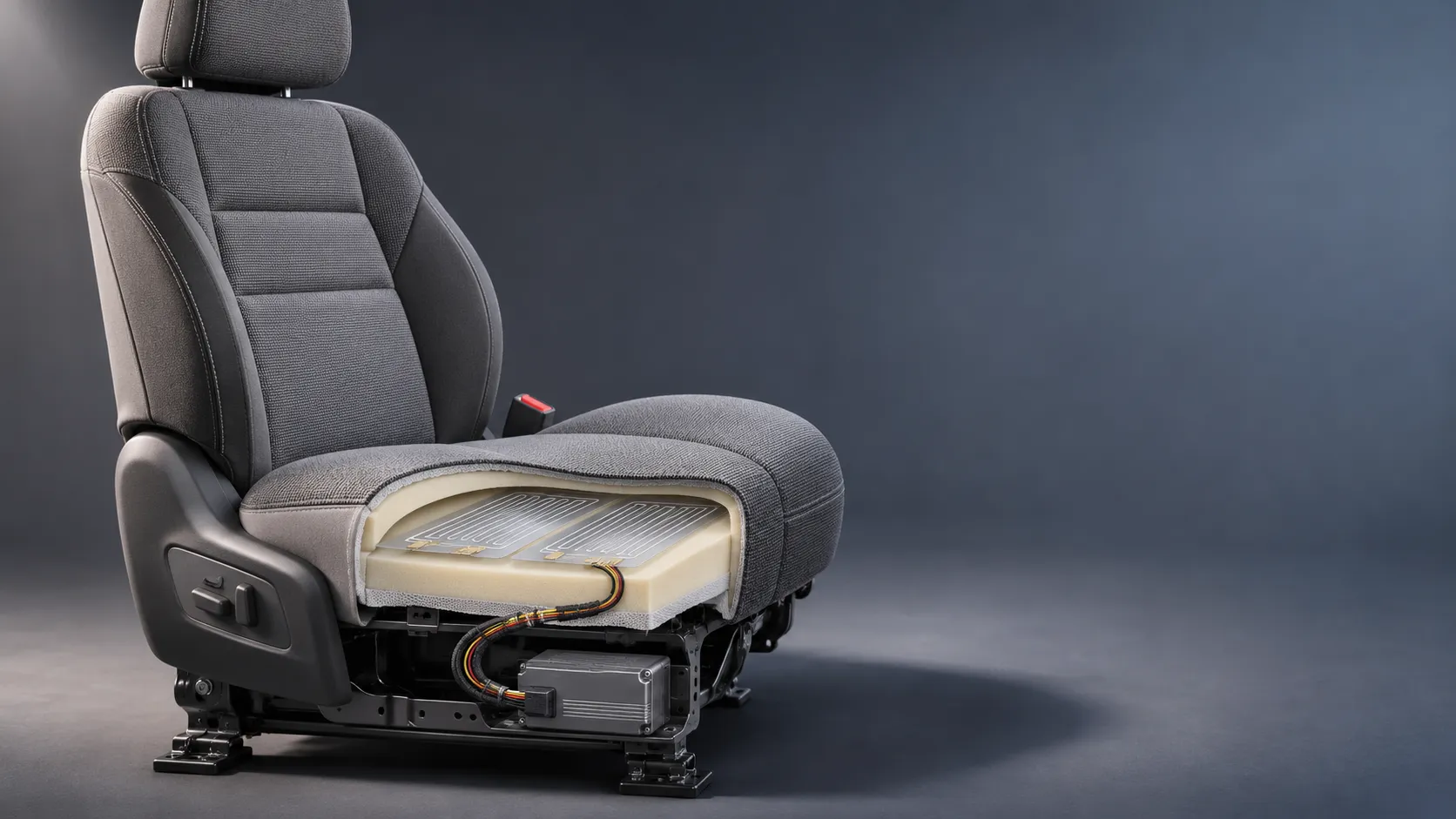
How Capacitive Seat Occupancy Sensing Works in Automotive Airbag Systems
Discover how capacitive seat occupancy sensing supports automotive airbag systems, and explore the design, calibration, and validation challenges behind reliable performance.
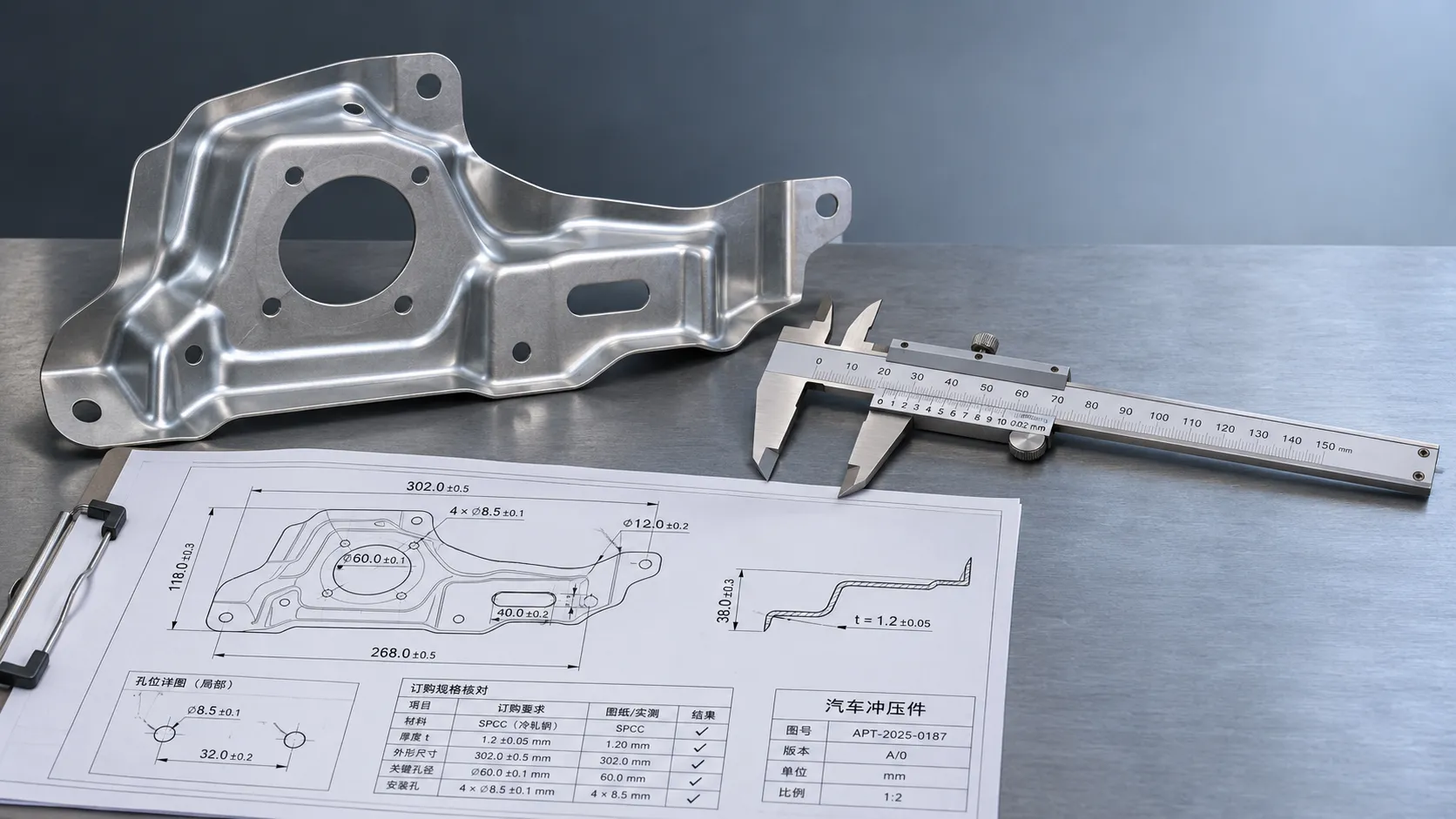
Industrial Product References: How to Verify Specs Before Ordering
Use an industrial product reference for procurement to verify specs, compatibility, and certifications before ordering—and reduce costly purchasing risks.
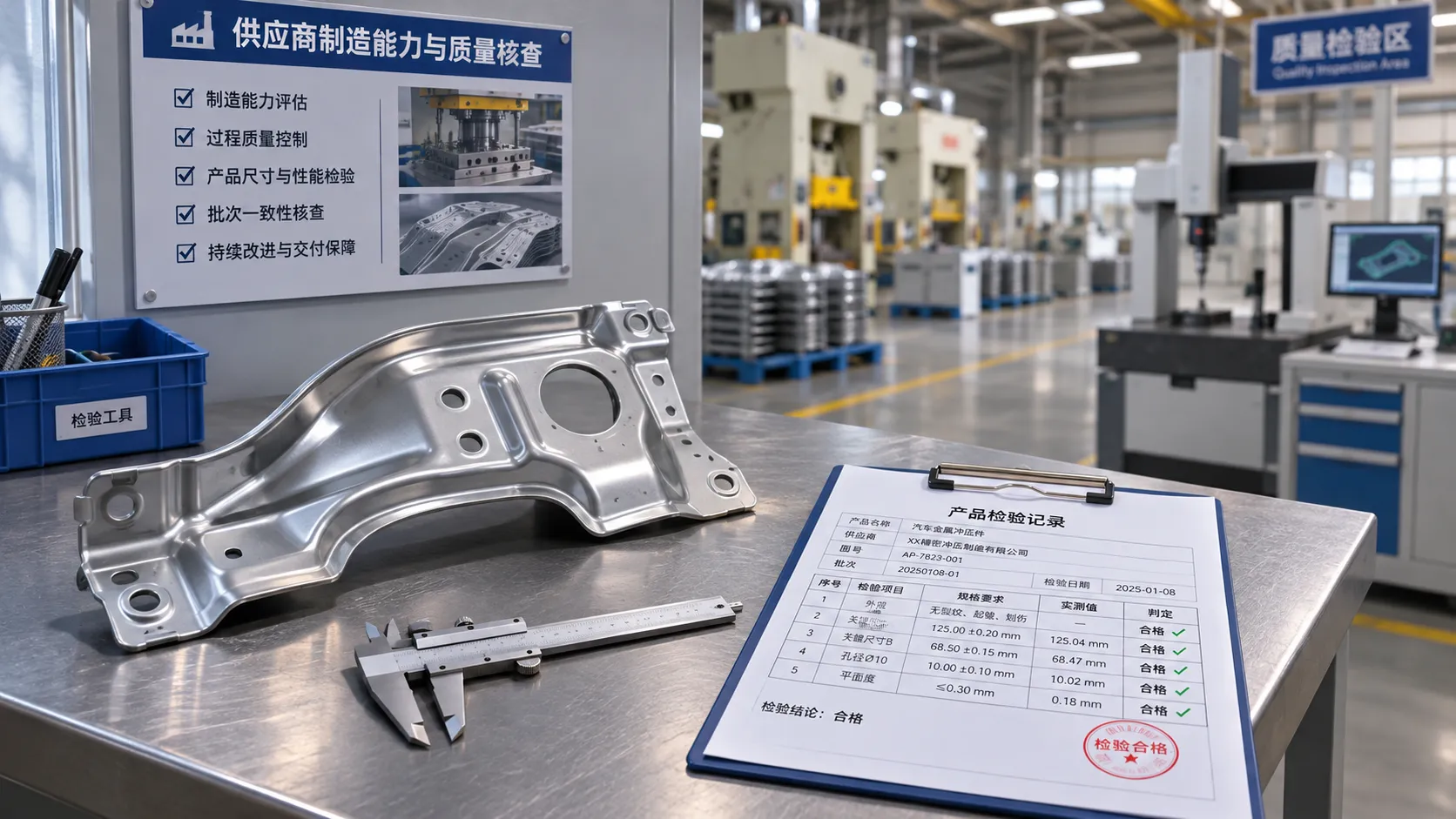
Choosing a Private Label Partner in Europe: Key Supplier Criteria
Private label cooperation Europe buyers can trust starts with the right supplier. Explore key criteria for compliance, quality, traceability and supply resilience.

Integrated Cabin Comfort Systems: How Seat and Cabin Climate Controls Work Together
Discover how integrated cabin comfort systems coordinate seat and climate controls to balance occupant comfort, energy use, safety, and performance.
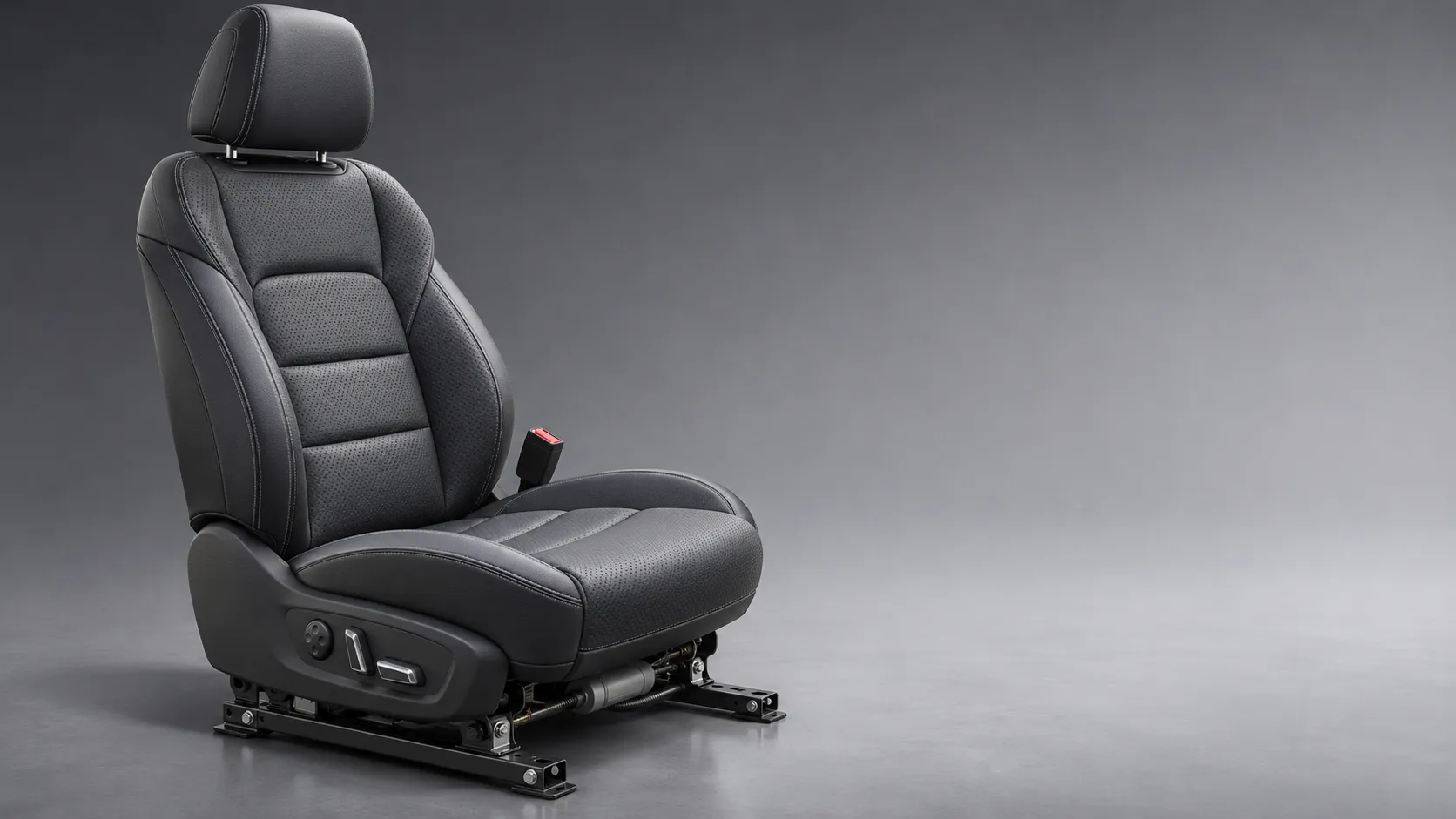
Automotive Ergonomics Pricing: What Drives Seat System Costs?
Discover what drives automotive ergonomics pricing, from seat mechanisms and safety systems to tooling and volume, and learn how to compare supplier quotes.
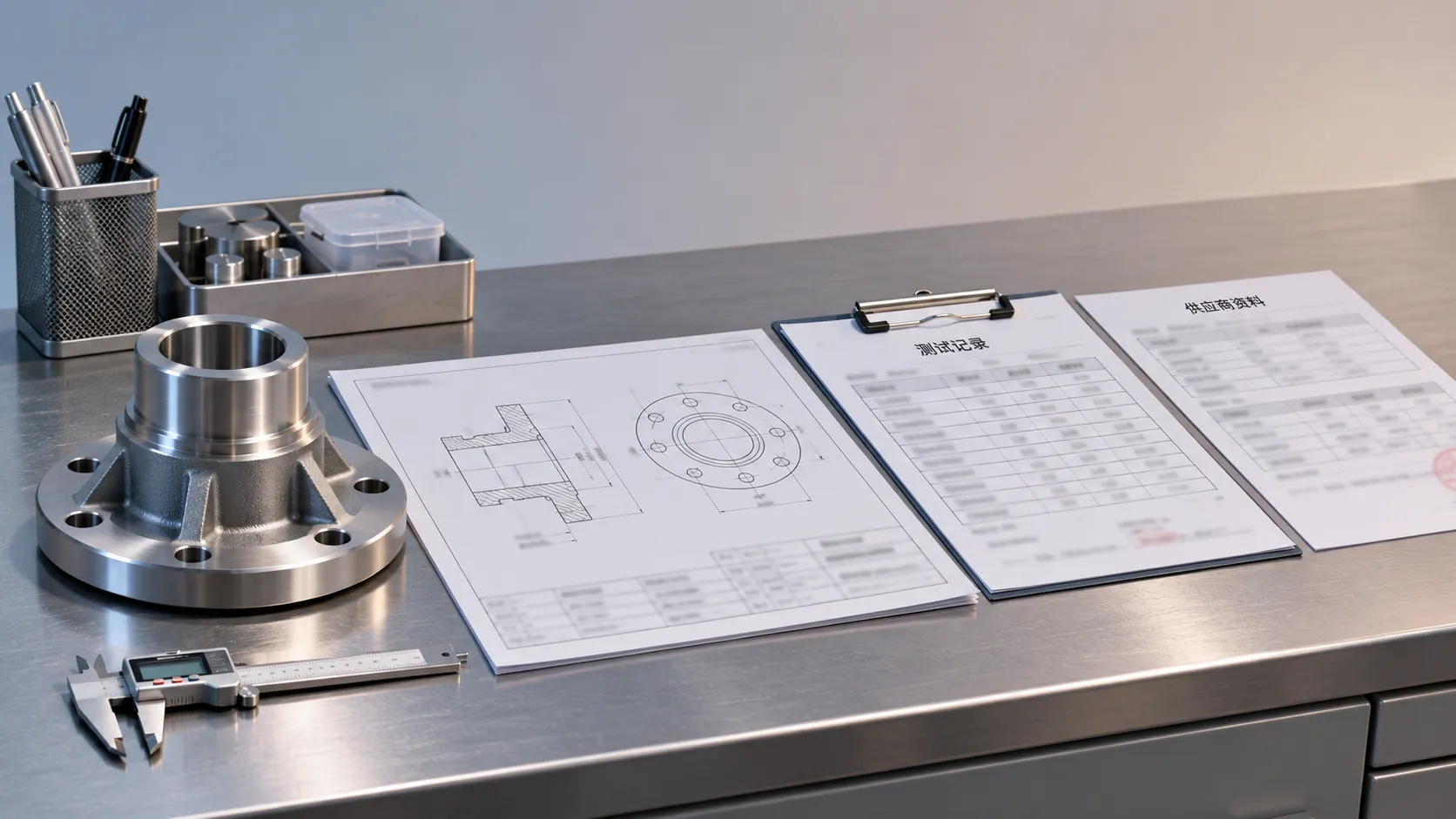
Evaluating Supplier Solutions: How to Verify References and Standards
Supplier solution references and standards can make or break a sourcing decision. Learn how to verify claims, assess compliance, and reduce risk before awarding a contract.
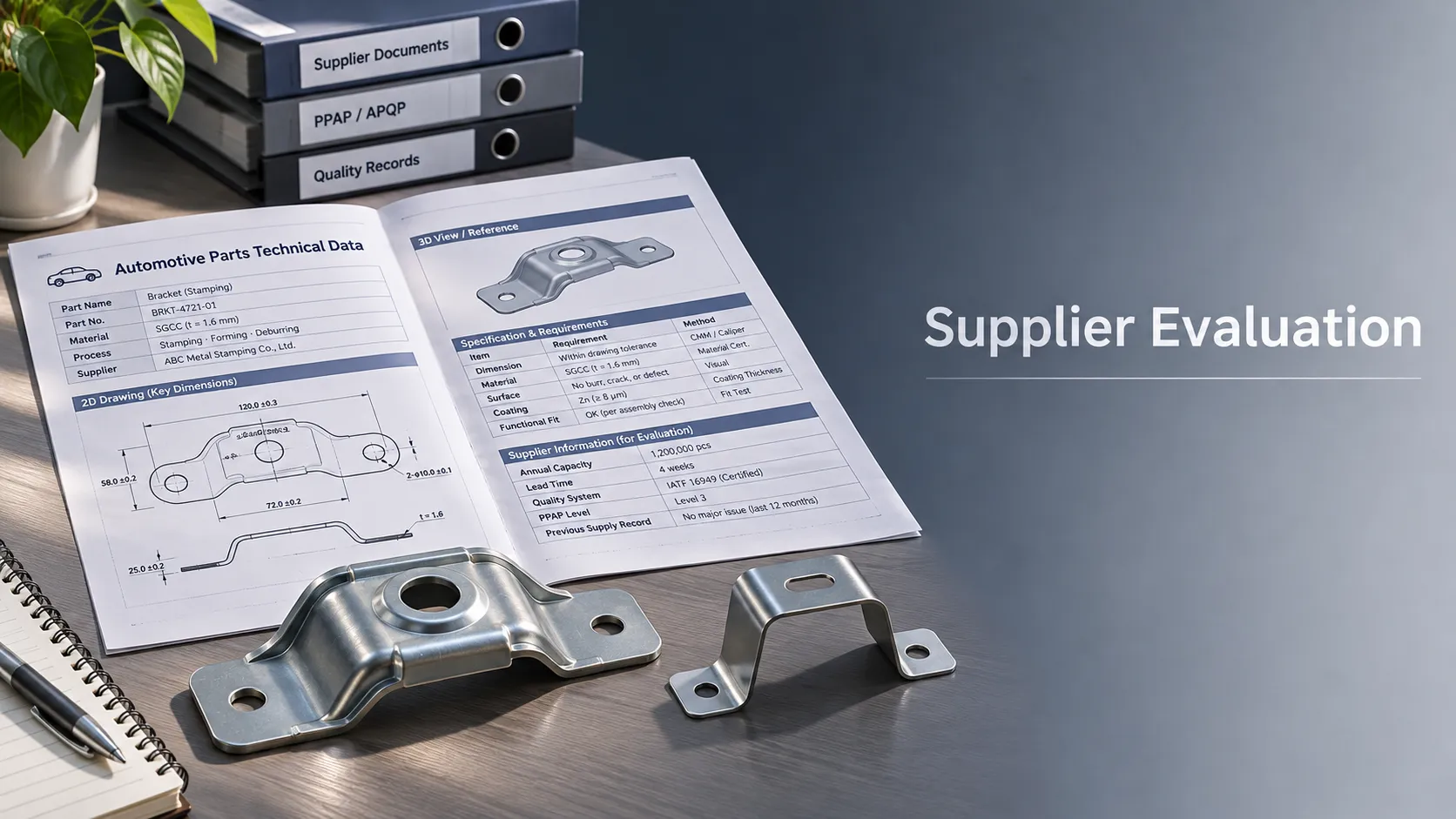
Choosing B2B Product Knowledge Platform Suppliers: Key Evaluation Criteria
Compare B2B product knowledge platform suppliers with confidence. Explore key criteria for data accuracy, supplier transparency, integrations, and value.

Choosing a Marine Radar Systems Supplier: What to Check Before Buying
Choosing a marine radar systems supplier? Compare installed costs, bridge compatibility, compliance evidence, and service support before you buy.
Related News
- 00
0000-00
When lightweight body panels can reduce vehicle mass without trade-offs - 00
0000-00
Which exterior body panel materials resist dents in daily driving - 00
0000-00
Do aluminum body panels justify their higher repair costs than steel - 00
0000-00
How a car aluminum body changes corrosion risk in coastal climates - 00
0000-00
What repair shops need to know before welding an aluminium car body
0000-00
Weekly Insights
Stay ahead with our curated technology reports delivered every Monday.