
Automotive Ergonomics Pricing: What Drives Seat System Costs?
When two suppliers quote for an apparently similar automotive seat, the lower unit price may conceal differences in adjustment range, safety integration, tooling or production assumptions. Automotive ergonomics pricing is driven principally by the seat’s mechanical architecture, comfort and sensing features, validation requirements, and expected volume—not by upholstery or perceived comfort alone.
The practical starting point is to compare quotations against the same vehicle package, occupant requirements and commercial scope. A simpler mechanism or shared frame can reduce cost, but removing an adjustment or changing a mounting arrangement may transfer expense into engineering changes, testing or an unsuitable driving position.
Start with the seat configuration, not the quoted number
A seat quotation can refer to a complete assembly, a frame and mechanism, or a narrower group of components. Before comparing prices, establish whether each offer covers the same front or rear seating positions, trim levels and variants. A driver’s seat with powered adjustments and an occupant-sensing function is not directly comparable with a manually adjusted passenger seat, even when the visible cushion and cover look alike.
Ask suppliers to identify the included parts, purchased components and responsibilities at each interface. The comparison should also state the currency, delivery point, production location and commercial basis. Without those details, a difference in price may reflect the scope of supply rather than a genuine manufacturing advantage.
Request separate visibility into recurring piece price, one-time engineering, tooling, validation and any software or calibration work. Suppliers may allocate these costs differently: one may recover tooling through the part price, while another quotes it separately. Both approaches can be commercially reasonable, but they produce different cost exposures if the program volume changes.
The hardware behind an ergonomic seat
Frame, tracks and structural interfaces
The frame supports the occupant and provides attachment points for mechanisms, cushions and other systems. Its cost depends on material, geometry, joining processes, part count and the loads it must carry. Higher-strength steel, aluminum or mixed-material designs can change mass and manufacturing requirements, but a lighter material does not automatically produce a cheaper seat. Forming complexity, joining methods, scrap and supplier capability all affect the delivered cost.
Seat tracks and mounting brackets deserve separate attention. A longer fore-aft travel range or a lower seating position may require a different track design or tighter packaging. Where the seat carries a belt anchorage or interfaces with an integrated restraint, structural loads and validation obligations can differ from those of a seat using body-mounted anchorages. Confirm the vehicle-level arrangement before treating frame quotations as interchangeable.
Adjustment mechanisms
Manual adjustment generally uses fewer electrical components than powered adjustment, but the number of movements and the required loads still matter. Fore-aft travel, seat height, recline, cushion tilt and lumbar support each need a defined mechanism, whether manual or powered. Additional movement can improve accommodation for different occupants while increasing parts, assembly work, mass and potential warranty exposure.
For powered seats, ask whether the quotation includes motors, switches, harnesses, control modules and software interfaces. Memory functions can add controls and integration work beyond the actuators themselves. A supplier offering a low-cost actuator without the associated electronics may be quoting a component rather than the functional system required by the vehicle.
Specify useful adjustment ranges and operating loads rather than requesting the largest available range by default. Engineering should confirm that the selected range supports the intended driver population, sight lines, pedal reach and vehicle packaging. A cost reduction that restricts those requirements can make a seat unsuitable even if the mechanism meets its own component specification.
Cushioning and trim
Foam formulation, cushion shape, cover material and assembly method influence both cost and the way the seat feels over time. A softer initial impression is not, by itself, evidence of better pressure distribution or long-distance support. Foam density and hardness are also different properties; asking for one number without defining the expected performance can lead to misleading comparisons.
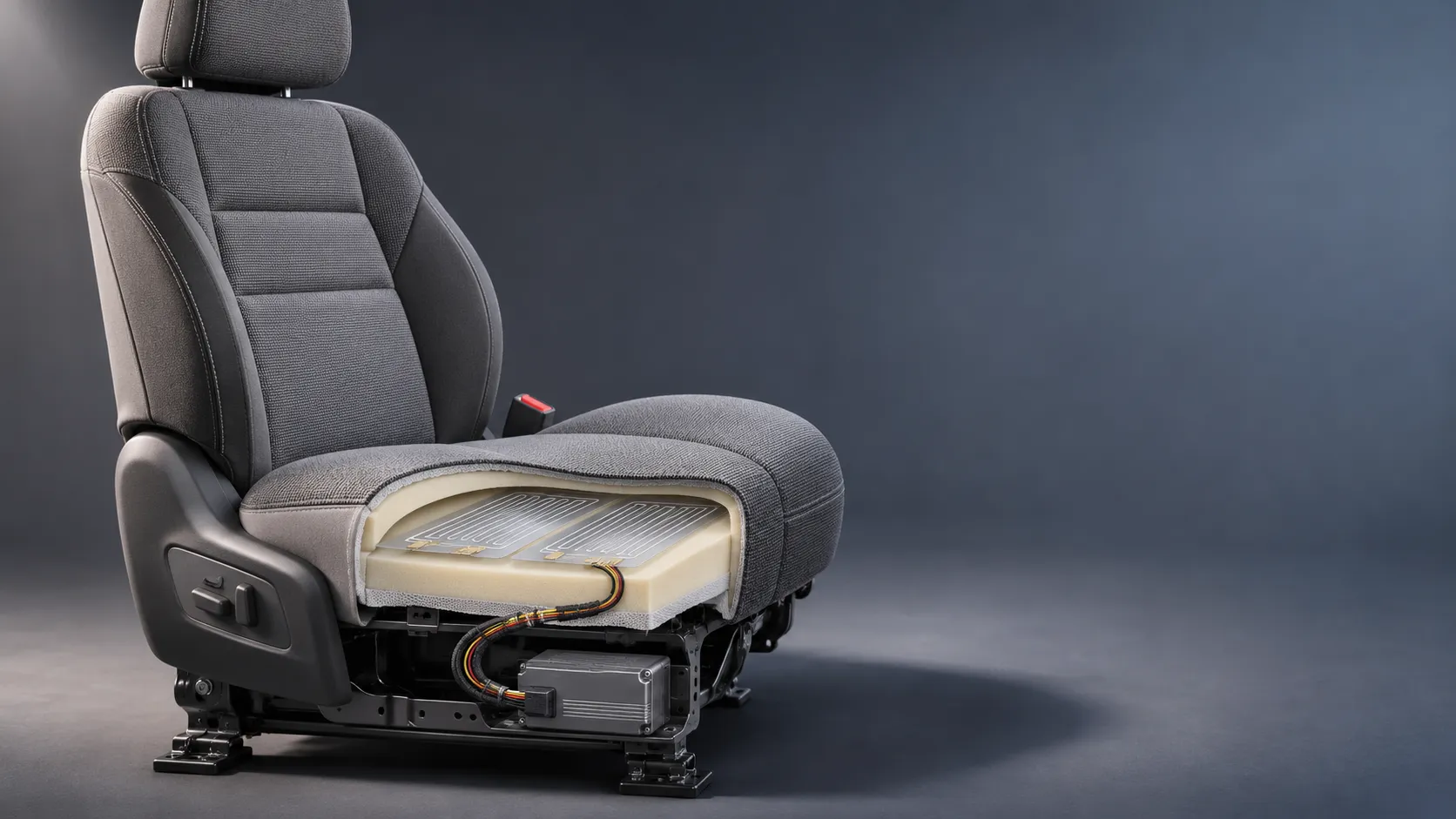
Compare quotations against agreed durability, appearance, cleanability and comfort requirements. Stitch patterns, perforations, decorative inserts and multiple cover materials can add cutting and sewing operations. Heated or ventilated seats may require compatible foam and trim construction as well as electrical hardware, so a feature cannot always be priced accurately as an isolated switch-on option.
Safety and electronics can change the scope of supply
A seat may contain or interface with side airbags, belt components, occupant classification or presence sensing, heating elements and control electronics. The price impact depends on which functions are included, who supplies them and how they are integrated. For example, the cost of a sensor mat is only part of the decision if its placement, wiring, calibration and vehicle-level verification are also needed.
Obtain an interface matrix showing mechanical attachments, electrical connectors, communication requirements and ownership of calibration. Clarify whether the seat supplier is responsible for a complete working function or only for installing a customer-supplied component. This distinction affects both the quote and the organization responsible for resolving integration issues.
Safety-related changes should not be treated as ordinary trim substitutions. A different foam profile, cover seam, bracket or sensor location may affect system performance and require reassessment. The vehicle manufacturer and relevant engineering teams should determine applicable market requirements and the validation needed for the proposed configuration; a supplier’s component claim alone does not establish vehicle-level compliance.
Production assumptions behind the piece price
Volume affects purchasing leverage, but it also changes the manufacturing process a supplier can justify. Dedicated tooling and automation may spread fixed costs across a larger planned output, while lower-volume programs may use more manual operations or less specialized equipment. The cheapest approach at the forecast volume may not remain cheapest if demand falls or the program ends early.
Ask for the volume assumptions used to build the quote: annual forecast, total program quantity, production life, variants, shift pattern and expected release schedule. Check whether the supplier’s price depends on minimum volumes or a particular mix of powered and manual seats. A nominal annual quantity is less useful when many low-volume variants create frequent changeovers or separate inventory.
Also separate capacity commitments from forecast assumptions. A supplier may price for an expected schedule without reserving enough capacity for the peak requirement. Conversely, capacity held for a surge can carry a cost even when it is not fully used. Define how demand changes, idle capacity and additional investment will be handled commercially.
Make competing quotations comparable
A useful comparison starts with a common request for quotation and a controlled list of deviations. Include drawings or package envelopes, performance targets, adjustment ranges, interfaces, expected volumes and the intended manufacturing location. Where a specification is still open, ask suppliers to quote the same baseline and show alternatives as separate options.
Review exclusions as carefully as inclusions. Prototype seats, test fixtures, freight, import charges, returnable packaging and production-readiness activities may sit outside the quoted piece price. Ask each supplier to mark an item as included, excluded or subject to a separate quotation rather than leaving it ambiguous.
For a consistent commercial comparison, calculate an evaluated program cost using the same forecast for every offer: expected recurring purchases plus one-time charges and other agreed costs, less only those credits that are contractually supported. Run a lower-volume scenario as well as the planning case. This reveals whether a low piece price depends on recovering a large fixed investment through an optimistic forecast. The calculation is an evaluation tool, not a guaranteed final spend.
Find savings without weakening the requirement
The most useful negotiation opportunities often lie in requirements that have not been clearly prioritized. Separate mandatory occupant accommodation and safety performance from preference features, then ask engineering which alternatives preserve the required function.
- Reduce unnecessary variants. Common frames, tracks or covers can simplify tooling and inventory, provided vehicle packaging and trim-level requirements remain satisfied.
- Price features independently. Obtain incremental quotes for powered adjustment, lumbar support, heating, ventilation or memory so their cost can be weighed against program needs.
- Review manufacturing complexity. Fewer trim panels or simpler stitching may reduce labor, but the revised construction still needs to meet appearance and durability requirements.
- Challenge interface duplication. Establish whether brackets, connectors or controls are already supplied elsewhere before paying for overlapping content.
Do not assume that a common component always lowers total cost. A shared frame may need additional brackets, create unused capability or force compromises in vehicle packaging. Ask for the cost of the common part together with adaptations, tooling and validation for each application.
Account for costs after the sourcing decision
Engineering changes can consume an apparent saving quickly. Agree on the process for quoting design changes, the treatment of obsolete inventory and who pays for retesting when either the vehicle or seat specification changes. A price-validity period and a defined mechanism for reviewing material or currency changes also make the quotation easier to manage than an unexplained future adjustment.
Warranty terms deserve the same scrutiny as the initial price. Clarify how failures will be investigated, how responsibility is allocated across the seat, restraint and vehicle interfaces, and whether the supplier can trace affected production. A lower-cost mechanism may be a sound choice, but its commercial value depends on meeting the same durability and functional requirements as the alternative.
Before award, confirm that the preferred quotation covers the released configuration and that unresolved deviations have owners and due dates. If a supplier proposes a material, mechanism or safety-interface change to meet the target price, evaluate the revised design and its validation cost before incorporating the saving into the business case.
Related News

How to Evaluate Supplier Solution References Before Signing a Contract
Evaluate supplier solution references with confidence. Learn how to verify technical evidence, identify delivery risks, and close gaps before signing a contract.
How Capacitive Seat Occupancy Sensing Works in Automotive Airbag Systems
Discover how capacitive seat occupancy sensing supports automotive airbag systems, and explore the design, calibration, and validation challenges behind reliable performance.
Industrial Product References: How to Verify Specs Before Ordering
Use an industrial product reference for procurement to verify specs, compatibility, and certifications before ordering—and reduce costly purchasing risks.
Choosing a Private Label Partner in Europe: Key Supplier Criteria
Private label cooperation Europe buyers can trust starts with the right supplier. Explore key criteria for compliance, quality, traceability and supply resilience.

Integrated Cabin Comfort Systems: How Seat and Cabin Climate Controls Work Together
Discover how integrated cabin comfort systems coordinate seat and climate controls to balance occupant comfort, energy use, safety, and performance.
Evaluating Supplier Solutions: How to Verify References and Standards
Supplier solution references and standards can make or break a sourcing decision. Learn how to verify claims, assess compliance, and reduce risk before awarding a contract.
Choosing B2B Product Knowledge Platform Suppliers: Key Evaluation Criteria
Compare B2B product knowledge platform suppliers with confidence. Explore key criteria for data accuracy, supplier transparency, integrations, and value.

Choosing a Marine Radar Systems Supplier: What to Check Before Buying
Choosing a marine radar systems supplier? Compare installed costs, bridge compatibility, compliance evidence, and service support before you buy.

Solution Comparison Resources: How to Evaluate Unbiased Sources
Discover how to evaluate solution comparison resources, spot bias, verify evidence, and make confident purchasing decisions with a practical checklist.
Related News
- 00
0000-00
How to Evaluate Supplier Solution References Before Signing a Contract - 00
0000-00
Industrial Product References: How to Verify Specs Before Ordering - 00
0000-00
Choosing a Private Label Partner in Europe: Key Supplier Criteria - 00
0000-00
Automotive Ergonomics Pricing: What Drives Seat System Costs? - 00
0000-00
Evaluating Supplier Solutions: How to Verify References and Standards
0000-00
Weekly Insights
Stay ahead with our curated technology reports delivered every Monday.