
Evaluating Supplier Solutions: How to Verify References and Standards
A convincing proposal is not evidence that a supplier can deliver a compliant solution consistently. A sound selection depends on whether customer references, certifications, test reports, and production records all relate to the exact product, manufacturing location, and conditions covered by the proposed contract.
The distinction matters most when failure can affect safety or regulatory approval. A navigation system installed on one vessel is not automatically suitable for another, and an airbag component tested in one vehicle configuration does not establish performance in a different restraint system. Supplier claims become useful only when their scope and limitations are clear.
Start with the solution being purchased, not the supplier’s credentials
Before asking for certificates or references, define the intended application in enough detail to judge whether the evidence is relevant. Record the product designation, configuration, software or hardware version where applicable, production site, destination market, expected service conditions, and any customer-specific requirements. For a component incorporated into a larger system, identify which party is responsible for integration and final approval.
This baseline prevents a common comparison error: treating evidence for a supplier’s general capabilities as proof for the proposed solution. A manufacturer may hold a quality management certificate for one facility while the quoted product is assembled elsewhere. A test report may cover a similar part but use a different material, mounting arrangement, or software version.
Ask suppliers to map each important claim to a specific piece of evidence. For example, a claim about environmental performance should point to a report identifying the tested configuration, test method, conditions, and result. A claim about production reliability should be supported by information relevant to the actual production line, not just by a corporate presentation.
Use references to test comparability and delivery performance
A customer name is a starting point, not a validated reference. The strongest reference describes a completed or ongoing supply relationship involving a comparable product, operating environment, order profile, and scope of responsibility. A reference for prototype development has limited value when the sourcing decision concerns stable serial production.
Request permission to speak directly with a contact who can discuss the supplier’s performance. Confirm the contact’s role and relationship to the project through an independent channel, such as the customer’s published corporate contact details. Respect confidentiality restrictions: a reference that cannot disclose commercially sensitive details may still be able to discuss delivery performance, issue resolution, and the nature of the work.
Questions should establish both relevance and performance:
- What product or service was supplied, and how similar was its configuration to the proposed purchase?
- Did the supplier manufacture the critical items itself or rely on subcontractors? Were those arrangements disclosed?
- How did actual delivery dates compare with agreed schedules, and how were shortages or delays communicated?
- Were defects or field issues encountered? How quickly did the supplier contain the problem, identify its cause, and verify corrective action?
- How were engineering changes, documentation revisions, and approval requests handled?
- Would the customer use the supplier again for a comparable scope, and subject to what conditions?
Listen for the difference between an isolated problem and an uncontrolled process. A reference that acknowledges a defect but can describe containment, traceability, and an effective correction may be more informative than a uniformly positive statement with no operational detail. Equally, praise for responsiveness does not establish that the product met technical or regulatory requirements.
Where direct contact is unavailable, consider alternative evidence such as redacted acceptance records, purchase history, service records, or completion certificates. These can support parts of a claim, but they do not replace an independent discussion about performance. Record the limitation rather than treating silence as a negative reference or an endorsement.
Separate management-system certification from product approval
One of the most consequential errors in evaluating supplier solution references and standards is assuming that a certified management system proves the product itself is compliant. It does not. A management-system certificate indicates that an organization’s system has been assessed against a specified standard within a defined scope. Product approval, type approval, laboratory testing, and customer acceptance address different questions.
For example, ISO 9001 concerns quality management systems. IATF 16949 addresses quality management system requirements for automotive production and relevant service parts organizations, alongside applicable customer-specific requirements. Neither certificate alone confirms that a particular seatbelt assembly meets the legal requirements of a destination market or will perform correctly in a particular vehicle.
For each certificate, check:
- Legal entity and site: Do the certificate holder and covered locations match the contracting and manufacturing arrangements?
- Scope: Does it cover the relevant activities, such as design, manufacture, or assembly? Do not infer design capability from a manufacturing-only scope.
- Validity and status: Check dates and, where available, confirm current status through the issuing certification body’s directory or other official verification channel.
- Accreditation: Where accredited certification is required, confirm the certification body’s accreditation and its applicable scope with the relevant accreditation body.
- Changes: Ask about site moves, ownership changes, suspended certificates, or major process changes that could affect the evidence provided.
A valid certificate is useful evidence of an assessed system, not a guarantee of defect-free supply. Audit findings and corrective actions can provide additional insight where the supplier is willing and authorized to share them. For higher-consequence purchases, agree on appropriate access to relevant records or a site assessment rather than relying on the certificate alone.
Identify which standards and regulations actually apply
The applicable requirements depend on the product, intended use, destination jurisdiction, and role in the finished system. A supplier’s list of standards may include voluntary industry standards, mandatory regulations, customer specifications, and test methods. Those categories are not interchangeable: a test method specifies how a property is assessed, while a regulation or customer specification may also set acceptance criteria and approval obligations.
Build a requirement register with the exact document identifier, applicable edition or amendment where relevant, product scope, responsible party, and required evidence. Confirm the applicable edition against the relevant regulatory or contractual framework rather than assuming that the newest published edition automatically governs every project.
For automotive restraint systems, applicable requirements can include vehicle or component regulations in the intended market as well as the vehicle manufacturer’s specifications. A component-level test does not by itself establish approval of the complete vehicle or restraint system. Interface details, occupant classification, sensors, control logic, mounting points, and interactions with other components can affect the final assessment.
For marine navigation equipment, requirements depend on the equipment function, vessel category, flag, and applicable approval regime. Equipment intended for regulated vessels may need evidence accepted by the relevant flag administration or recognized approval framework. A generic statement that a device is “IMO compliant” should be followed by a request for the specific requirements, approval documents, equipment model, and conditions covered.
Standards organizations, regulatory authorities, approval bodies, and classification societies can provide authoritative information within their respective roles. Use their published registers and official documents where available. If the compliance route remains unclear, have the responsible engineering or regulatory function resolve it before making an unconditional award.
Read test reports for their boundaries
A laboratory report can be authentic and still be insufficient for the sourcing decision. Confirm who commissioned the test, who performed it, whether the laboratory’s accreditation covers the relevant test method where accreditation is required, and whether the report is complete. Check the sample identification, revision, date, method, test conditions, deviations, results, and stated limitations.
Pay particular attention to the relationship between the tested sample and the product that will be delivered. A report for an earlier design may not cover a changed material, manufacturing site, subcomponent, or software release. Ask for an engineering assessment explaining why existing evidence remains applicable after a change, and obtain additional testing or approval where the governing requirements call for it.
Also distinguish a pass against a specified criterion from a set of measured results. A report may contain measurements without declaring conformity, or it may assess only selected clauses of a broader standard. If the report cites an external specification, obtain enough of that specification to understand the acceptance limits and any conditions attached to the result.
For destructive or safety-critical tests, sample selection and production representativeness matter. A successful test on a specially prepared prototype is weaker evidence for serial supply than a documented link to the approved production design and process. That link may include material specifications, controlled drawings, process records, and traceability arrangements.
Connect approval evidence to the production supply chain
A supplier may own the design but outsource manufacturing, testing, or a critical subassembly. Ask for the proposed supply-chain structure and identify which site performs each safety- or compliance-relevant activity. Evidence should cover the actual arrangements, including external providers where their work affects conformity.
Traceability deserves particular attention. Determine whether the supplier can link delivered units or batches to production records, material lots, inspection results, and relevant subcomponents. The appropriate level of traceability depends on the product and contract, but the mechanism should be specific enough to support containment if a defect or nonconformity is found.
Review how the supplier controls changes to materials, tooling, manufacturing location, sub-suppliers, software, and test methods. A change that appears commercially minor can invalidate prior evidence or trigger customer notification, requalification, or regulatory action. Contract terms should define which changes require advance notice or approval, what supporting evidence is required, and whether existing stock is affected.
Capacity and continuity claims should also be tied to the proposed operation. Ask for the assumptions behind quoted lead times, the production site responsible for the order, constraints on critical inputs, and the process for communicating interruptions. A reference confirming past delivery performance is useful, but it does not prove that the same capacity is available for a new program.
Make evidence gaps part of the award decision
Not every missing document has the same significance. A reference that cannot disclose pricing may have little bearing on technical qualification; an absent approval required for the intended market can prevent lawful use or delivery. Classify gaps by consequence and define what must be resolved before award, before production release, or before shipment.
A practical comparison records each requirement against the supplier’s claim, supporting evidence, scope match, verification result, and remaining action. Avoid reducing the decision to a numerical score if a low score in one area can be offset by attractive pricing elsewhere. Mandatory legal requirements and critical safety conditions should be treated as prerequisites, while commercial and operational differences can be compared among suppliers that meet them.
Where an award is conditional, state the conditions in the contract or qualification plan: required approvals, acceptable evidence, responsible owner, deadlines, access rights, and the consequences of failure to meet them. Specify the approved product configuration and site, along with change-notification and record-retention obligations. This turns due diligence into controls that remain effective after the initial certificate and reference checks are complete.
Related News

How to Evaluate Supplier Solution References Before Signing a Contract
Evaluate supplier solution references with confidence. Learn how to verify technical evidence, identify delivery risks, and close gaps before signing a contract.

How Capacitive Seat Occupancy Sensing Works in Automotive Airbag Systems
Discover how capacitive seat occupancy sensing supports automotive airbag systems, and explore the design, calibration, and validation challenges behind reliable performance.
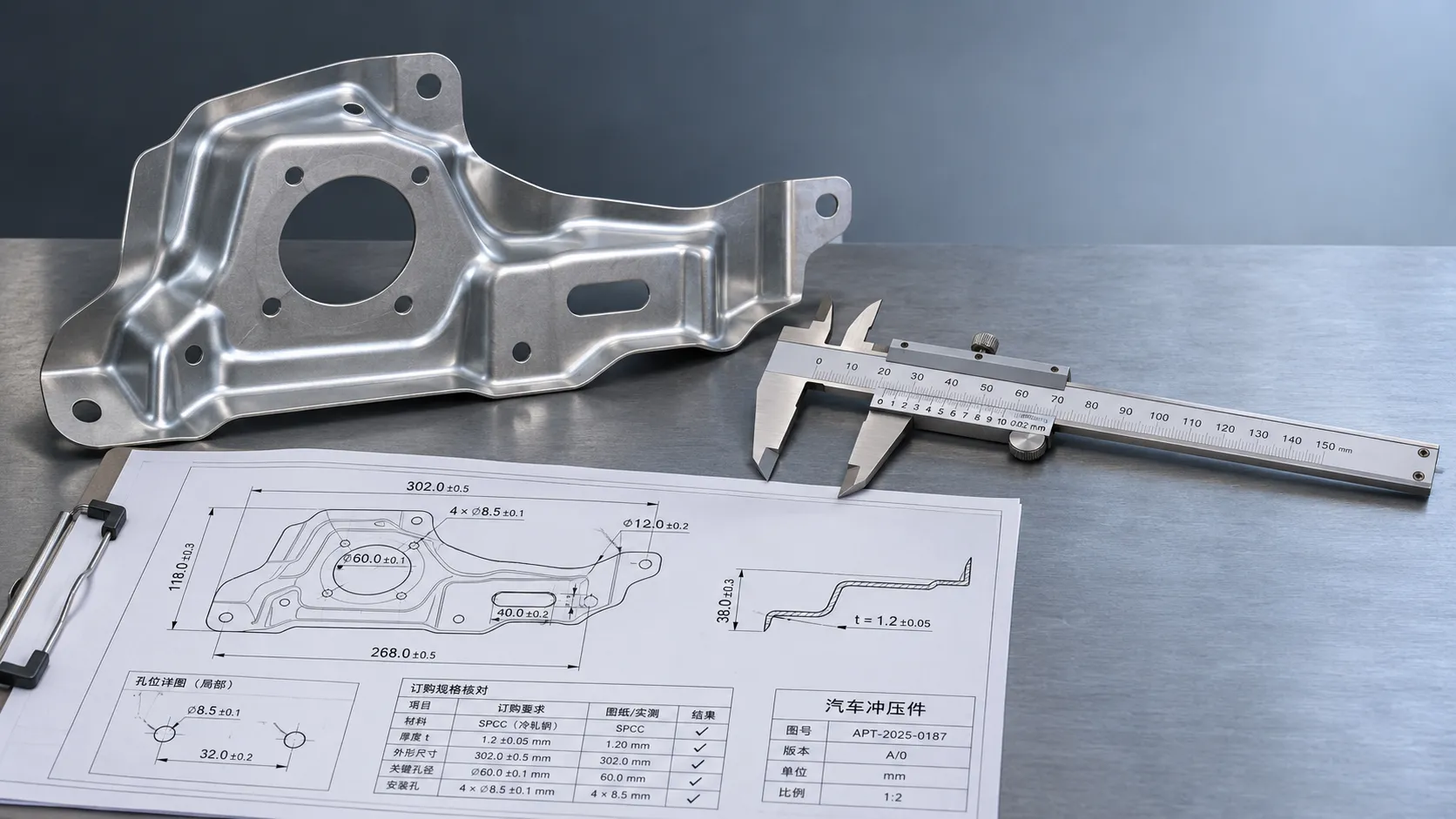
Industrial Product References: How to Verify Specs Before Ordering
Use an industrial product reference for procurement to verify specs, compatibility, and certifications before ordering—and reduce costly purchasing risks.
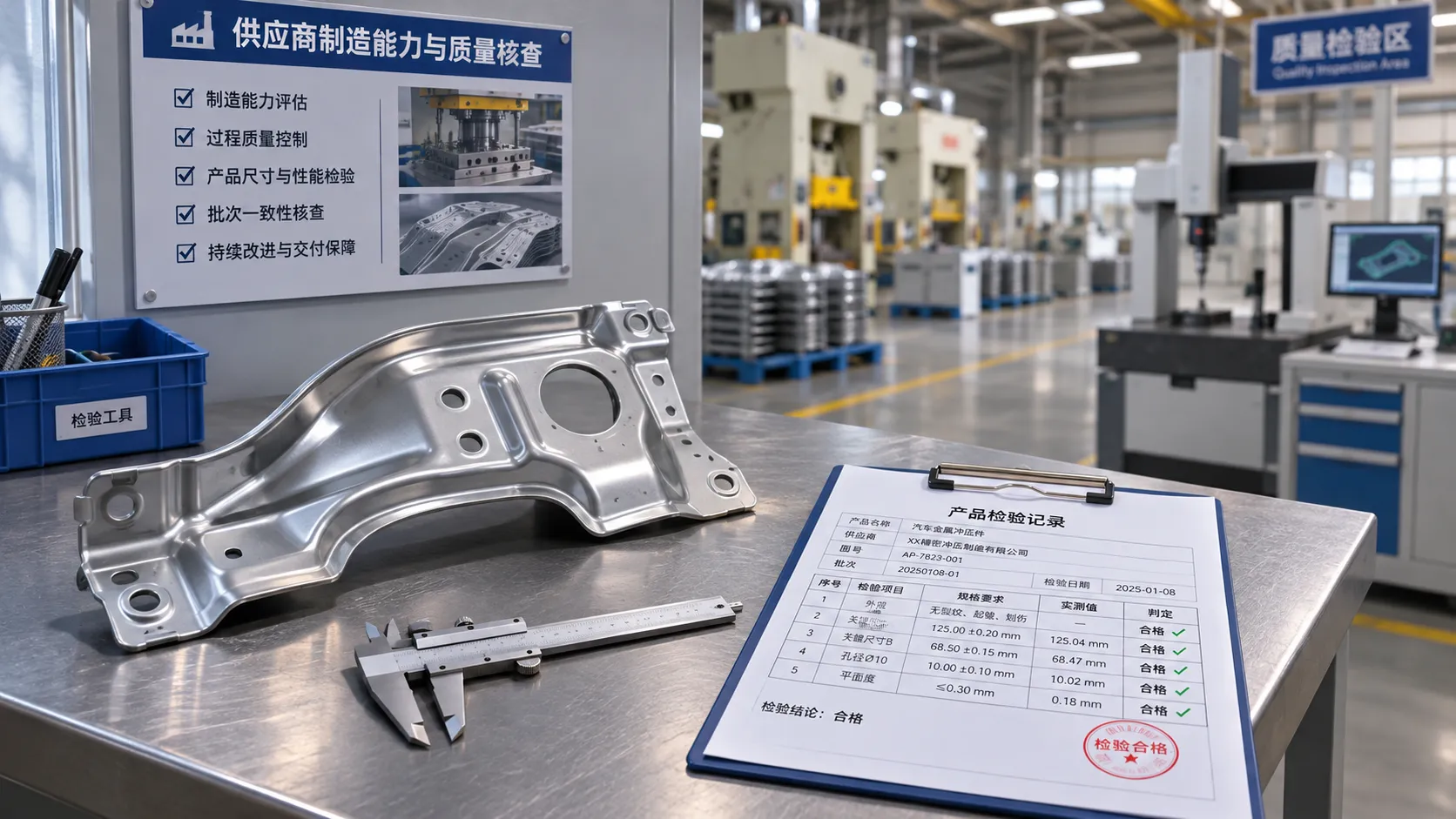
Choosing a Private Label Partner in Europe: Key Supplier Criteria
Private label cooperation Europe buyers can trust starts with the right supplier. Explore key criteria for compliance, quality, traceability and supply resilience.

Integrated Cabin Comfort Systems: How Seat and Cabin Climate Controls Work Together
Discover how integrated cabin comfort systems coordinate seat and climate controls to balance occupant comfort, energy use, safety, and performance.

Automotive Ergonomics Pricing: What Drives Seat System Costs?
Discover what drives automotive ergonomics pricing, from seat mechanisms and safety systems to tooling and volume, and learn how to compare supplier quotes.
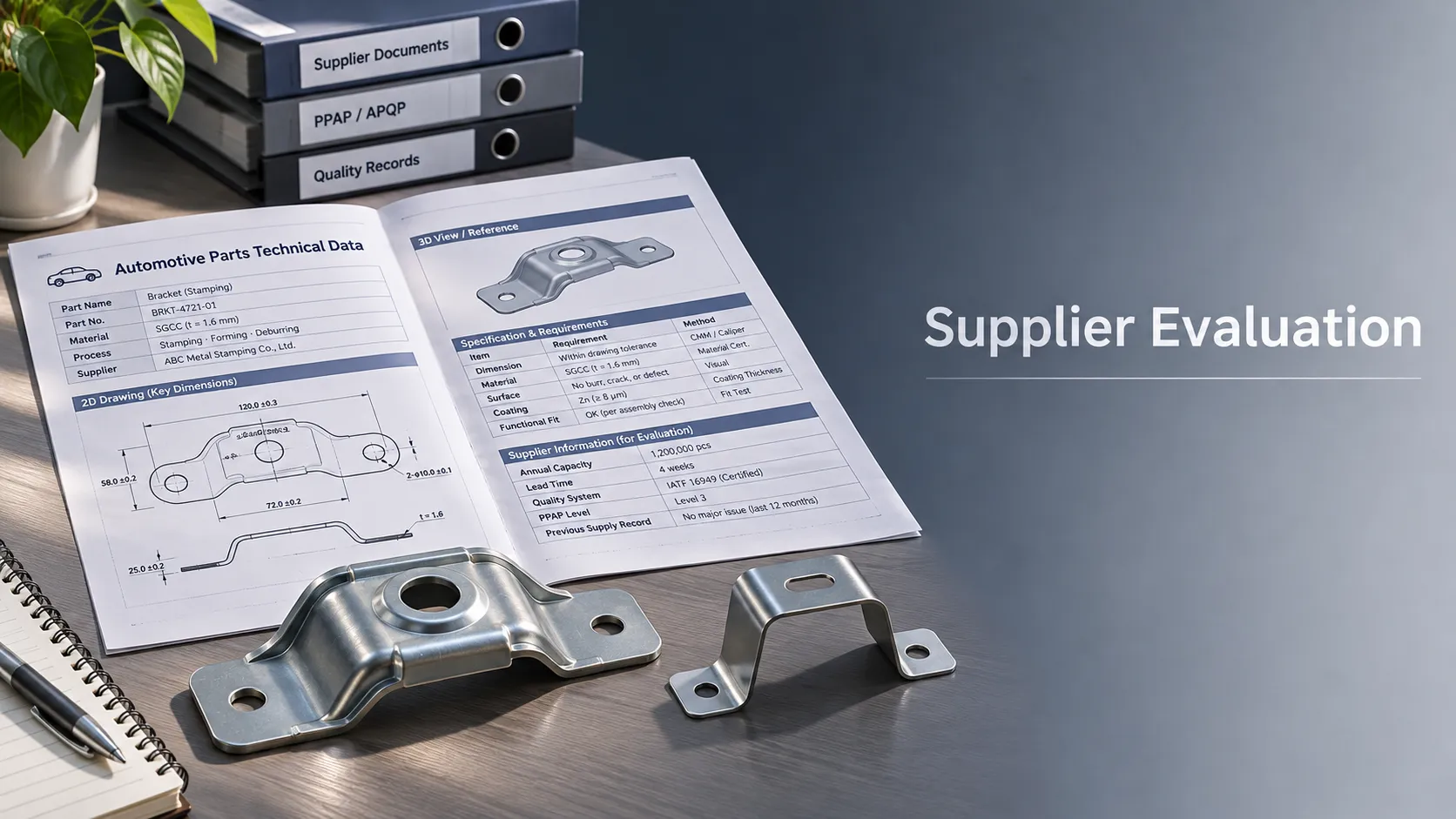
Choosing B2B Product Knowledge Platform Suppliers: Key Evaluation Criteria
Compare B2B product knowledge platform suppliers with confidence. Explore key criteria for data accuracy, supplier transparency, integrations, and value.

Choosing a Marine Radar Systems Supplier: What to Check Before Buying
Choosing a marine radar systems supplier? Compare installed costs, bridge compatibility, compliance evidence, and service support before you buy.

Solution Comparison Resources: How to Evaluate Unbiased Sources
Discover how to evaluate solution comparison resources, spot bias, verify evidence, and make confident purchasing decisions with a practical checklist.
Related News
- 00
0000-00
How to Evaluate Supplier Solution References Before Signing a Contract - 00
0000-00
Industrial Product References: How to Verify Specs Before Ordering - 00
0000-00
Choosing a Private Label Partner in Europe: Key Supplier Criteria - 00
0000-00
Automotive Ergonomics Pricing: What Drives Seat System Costs? - 00
0000-00
Evaluating Supplier Solutions: How to Verify References and Standards
0000-00
Weekly Insights
Stay ahead with our curated technology reports delivered every Monday.