
Do aluminum body panels justify their higher repair costs than steel
Aluminum body panels can justify higher repair costs, but only when the vehicle captures enough value from lower mass, corrosion resistance, design freedom, or regulatory compliance to offset a more expensive repair ecosystem. The material itself is not the financial answer. The answer depends on where the panel sits on the vehicle, how often it is damaged, how the vehicle is used, and whether repair capacity exists across the markets where it will be sold and serviced.
A lightweight aluminum hood on a vehicle with demanding efficiency targets can have a credible lifecycle rationale. An aluminum outer panel in a high-frequency fleet damage zone, sold into a market with limited certified repair capacity, may create a recurring cost exposure that overwhelms its mass-saving benefit. The relevant comparison is therefore not “aluminum repair cost versus steel repair cost” in isolation, but the full economic effect of a material decision over the vehicle’s design, production, insurance, repair, resale, and warranty life.
Why repair bills for aluminum are structurally different
Aluminum is not simply a lighter version of steel. Its mechanical behavior, joining requirements, and contamination risks change how collision repairs are performed.
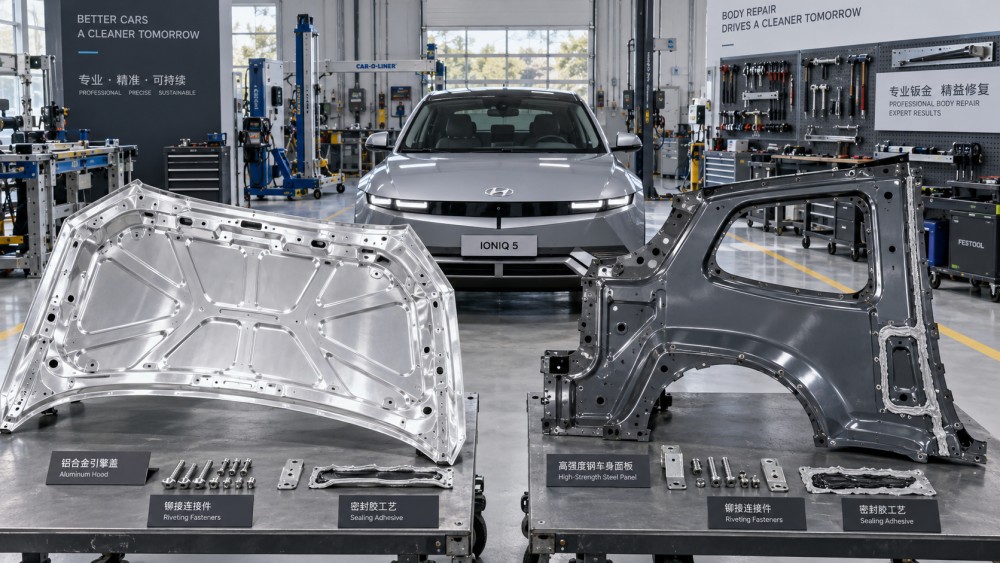
Steel panels can often be straightened, reshaped, welded, or partially repaired using equipment and methods familiar to a broad repair network. Aluminum alloys used in automotive panels require more controlled repair procedures. Aluminum work areas must be separated from steel work to prevent cross-contamination; dust management is important because aluminum particles can create safety risks in body-shop environments; and repair technicians need material-specific training. Heat application also requires tighter control because inappropriate heating can alter the properties of heat-treated aluminum alloys.
Joining methods are a major cost driver. Modern aluminum structures may use adhesive bonding, self-piercing rivets, flow-drill screws, clinching, or specialized welding processes. A damaged panel may therefore require more than removing and replacing a stamped skin. It may involve restoring corrosion protection, structural adhesive application, rivet replacement, sealing, and calibration checks for adjacent sensors. These steps consume labor time and require tools that a conventional steel-oriented shop may not hold.
The financial effect is uneven. A bolt-on aluminum hood, fender, or door is usually easier to replace than an aluminum component integrated into a multi-material body-in-white. Costs rise sharply when the repair affects load paths, bonded joints, closure alignment, or sensor-equipped areas such as front-end modules, mirrors, doors, and bumpers.
Lower mass has value only when it is converted into a measurable business benefit
The core benefits of aluminum vs steel body panels begin with density. Aluminum is substantially less dense than steel, allowing designers to reduce mass when panel geometry, thickness, stiffness targets, and alloy selection are properly engineered. But lower panel weight does not automatically create a proportionate reduction in total vehicle mass, and lower mass does not automatically create a financial return.
For an internal-combustion vehicle, the return may arise from improved fuel consumption, the ability to meet fleet efficiency requirements, or the option to preserve performance while reducing fuel use. For an electric vehicle, reduced mass can support range, payload, acceleration, or battery-sizing decisions. The largest economic benefit can sometimes come indirectly: if lightweighting permits a smaller battery pack while maintaining a target range, savings may extend beyond energy use into upstream vehicle cost. That conclusion cannot be assumed from an aluminum panel alone; it depends on the full vehicle weight strategy and the engineering choices it enables.
A finance review should require the engineering team to translate kilograms saved into a defined vehicle-level outcome. “Weight reduction” is an engineering attribute. “Avoided battery capacity,” “lower compliance risk,” “improved payload,” or “reduced operating energy expense” are decision-relevant outcomes. Without that conversion, the analysis compares a visible repair premium against an unquantified design benefit.
The location of the panel matters. Closures such as hoods, liftgates, and doors can offer useful mass reduction because they are large components and may influence vehicle balance, opening effort, and hinge loads. Exterior skins can also take advantage of aluminum’s corrosion behavior. Yet a part that is especially exposed to parking impacts or fleet abrasion deserves a different calculation from a relatively protected roof panel. Repair frequency and damage severity must be considered alongside initial weight savings.
Corrosion resistance can improve the lifecycle case, but mixed-material design creates its own obligations
Aluminum does not form red rust in the way unprotected steel does. Its natural oxide layer can provide meaningful corrosion resistance, which is particularly relevant for vehicles operating in coastal climates, regions using road de-icing salts, humid environments, or long ownership cycles. For exposed panels, reduced corrosion-related cosmetic deterioration can support residual values and reduce warranty or refurbishment exposure.
This benefit is not unconditional. Aluminum can suffer galvanic corrosion when electrically connected to dissimilar metals in the presence of an electrolyte. Modern vehicle designs address this through coatings, adhesives, sealers, isolation layers, fastener selection, drainage paths, and paint systems. The financial issue is whether these controls are maintained throughout manufacturing and repair.
An aluminum panel joined to steel, for example, needs effective electrical isolation and corrosion protection at interfaces. Poor repair practice can compromise coatings or seals and create corrosion concerns that may not be immediately visible. The cost model should include not only the specified material but also the quality assurance burden attached to mixed-material joints. A low-cost repair that bypasses approved isolation or sealing procedures can become more expensive through later corrosion claims, refinishing defects, or reduced resale value.
Crash performance is a design-system question, not a material ranking
Neither aluminum nor steel is inherently the universal “safer” choice. Vehicle crash performance depends on alloy grade, panel geometry, section design, joining method, load paths, deformation management, restraint systems, and the interaction of the body structure with other safety components. Advanced high-strength steels retain major importance because they can provide high strength in relatively thin sections and are well suited to many structural applications. Aluminum can also provide effective energy-management performance when engineered into appropriate extrusions, castings, and sheet structures.
For a non-structural outer panel, the direct crash-performance argument may be limited. The panel can still affect pedestrian protection, closure behavior, packaging, and repairability, but it should not be credited with structural value it does not provide. Conversely, a structural aluminum member cannot be evaluated merely as a more expensive sheet-metal component; its replacement method, joining sequence, and calibration requirements may be tied to the integrity of the broader crash-management system.
This distinction matters in approval discussions. Aluminum is more defensible where it supports a documented vehicle architecture, rather than where it is adopted solely as a material substitution. A material decision that creates complexity without allowing a meaningful redesign often captures less value than one integrated with mass, stiffness, corrosion, manufacturing, and safety objectives from the beginning.
Insurance exposure is often the decisive variable
Repair costs are not borne in the same way by every vehicle owner or manufacturer. For leased vehicles, commercial fleets, subscription models, and vehicles with high turnover, collision frequency and repair cycle time can have a direct effect on operating margins. For retail vehicles, repair complexity may influence insurance claim severity, premiums, customer inconvenience, and perceived ownership cost. An aluminum panel that reduces energy consumption but raises claim costs in a damage-prone application may shift cost from vehicle engineering to insurers, owners, or fleet operators rather than eliminating it.
Part availability also matters. Aluminum repair costs are not confined to labor rates. If replacement panels, rivets, adhesives, clips, reinforcements, or calibrated fasteners have long replenishment times, vehicle downtime can become more costly than the repair itself. This is particularly relevant in cross-border supply chains where service parts may be distributed differently from production parts.
A useful financial review separates three types of collision cost:
- Direct repair cost: parts, labor, consumables, refinishing, scanning, calibration, and quality inspections.
- Operational interruption cost: towing, substitute vehicles, lost fleet utilization, storage, and delayed return to service.
- Portfolio-level cost: insurance terms, warranty exposure, residual-value effects, and the cost of maintaining an approved repair network.
Only the first category appears clearly on a repair estimate. The second and third can determine whether aluminum produces an attractive lifecycle result.
Where aluminum tends to be economically credible
Aluminum panels have the strongest justification when multiple value mechanisms operate at once. A vehicle with strict mass targets, a long intended service life, significant corrosion exposure, and adequate repair-network coverage has a much stronger case than a vehicle receiving aluminum merely to reduce a single component’s mass.
They are also more credible on components where lower weight improves a specific functional outcome: large closures, liftgates, or panels that affect vehicle balance and operating effort; parts where corrosion resistance protects visible quality over extended use; and vehicle programs where lightweighting contributes to a broader powertrain or battery-sizing strategy. In premium segments, the repair premium may be acceptable if the vehicle’s pricing, customer expectations, and service network already support specialized procedures.
The justification weakens when the aluminum part is installed in a high-damage location, is difficult to repair rather than replace, requires scarce service capability, and produces only a marginal vehicle-level mass benefit. It also weakens where local insurers, fleets, or repairers lack a practical route to manage the additional complexity.
When steel remains the more controlled financial choice
Steel remains compelling where repair accessibility, predictable claims cost, broad supplier competition, and simple service procedures outweigh incremental mass savings. This is not an argument that steel is technologically inferior. Modern high-strength and advanced high-strength steel grades allow manufacturers to achieve demanding stiffness and crash requirements while using an established manufacturing and repair base.
For vehicles sold into geographically dispersed markets, service-network consistency can be more valuable than an incremental mass reduction. Steel can also be preferable for components with frequent minor-damage exposure, especially if the repair strategy relies on widespread local body-shop capability. The lifecycle value of a material is reduced if a minor collision requires transport to a distant specialist facility or a full panel replacement because local repair options are unavailable.
Steel’s cost-control advantage is particularly relevant when production volume supports mature stamping and sourcing economics, while the vehicle’s energy or payload case does not assign material value to every kilogram saved. In that setting, choosing steel may be a disciplined allocation of capital rather than a compromise.
Approval should be based on a panel-by-panel lifecycle model
A vehicle-level comparison can conceal the fact that aluminum is justified for some panels and not for others. The appropriate unit of analysis is often the individual component family, defined by its mass contribution, damage exposure, repair path, corrosion environment, and service-market coverage.
The approval case should connect each aluminum panel to a traceable economic benefit and a traceable risk allowance. Initial material and tooling costs should be evaluated alongside joining equipment, supplier qualification, scrap handling, service-parts inventory, technician training, repair procedures, and insurance implications. If the program claims an energy or range benefit, that benefit should be linked to a realistic usage assumption rather than treated as a general attribute of lightweighting.
Repair-network readiness deserves the same scrutiny as production readiness. Approved procedures, access to replacement parts, availability of correct consumables, and the ability to restore corrosion protection are part of the product’s cost base. A technically sound aluminum design can still create poor lifecycle economics if service capability is treated as an afterthought.
The practical conclusion is not that aluminum must “pay back” its repair premium through fuel savings alone. Its value can come from a combination of lower mass, vehicle architecture, corrosion durability, compliance support, and customer-facing product attributes. But where those benefits are diffuse or unmeasured, higher repair costs become a real and recurring financial liability. Aluminum body panels justify their premium when the whole system has been designed to monetize their advantages; steel remains the better choice when repair predictability and network resilience carry greater economic weight.
Related News

How to Evaluate Supplier Solution References Before Signing a Contract
Evaluate supplier solution references with confidence. Learn how to verify technical evidence, identify delivery risks, and close gaps before signing a contract.
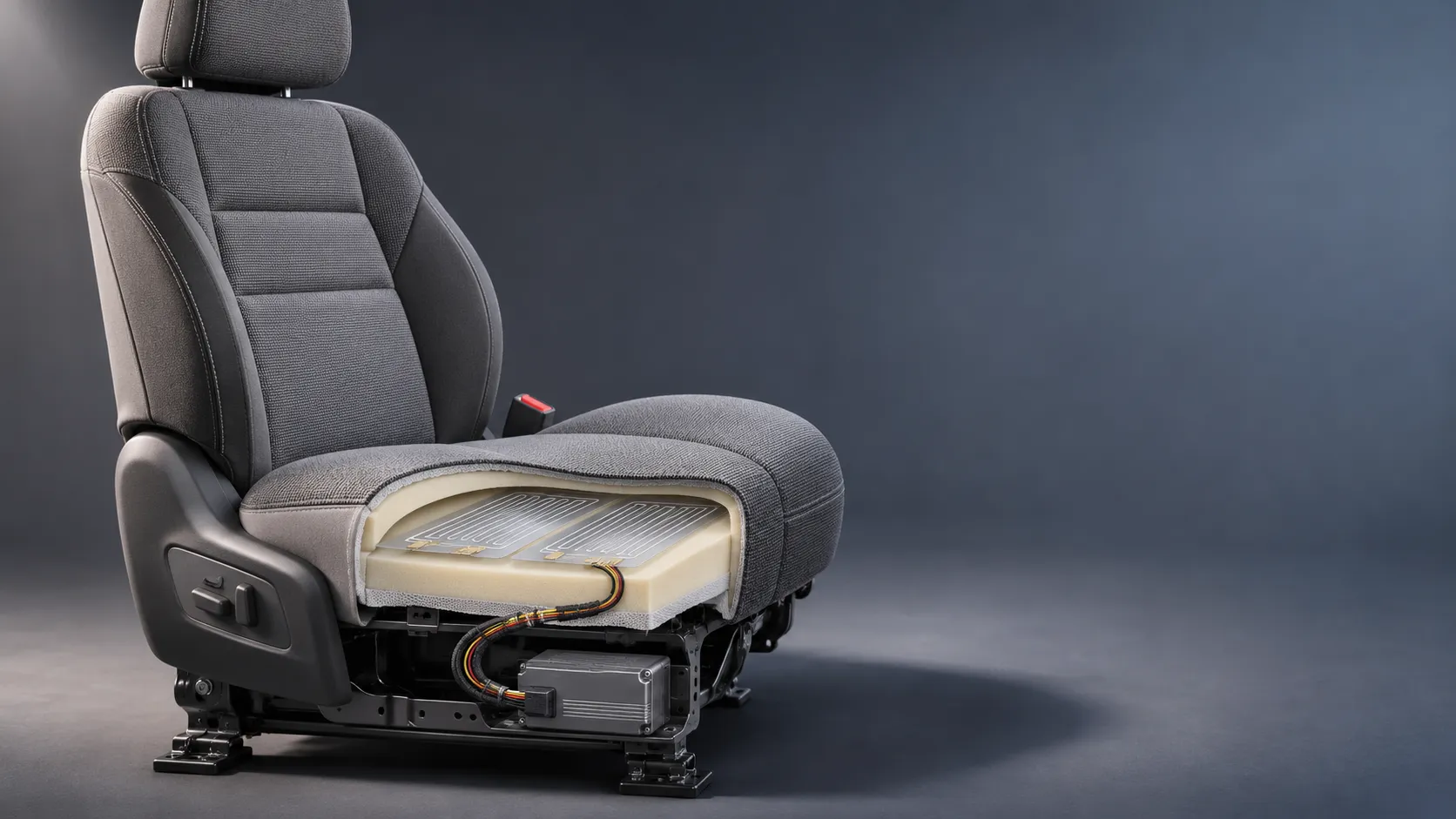
How Capacitive Seat Occupancy Sensing Works in Automotive Airbag Systems
Discover how capacitive seat occupancy sensing supports automotive airbag systems, and explore the design, calibration, and validation challenges behind reliable performance.
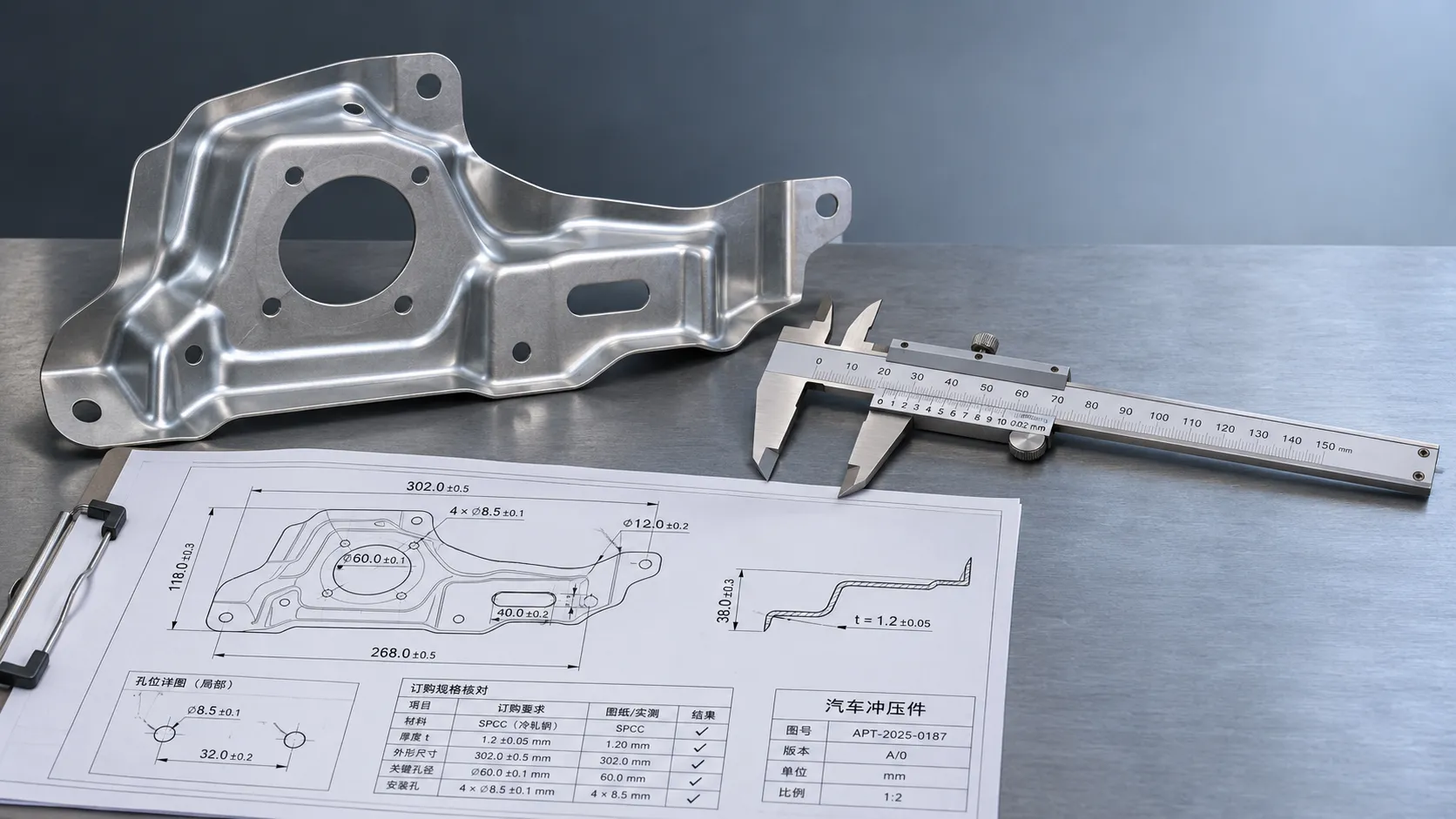
Industrial Product References: How to Verify Specs Before Ordering
Use an industrial product reference for procurement to verify specs, compatibility, and certifications before ordering—and reduce costly purchasing risks.
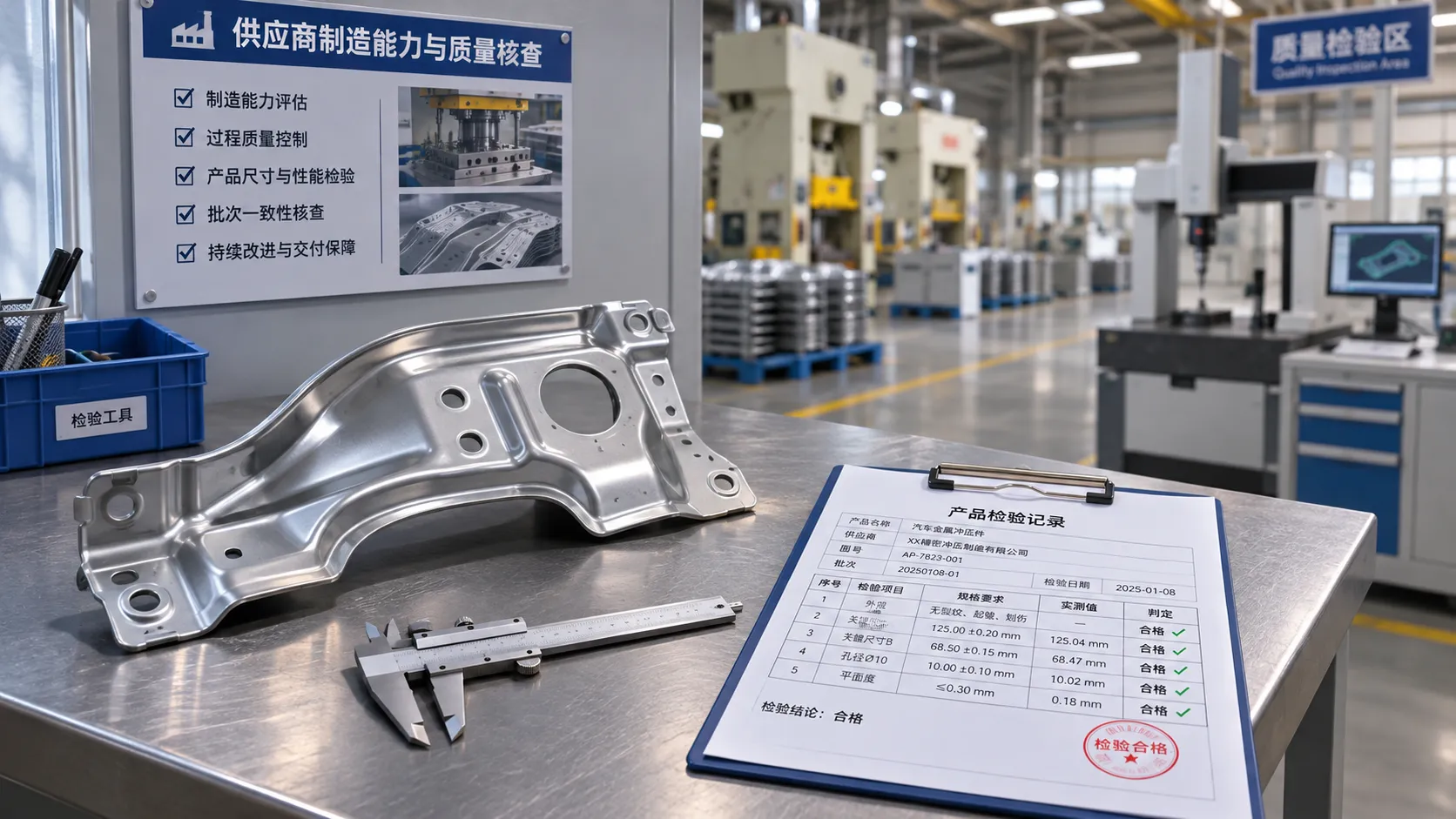
Choosing a Private Label Partner in Europe: Key Supplier Criteria
Private label cooperation Europe buyers can trust starts with the right supplier. Explore key criteria for compliance, quality, traceability and supply resilience.
Integrated Cabin Comfort Systems: How Seat and Cabin Climate Controls Work Together
Discover how integrated cabin comfort systems coordinate seat and climate controls to balance occupant comfort, energy use, safety, and performance.
Automotive Ergonomics Pricing: What Drives Seat System Costs?
Discover what drives automotive ergonomics pricing, from seat mechanisms and safety systems to tooling and volume, and learn how to compare supplier quotes.
Evaluating Supplier Solutions: How to Verify References and Standards
Supplier solution references and standards can make or break a sourcing decision. Learn how to verify claims, assess compliance, and reduce risk before awarding a contract.
Choosing B2B Product Knowledge Platform Suppliers: Key Evaluation Criteria
Compare B2B product knowledge platform suppliers with confidence. Explore key criteria for data accuracy, supplier transparency, integrations, and value.

Choosing a Marine Radar Systems Supplier: What to Check Before Buying
Choosing a marine radar systems supplier? Compare installed costs, bridge compatibility, compliance evidence, and service support before you buy.
Related News
- 00
0000-00
When lightweight body panels can reduce vehicle mass without trade-offs - 00
0000-00
Which exterior body panel materials resist dents in daily driving - 00
0000-00
Do aluminum body panels justify their higher repair costs than steel - 00
0000-00
How a car aluminum body changes corrosion risk in coastal climates - 00
0000-00
What repair shops need to know before welding an aluminium car body
0000-00
Weekly Insights
Stay ahead with our curated technology reports delivered every Monday.