
Automotive Safety Features Comparison: Which Systems Matter Most for New Models?
Automotive Safety Features Comparison: Which Systems Matter Most for New Models?
As new vehicles add more sensors, structural upgrades, and occupant protection technologies, automotive safety has become a critical benchmark for technical evaluation.
This comparison looks at the systems that matter most in new models. The focus stays on measurable protection, regulatory fit, and real-world performance.
In practice, the best automotive safety package is rarely the one with the longest feature list. It is the one with the strongest system balance.
Why automotive safety comparison now matters more
Recent model cycles show a clear shift. Safety value is moving from isolated parts to integrated protection architecture.
That means body structure, airbags, seatbelts, seats, and driver assistance must work together. A strong score in one area cannot fully offset weakness elsewhere.
This also reflects stricter expectations from IIHS, Euro NCAP, NHTSA, and other programs. Assessment is becoming more scenario-based and less checkbox-driven.
For technical evaluation, automotive safety now includes crash energy management, occupant restraint timing, sensor reliability, software behavior, and maintainability after deployment.
The five systems that deserve top priority
Not every feature has the same decision weight. Some systems consistently show higher impact on injury reduction and compliance outcomes.
1. Body structure and crash energy absorption
Structural design remains the foundation of automotive safety. If the safety cage fails, later-stage systems face much harder conditions.
Look closely at hot-stamped steel use, load path design, side-impact reinforcement, and front crash energy distribution. Lightweight design only matters if stiffness and deformation control remain strong.
Pay attention to battery protection in EV platforms as well. Floor integrity and intrusion resistance now affect both occupant survival space and secondary fire risk.
2. Seatbelt systems with pretensioning and load limiting
Seatbelts still deliver some of the highest real-world automotive safety value. They are not legacy hardware. They are active timing devices in a crash sequence.
Pretensioners reduce slack early. Load limiters then manage chest force. That combination improves restraint quality and helps airbags work as intended.
Evaluation should cover front and rear seats. Rear restraint performance is getting more attention, especially for family vehicles and ride-hailing use cases.
3. Airbag coverage and deployment logic
Airbag count alone does not define strong automotive safety. Deployment speed, coverage shape, occupant classification, and crash algorithm quality matter more.
Front, side, curtain, center, and knee airbags all serve different roles. The right mix depends on vehicle size, seating layout, and expected crash modes.
Center airbags deserve extra attention in new models. They help reduce occupant-to-occupant contact during side impacts, which is increasingly relevant in stricter testing.
4. Seat design and occupant positioning
Seats are often underestimated in automotive safety reviews. Yet seat geometry directly influences posture, belt fit, whiplash protection, and airbag interaction.
Strong seat frames, anti-submarining control, active head restraints, and stable recliner mechanisms can materially improve injury outcomes.
This becomes even more important as vehicles add comfort features. Softness, ventilation, or smart adjustment should not compromise restraint geometry.
5. ADAS and driver-assistance integration
Active systems are now a major part of automotive safety decisions. Automatic emergency braking, lane keeping, blind spot monitoring, and driver monitoring have moved into the mainstream.
Still, feature presence is not enough. What matters is detection performance, false positive control, low-light behavior, and stable sensor fusion.
A model with fewer but well-calibrated ADAS features can outperform a vehicle with a more crowded, less reliable package.
Which systems matter most by evaluation weight
When comparing new models, it helps to separate core protection from enhancement features. The following order is practical for many selection decisions.
This ranking is not rigid. Urban EVs, commercial fleets, and premium SUVs may shift weights slightly based on use profile and regulatory targets.
How to compare automotive safety beyond brochure claims
A practical review should move from marketing language to evidence. That usually means checking technical depth in five areas.
- Review crash test performance by scenario, not only overall star ratings.
- Check whether restraint systems adapt to occupant size and seating position.
- Study sensor placement, cleaning needs, and weather tolerance for ADAS.
- Confirm software update pathways for safety-critical functions.
- Assess repair complexity because poor repairability can reduce long-term safety consistency.
From a decision angle, one of the clearest signals is system coordination. High automotive safety maturity shows up when subsystems behave predictably together.
That includes crash sensing, belt pretensioning, seat positioning, airbag timing, and post-crash response such as hazard signaling or battery isolation.
Common selection risks in new model evaluation
Several risks appear repeatedly when comparing new vehicles. These issues can distort automotive safety judgments if left unchecked.
- Overvaluing feature quantity while ignoring calibration quality.
- Assuming premium trim always means better occupant protection.
- Missing rear-seat safety gaps in belt design or side protection.
- Ignoring post-sale software governance for ADAS and warning logic.
- Treating lightweight materials as a benefit without validating crash behavior.
In real projects, these mistakes often lead to misaligned sourcing, weak compliance planning, or poor field performance under demanding conditions.
A practical decision framework for new models
A useful automotive safety framework should be simple enough to apply, but detailed enough to separate true value from surface claims.
Start with structural protection. Then review restraint performance. After that, assess prevention technology and lifecycle support.
- Step 1: Validate crash structure, intrusion control, and energy paths.
- Step 2: Compare seatbelt and airbag coordination across seating rows.
- Step 3: Review seat architecture for posture stability and whiplash defense.
- Step 4: Test ADAS consistency in edge cases, not only ideal demos.
- Step 5: Confirm update, repair, and compliance readiness over the model lifecycle.
This process makes comparison more grounded. It also supports sourcing decisions where safety performance must be traceable and defensible.
For organizations tracking mobility intelligence, this wider view aligns with how advanced platforms are now judged across body, cabin, and sensing systems.
The strongest new models usually show one pattern. Their automotive safety strategy is coherent from metal structure to digital intervention.
If the goal is better selection, focus first on systems that preserve survival space, control occupant motion, and prevent avoidable crashes. That is where automotive safety matters most.
Related News
How to Specify Integrated Marine Electronics for Reliable Bridge Operations
Integrated marine electronics: learn how to specify reliable bridge systems with clear data flows, redundancy, alarm control, lifecycle interfaces, and operational testing.

How to Evaluate Navigation Radar Manufacturers for Commercial Vessel Projects
Navigation radar manufacturers: learn how to compare performance, compliance, integration, support, and lifecycle cost for commercial vessel projects.
How Adjustable Cabin Ergonomics Reduce Operator Fatigue in Long-Shift Vehicles
Adjustable cabin ergonomics reduces operator fatigue through better seating, reach, visibility, vibration control, and climate comfort for safer long-shift vehicles.
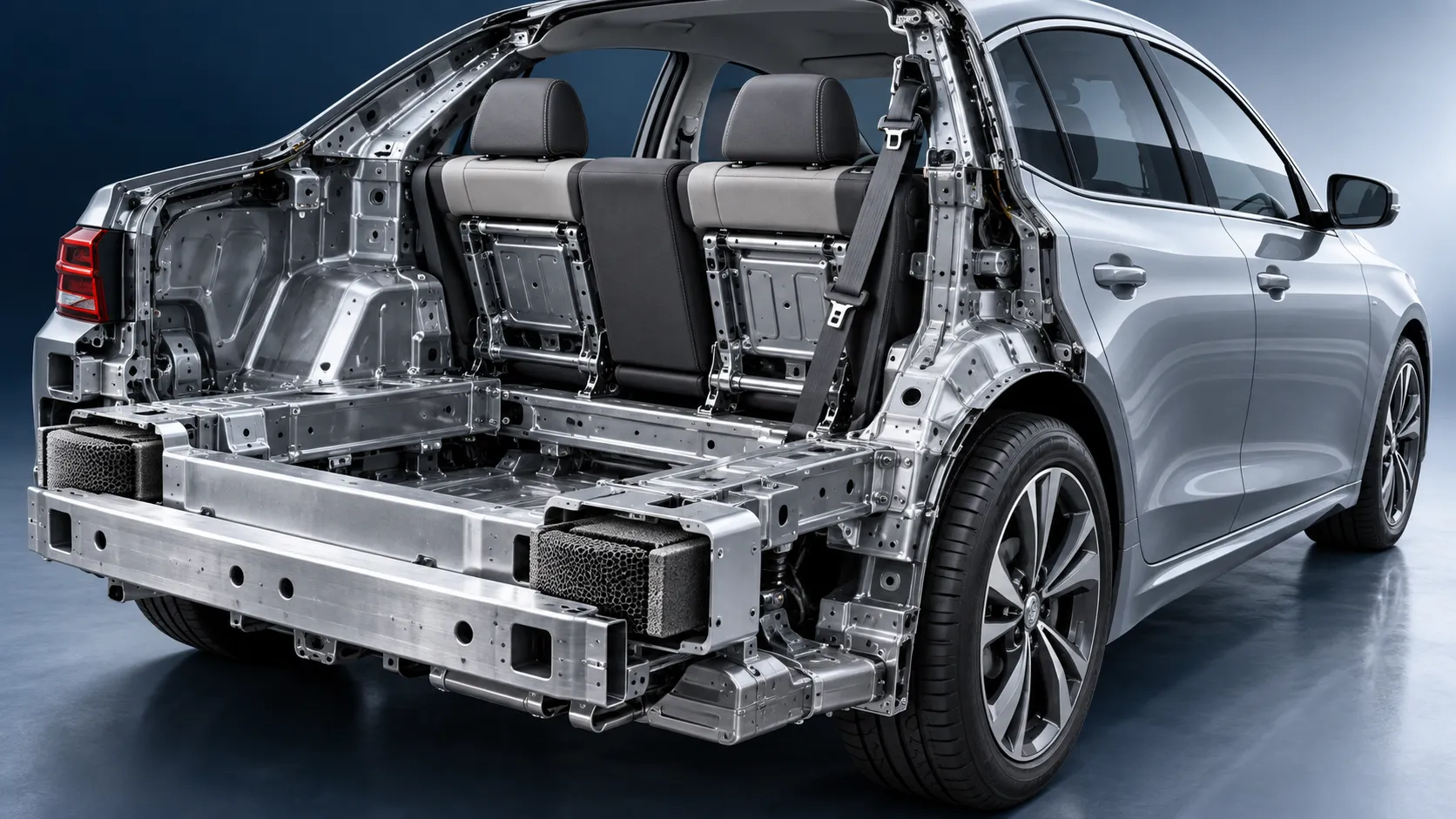
How Rear-Impact Safety Components Work Together to Protect Vehicle Occupants
Explore how automotive safety components for rear impact work together—from crash structures and seats to head restraints and belts—to enhance occupant protection.
How to Evaluate a Marine Safety Systems Manufacturer for Vessel Compliance and Reliability
Marine safety systems manufacturer evaluation guide: verify compliance, engineering quality, lifecycle costs, and global service support for safer, reliable vessel operations.
Crash Test Regulations for Seatbelts: Key Compliance Requirements Explained
Crash test regulations seatbelts explained: explore FMVSS, UN rules, anchorage strength, and dynamic restraint testing for safer, compliant vehicle systems.

How to Calculate the Total Cost of Automotive Lightweighting for a Vehicle Program
Automotive lightweight solutions cost: learn how to calculate program-level costs, including materials, tooling, joining, validation, risk, and vehicle-level value.

How Automotive Seat Occupancy Sensing Improves Airbag Deployment Decisions
Automotive seat occupancy sensing helps optimize airbag deployment decisions, improving passenger classification, safety diagnostics, and compliance across real-world conditions.

What Drives Lightweight Body Component Costs in High-Volume Vehicle Programs?
Lightweight body components cost depends on material yield, forming, joining, tooling, validation, and logistics. Explore proven ways to optimize total vehicle program cost.
Related News
- 00
0000-00
How Automotive Seat Occupancy Sensing Improves Airbag Deployment Decisions - 00
0000-00
How Smart Seating Sensors Improve Occupant Detection and Airbag Deployment - 00
0000-00
How to Qualify an Airbag Modules Supplier for OEM Safety and Delivery Requirements - 00
0000-00
How to Select Occupant Safety Systems for Vehicles Operating in the Middle East - 00
0000-00
Which Passive Safety Engineering Standards Apply to Automotive Restraint Systems?
Weekly Insights
Stay ahead with our curated technology reports delivered every Monday.