
Common Failure Points in Maritime Positioning Systems and How to Improve Accuracy at Sea
Common Failure Points in Maritime Positioning Systems and How to Improve Accuracy at Sea
From signal interference and multipath errors to sensor drift and poor system integration, maritime positioning systems can fail at critical moments when accuracy matters most.
Understanding those weak points helps reduce navigational risk, improve uptime, and support compliance across demanding marine operations.
This article explains where maritime positioning systems usually break down and what practical steps improve accuracy at sea.
Why maritime positioning systems fail under real operating conditions
On paper, modern maritime positioning systems look highly reliable.
At sea, however, accuracy depends on weather, vessel structure, sea state, electronics health, and how well subsystems work together.
A positioning chain is only as strong as its weakest sensor, interface, timing source, or installation decision.
That is why many marine navigation failures are not caused by one dramatic fault, but by several small errors stacking up.
1. GNSS signal interference and jamming
The most visible failure point in maritime positioning systems is degraded GNSS reception.
Interference may come from onboard transmitters, nearby vessels, port infrastructure, or intentional jamming in sensitive regions.
When signal quality drops, position updates may become unstable, delayed, or completely unavailable.
Typical warning signs include:
- Sudden jumps in latitude and longitude
- Frequent loss of satellite lock
- Inconsistent speed over ground readings
- Position disagreement between bridge systems
To improve accuracy at sea, use multi-constellation receivers and well-shielded antenna cables.
It also helps to separate GNSS antennas from high-power radio equipment during installation and refit planning.
2. Multipath errors near metal structures and ports
Multipath happens when satellite signals reflect off masts, cranes, decks, or nearby terminal structures.
The receiver then processes both direct and reflected signals, which distorts the estimated position.
This issue is especially common during harbor approach, offshore support work, and operations beside large steel hulls.
In practical terms, maritime positioning systems may look acceptable offshore, then degrade sharply in constrained areas.
Better antenna placement, choke-ring designs, and site-specific validation trials reduce this risk significantly.
3. Sensor drift in inertial and heading inputs
Many maritime positioning systems rely on inertial sensors, gyrocompasses, and heading references to smooth location data.
That improves continuity, but only when calibration is maintained.
Over time, drift builds slowly and often goes unnoticed until a vessel maneuvers in tight waters.
A small heading bias can become a large positional error when data fusion algorithms depend on it.
Useful controls include:
- Scheduled calibration windows
- Cross-checks against independent sensors
- Drift trend monitoring in maintenance dashboards
- Alarm thresholds for heading and rate anomalies
The key point is simple: continuity without validation creates false confidence.
Integration gaps that quietly reduce positioning accuracy
More obvious failures get attention first, but integration gaps are often more expensive over time.
They create recurring errors, confusing operator displays, and poor trust in maritime positioning systems.
4. Poor sensor fusion and inconsistent data timing
Accurate navigation depends on timing as much as position quality.
If AIS, radar, ECDIS, sonar, and GNSS inputs are not synchronized, the displayed track may lag behind reality.
This becomes critical during collision avoidance, dynamic positioning, and pilot transfer operations.
A common mistake is assuming all NMEA or networked devices share the same time base.
To improve maritime positioning systems, verify timestamp alignment during commissioning, not after incident reports appear.
5. Software configuration errors and stale chart interfaces
Not every accuracy problem starts in hardware.
Wrong datum settings, outdated firmware, and poorly managed ECDIS interfaces can distort otherwise valid position inputs.
These errors are dangerous because systems may still appear to operate normally.
From a delivery standpoint, configuration control should be treated like a safety function, not an admin task.
Baseline templates, change logs, and post-update validation runs make maritime positioning systems more predictable and auditable.
6. Power quality and environmental stress
Marine electronics live in a harsh environment.
Voltage fluctuations, vibration, salt exposure, and heat cycling can all affect maritime positioning systems.
The result may be intermittent faults that are hard to reproduce during shore-based inspection.
This is why failure analysis should combine electrical logs, environmental records, and voyage context.
Rugged connectors, clean power design, and enclosure health checks often deliver fast accuracy gains.
How to improve accuracy at sea without overcomplicating the project
Better maritime positioning systems do not always require a full platform replacement.
In many cases, accuracy improves fastest when teams focus on architecture, verification, and operational discipline.
Build redundancy that is genuinely independent
Redundancy only works when backup paths fail differently from primary paths.
Two receivers sharing the same antenna location and power weakness are not true resilience.
A stronger setup usually includes:
- Independent antennas and cable routes
- Separate power conditioning paths
- Alternative position references
- Defined fallback modes for degraded navigation
That approach strengthens maritime positioning systems during both technical failures and regional signal disruption.
Use acceptance testing that matches sea reality
Factory tests rarely capture the full behavior of maritime positioning systems.
Sea trials should cover open water, port approach, electromagnetic congestion, and degraded sensor conditions.
More importantly, test reports should measure recovery time, data alignment, and operator usability, not just nominal accuracy.
This produces evidence that is useful for compliance, warranty management, and future fleet replication.
Turn maintenance data into an accuracy program
The best-performing maritime positioning systems are usually supported by disciplined data review.
Instead of reacting to breakdowns, teams track drift, signal health, interface errors, and software changes over time.
That makes recurring failure points visible before they affect route safety or commercial performance.
A practical review cycle should cover:
- Monthly anomaly trending
- Post-voyage event review
- Firmware and configuration audits
- Calibration status checks
- Training feedback from bridge teams
In actual operations, these routines often outperform expensive upgrades implemented without clear failure evidence.
What matters most when planning the next upgrade
When upgrading maritime positioning systems, accuracy should be evaluated as a full-system outcome.
That means looking beyond receiver specifications and asking how the vessel actually senses, timestamps, validates, and displays position.
The strongest programs prioritize antenna design, sensor health, time synchronization, environmental protection, and software governance together.
This also aligns with the broader GNCS view of precision spatial perception, where technical stitching matters more than isolated component claims.
If maritime positioning systems fail, the real cost is not only position error.
The larger cost is reduced trust, slower decisions, higher operating risk, and weaker compliance confidence.
A practical path forward starts with identifying the highest-impact failure points already present onboard.
Then improve maritime positioning systems through targeted testing, disciplined integration, and maintenance routines that keep accuracy stable at sea.
Related News
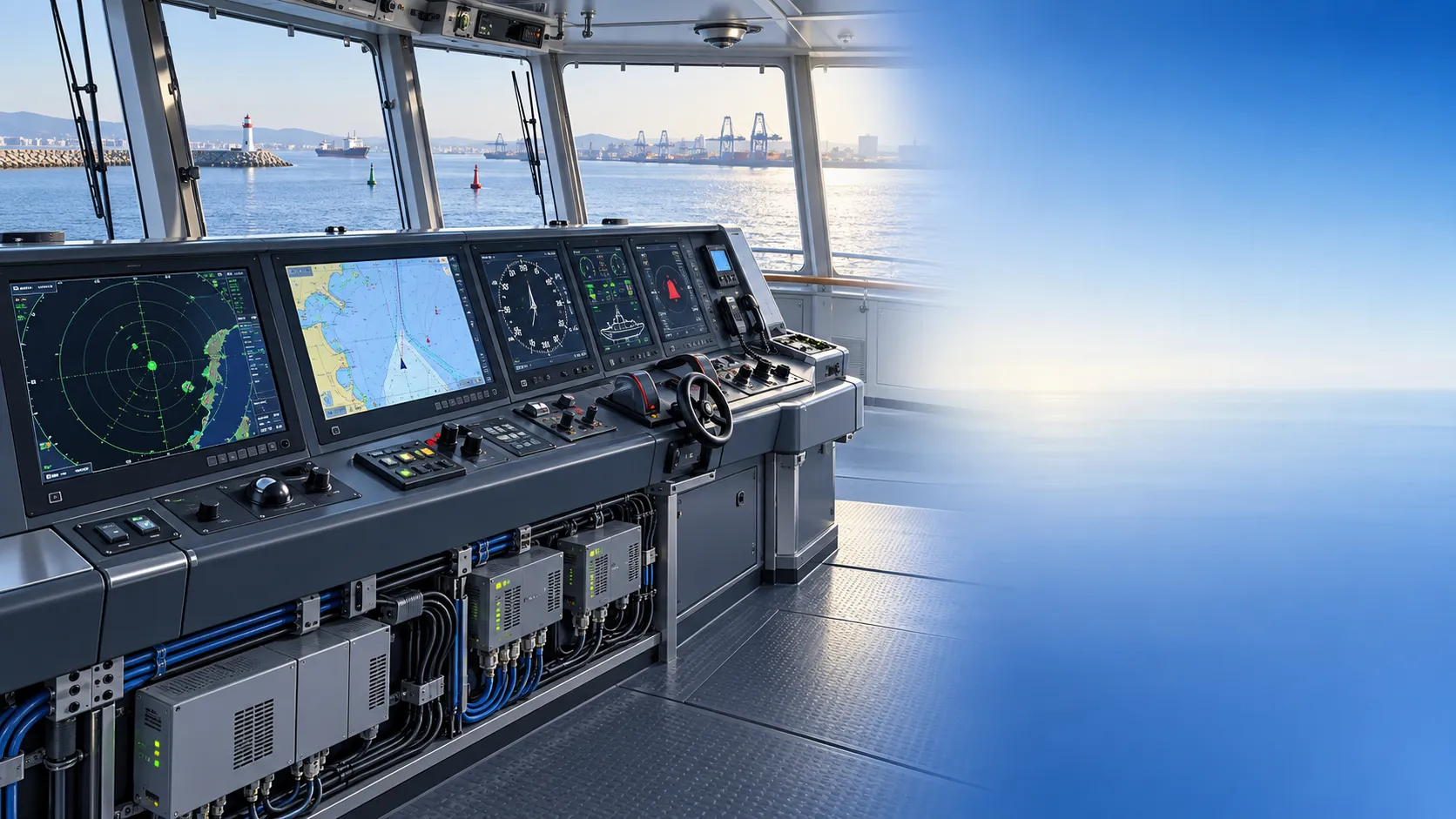
How to Specify Integrated Marine Electronics for Reliable Bridge Operations
Integrated marine electronics: learn how to specify reliable bridge systems with clear data flows, redundancy, alarm control, lifecycle interfaces, and operational testing.
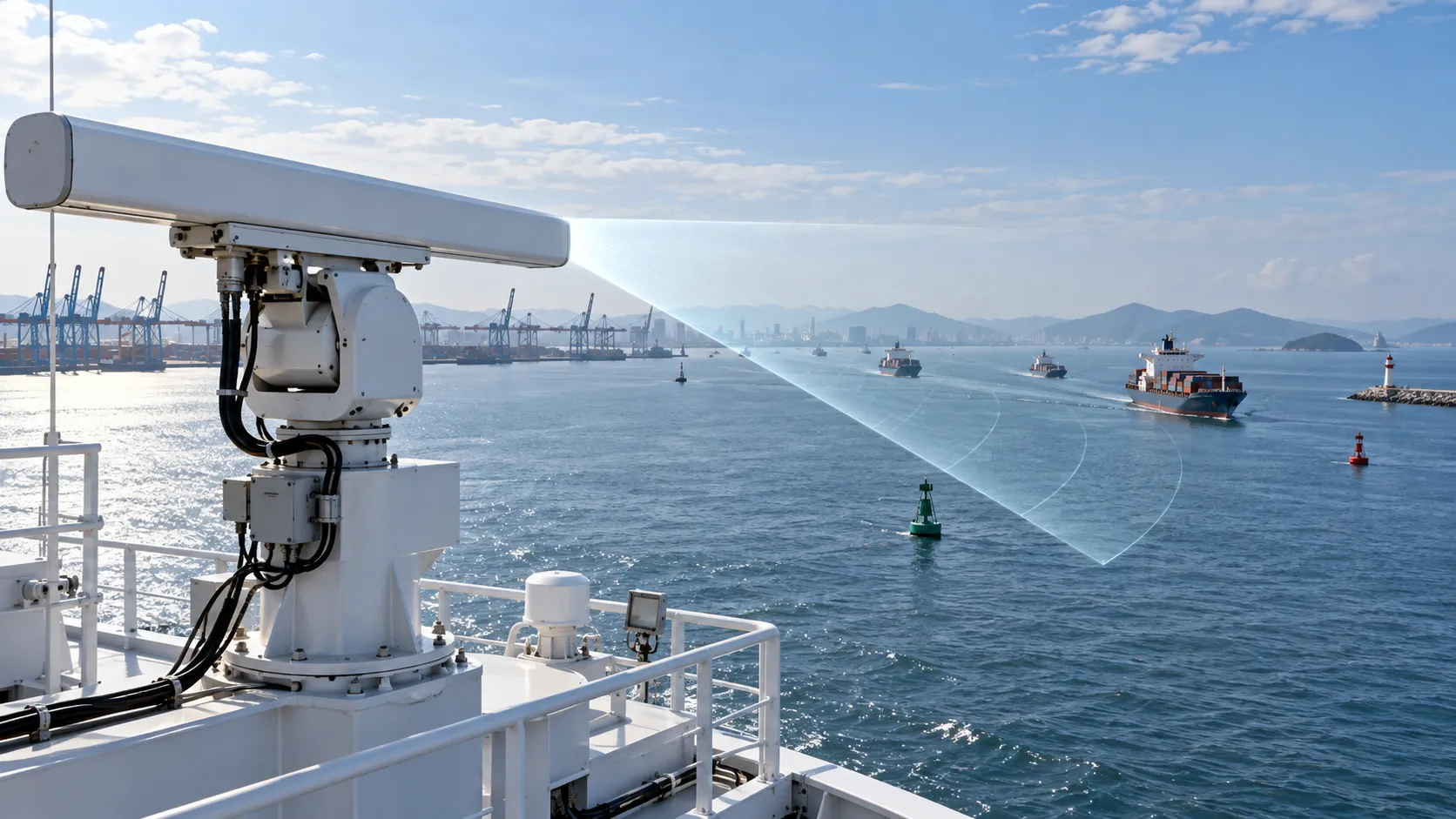
How to Evaluate Navigation Radar Manufacturers for Commercial Vessel Projects
Navigation radar manufacturers: learn how to compare performance, compliance, integration, support, and lifecycle cost for commercial vessel projects.

How Adjustable Cabin Ergonomics Reduce Operator Fatigue in Long-Shift Vehicles
Adjustable cabin ergonomics reduces operator fatigue through better seating, reach, visibility, vibration control, and climate comfort for safer long-shift vehicles.

How Rear-Impact Safety Components Work Together to Protect Vehicle Occupants
Explore how automotive safety components for rear impact work together—from crash structures and seats to head restraints and belts—to enhance occupant protection.
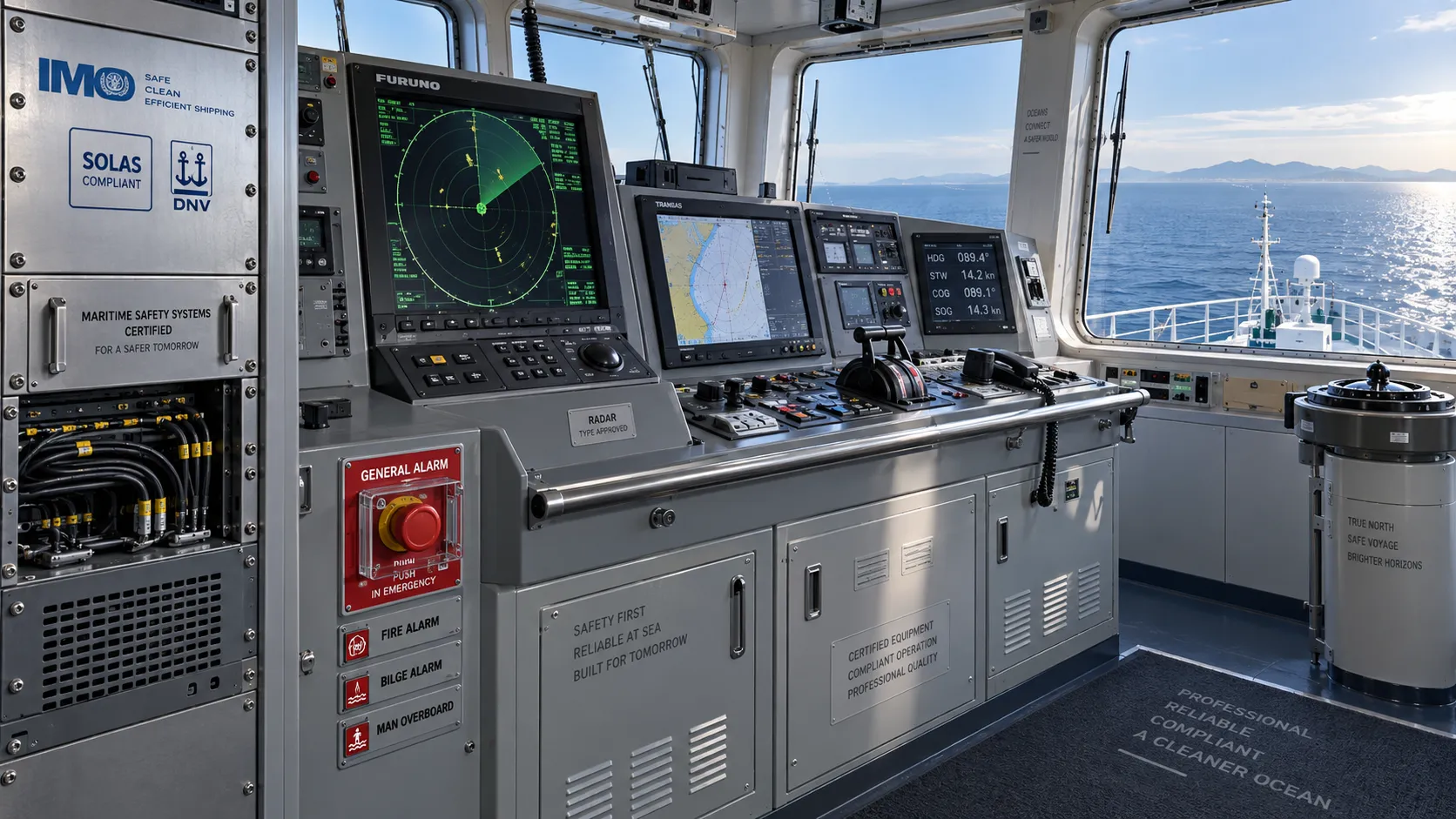
How to Evaluate a Marine Safety Systems Manufacturer for Vessel Compliance and Reliability
Marine safety systems manufacturer evaluation guide: verify compliance, engineering quality, lifecycle costs, and global service support for safer, reliable vessel operations.

Crash Test Regulations for Seatbelts: Key Compliance Requirements Explained
Crash test regulations seatbelts explained: explore FMVSS, UN rules, anchorage strength, and dynamic restraint testing for safer, compliant vehicle systems.

How to Calculate the Total Cost of Automotive Lightweighting for a Vehicle Program
Automotive lightweight solutions cost: learn how to calculate program-level costs, including materials, tooling, joining, validation, risk, and vehicle-level value.

How Automotive Seat Occupancy Sensing Improves Airbag Deployment Decisions
Automotive seat occupancy sensing helps optimize airbag deployment decisions, improving passenger classification, safety diagnostics, and compliance across real-world conditions.

What Drives Lightweight Body Component Costs in High-Volume Vehicle Programs?
Lightweight body components cost depends on material yield, forming, joining, tooling, validation, and logistics. Explore proven ways to optimize total vehicle program cost.
Related News
- 00
0000-00
How to Choose a Marine Positioning Solutions Supplier in Europe for Offshore and Port Operations - 00
0000-00
Marine Positioning Solutions Provider Comparison: GNSS, Accuracy, and Integration Factors - 00
0000-00
Marine Electromagnetic Navigation Accuracy vs GNSS: Which Performs Better Near Interference? - 00
0000-00
Marine Electromagnetic Navigation Accuracy: What Affects Position Stability at Sea? - 00
0000-00
Marine Positioning Systems Exporter Selection: What to Check in GNSS Accuracy, Compliance, and Support
Weekly Insights
Stay ahead with our curated technology reports delivered every Monday.