Navigation Compliance Certification: Which Marine Systems Need It and How to Prepare?
Navigation compliance certification usually becomes urgent at the worst possible moment: a vessel is close to delivery, equipment has already been selected, and someone finally asks whether every installed navigation unit has the right approvals, test evidence, and integration records. At that point, what looked like a technical detail turns into a schedule problem, a documentation problem, and sometimes a design-change problem.
Many project managers, shipyard teams, and marine electronics buyers run into the same issue. They know certification matters, but they are less certain about which systems fall under the navigation compliance certification process, what supporting documents are normally expected, and how to prepare without creating rework. The practical answer is to treat certification as part of system planning, not as a final paperwork exercise.
Why navigation compliance certification becomes a project bottleneck
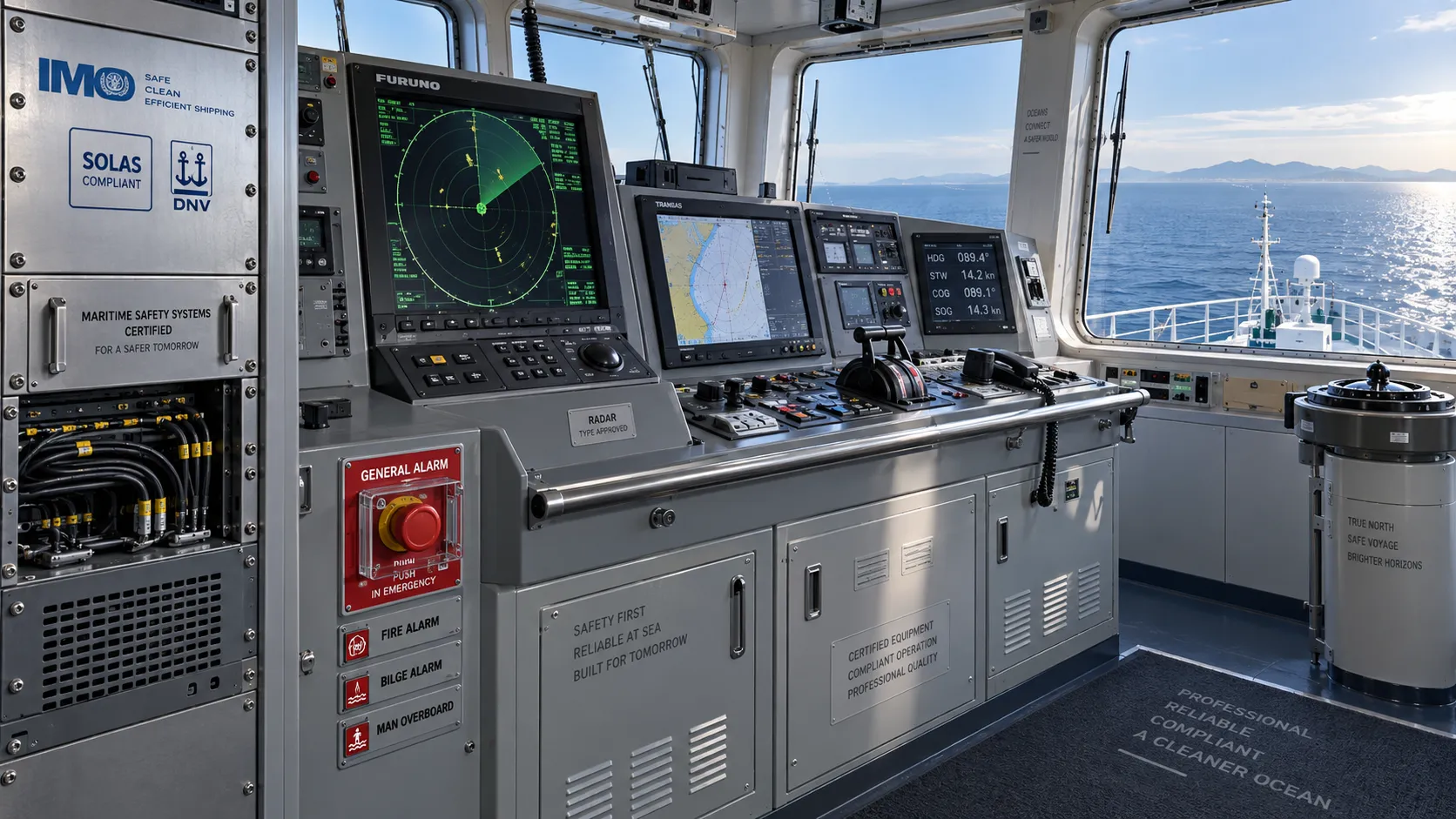
In marine projects, navigation equipment rarely works as a single standalone device. Radar may share data with the bridge display. GNSS feeds position into ECDIS, autopilot, AIS, and voyage recording functions. Heading sensors, echo sounders, and speed logs may all support route monitoring or safe maneuvering. Because of that interdependence, one missing approval, one outdated software declaration, or one undocumented interface can affect more than one acceptance item.
The problem is not only regulatory. It also affects procurement timing, installation planning, commissioning workload, and handover confidence. If a selected unit does not match the vessel class, intended trading area, or bridge configuration, the team may need to replace hardware late in the project. If the equipment itself is acceptable but the technical file is incomplete, the approval process can still slow down because reviewers need evidence that performance, installation, and interoperability meet the expected standard.
A common mistake is to assume that certification belongs only to the manufacturer. In reality, manufacturers carry responsibility for product conformity, but shipyards, integrators, naval architects, and owners still need to verify that the right certified configuration is being installed in the right operational context.
Which marine systems usually need navigation compliance certification
Not every electrical device on a vessel belongs in the same certification path, but core bridge and navigation functions usually do. The exact scope depends on vessel type, flag requirements, class expectations, and whether the system is mandatory for the vessel’s operation. Still, several categories regularly fall into the navigation compliance certification discussion.
Primary navigation and positioning systems
These are often the first systems teams think about, and for good reason. They support essential situational awareness and route execution.
- GNSS or satellite positioning receivers used for official navigation functions
- Gyrocompasses and heading reference systems
- Speed and distance measuring devices
- Echo sounders where required for safe navigation
For these products, compliance usually depends not only on the device category but also on intended use. A general-purpose positioning receiver used for internal monitoring is treated differently from a bridge-installed unit feeding mandatory navigation displays.
Bridge display and route management systems
These systems are highly visible in any navigation compliance certification review because they shape how officers interact with voyage data.
- ECDIS and related chart display systems
- Integrated navigation systems
- Bridge alert management interfaces where fitted
- Multi-function bridge workstations used for approved navigation tasks
These systems often trigger more questions than simpler sensors because software version control, update procedures, cybersecurity-related handling, interface mapping, and backup arrangements all matter.
Detection and awareness systems
Anything that supports detection of hazards, targets, or vessel surroundings may require careful review.
- Marine radar systems
- AIS equipment
- Sonar or forward-looking detection systems when used as navigational aids
- Track control or target tracking functions integrated into bridge operations
Here the challenge is often integration. A radar might be certified as a unit, but the final installed arrangement still needs to reflect approved antenna placement, power supply conditions, display compatibility, and data exchange behavior.
Control-linked navigation equipment
Some systems sit between information and vessel motion, which increases the importance of configuration control.
- Autopilot or track control systems
- Heading control interfaces connected to bridge navigation inputs
- Integrated bridge control functions with navigational consequences
These systems typically require closer attention to fail-safe behavior, alarm handling, sensor dependencies, and human-machine interface consistency.
Recording and supporting systems
Even when they are not the first focus, supporting systems can become part of the certification conversation if they are required to capture, distribute, or preserve navigation data.
- Voyage data recording elements tied to navigation sources
- Networked data distribution units for approved bridge functions
- Power, redundancy, and backup arrangements linked to essential navigation services
The key principle is simple: if a system contributes directly to compliant navigation, route execution, collision avoidance, or official bridge records, it should be checked early for certification relevance.
A practical way to decide whether a system belongs in the certification scope
Teams often lose time because they ask, “Is this product certified?” when the more useful question is, “Is this exact installed function required to be certified in this vessel context?” That shift matters.
A better review method is to check each system against four filters:
- Operational role: Is the system used for mandatory navigation, collision avoidance, route monitoring, official recording, or bridge decision support?
- Installation context: Is it part of the approved bridge layout, connected to essential navigation data, or designated as a primary or backup unit?
- Regulatory pathway: Does the vessel’s flag, class society, or applicable marine equipment regime expect formal approval for this equipment category?
- Configuration control: Is the certified status tied to a specific hardware version, software release, interface module, or installation method?
If the answer to several of these questions is yes, the system should be treated as part of the navigation compliance certification plan. This approach is much more reliable than waiting for a late-stage checklist from a supplier.
How to prepare for navigation compliance certification without creating rework
Preparation goes more smoothly when the team builds a certification file alongside engineering development. This is especially important for new builds, bridge retrofits, and multi-supplier integration projects where a compliant product can still become a non-compliant installation.
1. Build an equipment scope list before purchase is finalized
Start with a system map of all bridge and navigation-related equipment. Include primary units, backups, sensors, display stations, network components that carry approved data, and control interfaces. Then mark which items are expected to need navigation compliance certification review.
This early scope list helps procurement avoid a common trap: selecting equipment based on function and price first, then checking certification later. If a project serves different vessel profiles, this list should also note whether requirements vary by route, tonnage, or operating role.
2. Verify the exact approval basis, not just the product family name
One of the most frequent sources of confusion is assuming that an approved series name covers every model, software build, accessory, and interface option. It often does not. Ask for the exact certificate references, declarations, approved configuration details, and any limitations on use.
This step is where disciplined industry intelligence becomes useful. A portal such as GNCS can help teams track changes in marine navigation technologies, software update practices, and compliance trends, which makes it easier to ask better questions before selection is locked in. That does not replace formal approval review, but it can reduce blind spots.
3. Collect documentation in a structure reviewers can actually use
Scattered files slow down everyone. Create a documentation set for each relevant system and keep the same internal structure across suppliers. A practical file usually includes:
- Product identification and model details
- Certificate or conformity documents
- Software and firmware version records
- Interface descriptions and data flow notes
- Installation manuals and environmental limits
- Bridge arrangement references or wiring context
- Commissioning and test evidence
- Change log for substitutions or updates
When this is organized early, approval review becomes a technical confirmation exercise instead of a document hunt.
4. Review integration points as carefully as the devices themselves
Navigation compliance certification problems often appear at the interface level. A sensor may be approved, a display may be approved, and yet the final arrangement still raises questions because data priorities, alarm routing, redundancy logic, or network dependencies were not documented clearly.
At minimum, confirm:
- Which device is the source of truth for position, heading, depth, and speed
- What happens when a primary source fails
- How alarms are presented and acknowledged
- Whether software versions across connected equipment are compatible
- Whether backup arrangements remain operational during faults or maintenance
5. Align supplier, yard, and approval expectations before commissioning
By the time sea trials or final commissioning begin, the team should already know what evidence needs to be shown. That usually includes who provides certificates, who confirms installation quality, who demonstrates functional tests, and who signs off on final records.
Many delays come from a simple mismatch: suppliers think product documentation is enough, while the yard or owner expects installed-system evidence. A short pre-commissioning review meeting can prevent that gap.
6. Control late changes aggressively
Substituting a display, updating bridge software, changing a sensor interface converter, or moving an antenna may all affect certification relevance. Even when the change seems minor, it should trigger a quick review of whether the previous approval basis still applies. Late changes are where otherwise well-run projects get exposed.
Common mistakes that make certification harder than it needs to be
Several patterns show up repeatedly across marine equipment projects.
- Treating certification as supplier-only work. This leaves integration and installed-context questions unanswered.
- Checking certificates too late. By then, hardware choices may already be constrained.
- Ignoring software control. For bridge systems, software status can matter as much as hardware model.
- Assuming similar products are interchangeable. Two units with similar functions may sit under different approval conditions.
- Failing to document interfaces. Reviewers need to understand how approved navigation data moves across the bridge environment.
- Not tracking modifications during the build. A good initial file loses value if later changes are not captured.
If your team is facing repeated questions from class, flag representatives, owners, or commissioning engineers, these are the first areas worth checking.
What a workable internal checklist looks like
For teams that want a repeatable process, the simplest approach is to keep a short internal checklist for each navigation-related system:
- Define the system’s operational purpose on the vessel.
- Confirm whether it supports a required navigation function.
- Match the exact model and version to the relevant approval documents.
- Record all connected systems and data dependencies.
- Check installation conditions against manufacturer requirements.
- Prepare test and commissioning evidence for the installed configuration.
- Review any changes made after the original equipment selection.
- Store the final file where yard, owner, and approval stakeholders can access it.
This kind of checklist is not complicated, but it creates discipline. That is usually what separates a smooth navigation compliance certification process from a reactive one.
Frequently Asked Questions
Does every navigation-related device on board need formal certification?
No. The answer depends on the device’s role, whether it supports required navigation functions, and which regulatory pathway applies to the vessel. Supporting or monitoring devices may not follow the same route as primary approved bridge equipment.
Is product certification enough, or do we also need installation evidence?
In many cases, product approval alone is not enough. Reviewers may also need evidence that the equipment was installed, configured, and integrated in a way that preserves compliant performance on the vessel.
Why do software versions matter in navigation compliance certification?
Because some approvals apply to defined software configurations. If a bridge system, ECDIS platform, radar processor, or interface module changes version, the team should confirm that the approval basis still matches the installed setup.
When should we start preparing certification documents?
Start during equipment selection and system design. Waiting until commissioning usually leads to missing records, unclear responsibilities, and avoidable schedule pressure.
What is the most overlooked part of the process?
Interface control. Teams often verify the devices themselves but spend too little time documenting how data, alarms, redundancy, and failure handling work across the full navigation system.
Closing thought
Navigation compliance certification becomes manageable once the scope is clear and the work is broken into decisions, records, and checks made early enough to matter. The teams that handle it well usually do three things consistently: they identify which systems truly belong in scope, they verify exact approval status instead of relying on assumptions, and they treat integration documentation as part of the engineering job. If you are preparing a new build, retrofit, or bridge equipment update, that is the most reliable place to start.