
What slows adoption of digitalized mobility equipment?
Despite the promise of safer operations, better traceability, and faster compliance, digitalized mobility equipment is not adopted as quickly as many forecasts suggest. The slowdown is rarely caused by weak technology alone. More often, it comes from a difficult mix of capital pressure, fragmented standards, integration risk, validation burdens, cybersecurity concerns, and uncertainty over who captures the return on investment.
For information researchers, the key insight is simple: adoption moves fastest where digital functions solve a measurable operational or regulatory problem, and slowest where equipment must survive harsh environments, integrate across legacy systems, and prove reliability over long product cycles. That pattern appears repeatedly across marine navigation systems, passive safety components, and smart cabin assemblies.
What is the real search intent behind “What slows adoption of digitalized mobility equipment?”
Readers searching this topic usually want more than a list of barriers. They are trying to understand why digitalized mobility equipment, despite clear value, still faces procurement hesitation and uneven deployment across sectors.
They also want a decision framework. In practice, that means identifying which obstacles are structural, which are temporary, which vary by application, and which signals indicate that a market is approaching faster adoption.
For GNCS-relevant industries, that question is especially important because the equipment involved is not a low-risk consumer device. It often sits at the intersection of safety-critical performance, regulatory compliance, environmental durability, and multi-supplier engineering complexity.
Why adoption is slower than the technology narrative suggests
The market narrative often assumes that once equipment becomes connected, sensor-rich, software-updatable, and data-visible, adoption should accelerate automatically. In reality, digitalization adds layers of technical and organizational dependency that many buyers are not ready to absorb quickly.
A marine navigation platform may need compatibility with existing bridge electronics, satellite inputs, sonar workflows, crew training, and flag-state compliance practices. A smart seating platform may require alignment between electronics, thermal management, occupant sensing, wiring architecture, and vehicle software strategy.
In passive safety, the threshold is even higher. Airbag assemblies and seatbelt systems cannot adopt digital features on the strength of convenience claims alone. They must demonstrate uncompromised reliability under extreme conditions and across long validation cycles.
This is why adoption does not move in a straight line. Digital functionality may be technically mature, but commercial readiness depends on ecosystem readiness, certification readiness, and buyer confidence.
The biggest barrier: high integration cost, not just high purchase cost
One of the most common misunderstandings is to treat adoption as a simple hardware pricing issue. In many cases, the larger problem is integration cost. Buyers are not only paying for equipment, but for redesign, testing, software adaptation, training, diagnostics, and supplier coordination.
For example, a digital marine navigation upgrade may require vessel downtime, bridge system reconfiguration, user retraining, cybersecurity review, and new maintenance procedures. The upfront equipment price can be only one part of the true investment.
In automotive systems, integrating digitalized mobility equipment into lightweight body structures or smart cabins can trigger changes far beyond the component level. New sensor interfaces, software logic, wiring harness complexity, and functional safety verification all increase cost and time.
This is especially difficult for manufacturers and operators managing tight margins. Even when the total lifecycle value is positive, adoption slows if the first budget owner carries most of the cost while the benefits are distributed across engineering, compliance, service, and end-user experience.
Fragmented standards create hesitation across the value chain
Another major constraint is the lack of fully harmonized standards. Digital systems often cross boundaries between hardware, software, communications, cybersecurity, and safety regulation. That creates uncertainty over which specifications matter most and how long they will remain stable.
In marine navigation, evolving requirements around electronic chart systems, communication protocols, and data handling can make buyers cautious. If a system risks becoming difficult to update or certify across different operating environments, procurement teams delay decisions.
In automotive and cabin safety applications, regional differences in crash test expectations, data governance rules, and functional safety approaches can complicate platform planning. A digital feature that helps in one market may require costly adaptation in another.
When standards are fragmented, each participant in the chain becomes more conservative. OEMs hesitate because of platform risk. Tier 1 suppliers hesitate because of redesign exposure. Operators hesitate because of support uncertainty. That collective caution slows market penetration.
Long validation cycles are unavoidable in safety-critical equipment
Digital adoption is much faster in categories where products can be updated frequently and failures are tolerable. Mobility equipment does not fit that model. Many products in this space must work correctly in rare but severe conditions, and failure can carry legal, financial, and human consequences.
That is why validation cycles remain long. A connected seatbelt system, an advanced airbag control interface, or a digitally monitored seating assembly must prove not only functionality, but stable performance across heat, vibration, moisture, impact, electromagnetic interference, and aging.
Marine systems face their own durability burden. Salt exposure, signal complexity, weather variability, and continuous operation place pressure on electronic reliability. Buyers know that field conditions can be less forgiving than lab conditions.
As a result, even a promising digitalized mobility equipment solution may spend years moving through qualification, limited deployment, field feedback, and regulatory review. From the outside, that looks like resistance. In reality, it is often disciplined risk management.
Reliability concerns still outweigh feature enthusiasm
In sectors tied to navigation and occupant protection, reliability remains the decisive filter. Buyers may appreciate predictive maintenance, real-time diagnostics, over-the-air updates, and richer data visibility, but only after they trust the system’s core performance.
This is where digital products often face a credibility gap. The more software layers, connectivity modules, and sensor dependencies added to a system, the more stakeholders ask what happens when one part fails, drifts, loses signal, or conflicts with another subsystem.
For passive safety products, the burden is even heavier because digitalization cannot be allowed to weaken deterministic behavior. A smart function is valuable only if it complements, rather than complicates, the underlying protective mechanism.
That is why many buyers prefer gradual digital enhancement over full architecture shifts. They favor equipment that preserves familiar performance while adding targeted intelligence in diagnostics, traceability, or system monitoring.
Legacy infrastructure slows even well-designed innovation
Adoption often depends less on the quality of the new system than on the limitations of the old one. Legacy vessels, production lines, and vehicle platforms were not always designed to support modern data architectures or highly connected subsystems.
In marine environments, legacy bridge equipment may use mixed generations of hardware and proprietary interfaces. Replacing one component can expose incompatibilities elsewhere. That creates a chain reaction of cost and complexity that discourages incremental upgrades.
In automotive manufacturing, legacy tooling, existing supplier programs, and platform freeze timelines can restrict the pace of digital integration. A strong solution may still wait for the next redesign cycle before it becomes commercially realistic.
Because of this, adoption often follows platform renewal cycles rather than pure technology readiness. Researchers tracking the market should watch model refreshes, vessel retrofitting incentives, and regulatory deadlines as much as they watch product launches.
Cybersecurity and data governance add a new layer of procurement risk
As mobility equipment becomes more connected, buyers must evaluate not only performance and compliance, but also cyber resilience, software maintenance responsibility, and data control. These issues can significantly delay purchasing decisions.
A digital navigation system linked to cloud updates or remote diagnostics raises questions about network integrity, update authentication, and service continuity. Smart cabin equipment raises parallel concerns around user data, sensor outputs, and software lifecycle obligations.
For many organizations, these issues are not yet owned by a single team. Engineering, IT, legal, compliance, and procurement may all influence the approval process. That expands the number of stakeholders and slows consensus.
Even where the technical solution is strong, unclear governance can stall deployment. Buyers increasingly ask who controls the data, who patches the software, how vulnerabilities are disclosed, and what support guarantees exist over the product lifetime.
Adoption slows when the ROI is real but hard to prove internally
Many digital solutions do create value, but not always in a way that is easy to defend inside a budgeting process. Savings may appear through reduced downtime, better maintenance timing, easier compliance documentation, improved traceability, or lower warranty exposure.
These are meaningful benefits, yet they can be difficult to convert into a simple payback model. Procurement teams often prefer direct and immediate cost reductions, while the strongest value from digitalized mobility equipment may arrive through risk prevention and operational resilience.
This challenge is common in safety-related sectors. The benefit of a smarter system may be that it reduces the likelihood of failure, accelerates fault isolation, or improves audit readiness. Those gains matter, but they are often probabilistic rather than instantly visible.
That is one reason intelligence platforms such as 无 become useful in research workflows. They help decision-makers compare technology maturity, compliance direction, and demand signals with more context than simple marketing claims provide.
Where adoption is accelerating first
Not every segment moves at the same speed. Adoption tends to accelerate first where digital features solve a painful problem with measurable outcomes. Examples include navigation accuracy, condition monitoring, maintenance planning, compliance documentation, and occupant sensing optimization.
Marine navigation is a strong example when digitalization improves situational awareness, route precision, and update management under demanding operational conditions. The value is easier to quantify when it affects fuel efficiency, safety margin, or reporting quality.
In smart seating systems, adoption can advance where digital functions improve comfort control, predictive serviceability, or integration with wider cabin intelligence strategies. In these cases, digitalization supports both user experience and platform differentiation.
In passive safety, the pace is usually more selective. Digital features gain traction when they improve system monitoring, traceability, and calibration confidence without introducing unacceptable uncertainty into the protection function itself.
How researchers can assess whether resistance is temporary or structural
For information researchers, the best approach is to separate short-term friction from long-term barriers. Temporary resistance often comes from supply chain stress, budgeting cycles, or delayed certification. Structural resistance comes from unresolved standards, weak interoperability, or poor reliability confidence.
Useful signals include whether major OEMs are standardizing interfaces, whether regulators are clarifying compliance paths, whether pilot deployments are moving into series programs, and whether suppliers can support updates and diagnostics at scale.
It also helps to study who benefits first. If operators gain value but OEMs bear integration cost, adoption may lag until the commercial model changes. If compliance pressure increases at the same time that data visibility reduces service cost, adoption can accelerate quickly.
Researchers should also compare sectors rather than generalize. A digital function accepted in navigation may face much slower movement in crash-related systems because the evidence threshold is different. Market timing depends on application-specific risk tolerance.
What this means for the future of digitalized mobility equipment
The outlook is not one of broad rejection. It is one of selective acceleration. Digitalized mobility equipment is being adopted, but the fastest growth appears where solutions reduce a defined operational burden, fit into existing architectures, and prove reliability under real-world conditions.
That means market winners are unlikely to be the most feature-heavy products alone. They will more often be the systems that combine robust engineering, upgrade practicality, standards awareness, and a defensible return story for procurement and compliance teams.
For industries covered by GNCS, the pattern is especially clear. Whether the equipment is navigating a vessel, absorbing crash energy, restraining occupants, or shaping intelligent cabin interaction, digitalization succeeds when it strengthens trust rather than simply adding complexity.
In that sense, the central question is not whether the market wants digitalization. It does. The real question is whether suppliers can make digitalization easier to validate, easier to integrate, and easier to justify across the full lifecycle.
Conclusion
What slows adoption of digitalized mobility equipment is not a single obstacle, but a stack of interconnected risks. High integration cost, fragmented standards, long validation cycles, legacy infrastructure, cybersecurity obligations, reliability concerns, and difficult ROI narratives all play a role.
For researchers, the most valuable lens is practical rather than theoretical. Adoption rises where digital systems solve urgent problems with credible proof and manageable implementation. It stalls where the technology promise outruns the buyer’s ability to validate, govern, and support it.
That is why market analysis in this field must go deeper than innovation headlines. Platforms such as 无 are most useful when they help readers connect technology evolution with compliance pressure, engineering reality, and commercial timing.
Ultimately, digitalization in mobility equipment is advancing, but on the market’s terms: cautiously, evidence-first, and shaped by safety, interoperability, and trust. Understanding that pattern is essential for anyone evaluating where momentum is building and where resistance still defines the landscape.
Related News

How to Specify Micro-Climate Control Cabins for Harsh Outdoor Worksites?
Micro-climate control cabins for harsh outdoor worksites: learn how to specify thermal control, filtration, pressurization, and durability for safer uptime and smarter buying.

How to Evaluate a B2B Product Knowledge Platform for Faster Procurement Decisions
B2B product knowledge platform procurement starts with reducing decision risk. Learn how to compare specs, compliance, and supplier data to speed sourcing with confidence.
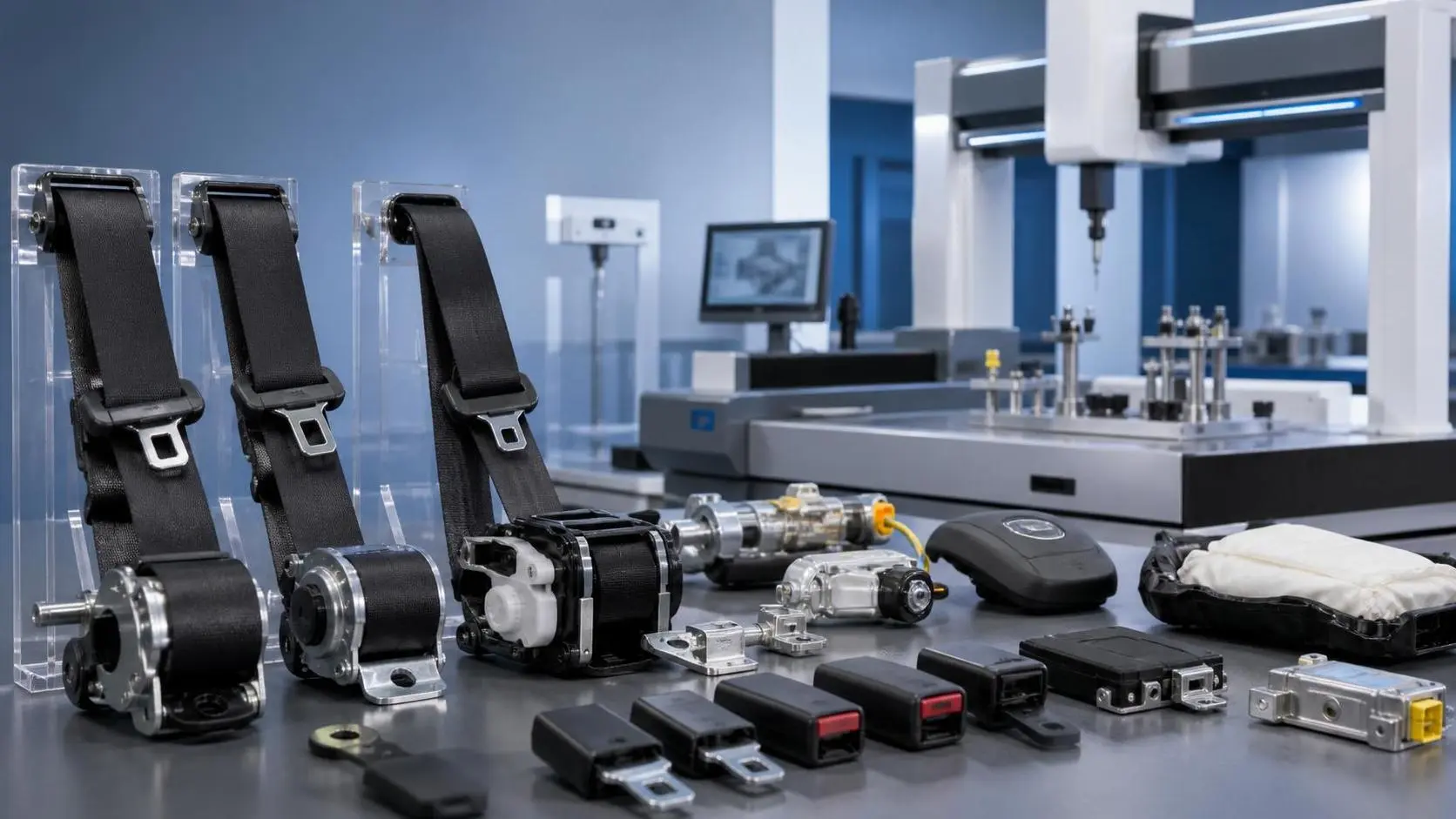
How to Evaluate an Occupant Restraint Systems Exporter for Quality, Compliance, and Supply Risk
Occupant restraint systems exporter evaluation guide: learn how to verify quality controls, compliance evidence, and supply risk before sourcing to avoid recalls, delays, and hidden costs.
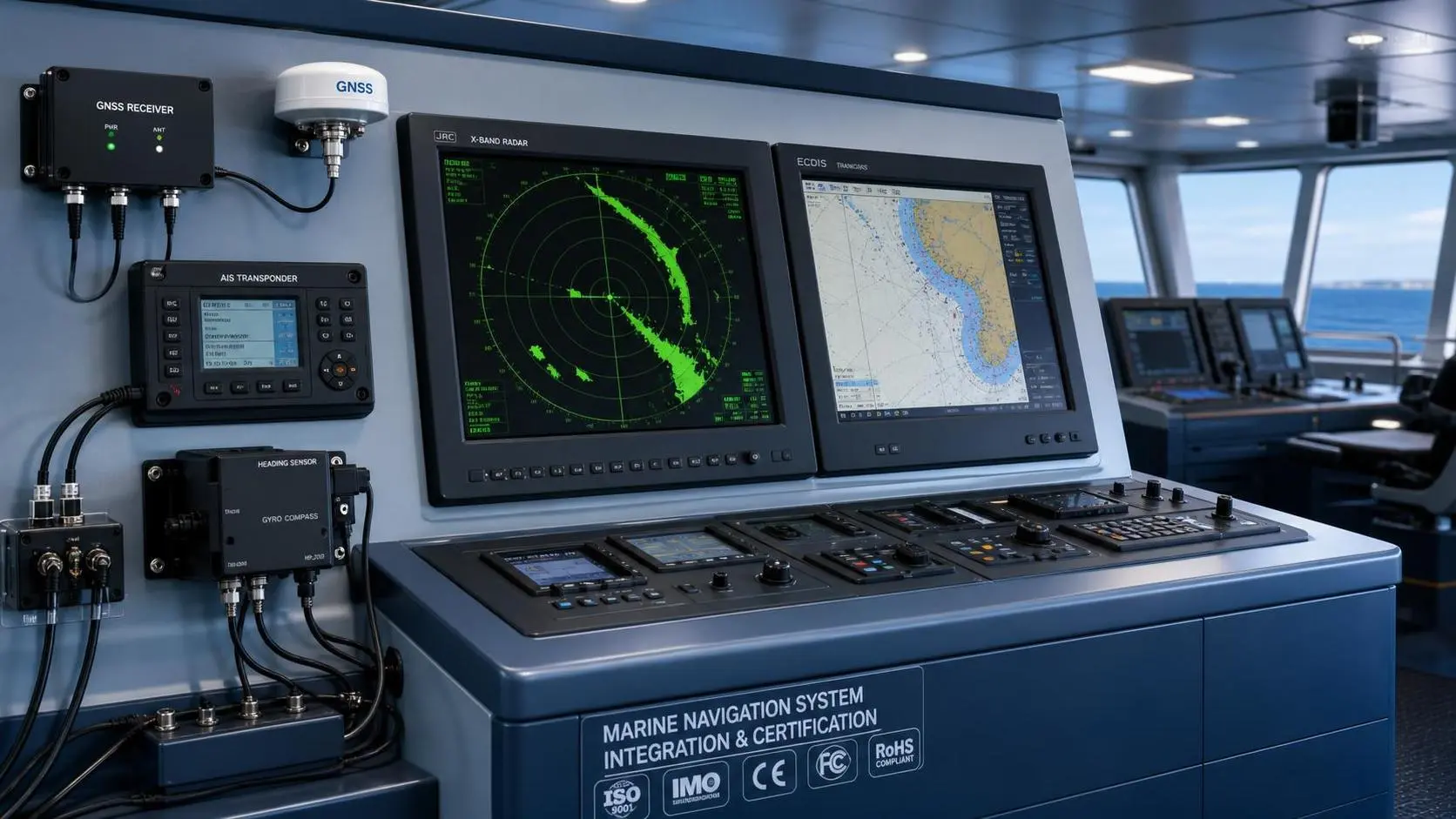
Navigation Compliance Certification: Which Marine Systems Need It and How to Prepare?
Navigation compliance certification explained: discover which marine systems need approval, what documents matter, and how to prepare early to avoid delays, rework, and costly project risks.

How to Evaluate Steel Auto Body Stampings for Strength, Fit, and Cost
Steel auto body stampings should be judged by strength, fit, and total cost together. Learn how to compare materials, forming limits, springback, joining, and tooling before choosing.

How to Evaluate Lightweight Automotive Components for EV Range and Crash Performance
Lightweight automotive components for EVs: learn how to evaluate real range gains, crash performance, joining risk, and manufacturability to choose safer, smarter EV parts.
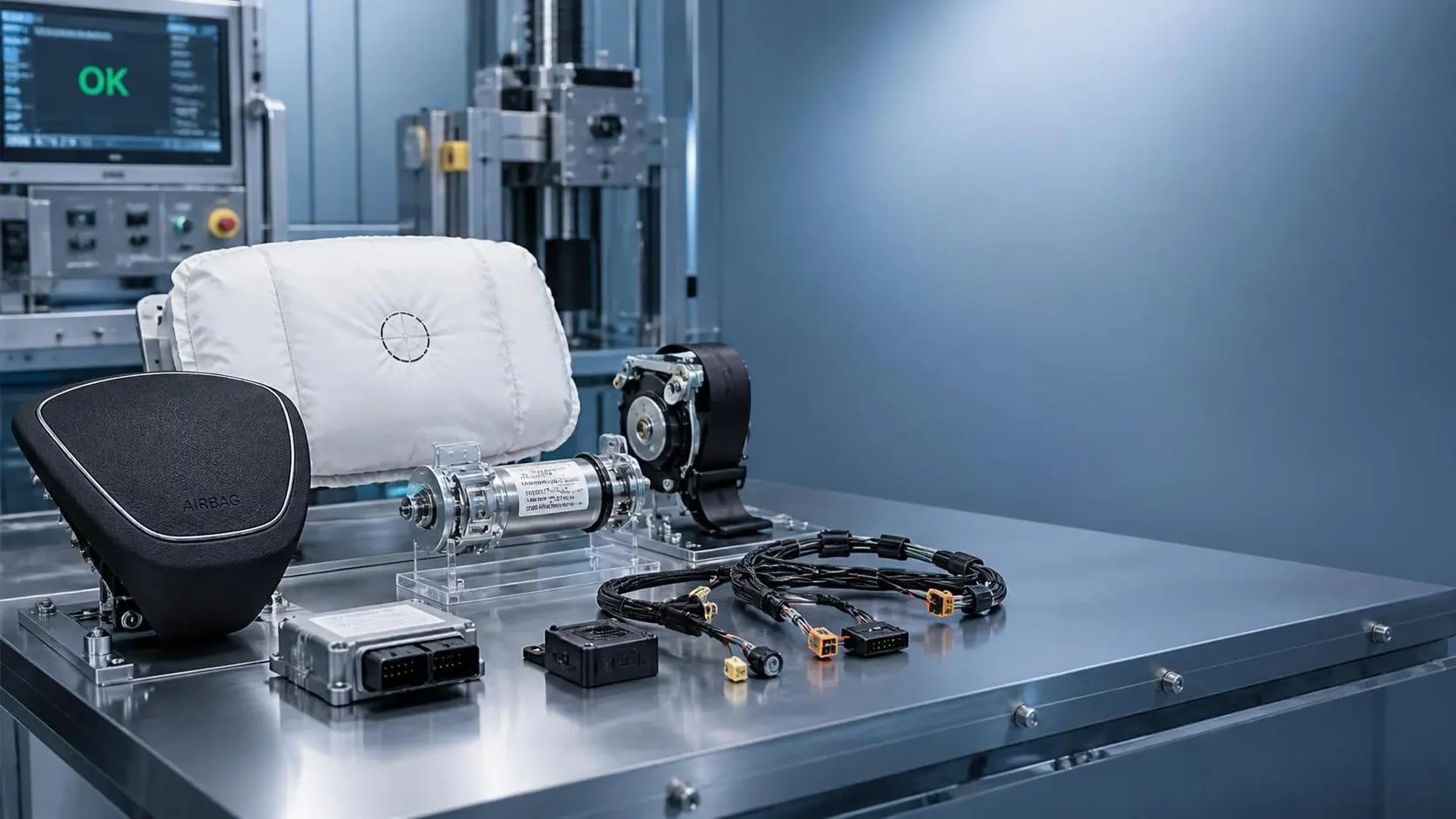
How to Evaluate Airbag Components for OEM Safety Performance and Compliance?
Airbag components evaluation guide for OEM teams: compare deployment performance, inflator consistency, compliance evidence, and supplier traceability to reduce safety risk and choose with confidence.

Maritime Compliance Information Standards: What Ship Operators Must Check
Maritime compliance information standards explained for ship operators: learn the key checks for navigation, documentation, updates, and crew readiness to reduce risk and avoid costly delays.

How to Evaluate Cargo Marine Sonar Systems for Detection Range and Vessel Fit
Cargo marine sonar systems: learn how to assess usable detection range, hull fit, noise risk, and bridge integration to choose a reliable solution for real cargo vessel operations.
Related News
- 00
0000-00
How to Specify Micro-Climate Control Cabins for Harsh Outdoor Worksites? - 00
0000-00
How to Evaluate a B2B Product Knowledge Platform for Faster Procurement Decisions - 00
0000-00
How to Evaluate an Occupant Restraint Systems Exporter for Quality, Compliance, and Supply Risk - 00
0000-00
Navigation Compliance Certification: Which Marine Systems Need It and How to Prepare? - 00
0000-00
How to Evaluate Lightweight Automotive Components for EV Range and Crash Performance
Weekly Insights
Stay ahead with our curated technology reports delivered every Monday.