
When high-precision marine navigation becomes a liability
When high-precision marine navigation becomes a liability, the issue is rarely precision itself.
The real problem appears when accuracy is treated as invulnerability.
In modern mobility systems, high-precision marine navigation supports safer routes, tighter fuel control, and better fleet coordination.
Yet the same architecture can create fragile dependencies across satellites, sensors, software, communications, and human response.
This article explores where high-precision marine navigation adds value, where it creates exposure, and how resilient management reduces hidden failure points.
What does high-precision marine navigation actually include?
High-precision marine navigation is more than a better GPS receiver.
It is usually a layered system combining GNSS, inertial sensors, radar, sonar, AIS, electronic charts, correction signals, and route optimization software.
Some platforms also connect weather feeds, collision avoidance logic, autopilot functions, and cloud-based diagnostics.
The promise is straightforward: better positional certainty produces better operational decisions.
That promise holds in congested ports, narrow channels, offshore construction, autonomous support operations, and fuel-sensitive long-haul routes.
However, complexity changes the risk profile.
A single navigation fault may no longer stay local.
It can affect route planning, bridge decisions, safety reporting, compliance records, and downstream maintenance schedules.
That is why high-precision marine navigation should be evaluated as an operational ecosystem, not a standalone instrument.
Why can high-precision marine navigation become a liability?
Liability begins when precision creates overconfidence.
A highly accurate display may hide uncertainty in timing, correction latency, chart updates, sensor alignment, or cyber integrity.
Decision-makers then trust a polished interface more than the health of the underlying chain.
Common liabilities include:
- Signal dependence in contested or noisy electromagnetic environments
- Software update failures affecting ECDIS or integrated bridge systems
- Misalignment between sensor precision and crew verification habits
- Cybersecurity exposure through remote connectivity and patch channels
- False belief that automation removes human judgment requirements
In short, high-precision marine navigation may improve control while simultaneously reducing tolerance for disruption.
The tighter the operational envelope, the smaller the margin for unnoticed error.
Where does overdependence show up first?
Usually in routine success.
Systems that perform smoothly for long periods can weaken manual cross-check discipline.
Teams stop questioning position confidence, route assumptions, or correction-source continuity.
Then an edge case arrives.
A spoofed signal, a chart mismatch, or a delayed update suddenly becomes a navigation event.
Which operating scenarios make the risks more serious?
Not every voyage faces the same exposure.
High-precision marine navigation carries higher liability when context punishes even small positioning or timing errors.
Examples include dense traffic zones, Arctic routes, dredging work, offshore energy support, port arrival windows, and military-adjacent waters.
Risk also rises when navigation data is integrated into broader mobility intelligence.
For example, navigation may feed scheduling, fuel analytics, maintenance triggers, and compliance documentation.
A corrupted input then affects multiple decisions beyond the bridge.
This systems-level view matters across industries.
Organizations tracking precision, safety, and intelligent equipment often study adjacent sectors for resilience lessons.
A portal reference such as 无 may appear simple, but the broader lesson is integration discipline.
What are the earliest warning signs?
- Frequent unexplained position jumps that are dismissed as minor
- Inconsistent agreement between primary and backup navigation sources
- Delayed software validation after chart or firmware updates
- Crew reliance on one display without procedural challenge
- Poor incident logging for temporary signal loss or anomaly events
How should high-precision marine navigation be assessed before deployment?
A useful assessment begins with a difficult question.
What happens when the precision layer degrades, lies, or disappears?
If the answer is unclear, deployment is incomplete.
A practical review should cover five dimensions:
- Signal resilience under jamming, spoofing, blockage, and interference
- Software assurance across updates, rollback, verification, and patch timing
- Human-machine interaction during abnormal or ambiguous conditions
- Redundancy between independent sensors and fallback procedures
- Compliance alignment with flag, port, insurer, and class expectations
High-precision marine navigation should never be approved using accuracy metrics alone.
Mean error, update rate, and correction quality are important, but incomplete.
Failure behavior matters more than peak performance.
An elegant system that degrades unpredictably is often riskier than a less precise system with transparent fallback behavior.
How do cybersecurity and compliance change the liability picture?
They transform navigation from an equipment issue into a governance issue.
High-precision marine navigation increasingly depends on digital interfaces, remote services, and synchronized data environments.
That creates a larger attack surface.
A cyber event may not shut everything down immediately.
Instead, it may alter route data, manipulate timing, corrupt chart layers, or delay critical updates.
Those subtle failures are especially dangerous because they appear operationally normal.
Compliance adds another layer.
If logs, update records, bridge procedures, or validation evidence are weak, a navigation incident becomes harder to defend.
In many cases, liability grows after the event because documentation cannot prove due diligence.
This is why high-precision marine navigation requires coordinated ownership across technical, operational, and compliance functions.
What is the best way to reduce risk without losing performance?
The goal is not less precision.
The goal is resilient precision.
That means designing high-precision marine navigation to fail visibly, degrade gracefully, and recover quickly.
Several measures are consistently effective:
- Use independent positioning references rather than cosmetic redundancy
- Separate operational networks from unnecessary remote access paths
- Test software updates in controlled stages before fleet-wide release
- Build procedures for confidence scoring, not just raw position display
- Run drills that simulate degraded precision and conflicting sensor outputs
- Track anomaly trends, not only confirmed failures
This approach turns high-precision marine navigation into a managed capability rather than a hidden single point of failure.
It also improves conversations with insurers, regulators, partners, and system integrators.
Where technical intelligence platforms are used for benchmarking, even a simple reference like 无 reminds teams to compare architecture decisions, not just hardware claims.
Does higher cost always mean lower liability?
No.
A premium platform can still carry high liability if its integration, governance, and fallback logic are weak.
Conversely, a well-managed system with disciplined validation may outperform a more expensive but poorly governed stack.
What should happen next if exposure is already suspected?
Start with evidence, not assumptions.
Review anomaly logs, update history, signal integrity events, and bridge response patterns.
Then map where high-precision marine navigation feeds other business or safety decisions.
That dependency map usually reveals the true liability footprint.
Next, classify issues into three buckets:
- Immediate controls, such as access restrictions or verification rules
- Medium-term fixes, such as redundancy redesign or software assurance
- Strategic changes, such as governance ownership and vendor accountability
When high-precision marine navigation becomes a liability, the answer is not panic or retreat.
It is disciplined visibility.
Precision remains valuable when accuracy is matched by resilience, traceability, and realistic failure planning.
The best next step is a structured review of signal trust, software governance, human verification, and compliance evidence before the next voyage tests them all.
Related News

How to Specify Micro-Climate Control Cabins for Harsh Outdoor Worksites?
Micro-climate control cabins for harsh outdoor worksites: learn how to specify thermal control, filtration, pressurization, and durability for safer uptime and smarter buying.

How to Evaluate a B2B Product Knowledge Platform for Faster Procurement Decisions
B2B product knowledge platform procurement starts with reducing decision risk. Learn how to compare specs, compliance, and supplier data to speed sourcing with confidence.

How to Evaluate an Occupant Restraint Systems Exporter for Quality, Compliance, and Supply Risk
Occupant restraint systems exporter evaluation guide: learn how to verify quality controls, compliance evidence, and supply risk before sourcing to avoid recalls, delays, and hidden costs.
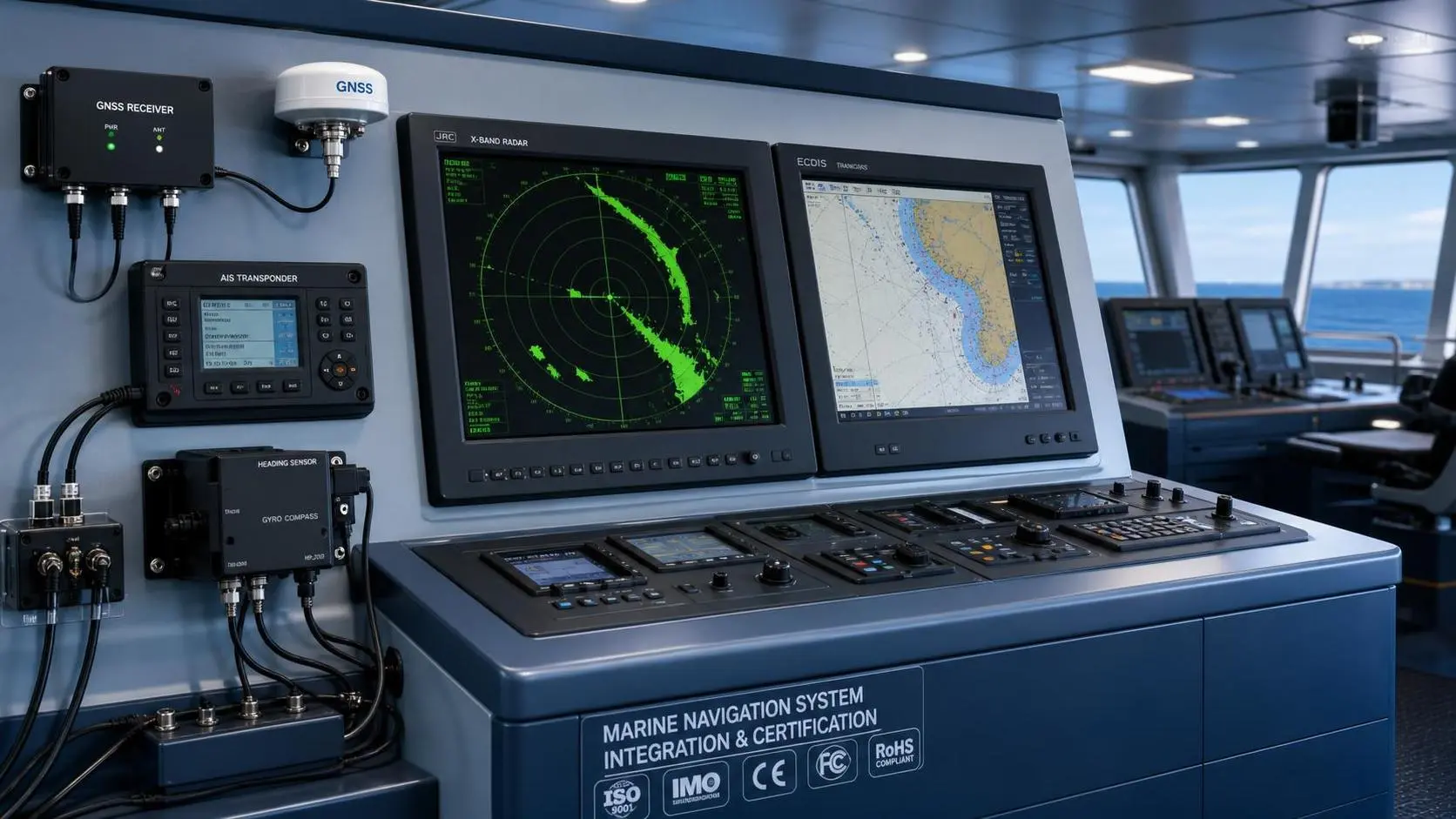
Navigation Compliance Certification: Which Marine Systems Need It and How to Prepare?
Navigation compliance certification explained: discover which marine systems need approval, what documents matter, and how to prepare early to avoid delays, rework, and costly project risks.

How to Evaluate Steel Auto Body Stampings for Strength, Fit, and Cost
Steel auto body stampings should be judged by strength, fit, and total cost together. Learn how to compare materials, forming limits, springback, joining, and tooling before choosing.

How to Evaluate Lightweight Automotive Components for EV Range and Crash Performance
Lightweight automotive components for EVs: learn how to evaluate real range gains, crash performance, joining risk, and manufacturability to choose safer, smarter EV parts.

How to Evaluate Airbag Components for OEM Safety Performance and Compliance?
Airbag components evaluation guide for OEM teams: compare deployment performance, inflator consistency, compliance evidence, and supplier traceability to reduce safety risk and choose with confidence.
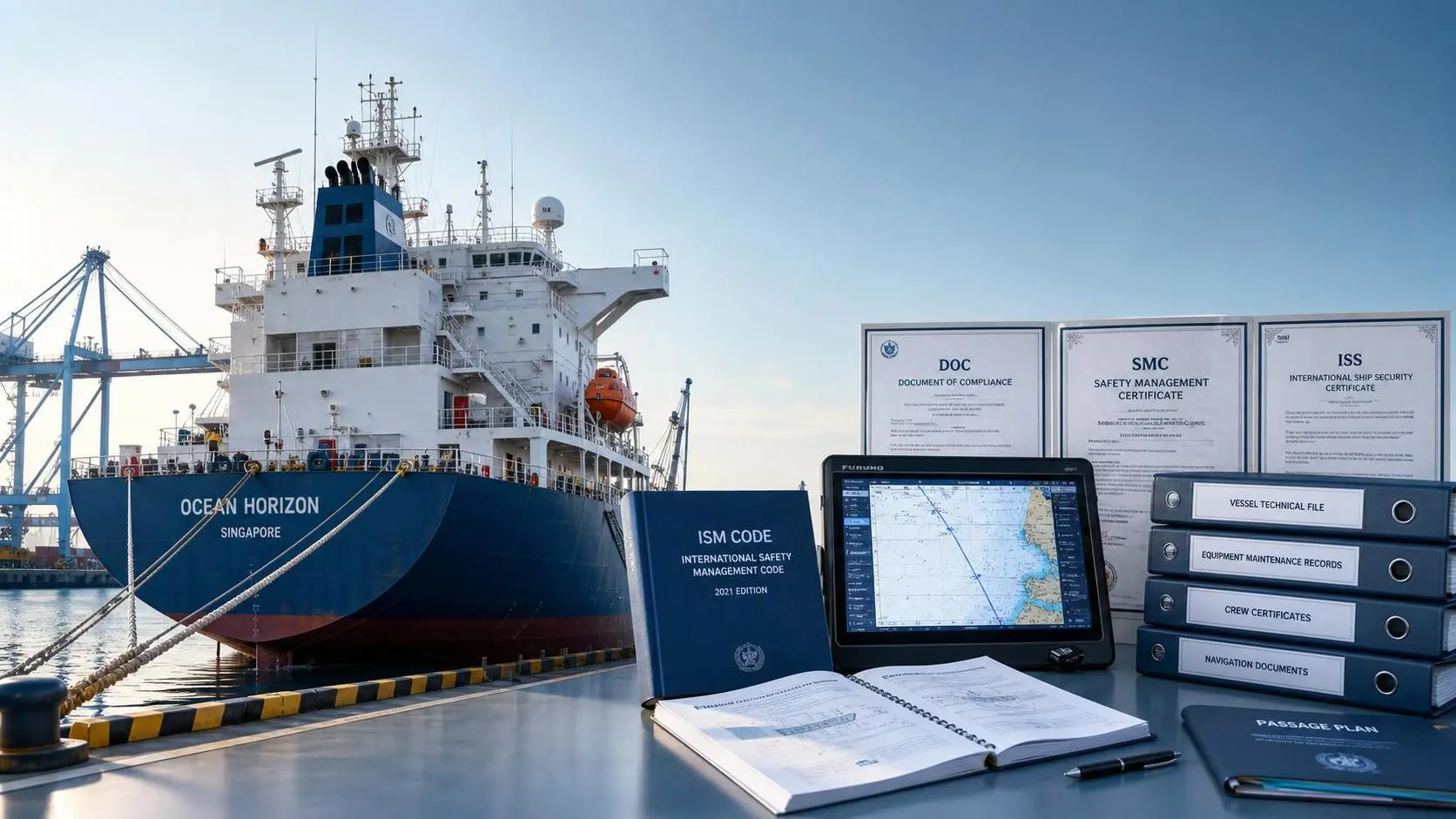
Maritime Compliance Information Standards: What Ship Operators Must Check
Maritime compliance information standards explained for ship operators: learn the key checks for navigation, documentation, updates, and crew readiness to reduce risk and avoid costly delays.

How to Evaluate Cargo Marine Sonar Systems for Detection Range and Vessel Fit
Cargo marine sonar systems: learn how to assess usable detection range, hull fit, noise risk, and bridge integration to choose a reliable solution for real cargo vessel operations.
Related News
- 00
0000-00
How to Choose a Marine Positioning Solutions Supplier in Europe for Offshore and Port Operations - 00
0000-00
Marine Positioning Solutions Provider Comparison: GNSS, Accuracy, and Integration Factors - 00
0000-00
Marine Electromagnetic Navigation Accuracy vs GNSS: Which Performs Better Near Interference? - 00
0000-00
Marine Electromagnetic Navigation Accuracy: What Affects Position Stability at Sea? - 00
0000-00
Marine Positioning Systems Exporter Selection: What to Check in GNSS Accuracy, Compliance, and Support
Weekly Insights
Stay ahead with our curated technology reports delivered every Monday.