
Advanced Driver Assistance Failures: Risks Hidden in Sensor Calibration
Advanced driver assistance is reshaping expectations for mobility safety across passenger vehicles, commercial fleets, and connected transport ecosystems. Yet the promise of safer braking, lane support, blind-spot monitoring, and collision avoidance depends on one fragile condition: sensor calibration must remain accurate over time. A camera mounted a few millimeters off angle, a radar shifted after a minor impact, or a lidar unit disturbed during service can quietly reduce detection performance long before any dashboard warning appears. In a market increasingly defined by compliance, software-defined upgrades, and cross-system integration, these hidden errors are becoming a serious operational and legal risk.
Advanced driver assistance is entering a higher-risk phase of precision dependency
Today’s advanced driver assistance architecture is no longer a simple bundle of convenience features. It is a precision perception layer that combines cameras, radar, ultrasonic devices, inertial data, steering input, and in some cases lidar to interpret space in real time. As vehicles become lighter, more aerodynamic, and more digitally integrated, sensor placement tolerances grow tighter. This creates a new reality: performance failures are often not caused by complete hardware breakdown, but by subtle calibration drift.

The trend is especially important across the broader mobility supply chain followed by GNCS, where precision perception and physical protection are increasingly linked. In automotive cabins, advanced driver assistance influences not only active safety outcomes but also passive safety event timing, occupant positioning assumptions, and post-crash data interpretation. A miscalibrated forward camera may delay braking support by fractions of a second, but those fractions can alter impact severity, airbag deployment context, and downstream liability analysis.
Another signal is the rise of repair-related sensor issues. Windshield replacement, bumper repainting, body panel work, suspension modification, wheel alignment, and even seat height changes in some sensor-linked systems can affect how advanced driver assistance interprets the environment. As over-the-air software updates become more common, calibration integrity is no longer just a workshop issue; it is a lifecycle management issue.
Why calibration failures are becoming more common than many safety teams expect
Several forces are increasing the likelihood that advanced driver assistance performance will be compromised by hidden sensor misalignment rather than obvious component failure.
The key issue is that advanced driver assistance can degrade gradually. Unlike a failed sensor that triggers an immediate fault code, miscalibration may still allow lane keeping, adaptive cruise, or emergency braking to operate inconsistently. That makes the risk harder to detect, more expensive to audit, and more dangerous in edge cases such as rain, low light, road curvature, reflective surfaces, or dense urban traffic.
Small misalignments can trigger large safety and compliance consequences
In advanced driver assistance, spatial perception is everything. A small angular deviation in a forward-facing camera can shift lane model interpretation. A radar unit with slight yaw error can estimate target position incorrectly. Lidar with disturbed reference alignment can distort object boundaries and timing. These shifts may look minor in static inspection, but in dynamic driving they can compound rapidly.
- Object detection risk: vehicles, pedestrians, and roadside obstacles may be classified later or less confidently.
- Braking intervention risk: automatic emergency braking can trigger too late, too early, or not at all in critical scenarios.
- Lane support risk: lane departure warning and lane centering can drift, weave, or disengage unexpectedly.
- False positive risk: incorrect sensing may produce unnecessary alerts or braking events, reducing trust and creating secondary hazards.
- Compliance risk: post-repair validation records may fail to demonstrate that advanced driver assistance met required calibration conditions.
The broader industry implication is clear. Advanced driver assistance is no longer evaluated only by design capability; it is judged by in-field consistency. That shifts attention from feature availability to calibration governance, repair discipline, environmental validation, and digital traceability.
The impact reaches multiple business links, not just the sensor itself
Hidden advanced driver assistance calibration failures affect a wide chain of decisions and operating processes. In vehicle development, they complicate validation because bench performance may not reflect field conditions after body variation, mounting stress, or software changes. In aftersales and repair networks, they raise the need for controlled procedures, proper targets, workshop environment checks, and documented recalibration steps.
The influence also extends into adjacent safety domains that GNCS continuously tracks. Lightweight stampings can alter sensor mounting stability and repair behavior. Smart seating and occupant sensing can interact with driver monitoring and cabin alerts. Passive safety analysis after a crash increasingly depends on reconstructing whether advanced driver assistance had reliable perception at the moment before impact. As these systems converge, calibration quality becomes a cross-functional safety variable rather than a standalone electronics issue.
Insurance reviews, warranty claims, regulatory reporting, and litigation discovery are all being shaped by this shift. Where advanced driver assistance is marketed as a protective function, undocumented misalignment can become evidence of inadequate process control. The reputational cost may exceed the direct technical defect.
What deserves close attention now in advanced driver assistance management
The most effective response is to treat advanced driver assistance calibration as a controlled lifecycle discipline, not a one-time setup task. Several priorities stand out.
- Map calibration-sensitive events: identify every operation that can affect advanced driver assistance, including windshield replacement, bumper repair, alignment work, suspension service, collision repair, and software updates.
- Standardize reference conditions: define floor flatness, lighting, target distance, tire pressure, ride height, load state, and environmental requirements for calibration tasks.
- Build traceable records: retain pre-scan, post-scan, calibration output, technician steps, equipment status, and version history for each advanced driver assistance intervention.
- Validate after updates: do not assume algorithm changes are harmless if physical sensor position has drifted over time.
- Connect active and passive safety review: assess how advanced driver assistance sensing quality may influence crash severity assumptions and occupant protection outcomes.
- Monitor false positives and driver complaints: nuisance alerts and inconsistent lane behavior are often early signs of hidden calibration problems.
A practical path forward starts with better detection, governance, and review cycles
Organizations evaluating advanced driver assistance risk should move from reactive repair to structured surveillance. The goal is not simply to recalibrate when faults appear, but to identify drift before it becomes a safety event.
The next step is to treat advanced driver assistance as part of a broader precision safety strategy. That means watching how sensing, structure, cabin systems, and compliance evidence interact over the full equipment lifecycle. GNCS continues to follow these convergence points because the future of safer mobility depends not only on smarter functions, but on whether those functions remain precisely aligned in real operating conditions. Reviewing calibration triggers, documentation gaps, and cross-system dependencies now is one of the most practical ways to reduce risk before hidden failure becomes public failure.
Related News
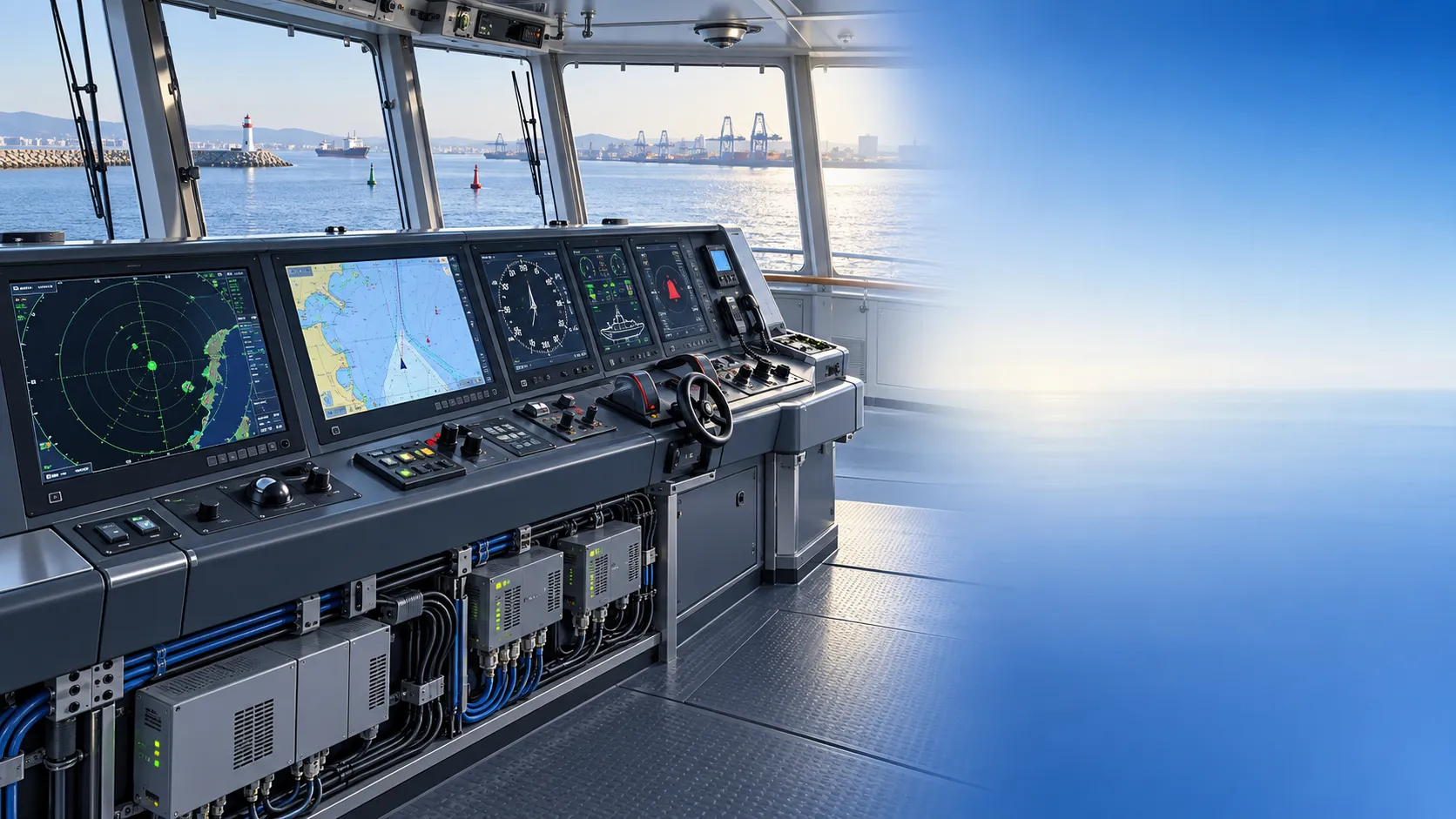
How to Specify Integrated Marine Electronics for Reliable Bridge Operations
Integrated marine electronics: learn how to specify reliable bridge systems with clear data flows, redundancy, alarm control, lifecycle interfaces, and operational testing.

How to Evaluate Navigation Radar Manufacturers for Commercial Vessel Projects
Navigation radar manufacturers: learn how to compare performance, compliance, integration, support, and lifecycle cost for commercial vessel projects.

How Adjustable Cabin Ergonomics Reduce Operator Fatigue in Long-Shift Vehicles
Adjustable cabin ergonomics reduces operator fatigue through better seating, reach, visibility, vibration control, and climate comfort for safer long-shift vehicles.

How Rear-Impact Safety Components Work Together to Protect Vehicle Occupants
Explore how automotive safety components for rear impact work together—from crash structures and seats to head restraints and belts—to enhance occupant protection.
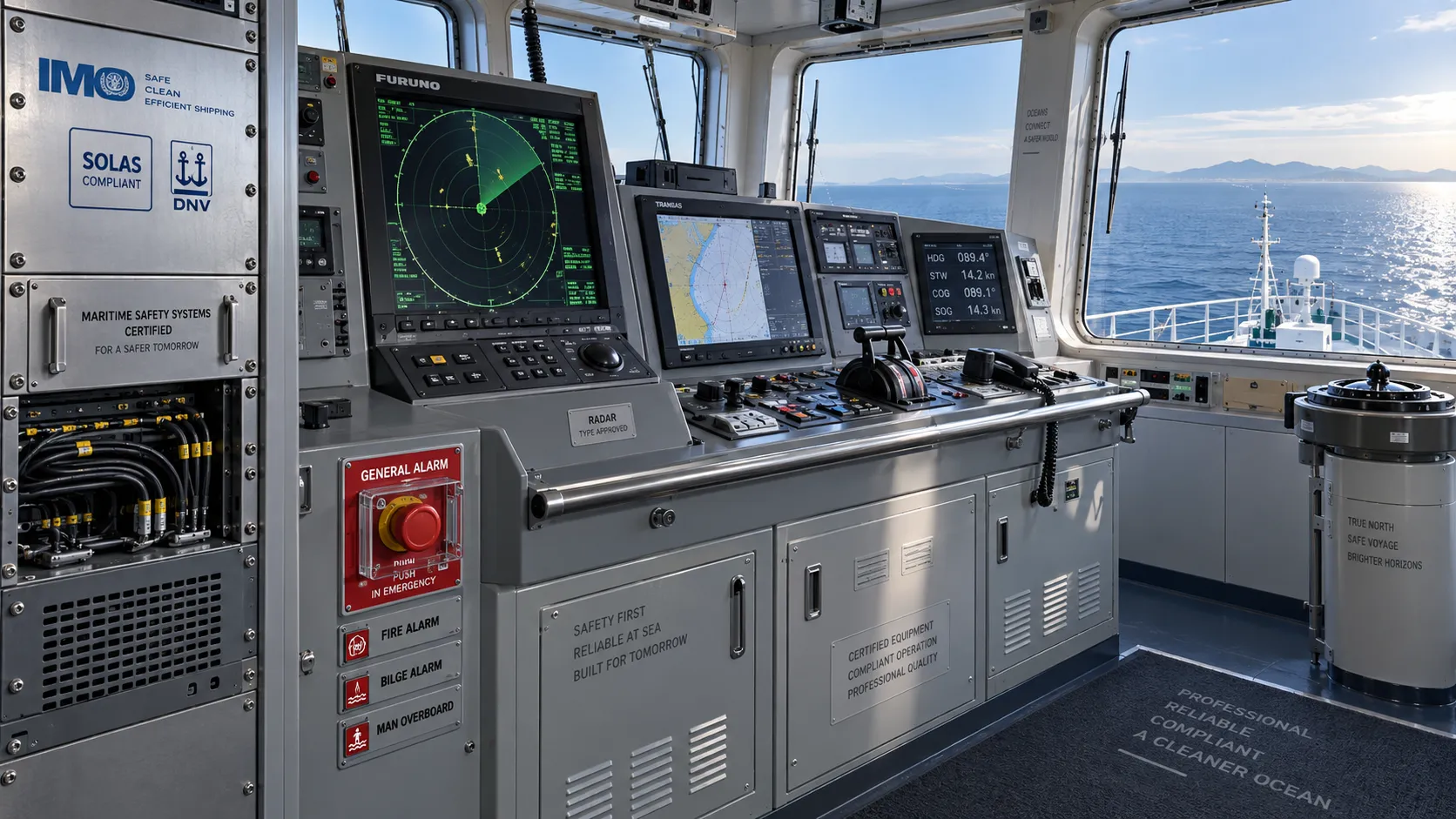
How to Evaluate a Marine Safety Systems Manufacturer for Vessel Compliance and Reliability
Marine safety systems manufacturer evaluation guide: verify compliance, engineering quality, lifecycle costs, and global service support for safer, reliable vessel operations.
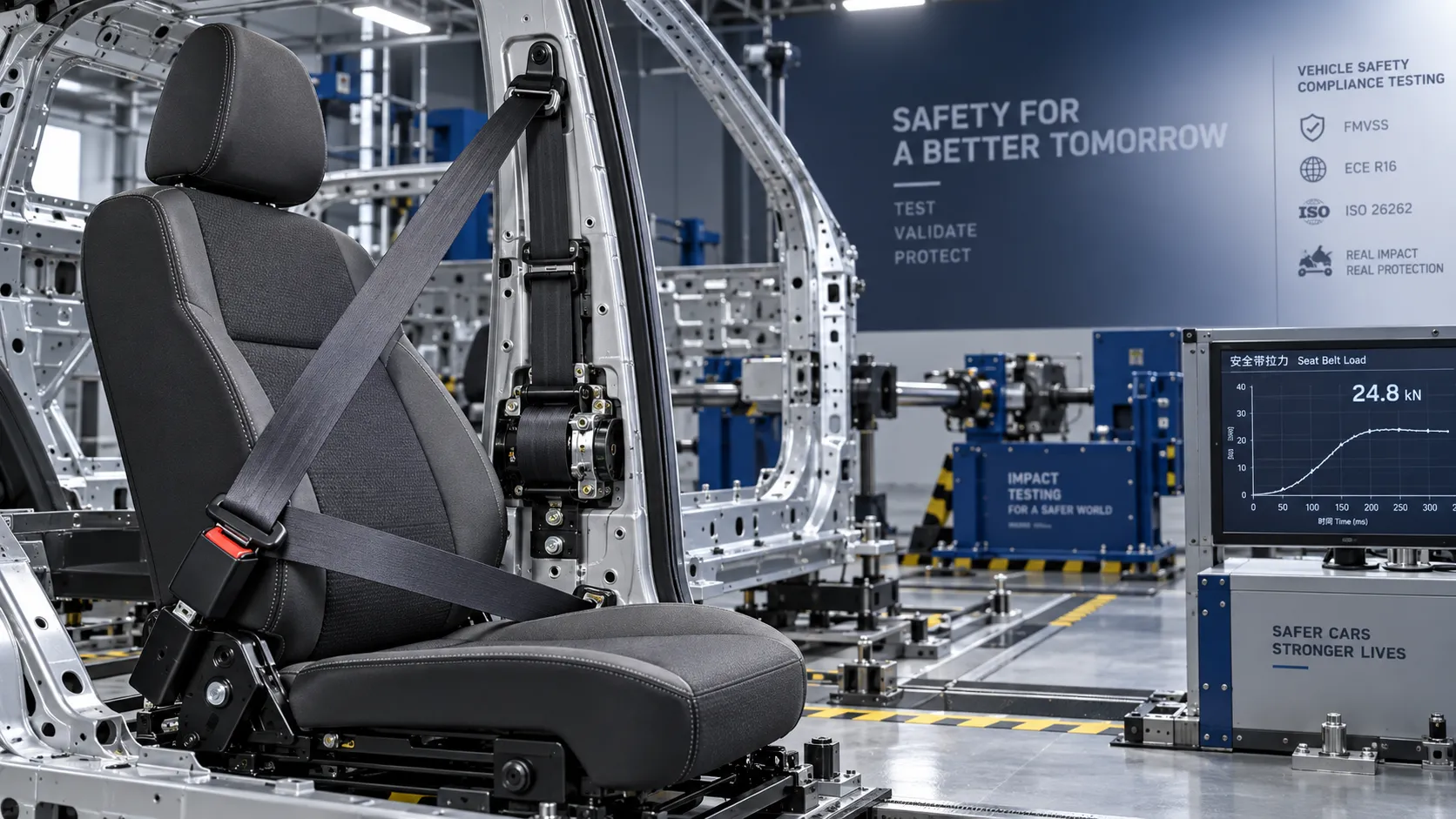
Crash Test Regulations for Seatbelts: Key Compliance Requirements Explained
Crash test regulations seatbelts explained: explore FMVSS, UN rules, anchorage strength, and dynamic restraint testing for safer, compliant vehicle systems.

How to Calculate the Total Cost of Automotive Lightweighting for a Vehicle Program
Automotive lightweight solutions cost: learn how to calculate program-level costs, including materials, tooling, joining, validation, risk, and vehicle-level value.

How Automotive Seat Occupancy Sensing Improves Airbag Deployment Decisions
Automotive seat occupancy sensing helps optimize airbag deployment decisions, improving passenger classification, safety diagnostics, and compliance across real-world conditions.

What Drives Lightweight Body Component Costs in High-Volume Vehicle Programs?
Lightweight body components cost depends on material yield, forming, joining, tooling, validation, and logistics. Explore proven ways to optimize total vehicle program cost.
Related News
- 00
0000-00
How to Specify Integrated Marine Electronics for Reliable Bridge Operations - 00
0000-00
How Adjustable Cabin Ergonomics Reduce Operator Fatigue in Long-Shift Vehicles - 00
0000-00
How to Evaluate a Marine Safety Systems Manufacturer for Vessel Compliance and Reliability - 00
0000-00
How to Calculate the Total Cost of Automotive Lightweighting for a Vehicle Program - 00
0000-00
What Drives Lightweight Body Component Costs in High-Volume Vehicle Programs?
Weekly Insights
Stay ahead with our curated technology reports delivered every Monday.