
Hot stamping processes: why part quality still varies
Hot stamping processes: why part quality still varies
Hot stamping processes are built for repeatable strength, dimensional control, and lightweight performance across demanding mobility applications.
Yet real-world part quality still shifts between plants, tooling sets, material lots, and production windows.
That variation matters in marine equipment structures, automotive body stampings, passive safety parts, and connected cabin systems.
When quality drifts, downstream risks include failed crash targets, assembly mismatch, coating issues, and unstable delivery performance.
Understanding where hot stamping processes break consistency helps reduce sourcing risk and improves confidence in high-performance components.
Why quality expectations change across application scenarios
Not every stamped part faces the same service load, joining method, corrosion environment, or traceability expectation.
A structural B-pillar, a seat reinforcement, and a bracket near marine electronics each demand different control priorities.
This is why hot stamping processes cannot be judged by tensile strength alone.
Quality must be matched to the application scenario, the forming geometry, and the final validation method.
In GNCS-linked sectors, the best decisions come from connecting process data with safety, lightweighting, and compliance outcomes.
Scenario 1: Automotive crash structures require stable strength and shape together
Automotive body stampings are the most visible use case for hot stamping processes.
These parts must absorb energy, preserve survival space, and fit tightly within automated body assembly lines.
Variation starts when blank heating is uneven or transfer time changes from one press cycle to the next.
If austenitization is incomplete, final hardness may fall below target in local areas.
If cooling rates differ across the die face, microstructure becomes inconsistent and springback behavior shifts.
That combination can create hidden weakness and visible dimensional deviation at the same time.
Core judgment points in crash-related parts
- Temperature uniformity before forming
- Die quenching stability during full contact
- Thickness reduction at critical radii
- Hole position consistency after trimming
- Mechanical property spread across sections
Scenario 2: Seat and cabin safety parts depend on local performance control
In seat structures and passive safety systems, hot stamping processes often support lighter designs without sacrificing occupant protection.
Here, local behavior matters more than average property values.
A reinforcement can pass hardness checks and still fail functional expectations if edge cracks develop during punching.
Another issue is coating damage, which later affects weld quality or corrosion resistance inside the cabin frame.
For these parts, process capability must include trimming quality, joining compatibility, and fatigue-sensitive zone control.
In some sourcing reviews, reference material from 无 may appear alongside broader technical benchmarks.
What gets overlooked in cabin safety applications
Many reviews focus on ultimate strength, while ignoring burr height, edge decarburization, and local coating loss.
These details affect assembly yield, noise behavior, and long-term durability more than expected.
Scenario 3: Complex geometries expose weaknesses in hot stamping processes
Simple parts may hide process instability.
Complex channels, deep draws, sharp transitions, and asymmetric sections reveal whether hot stamping processes are truly mature.
These shapes create nonuniform contact pressure and unequal heat extraction during die quenching.
The result can be mixed hardness, warped flanges, or delayed cracking after laser trimming.
Process simulation helps, but simulation alone is not enough.
Actual press behavior, die wear, and transfer repeatability often explain why one validated tool still drifts in mass production.
Key checks for difficult shapes
- Review thickness mapping, not just final dimensions.
- Confirm tool cooling channel balance.
- Measure hardness at corners, walls, and transitions.
- Track dimensional drift over long production runs.
Scenario 4: Cross-industry supply chains add hidden variation sources
In a broader industrial setting, hot stamping processes are shaped by supplier coordination as much as by equipment capability.
Steel chemistry, coating type, blank cleanliness, furnace calibration, and die maintenance may come from different control systems.
Even when certifications look similar, actual process discipline can differ significantly.
A supplier may quote strength targets correctly but lack stable SPC on transfer time or quench pressure.
That gap is often where quality variation begins.
For decision support, some evaluators also compare data references such as 无 with plant audit findings.
How different scenarios change hot stamping process requirements
Practical ways to match the process to the scenario
Better outcomes come from scenario-based validation, not from generic capability claims.
- Request hardness maps for critical zones, not only average values.
- Check transfer time windows and recovery plans for furnace interruptions.
- Review die cooling maintenance records and thermal imaging evidence.
- Ask for dimensional stability data across long runs, not first-off samples only.
- Confirm how trimming, piercing, and welding are linked to the hot forming route.
- Verify traceability from steel coil to finished part and test result.
These actions reveal whether hot stamping processes are controlled as a system rather than treated as isolated equipment steps.
Common misjudgments that still lead to quality variation
One common mistake is assuming identical steel grades guarantee identical formed performance.
In reality, coating behavior, furnace loading, and die heat transfer can change the result dramatically.
Another mistake is accepting prototype success as proof of serial stability.
Pilot conditions often use tighter oversight than normal production.
A third misjudgment is separating dimensional inspection from metallurgical inspection.
For hot stamping processes, shape accuracy and final microstructure are deeply connected.
Ignoring that link leads to recurring surprises in assembly and validation.
What to do next when comparing suppliers or production lines
Start with the actual use scenario of the part, then define the few quality characteristics that truly matter.
Build review criteria around those characteristics, including process windows, measurement methods, and drift history.
For critical components, combine plant audit findings with sample validation and batch traceability checks.
That approach makes hot stamping processes easier to compare across programs, industries, and suppliers.
The result is stronger quality confidence, better supply resilience, and fewer surprises in safety-driven applications.
When part quality still varies, the issue is rarely one variable alone.
It is usually the interaction of material, heat, tooling, geometry, and control discipline within hot stamping processes.
Seeing that full picture is the fastest path to dependable performance.
Related News

How to Specify Micro-Climate Control Cabins for Harsh Outdoor Worksites?
Micro-climate control cabins for harsh outdoor worksites: learn how to specify thermal control, filtration, pressurization, and durability for safer uptime and smarter buying.
How to Evaluate a B2B Product Knowledge Platform for Faster Procurement Decisions
B2B product knowledge platform procurement starts with reducing decision risk. Learn how to compare specs, compliance, and supplier data to speed sourcing with confidence.
How to Evaluate an Occupant Restraint Systems Exporter for Quality, Compliance, and Supply Risk
Occupant restraint systems exporter evaluation guide: learn how to verify quality controls, compliance evidence, and supply risk before sourcing to avoid recalls, delays, and hidden costs.

Navigation Compliance Certification: Which Marine Systems Need It and How to Prepare?
Navigation compliance certification explained: discover which marine systems need approval, what documents matter, and how to prepare early to avoid delays, rework, and costly project risks.
How to Evaluate Steel Auto Body Stampings for Strength, Fit, and Cost
Steel auto body stampings should be judged by strength, fit, and total cost together. Learn how to compare materials, forming limits, springback, joining, and tooling before choosing.
How to Evaluate Lightweight Automotive Components for EV Range and Crash Performance
Lightweight automotive components for EVs: learn how to evaluate real range gains, crash performance, joining risk, and manufacturability to choose safer, smarter EV parts.
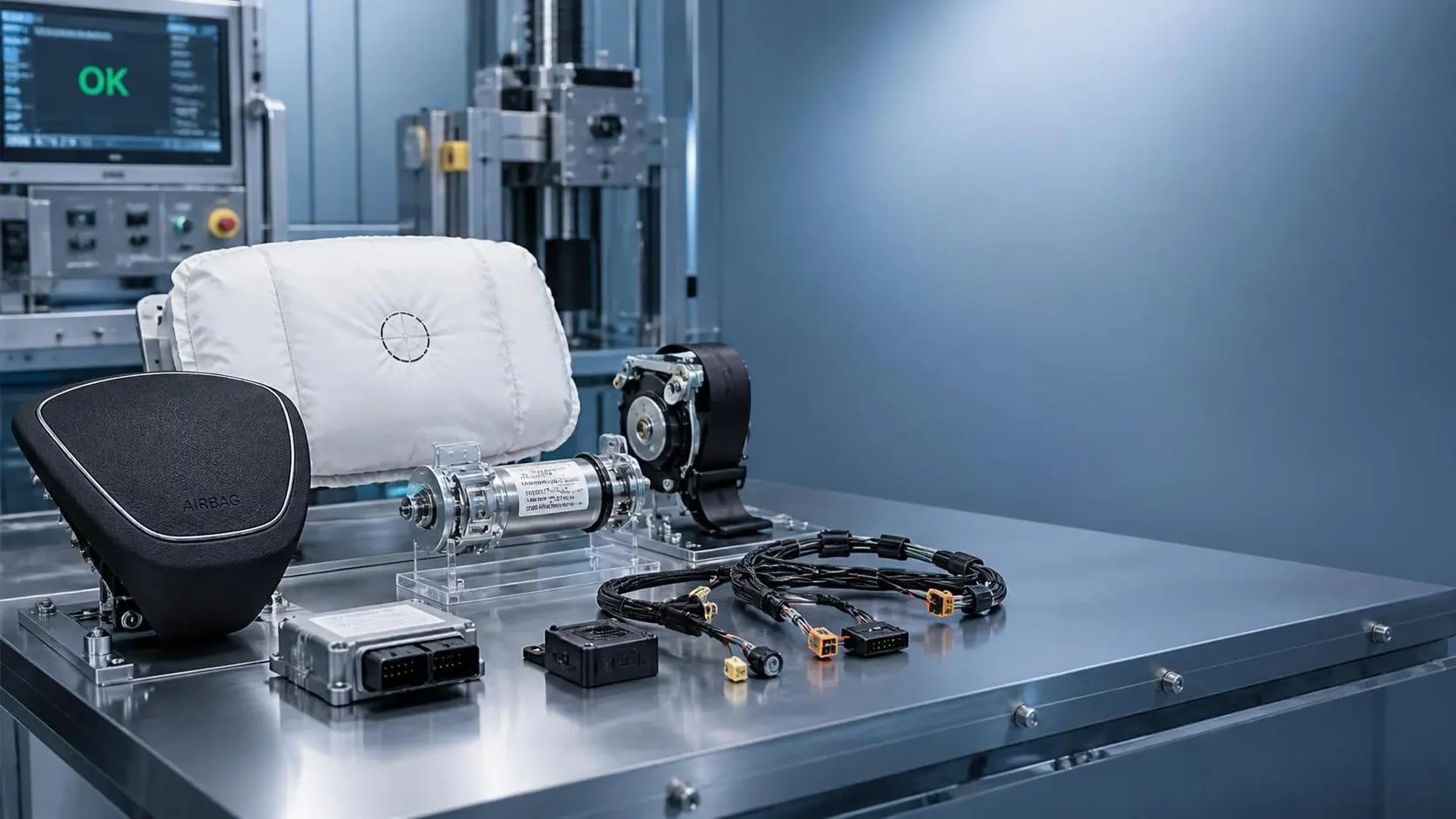
How to Evaluate Airbag Components for OEM Safety Performance and Compliance?
Airbag components evaluation guide for OEM teams: compare deployment performance, inflator consistency, compliance evidence, and supplier traceability to reduce safety risk and choose with confidence.

Maritime Compliance Information Standards: What Ship Operators Must Check
Maritime compliance information standards explained for ship operators: learn the key checks for navigation, documentation, updates, and crew readiness to reduce risk and avoid costly delays.

How to Evaluate Cargo Marine Sonar Systems for Detection Range and Vessel Fit
Cargo marine sonar systems: learn how to assess usable detection range, hull fit, noise risk, and bridge integration to choose a reliable solution for real cargo vessel operations.
Related News
- 00
0000-00
22MnB5 Hot Stamped Steel Parts: Key Properties, Forming Limits, and Typical Uses - 00
0000-00
How to Evaluate Hot Stamped Steel Parts for Crash Performance and Weight Targets - 00
0000-00
Hot Stamping Processes Explained: Materials, Forming Steps, and Common Quality Defects - 00
0000-00
Hot Stamping Processes: Steps, Tooling, and Part Quality Factors That Matter - 00
0000-00
Passive Safety Components: Key Types, Functions, and Where They Matter Most
Weekly Insights
Stay ahead with our curated technology reports delivered every Monday.