
Smart Sensing or Traditional Sensors: Which Delivers Better ROI
As enterprises weigh technology upgrades, the choice between smart sensing and traditional sensors is no longer just a technical decision—it is a strategic ROI question. In mobility equipment, marine electronics, passive safety, and cabin systems, sensing quality affects far more than signal capture. It shapes accuracy, system uptime, regulatory confidence, maintenance cycles, product differentiation, and long-term platform scalability. For sectors covered by GNCS, where precision spatial perception and physical containment protection define safety outcomes, the real question is not simply which technology is newer, but which one creates measurable value across the full operating lifecycle.
This comparison matters because the cost of a sensing decision is rarely limited to component price. A lower-cost sensor may increase calibration effort, false alarms, wiring complexity, or downtime. A more advanced smart sensing architecture may raise upfront investment but reduce integration friction, improve diagnostics, and support compliance in increasingly digitalized systems. In environments such as vessel navigation, airbag triggering, seatbelt restraint logic, and smart seating comfort controls, ROI depends on how sensing performs under real-world vibration, humidity, temperature shifts, electromagnetic interference, and safety audit pressure.
Understanding Smart Sensing and Traditional Sensors

Traditional sensors typically convert a physical variable—such as pressure, position, acceleration, temperature, or proximity—into a raw electrical signal. They are often valued for simplicity, known performance boundaries, and lower unit cost. In many mature systems, these sensors remain effective, especially where the operating environment is stable and the control logic is centralized elsewhere.
Smart sensing, by contrast, adds embedded processing, self-diagnostics, communication capability, compensation algorithms, and in some cases edge intelligence. Rather than only sending a raw signal, a smart sensor can interpret data, filter noise, detect drift, support predictive maintenance, and communicate with broader digital platforms. In practical terms, smart sensing transforms the sensor from a passive input device into an active decision-support node.
The ROI difference begins here. Traditional sensors may appear economical at purchase, but smart sensing often lowers hidden operational cost by improving reliability, reducing manual inspection, and shortening troubleshooting time. This is especially relevant in complex systems where one inaccurate signal can cascade into safety, compliance, or operational issues.
Why ROI Evaluation Has Shifted Across Mobility Equipment
Across marine navigation and automotive systems, sensor evaluation has moved beyond initial procurement budgets. Three industry changes are driving this shift. First, safety and regulatory expectations are rising. Second, systems are becoming more connected and software-defined. Third, downtime, recall exposure, and quality variation now carry far higher business cost than they did in previous hardware cycles.
For GNCS-relevant sectors, the following signals are especially important:
In short, when systems become more intelligent and more regulated, smart sensing gains an advantage because ROI is increasingly measured across the full chain of design, operation, support, and upgradeability.
Where Smart Sensing Usually Delivers Better Long-Term Value
In high-precision navigation systems, smart sensing improves data confidence by filtering noise, compensating for environmental variation, and enabling better fusion between radar, sonar, inertial, and satellite inputs. This can reduce navigation error, improve route stability, and strengthen all-weather operational safety. When the cost of a false reading can affect vessel movement or compliance records, enhanced sensing intelligence often pays back quickly.
In passive safety systems, the ROI case is even stronger. Airbag assemblies and seatbelt systems rely on millisecond-level decisions. Here, smart sensing can support crash discrimination, occupant classification, system health checks, and fault reporting. Better sensing logic reduces the risk of non-deployment, misdeployment, or unnecessary service interventions. Over time, this lowers warranty exposure and supports stronger safety validation.
In smart seating, smart sensing creates value beyond protection. It supports occupant presence detection, posture adjustment, micro-climate response, fatigue monitoring, and seat position memory. These functions improve user experience while enabling energy optimization and software-led feature expansion. ROI therefore comes not only from cost reduction, but also from premium capability and platform differentiation.
Another major advantage is maintenance efficiency. Traditional sensors often require separate tools and manual validation to diagnose failures. Smart sensing can report drift, contamination, communication interruption, or calibration deviation before a major fault occurs. In distributed systems, this can reduce inspection time and prevent unplanned outages.
Where Traditional Sensors Still Make Economic Sense
Despite the momentum behind smart sensing, traditional sensors remain cost-effective in certain conditions. If a function is simple, failure impact is low, and the surrounding system already provides sufficient control and diagnostics, a conventional sensor may deliver the best ROI. This is often true in stable environments with low variability and limited need for data-rich integration.
Traditional sensors can also be advantageous where design cycles prioritize proven architecture, spare-part availability, or straightforward replacement. Their simplicity may reduce cybersecurity concerns and training requirements. In high-volume applications with narrow performance demands, the lower bill-of-materials cost can still be compelling.
However, the critical point is that low purchase cost does not automatically equal better ROI. Traditional sensing performs best when hidden costs remain controlled. If manual calibration, noise susceptibility, or limited diagnostics begin to generate quality losses, the economics can shift rapidly toward smart sensing.
Comparing ROI Factors in Real Operating Scenarios
A useful way to compare technologies is to examine the full ROI stack rather than a single price point.
This comparison shows why smart sensing frequently delivers better ROI in safety-critical and data-intensive applications, while traditional sensors remain viable in narrow-function, cost-sensitive deployments.
Typical Application Paths Across GNCS-Covered Fields
- Marine navigation systems: smart sensing is well suited for signal fusion, anomaly detection, and condition-aware monitoring in complex electromagnetic environments.
- Auto body and structural systems: traditional sensors may still fit basic position or force verification tasks, while smart sensing adds value in process control and quality traceability.
- Airbag assemblies and seatbelt systems: smart sensing is typically the stronger ROI choice because response precision, redundancy logic, and fault transparency are essential.
- Auto seat assemblies: smart sensing supports comfort, safety, occupancy recognition, and software-enabled feature growth on a single platform.
Practical Evaluation Criteria Before Choosing a Sensing Strategy
To determine whether smart sensing will outperform traditional sensors financially, several practical questions should be answered early:
- What is the cost of a false reading, delayed response, or hidden fault?
- How harsh is the operating environment in terms of vibration, humidity, temperature, and interference?
- Will the system need remote diagnostics, software updates, or platform interoperability?
- Does compliance documentation require stronger traceability and performance validation?
- Is future product differentiation likely to depend on data quality and intelligence at the edge?
If the answer to several of these questions is yes, smart sensing usually offers a better long-term business case. If most answers are no, a traditional configuration may remain economically justified.
A Balanced Conclusion for Long-Term ROI
So, which delivers better ROI: smart sensing or traditional sensors? In today’s mobility equipment landscape, smart sensing generally creates stronger long-term value wherever safety, compliance, data integration, and lifecycle efficiency matter. Traditional sensors still hold an important place in simpler, stable, and highly cost-constrained applications. The most effective decision is therefore context-based, not trend-based.
For organizations tracking the future of marine navigation, passive safety, and intelligent cabin systems, the next step is to evaluate sensing not as a standalone component choice, but as part of a broader system economics model. Mapping failure cost, maintenance burden, regulatory exposure, and upgrade potential will reveal whether smart sensing is merely an added feature—or a strategic asset with superior ROI.
Related News
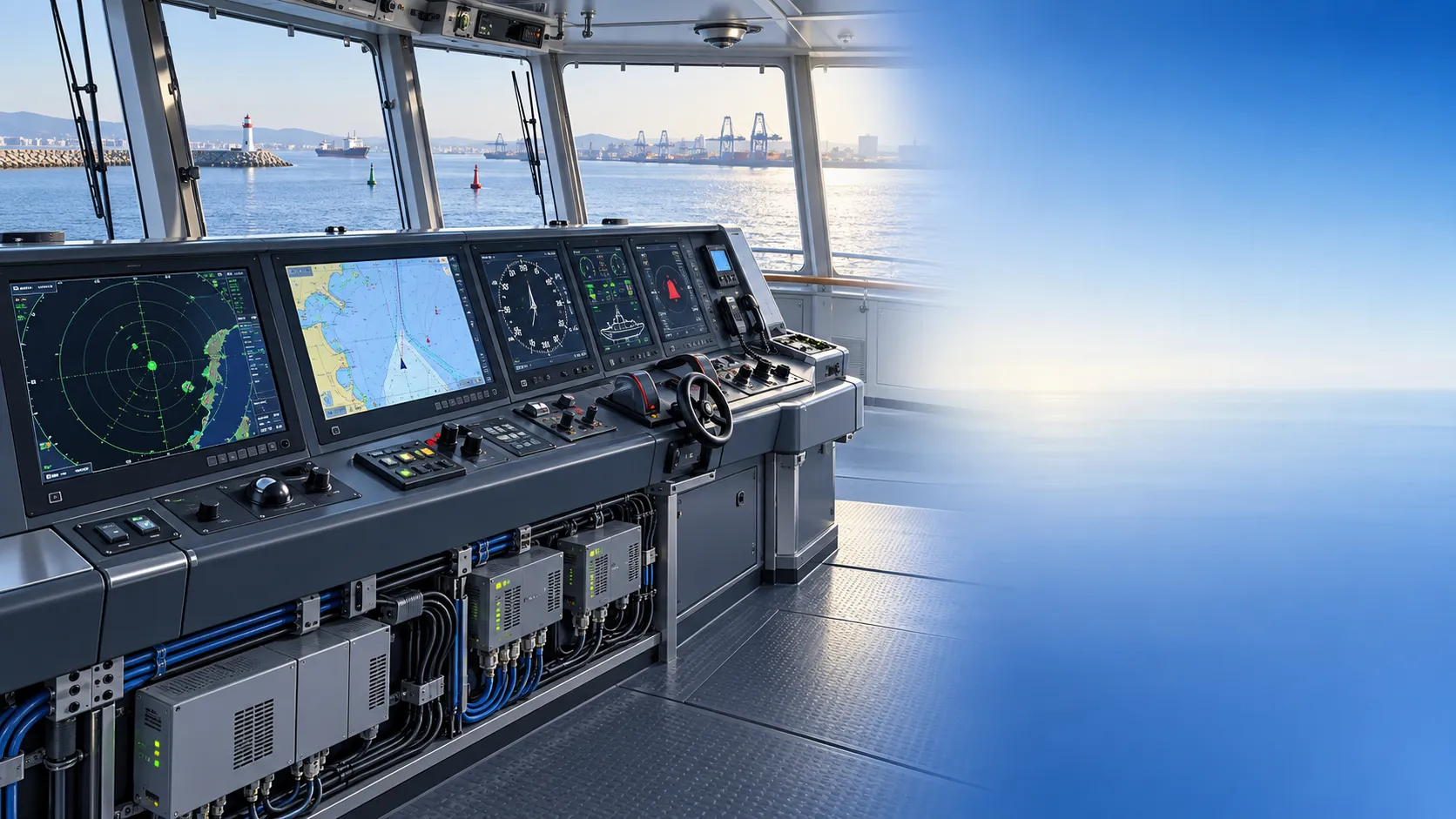
How to Specify Integrated Marine Electronics for Reliable Bridge Operations
Integrated marine electronics: learn how to specify reliable bridge systems with clear data flows, redundancy, alarm control, lifecycle interfaces, and operational testing.

How to Evaluate Navigation Radar Manufacturers for Commercial Vessel Projects
Navigation radar manufacturers: learn how to compare performance, compliance, integration, support, and lifecycle cost for commercial vessel projects.

How Adjustable Cabin Ergonomics Reduce Operator Fatigue in Long-Shift Vehicles
Adjustable cabin ergonomics reduces operator fatigue through better seating, reach, visibility, vibration control, and climate comfort for safer long-shift vehicles.

How Rear-Impact Safety Components Work Together to Protect Vehicle Occupants
Explore how automotive safety components for rear impact work together—from crash structures and seats to head restraints and belts—to enhance occupant protection.
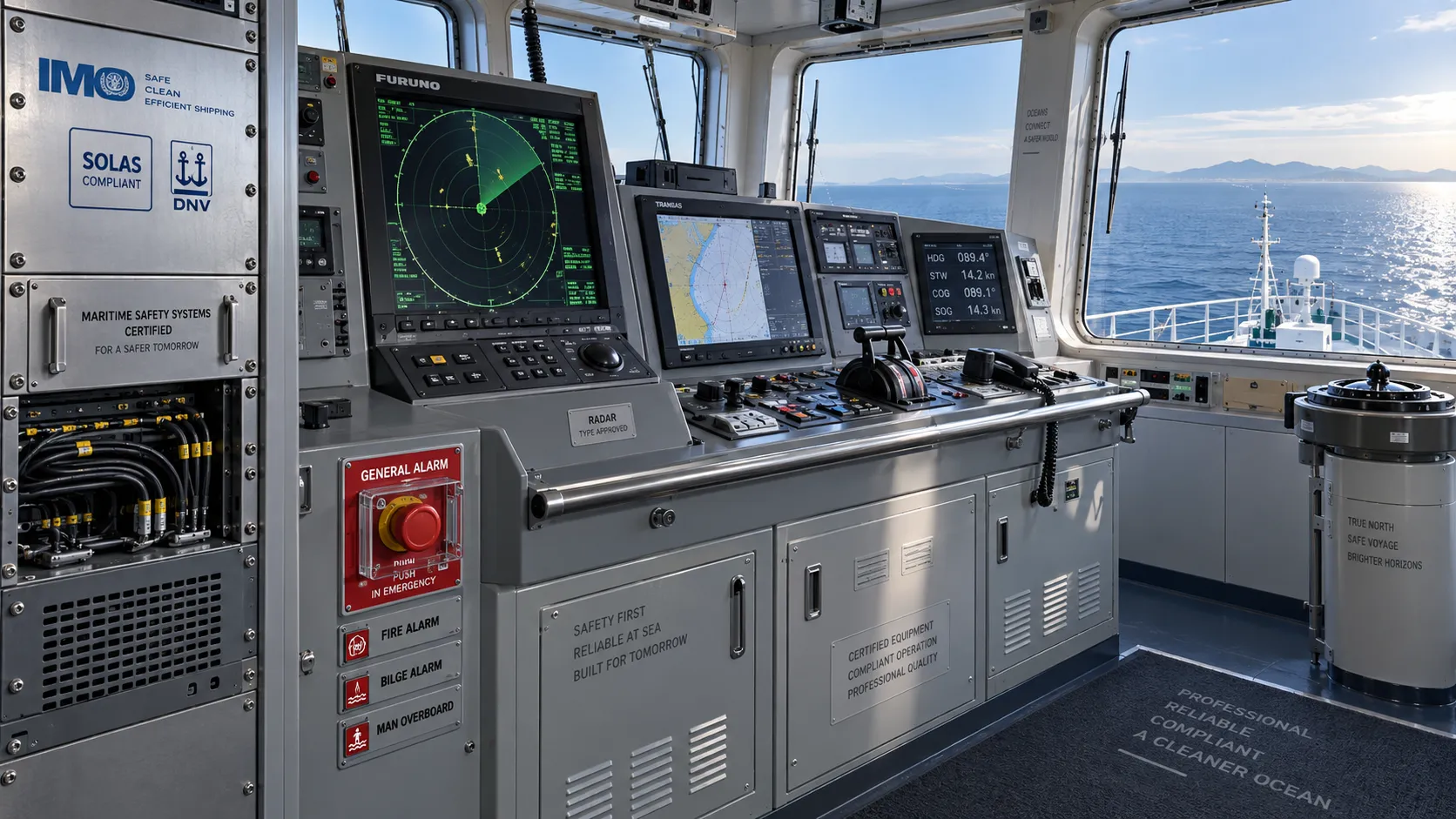
How to Evaluate a Marine Safety Systems Manufacturer for Vessel Compliance and Reliability
Marine safety systems manufacturer evaluation guide: verify compliance, engineering quality, lifecycle costs, and global service support for safer, reliable vessel operations.
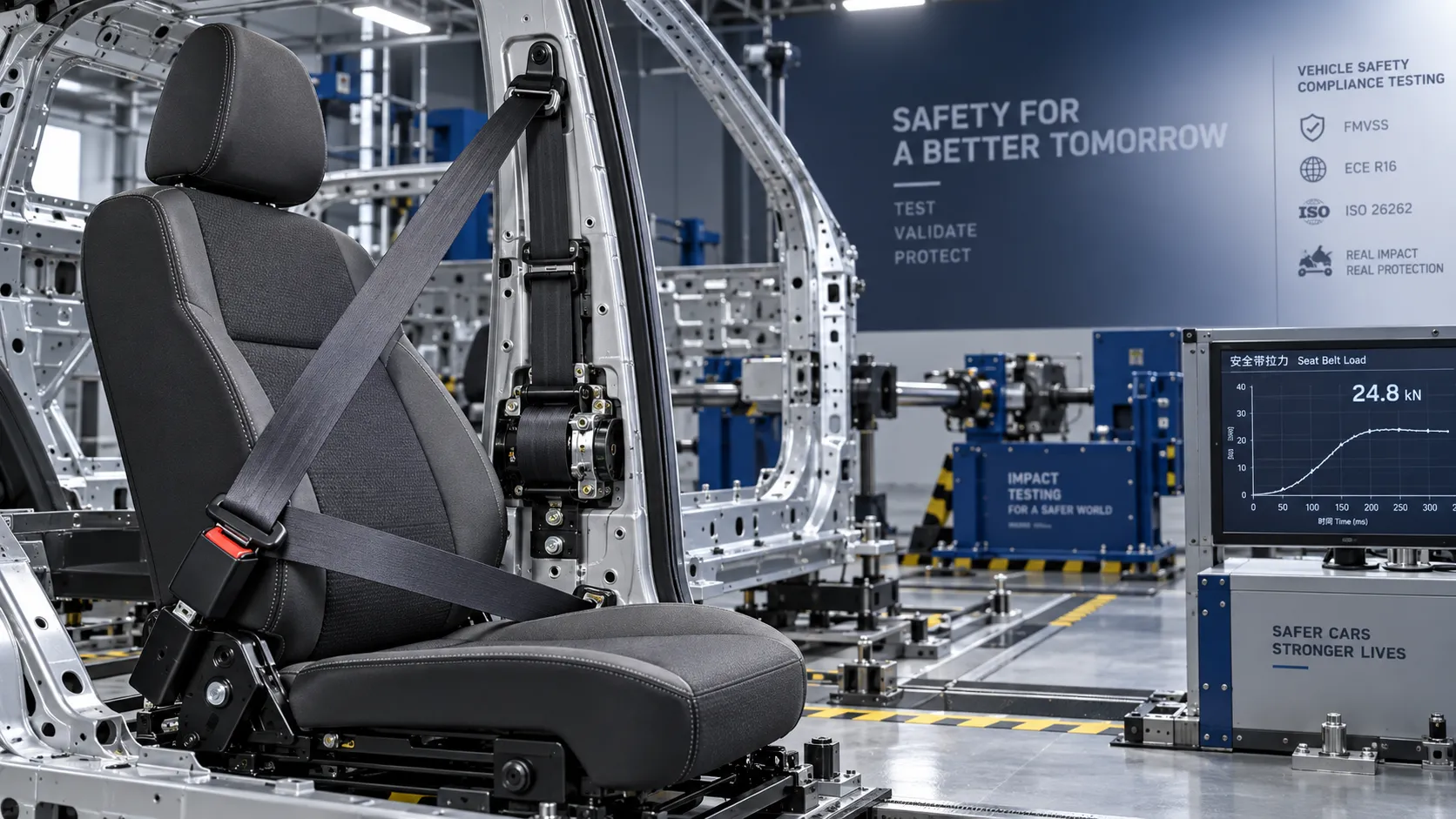
Crash Test Regulations for Seatbelts: Key Compliance Requirements Explained
Crash test regulations seatbelts explained: explore FMVSS, UN rules, anchorage strength, and dynamic restraint testing for safer, compliant vehicle systems.

How to Calculate the Total Cost of Automotive Lightweighting for a Vehicle Program
Automotive lightweight solutions cost: learn how to calculate program-level costs, including materials, tooling, joining, validation, risk, and vehicle-level value.

How Automotive Seat Occupancy Sensing Improves Airbag Deployment Decisions
Automotive seat occupancy sensing helps optimize airbag deployment decisions, improving passenger classification, safety diagnostics, and compliance across real-world conditions.

What Drives Lightweight Body Component Costs in High-Volume Vehicle Programs?
Lightweight body components cost depends on material yield, forming, joining, tooling, validation, and logistics. Explore proven ways to optimize total vehicle program cost.
Related News
- 00
0000-00
How to Specify Integrated Marine Electronics for Reliable Bridge Operations - 00
0000-00
How Adjustable Cabin Ergonomics Reduce Operator Fatigue in Long-Shift Vehicles - 00
0000-00
How to Evaluate a Marine Safety Systems Manufacturer for Vessel Compliance and Reliability - 00
0000-00
How to Calculate the Total Cost of Automotive Lightweighting for a Vehicle Program - 00
0000-00
What Drives Lightweight Body Component Costs in High-Volume Vehicle Programs?
Weekly Insights
Stay ahead with our curated technology reports delivered every Monday.