
Supplier Solution References Cost: What Buyers Should Check Before Requesting a Quote
Supplier Solution References Cost: why does it matter before you ask for a quote?
Price comparisons often begin too early. The better starting point is reference quality.
That is where supplier solution references cost becomes more than a line-item concern.
In marine navigation, passive safety, and mobility equipment, references reveal how a solution performs under real constraints.
A low quote can hide engineering gaps, weak validation, or expensive support obligations after launch.
A stronger quote may include tested compliance paths, field data, and fewer changes later.
GNCS follows this logic closely across navigation systems, body stampings, airbag assemblies, seatbelt systems, and smart seating.
Its industry lens shows that reference strength usually affects total procurement value more than initial unit price.
So the practical question is not only, “What is the quote?”
It is also, “What reference-backed cost structure supports that quote?”
What does supplier solution references cost actually include?
In practice, it refers to the cost signals hidden inside a supplier’s proven project history.
Those signals may include validation effort, tooling adaptation, certification readiness, integration support, and service depth.
For example, a radar supplier with offshore deployment references may already understand harsh electromagnetic environments.
That usually reduces testing repetition, documentation rework, and software adjustment time.
The same pattern appears in hot-stamped parts and restraint systems.
A supplier with references in IIHS, E-NCAP, or platform-specific crash programs typically prices from experience, not guesswork.
That does not always mean cheaper. It often means more predictable.
When evaluating supplier solution references cost, separate three layers:
- Reference acquisition cost: site visits, sample checks, audits, and engineering reviews.
- Reference maturity value: how much prior work lowers new-project uncertainty.
- Reference transferability risk: whether past success truly matches your application.
This is why generic references are less useful than adjacent references.
A seat supplier experienced in luxury comfort modules may still struggle with rugged fleet durability targets.
Which references are worth checking, and which ones only look impressive?
Not every reference carries the same decision value.
The most useful ones connect directly to your operating environment, safety threshold, and implementation pace.
A good reference answers whether the supplier solved a similar problem under similar pressure.
That may involve seawater corrosion exposure, lightweight forming tolerance, inflator chemistry compliance, or seat sensor calibration.
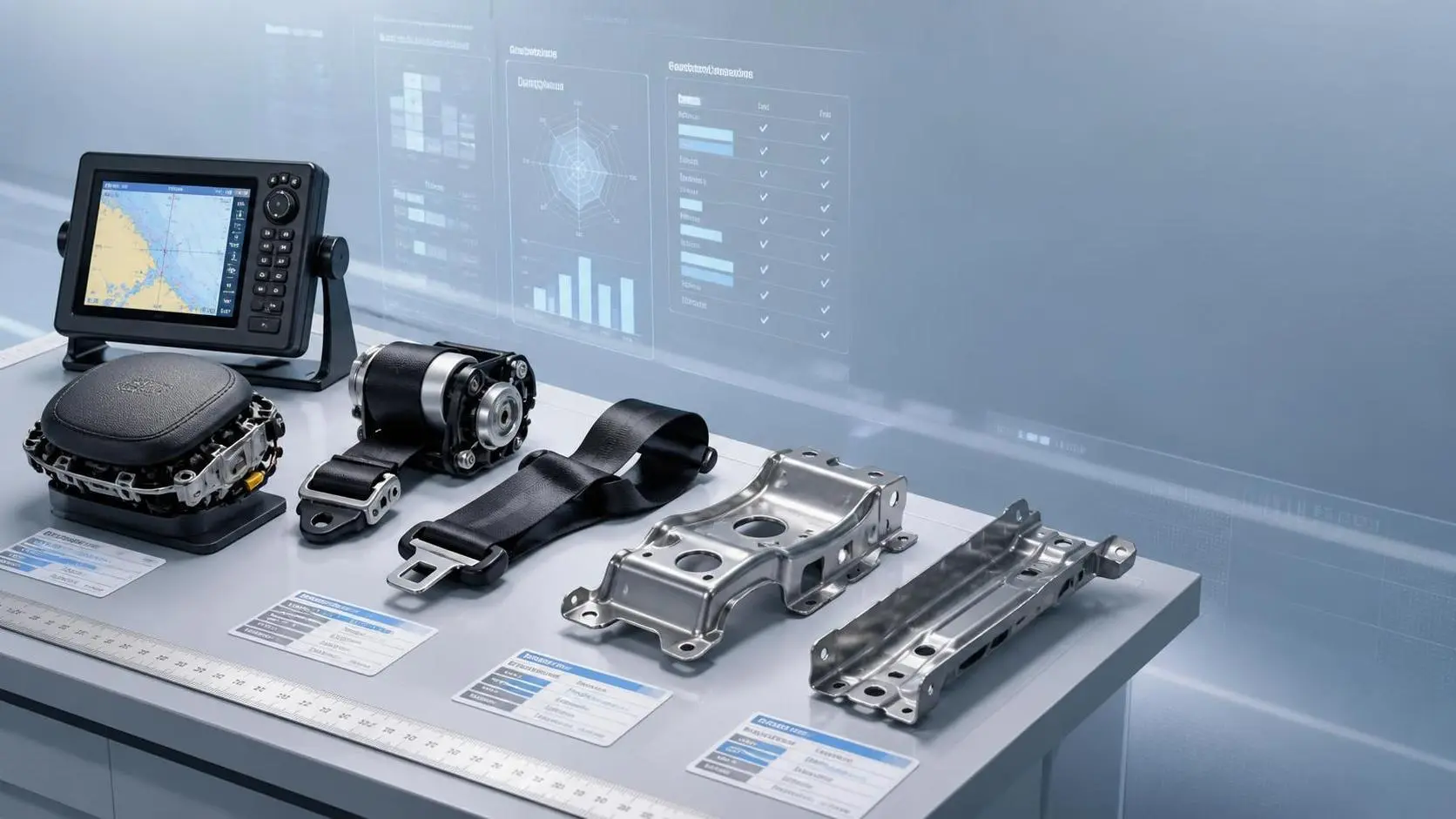
The table below helps sort references before the RFQ stage.
Impressive brand names alone are not enough.
A reference becomes weak when the supplier cannot explain scope, metrics, or lessons learned.
That often leads to vague pricing and unstable assumptions inside supplier solution references cost.
Can strong references really lower total cost, even when the quote is higher?
Yes, and this is where many sourcing decisions become clearer.
The initial quote reflects only visible cost. References often expose the hidden part.
A supplier with proven ECDIS update management or sonar integration may charge more upfront.
Yet that premium may avoid extra validation rounds, delayed vessel acceptance, or cyber patching issues.
In passive safety, the effect can be even larger.
A lower-cost inflator or seatbelt module without robust compliance references can trigger redesign, retesting, and warranty exposure.
Those costs rarely appear in early comparisons.
More useful questions include:
- How many engineering changes were needed in similar deployments?
- How often did launch timing slip because assumptions were incomplete?
- What service burden followed installation or SOP?
- Did prior customers need additional third-party validation?
If those answers are solid, a higher quote may actually indicate lower total lifecycle cost.
That is the practical reading of supplier solution references cost.
What should be confirmed before requesting a quote?
Requesting quotations too early creates noisy comparisons.
More often than not, the supplier is pricing around uncertainty you have not closed yet.
A short pre-quote checklist improves both speed and quote quality.
- Define the exact operating scenario, not only the product category.
- List mandatory standards, test levels, and regional compliance paths.
- Clarify what can be standard and what must be customized.
- Ask for references that match risk level, not only shipment volume.
- Confirm ownership of drawings, software changes, and validation data.
- Review support expectations across installation, launch, and field maintenance.
GNCS intelligence coverage is useful here because cross-domain risk often looks different from purchase to purchase.
A navigation component may fail through update protocol weakness.
A body stamping issue may come from material behavior during forming.
A seating system problem may emerge from sensors, comfort functions, and durability interacting together.
Without these checks, supplier solution references cost becomes harder to interpret, and quotes become less comparable.
Where do buyers usually misread supplier solution references cost?
One common mistake is treating all references as proof of future fit.
A supplier may have many references, but none under your exact regulatory or environmental conditions.
Another mistake is ignoring the age of the reference.
Older projects may predate new safety protocols, digital update requirements, or material changes.
This is especially relevant in areas tracked by GNCS, where regulation and engineering iteration move quickly.
A third mistake is asking only for customer names.
The stronger approach is to ask for project boundaries, qualification scope, deviation handling, and post-launch performance.
It also helps to compare reference depth against quote structure.
If the quote assumes extensive customization, but references show only standard deliveries, risk is rising.
If the quote is very low, but service references are thin, downstream cost is probably being shifted forward.
How should the final decision be framed before moving forward?
The best decisions connect quote data with evidence from prior execution.
That means reading supplier solution references cost as a decision tool, not as a paperwork exercise.
A practical decision frame includes four checks.
- Fit: do the references match the intended technical and regulatory reality?
- Predictability: can the supplier explain cost drivers with evidence?
- Transferability: will prior experience shorten your implementation path?
- Supportability: what happens when deployment conditions change after award?
When those answers are documented, quote reviews become sharper and internal alignment becomes easier.
Before requesting final pricing, organize requirement boundaries, shortlist reference-based questions, and identify non-negotiable compliance items.
Then compare offers against expected lifecycle effort, not price alone.
That is usually the most reliable way to turn supplier solution references cost into a smarter sourcing decision.
Related News

How to Evaluate Custom Smart Automotive Seating for Premium Vehicle Programs?
Custom smart automotive seating evaluation starts with safety, comfort, integration, and production readiness. Discover how premium vehicle teams choose smarter, lower-risk seat solutions.
B2B Product Intelligence Platforms: How to Compare Features, Data Coverage, and ROI
B2B product intelligence platform comparison: learn how to evaluate data coverage, feature depth, compliance visibility, and ROI to choose a sourcing tool that reduces risk and speeds decisions.

Climate Control Seats Cost: What Drives Price and Long-Term Ownership Value?
Climate control seats cost depends on materials, thermal tech, and integration. Learn what drives price and how to judge long-term value before you buy.

What Factors Drive Marine Navigation Components Cost in Commercial Vessel Projects?
Marine navigation components cost is shaped by integration, compliance, installation, and lifecycle support. Discover what drives pricing and how buyers can reduce risk while improving value.

How Much Does Seat Occupancy Sensing Cost? Key Pricing Factors for Buyers
Seat occupancy sensing price varies widely by technology, integration, and compliance needs. Learn the key cost drivers, avoid hidden fees, and make smarter buying decisions.

How to Specify Micro-Climate Control Cabins for Harsh Outdoor Worksites?
Micro-climate control cabins for harsh outdoor worksites: learn how to specify thermal control, filtration, pressurization, and durability for safer uptime and smarter buying.
How to Evaluate a B2B Product Knowledge Platform for Faster Procurement Decisions
B2B product knowledge platform procurement starts with reducing decision risk. Learn how to compare specs, compliance, and supplier data to speed sourcing with confidence.

How to Evaluate an Occupant Restraint Systems Exporter for Quality, Compliance, and Supply Risk
Occupant restraint systems exporter evaluation guide: learn how to verify quality controls, compliance evidence, and supply risk before sourcing to avoid recalls, delays, and hidden costs.

Navigation Compliance Certification: Which Marine Systems Need It and How to Prepare?
Navigation compliance certification explained: discover which marine systems need approval, what documents matter, and how to prepare early to avoid delays, rework, and costly project risks.
Related News
- 00
0000-00
B2B Product Intelligence Platforms: How to Compare Features, Data Coverage, and ROI - 00
0000-00
What Factors Drive Marine Navigation Components Cost in Commercial Vessel Projects? - 00
0000-00
How Much Does Seat Occupancy Sensing Cost? Key Pricing Factors for Buyers - 00
0000-00
How to Specify Micro-Climate Control Cabins for Harsh Outdoor Worksites? - 00
0000-00
How to Evaluate a B2B Product Knowledge Platform for Faster Procurement Decisions
Weekly Insights
Stay ahead with our curated technology reports delivered every Monday.