Navigation Compliance Standards: Key Risks in ECDIS Upgrades
As ECDIS modernization accelerates across global fleets, navigation compliance standards have become a critical checkpoint for quality and safety managers. A single upgrade can introduce chart inconsistencies, software validation gaps, or certification risks that directly affect voyage safety and regulatory readiness. This article highlights the key compliance threats hidden in ECDIS upgrades and helps decision-makers build a more controlled, audit-ready navigation environment.
For quality control teams and safety managers, ECDIS upgrades are not simply IT events. They affect bridge procedures, chart handling, alarm behavior, crew familiarization, and documentary evidence during inspections. In a sector where one missed update cycle, one incompatible chart layer, or one unverified software patch can trigger non-conformity findings, navigation compliance standards must be built into every stage of the upgrade process.
Within GNCS’s broader focus on precision perception and safety-critical systems, ECDIS modernization stands out as a practical example of how digital performance and compliance discipline must work together. The real challenge is not whether to upgrade, but how to control risk across validation, implementation, acceptance, and ongoing audit readiness.
Why ECDIS Upgrades Create Compliance Exposure
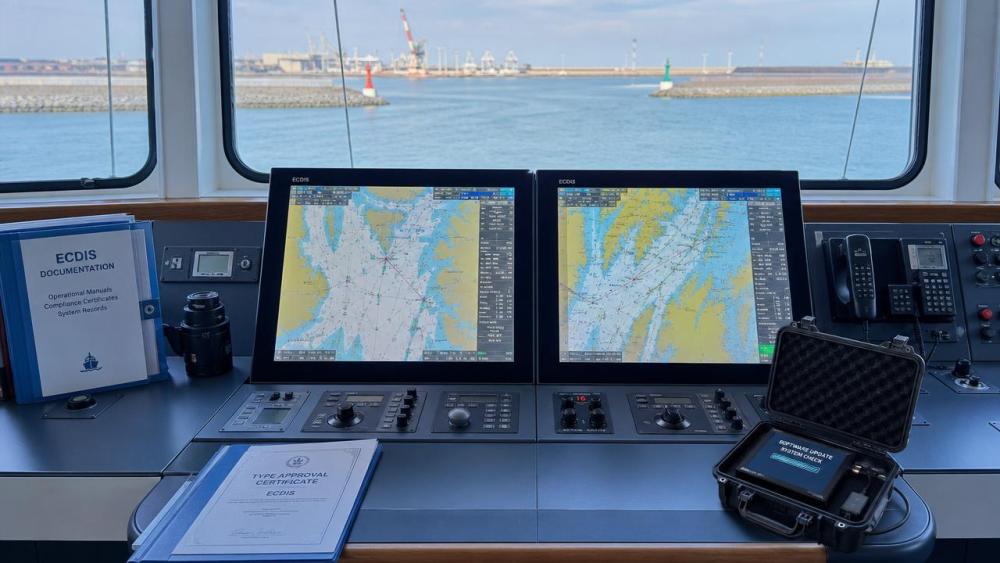
An ECDIS upgrade often appears routine because the installation window may take only 2 to 6 hours per vessel. However, the compliance footprint is much larger. A change in software version can alter symbol rendering, route-check logic, chart compatibility, user permissions, and backup behavior. For safety managers overseeing 10, 30, or more vessels, even a small mismatch across the fleet can multiply inspection risk.
Navigation compliance standards matter because regulators, flag administrations, class societies, and internal auditors do not assess the upgrade by intention alone. They look for evidence: software version control, approval status, training records, test logs, chart update integrity, and bridge team familiarity. If one of these elements is missing, a technically successful upgrade can still become a compliance failure.
The 4 most common sources of upgrade-related non-conformity
- Software installed without complete post-upgrade functional verification
- ENC and system library mismatch after patching or migration
- Incomplete crew familiarization records within 24 to 72 hours after commissioning
- Missing evidence that the upgraded configuration remains aligned with approved navigation compliance standards
Operational impact goes beyond the bridge console
When an upgrade changes alarm thresholds, route validation behavior, or display layers, the consequences can extend into voyage planning, internal reporting, and incident investigation. A route that passed validation before an upgrade may generate warnings afterward. If this change is not documented and communicated, bridge teams may either ignore critical alarms or overreact to nuisance alerts, both of which weaken navigational safety.
In practical terms, quality teams should treat every upgrade as a controlled change event with at least 3 checkpoints: pre-upgrade verification, installation control, and post-upgrade acceptance. This approach reduces variation across vessels and strengthens traceability during Port State Control reviews or internal audits.
The table below maps major compliance exposure areas to their likely operational effects and preferred control actions. It can be used as a quick internal review tool before fleet-wide rollout.
The key lesson is that compliance risk does not come from software alone. It usually appears where software, documentation, and human factors intersect. A robust navigation compliance standards program must therefore control all 3 dimensions together rather than treating the upgrade as a technical isolated task.
Key Risks Hidden in ECDIS Modernization Projects
The most serious ECDIS upgrade risks are often hidden inside normal project language such as “migration,” “patching,” or “system refresh.” For procurement teams, technical managers, and shipboard safety personnel, the critical issue is whether the project plan translates into measurable control points. If it does not, navigation compliance standards may be compromised even when the vessel appears operational.
1. Incomplete software validation
Validation should cover more than startup success. At minimum, the onboard team should confirm route planning, route monitoring, alarm generation, position input switching, sensor integration, chart import, and backup transfer behavior. A 7-item validation set is a practical baseline for most fleets. Skipping even 1 critical test can leave latent defects undiscovered until the vessel is underway.
2. Chart and data inconsistency after update
Upgrades sometimes affect chart rendering libraries, update agents, or storage paths. As a result, the system may display outdated layers, reject valid updates, or produce inconsistent route-check outcomes between primary and backup stations. This is one of the most overlooked threats to navigation compliance standards because it may not be obvious during a quick reboot test.
3. Documentation gaps during inspection cycles
A vessel may be technically compliant but still exposed if records are fragmented across ship, office, and vendor systems. Inspectors typically ask for evidence within minutes, not days. If the ship cannot show upgrade date, version number, approval trail, functional test record, and familiarization evidence in one place, the risk of observation or deficiency rises sharply.
4. Human-machine familiarization failures
Even minor interface changes can alter operator behavior. A menu relocation, revised alert hierarchy, or modified route-check prompt can lead to hesitation during time-critical navigation. For this reason, post-upgrade familiarization should not be a passive sign-off. It should include at least 3 tasks: creating a route, testing alarm acknowledgement, and confirming backup access.
Risk priority should be based on consequence and detectability
Quality managers often prioritize by severity alone, but ECDIS compliance control is more effective when each risk is assessed against two variables: consequence if missed and detectability before departure. A chart mismatch may have medium visibility but high consequence, while a missing training sign-off may have high visibility and medium consequence. This distinction helps teams allocate resources more efficiently.
A Practical Control Framework for Quality and Safety Managers
To keep navigation compliance standards under control, fleets need a repeatable framework rather than vessel-by-vessel improvisation. In most organizations, the most effective model uses 5 stages: preparation, technical verification, installation control, operational acceptance, and evidence retention. This structure supports both safety outcomes and inspection readiness.
Stage 1: Preparation before onboard deployment
- Confirm software scope, release notes, and affected functions.
- Verify approval status and compatibility with existing hardware and chart services.
- Define a vessel rollout sequence, usually in batches of 3 to 8 ships.
- Prepare rollback instructions if post-installation tests fail.
- Assign accountable persons from office, vessel, and service provider sides.
Stage 2: Installation and technical verification
During installation, version control is essential. Teams should log pre-upgrade and post-upgrade software numbers, time stamps, installer identity, and any deviations from the standard package. A disciplined process can reduce post-upgrade troubleshooting time from several hours to less than 60 minutes because root causes become easier to trace.
Stage 3: Operational acceptance on the vessel
Operational acceptance should happen before the next critical voyage segment whenever possible. That means route creation, alarm confirmation, chart display checks, backup station synchronization, and user access review should be completed in one controlled session. For most ships, a 45 to 90 minute acceptance protocol is realistic and sufficient when standardized.
The following checklist table provides a compact acceptance model that aligns technical and compliance objectives for safety-focused fleet managers.
This structure helps organizations convert navigation compliance standards from a policy statement into an auditable operating routine. The strongest fleets are usually not those with the newest systems, but those with the most disciplined configuration control and evidence management.
Stage 4: Documentation and audit readiness
A practical target is to close the documentation loop within 24 to 48 hours after onboard completion. Waiting until the next inspection is too late. Files should be stored in both shipboard and shore-based repositories, with one clearly named package containing software details, test records, crew briefing evidence, and any deviation notes.
Useful internal KPIs
- Upgrade documentation closure rate within 48 hours
- Percentage of vessels using the same approved software build
- Number of post-upgrade defects detected before departure
- Average familiarization completion time per bridge team
What Buyers and Decision-Makers Should Ask Vendors
When selecting an ECDIS upgrade partner, procurement and safety teams should evaluate more than price or installation speed. A lower service quote may exclude post-upgrade verification, training support, or documentary packaging. For compliance-sensitive fleets, these missing elements can cost far more during corrective action, detention risk, or internal rework.
5 vendor questions that protect navigation compliance standards
- What functions are changed in this software version, and how are they verified onboard?
- What approval references and release documents are included with the upgrade package?
- How is chart compatibility checked after installation?
- What is the standard post-upgrade test script and how long does it take?
- What records will be delivered to support audit and inspection requirements?
Common purchasing mistake: buying installation, not compliance assurance
Many buyers compare only service window, engineer availability, and direct cost. But quality-focused purchasing should also score deliverables across 4 categories: technical validation, crew support, documentation completeness, and rollback capability. Even a difference of 1 to 2 service items can materially affect the fleet’s compliance posture.
For organizations that operate across multiple flag regimes or inspection-heavy trading areas, a vendor’s ability to support consistent documentation may be as important as the upgrade itself. This is where intelligence-led review, such as the type promoted by GNCS in safety-critical mobility sectors, adds strategic value: it links technical change to operational assurance and commercial decision quality.
Final Recommendations for an Audit-Ready Upgrade Strategy
ECDIS modernization is unavoidable, but unmanaged modernization creates avoidable exposure. The safest path is to embed navigation compliance standards into every upgrade decision, from vendor selection to final document archiving. For quality control personnel and safety managers, the goal is not only a working system, but a verified, understood, and inspectable one.
A disciplined program should include a 5-stage control flow, a 7-item functional validation set, a 24 to 48 hour documentation closure target, and structured crew familiarization after every material software change. These measures reduce hidden risk, improve fleet consistency, and support safer voyage execution under real operating pressure.
If your team is reviewing upgrade pathways, supplier readiness, or compliance control methods for marine navigation systems, now is the right time to standardize the process. Contact GNCS to discuss a more controlled ECDIS upgrade framework, request a tailored compliance review checklist, or learn more solutions for audit-ready navigation performance.
Related News
How to Specify Integrated Marine Electronics for Reliable Bridge Operations
Integrated marine electronics: learn how to specify reliable bridge systems with clear data flows, redundancy, alarm control, lifecycle interfaces, and operational testing.

How to Evaluate Navigation Radar Manufacturers for Commercial Vessel Projects
Navigation radar manufacturers: learn how to compare performance, compliance, integration, support, and lifecycle cost for commercial vessel projects.

How Adjustable Cabin Ergonomics Reduce Operator Fatigue in Long-Shift Vehicles
Adjustable cabin ergonomics reduces operator fatigue through better seating, reach, visibility, vibration control, and climate comfort for safer long-shift vehicles.

How Rear-Impact Safety Components Work Together to Protect Vehicle Occupants
Explore how automotive safety components for rear impact work together—from crash structures and seats to head restraints and belts—to enhance occupant protection.
How to Evaluate a Marine Safety Systems Manufacturer for Vessel Compliance and Reliability
Marine safety systems manufacturer evaluation guide: verify compliance, engineering quality, lifecycle costs, and global service support for safer, reliable vessel operations.

Crash Test Regulations for Seatbelts: Key Compliance Requirements Explained
Crash test regulations seatbelts explained: explore FMVSS, UN rules, anchorage strength, and dynamic restraint testing for safer, compliant vehicle systems.

How to Calculate the Total Cost of Automotive Lightweighting for a Vehicle Program
Automotive lightweight solutions cost: learn how to calculate program-level costs, including materials, tooling, joining, validation, risk, and vehicle-level value.

How Automotive Seat Occupancy Sensing Improves Airbag Deployment Decisions
Automotive seat occupancy sensing helps optimize airbag deployment decisions, improving passenger classification, safety diagnostics, and compliance across real-world conditions.

What Drives Lightweight Body Component Costs in High-Volume Vehicle Programs?
Lightweight body components cost depends on material yield, forming, joining, tooling, validation, and logistics. Explore proven ways to optimize total vehicle program cost.
Related News
- 00
0000-00
ECDIS Systems for Ships: Compliance Requirements, Core Functions, and Buying Checklist - 00
0000-00
Navigation Compliance for Marine Systems: Key Rules, Certificates, and Approval Steps - 00
0000-00
How to Choose Marine Navigation Systems for Coastal, Offshore, and Port Operations - 00
0000-00
How Navigation Intelligence Affects Route Planning, Fuel Use, and Bridge Decisions - 00
0000-00
ECDIS Update Protocols: How to Manage Chart, Software, and Safety Data Correctly
Weekly Insights
Stay ahead with our curated technology reports delivered every Monday.