
Automatic Identification Systems: Common Setup Errors That Affect Tracking
For users and operators, automatic identification systems are only as reliable as their setup. A few overlooked configuration mistakes can lead to weak signal visibility, inaccurate vessel data, and serious tracking gaps. Understanding these common errors is essential for safer navigation, smoother compliance, and more dependable maritime situational awareness in real-world operations.
Why setup quality matters in different automatic identification systems scenarios
In marine operations, the value of automatic identification systems changes with the operating scene. A coastal patrol craft, a fishing vessel, a harbor workboat, and an ocean-going commercial ship may all use AIS, but their tracking priorities are not identical. Some need stable short-range awareness in congested ports, while others depend on persistent long-range identity broadcasting in offshore corridors. The same setup error can therefore create very different risks depending on route density, antenna height, voyage duration, and compliance exposure.
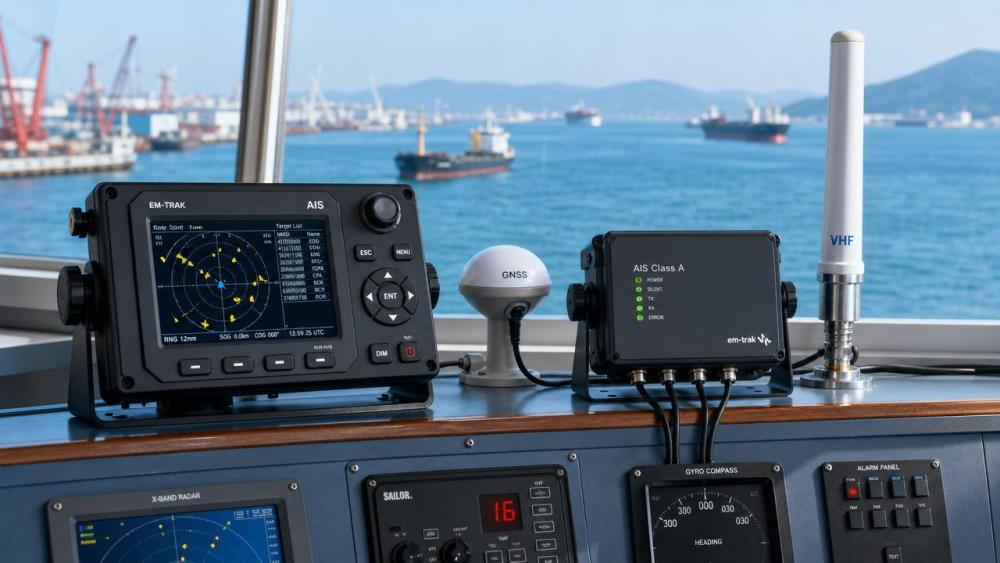
This is why configuration should never be treated as a one-time technical checkbox. In the wider mobility and safety context observed by GNCS, precise spatial perception begins with clean data foundations. When automatic identification systems are incorrectly installed or configured, bridge teams may face delayed target recognition, vessel databases may display outdated static information, and shore-based monitoring may misread identity, position, or voyage status. Setup discipline directly supports navigation safety, operational transparency, and interoperability with radar, ECDIS, VTS, and fleet intelligence platforms.
Scenario 1: Port and nearshore traffic where tracking gaps become immediately visible
In busy ports and nearshore lanes, automatic identification systems work under high target density. Here, even small setup errors quickly create visible consequences. If MMSI, vessel dimensions, or position source settings are wrong, nearby ships and shore stations may receive conflicting information. In tight maneuvering conditions, a wrong bow reference or incorrect GPS offset can distort where the vessel appears on another screen, making close-quarters decisions less reliable.
Another frequent issue in this scenario is poor antenna placement. AIS antennas mounted too close to radar scanners, metal obstructions, or other RF sources often suffer degraded transmission quality. In a port approach, where buildings, cranes, and vessel superstructures already complicate signal paths, weak installation decisions can reduce visibility exactly when continuous broadcasting matters most. The core judgment point in this scene is simple: if the vessel operates in congestion, setup accuracy must prioritize position integrity, update consistency, and clean VHF performance.
Scenario 2: Offshore and blue-water routes where small errors scale into long blind periods
On long offshore passages, common automatic identification systems errors may not be obvious at departure, but they become costly over distance and time. A mismatched GNSS input, unstable power supply, or poorly configured baud rate on connected devices can create intermittent dropouts that only appear after hours of operation. Because traffic density is lower offshore, these issues may go unnoticed until a tracking platform shows irregular reporting intervals or a counterpart vessel fails to identify the ship at expected range.
Static data mistakes are also more serious in international routes. Incorrect call sign, vessel type code, destination, or ETA entries reduce the operational usefulness of the broadcast and can trigger unnecessary questions during monitoring or inspection. In this scene, the key judgment point is endurance: automatic identification systems must remain accurate not just at dockside testing but across changing sea states, power conditions, and satellite-navigation environments.
Scenario 3: Workboats, fishing vessels, and mixed-use fleets with inconsistent maintenance routines
Smaller commercial vessels and mixed-use fleets often face a different challenge: inconsistent maintenance and undocumented changes. A replacement antenna may be installed without checking cable loss. A chart plotter update may alter data-sharing behavior. A transponder may be reset and left with default values. In such environments, automatic identification systems problems are rarely caused by a single dramatic failure; they usually result from cumulative minor deviations that weaken tracking reliability over time.
This scenario demands a practical judgment approach. If equipment has changed, wiring has been modified, or vessel identity data has been manually re-entered, verification should include live transmission checks, static data review, and comparison against independent position sources. For fleets operating across varying duty cycles, disciplined setup control is often more valuable than adding new hardware. Reliable automatic identification systems depend on repeatable configuration governance as much as on the transponder itself.
The most common setup errors and how their impact differs by scene
The following comparison highlights where typical automatic identification systems mistakes create the greatest operational exposure.
How to adapt automatic identification systems checks to real operating needs
A useful setup strategy for automatic identification systems should reflect operating context instead of following a generic checklist only. The most effective approach is to match verification depth to scene complexity, risk exposure, and reporting dependence.
- For port-intensive operations: confirm MMSI, call sign, vessel dimensions, GPS offset, and live local reception before each active cycle.
- For offshore routing: test transmission continuity over time, monitor power stability, and verify integration with ECDIS and bridge navigation sensors.
- For workboat or seasonal fleets: establish a post-maintenance recommissioning routine that includes antenna testing, software setting review, and static data confirmation.
- For compliance-sensitive operations: maintain configuration records so any change in identity data, equipment serials, or installation geometry can be traced and validated.
This adaptive method aligns with the broader GNCS view that high-value safety systems depend on intelligence stitching across equipment, regulation, and use conditions. Automatic identification systems perform best when setup, diagnostics, and operational review are treated as one connected process rather than isolated tasks.
Common misjudgments that cause automatic identification systems issues to be overlooked
Several assumptions repeatedly allow AIS problems to persist. One is believing that if a screen shows nearby targets, the vessel’s own outbound transmission must also be healthy. Reception and transmission quality are not the same. Another is assuming that a recent installation automatically means a correct installation. New equipment can still carry wrong vessel data, poor grounding, or antenna shadowing.
A third misjudgment is treating static data as administrative rather than operational. In reality, wrong ship type, dimensions, or destination can affect collision awareness, traffic coordination, and trust in tracking platforms. Finally, many operators underestimate the effect of incremental modifications. Replacing a connector, moving an antenna, adding another RF device, or changing a power distribution point can all degrade automatic identification systems performance without causing immediate total failure.
Quick warning signs worth investigating
- The vessel appears inconsistently on third-party tracking platforms.
- Reported position seems offset during docking or pilot boarding.
- Identity data differs across onboard and shore-side records.
- Transmission issues occur after maintenance, electrical work, or antenna replacement.
Next-step actions for stronger tracking reliability
Improving automatic identification systems performance starts with a structured field review. First, verify all static vessel data against official documentation. Second, inspect antenna placement, cable condition, connectors, and grounding. Third, confirm the GNSS source, reference offsets, and interface settings with connected bridge systems. Fourth, perform a live transmission validation rather than relying only on local display behavior. Fifth, document the final configuration so future maintenance does not silently undo correct settings.
In an industry where navigation precision, signal integrity, and safety compliance increasingly overlap, setup discipline is a practical competitive advantage. For organizations following GNCS insights across marine navigation and broader mobility safety systems, the lesson is consistent: reliable perception begins with reliable configuration. When automatic identification systems are matched to their operating scene and checked with intention, tracking becomes clearer, safer, and far more dependable in real operations.
Related News
How to Specify Integrated Marine Electronics for Reliable Bridge Operations
Integrated marine electronics: learn how to specify reliable bridge systems with clear data flows, redundancy, alarm control, lifecycle interfaces, and operational testing.

How to Evaluate Navigation Radar Manufacturers for Commercial Vessel Projects
Navigation radar manufacturers: learn how to compare performance, compliance, integration, support, and lifecycle cost for commercial vessel projects.

How Adjustable Cabin Ergonomics Reduce Operator Fatigue in Long-Shift Vehicles
Adjustable cabin ergonomics reduces operator fatigue through better seating, reach, visibility, vibration control, and climate comfort for safer long-shift vehicles.

How Rear-Impact Safety Components Work Together to Protect Vehicle Occupants
Explore how automotive safety components for rear impact work together—from crash structures and seats to head restraints and belts—to enhance occupant protection.
How to Evaluate a Marine Safety Systems Manufacturer for Vessel Compliance and Reliability
Marine safety systems manufacturer evaluation guide: verify compliance, engineering quality, lifecycle costs, and global service support for safer, reliable vessel operations.

Crash Test Regulations for Seatbelts: Key Compliance Requirements Explained
Crash test regulations seatbelts explained: explore FMVSS, UN rules, anchorage strength, and dynamic restraint testing for safer, compliant vehicle systems.

How to Calculate the Total Cost of Automotive Lightweighting for a Vehicle Program
Automotive lightweight solutions cost: learn how to calculate program-level costs, including materials, tooling, joining, validation, risk, and vehicle-level value.

How Automotive Seat Occupancy Sensing Improves Airbag Deployment Decisions
Automotive seat occupancy sensing helps optimize airbag deployment decisions, improving passenger classification, safety diagnostics, and compliance across real-world conditions.

What Drives Lightweight Body Component Costs in High-Volume Vehicle Programs?
Lightweight body components cost depends on material yield, forming, joining, tooling, validation, and logistics. Explore proven ways to optimize total vehicle program cost.
Related News
- 00
0000-00
How to Evaluate Navigation Radar Manufacturers for Commercial Vessel Projects - 00
0000-00
How to Evaluate Cargo Marine Sonar Systems for Detection Range and Vessel Fit - 00
0000-00
How to Evaluate Marine Signal Processing Software for Radar and Sonar Integration - 00
0000-00
How Do Automatic Identification Systems Improve Vessel Tracking and Collision Avoidance? - 00
0000-00
How to Choose Marine Navigation Systems for Patrol Boats in Coastal and Offshore Missions
Weekly Insights
Stay ahead with our curated technology reports delivered every Monday.