
Satellite Positioning Accuracy: What Causes Drift at Sea
For aftermarket maintenance teams, satellite positioning problems at sea rarely come from one isolated defect. In real operating conditions, satellite positioning accuracy is influenced by signal reflections, antenna installation angle, vessel roll and pitch, heavy weather, onboard electronics, and aging receivers. When these factors combine, the result is drift, unstable coordinates, delayed course updates, and reduced confidence in bridge decisions. For marine navigation systems, understanding why satellite positioning drifts in different scenarios is the fastest path to better diagnostics, safer routing, and stronger preventive maintenance planning.
When drift appears at sea, the operating scenario matters more than the symptom

A vessel showing satellite positioning drift in calm coastal water is not facing the same root causes as a vessel losing satellite positioning stability during a storm offshore. The symptom may look similar on screen, but the maintenance logic is different. That is why satellite positioning should be evaluated by scenario rather than by a single alarm code.
In marine environments, satellite positioning depends on clear sky visibility, stable antenna geometry, clean power supply, and healthy integration between GNSS receiver, heading source, autopilot, ECDIS, and AIS. Any weakness in that chain can create apparent drift. In some cases, the receiver is healthy and the displayed error comes from delayed data fusion. In other cases, true satellite positioning degradation is caused by multipath, interference, or outdated firmware. Scenario-based inspection prevents wasted replacement and shortens downtime.
Scenario 1: Coastal navigation often suffers from multipath and local interference
Near ports, breakwaters, cranes, high bridges, and dense ship traffic, satellite positioning accuracy can drop because signals bounce off large metal structures and water surfaces before reaching the antenna. This multipath effect causes the receiver to calculate a position that shifts slightly away from the vessel’s true location. The drift may be small at first, but during low-speed maneuvers even a few meters can become operationally significant.
Another coastal issue is radio-frequency congestion. VHF, radar, communication equipment, and nearby industrial electronics can raise the noise floor and reduce receiver sensitivity. The key judgment point in this scenario is whether the satellite positioning drift appears only in specific harbor sectors or near certain infrastructure. If yes, the likely cause is environmental rather than internal hardware failure. Checking antenna placement, shielding quality, and local interference patterns is usually more effective than replacing the GNSS receiver immediately.
Scenario 2: Offshore passage exposes satellite positioning to vessel motion and weather loading
In open sea, there are fewer reflective structures, but vessel dynamics become a major reason for satellite positioning drift. Heavy roll, pitch, and yaw can temporarily reduce antenna sky tracking quality, especially when the antenna is mounted on a flexible mast or near moving structures. If the installation lacks rigidity, the receiver may experience fluctuating satellite geometry and unstable fix quality during rough weather.
Weather itself also matters. Rain fade is usually less severe for GNSS than for some communication systems, but intense storms, wet antenna surfaces, salt accumulation, and rapid atmospheric changes can still affect signal reliability. The core diagnostic question here is whether satellite positioning drift increases with sea state. If the answer is yes, inspection should focus on antenna foundation strength, cable condition, connector sealing, and whether inertial support or sensor fusion settings are compensating correctly for vessel motion.
Scenario 3: Long-service vessels often show drift from aging components and integration mismatch
On older vessels, satellite positioning issues often come from gradual degradation rather than sudden failure. Antenna radomes may crack, connectors may corrode, coaxial cables may suffer signal loss, and power fluctuations may reduce receiver stability. These faults can create intermittent drift that appears random, especially when the ship vibrates or humidity rises.
Integration is another hidden source of error. A marine navigation display may show poor satellite positioning not because the receiver is wrong, but because the data stream is delayed, the baud rate is mismatched, or the software is applying position smoothing incorrectly. On mixed-generation bridge systems, legacy interfaces can create timing offsets between satellite positioning data and heading updates. The critical judgment point is whether drift is visible only on one display or across all linked systems. If only one device shows the problem, the fault may lie in data integration rather than the satellite source itself.
Scenario 4: High-precision operations require tighter satellite positioning thresholds than normal transit
Not every vessel needs the same satellite positioning accuracy. During routine ocean transit, small drift may be acceptable if cross-checked with radar, gyro, and chart context. But in dredging, offshore support, survey work, pilot boarding, dynamic positioning support, or narrow-channel approach, the tolerance is much lower. In these conditions, what looks like a minor offset can affect track control, equipment coordination, and safety margins.
This is why maintenance standards should reflect operating profile. A system that passes a basic dockside check may still be unsuitable for precision-dependent work. For high-demand scenarios, satellite positioning performance should be reviewed using repeatability, latency, satellite constellation stability, and alarm response time, not only whether the receiver can obtain a fix.
How different marine scenarios change satellite positioning requirements
Practical adaptation steps to improve satellite positioning reliability
A strong response to satellite positioning drift should move from quick observation to structured verification. The most effective approach is to combine physical inspection with data review.
- Verify antenna alignment, mounting height, and clear sky view before testing receiver replacement.
- Inspect coaxial cables, connector corrosion, waterproof sealing, and power stability under load.
- Compare satellite positioning data across ECDIS, AIS, autopilot, and independent handheld or backup references.
- Review firmware, interface settings, NMEA timing, and data refresh intervals after equipment upgrades.
- Record drift against location, weather, and vessel motion to identify repeatable patterns.
- For critical operations, define acceptable satellite positioning tolerance by task, not by generic equipment specification.
Common misjudgments that delay correction of satellite positioning drift
One common mistake is assuming that all drift means the GNSS antenna has failed. In practice, satellite positioning errors are frequently caused by poor installation geometry, loose brackets, software synchronization issues, or bridge equipment interference. Replacing the antenna without checking the full system often leaves the root cause untouched.
Another overlooked point is treating dockside tests as final proof of performance. Satellite positioning may appear stable when the vessel is stationary, then degrade during navigation because vibration, heel angle, and electrical load change the real operating condition. A useful maintenance process therefore includes both static inspection and underway validation.
It is also risky to judge satellite positioning only by whether coordinates are available. A fix can still be inaccurate, delayed, or inconsistent with heading and speed input. The better standard is operational consistency: does the position remain credible across the full bridge system and throughout the vessel’s actual mission profile?
The next step: build a scenario-based checklist for satellite positioning performance
To reduce repeat failures, satellite positioning maintenance should be organized around real marine scenarios: harbor entry, offshore transit, heavy-weather passage, long-service equipment review, and precision operation support. Each scenario needs its own acceptance criteria, inspection points, and verification method. This approach improves troubleshooting speed and helps bridge systems maintain trustworthy navigation data when conditions become demanding.
GNCS continues to track the technologies shaping marine navigation performance, from signal processing and sensor integration to system-level reliability in harsh environments. If satellite positioning drift is affecting route confidence, maintenance efficiency, or equipment planning, the most practical next move is to create a structured fault log, compare scenario-specific symptoms, and align future inspections with actual vessel operating conditions. Better satellite positioning starts with better context, not just better hardware.
Related News

How to Specify Integrated Marine Electronics for Reliable Bridge Operations
Integrated marine electronics: learn how to specify reliable bridge systems with clear data flows, redundancy, alarm control, lifecycle interfaces, and operational testing.

How to Evaluate Navigation Radar Manufacturers for Commercial Vessel Projects
Navigation radar manufacturers: learn how to compare performance, compliance, integration, support, and lifecycle cost for commercial vessel projects.

How Adjustable Cabin Ergonomics Reduce Operator Fatigue in Long-Shift Vehicles
Adjustable cabin ergonomics reduces operator fatigue through better seating, reach, visibility, vibration control, and climate comfort for safer long-shift vehicles.

How Rear-Impact Safety Components Work Together to Protect Vehicle Occupants
Explore how automotive safety components for rear impact work together—from crash structures and seats to head restraints and belts—to enhance occupant protection.
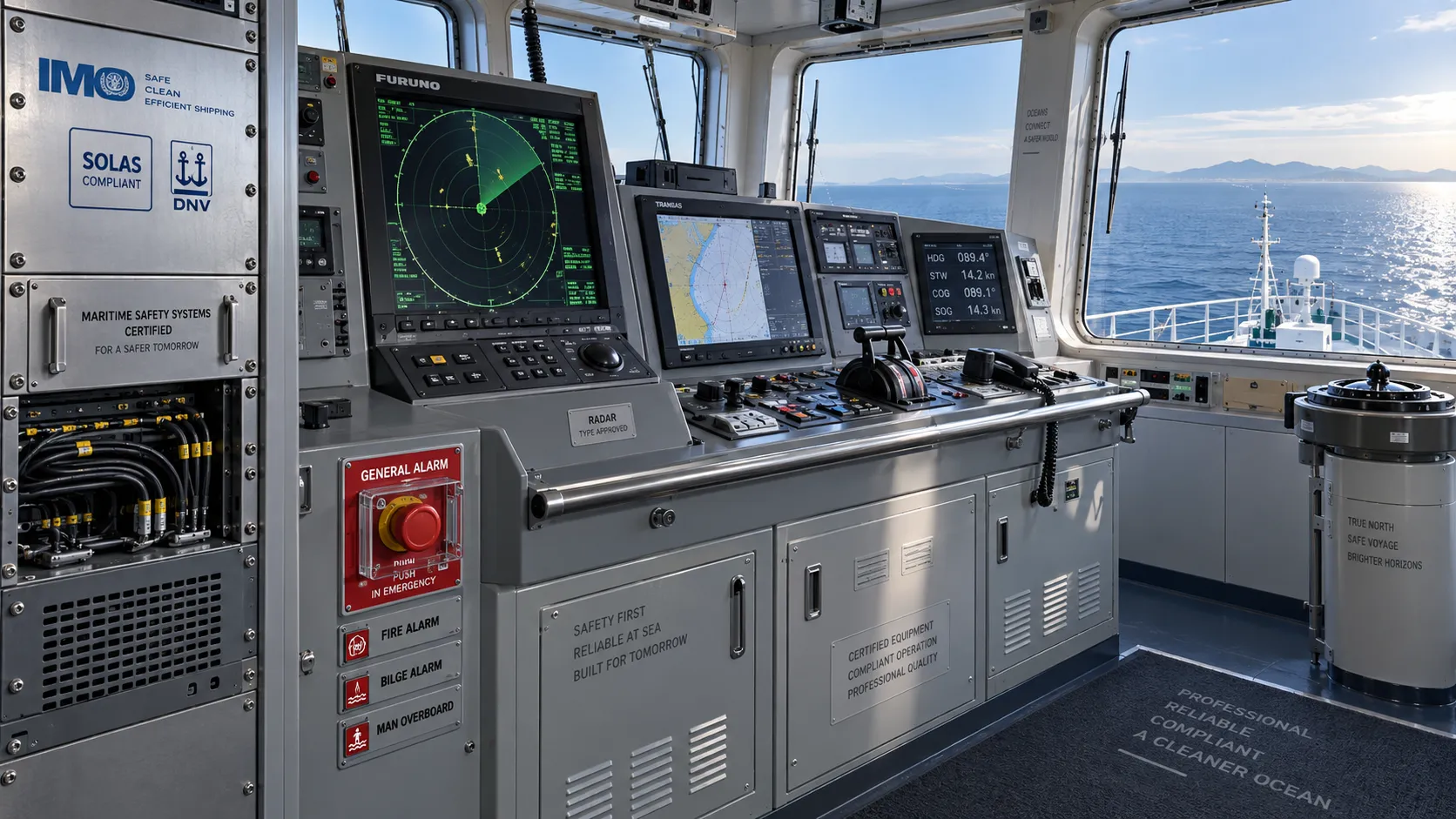
How to Evaluate a Marine Safety Systems Manufacturer for Vessel Compliance and Reliability
Marine safety systems manufacturer evaluation guide: verify compliance, engineering quality, lifecycle costs, and global service support for safer, reliable vessel operations.

Crash Test Regulations for Seatbelts: Key Compliance Requirements Explained
Crash test regulations seatbelts explained: explore FMVSS, UN rules, anchorage strength, and dynamic restraint testing for safer, compliant vehicle systems.

How to Calculate the Total Cost of Automotive Lightweighting for a Vehicle Program
Automotive lightweight solutions cost: learn how to calculate program-level costs, including materials, tooling, joining, validation, risk, and vehicle-level value.

How Automotive Seat Occupancy Sensing Improves Airbag Deployment Decisions
Automotive seat occupancy sensing helps optimize airbag deployment decisions, improving passenger classification, safety diagnostics, and compliance across real-world conditions.

What Drives Lightweight Body Component Costs in High-Volume Vehicle Programs?
Lightweight body components cost depends on material yield, forming, joining, tooling, validation, and logistics. Explore proven ways to optimize total vehicle program cost.
Related News
- 00
0000-00
How to Choose a Marine Positioning Solutions Supplier in Europe for Offshore and Port Operations - 00
0000-00
Marine Positioning Solutions Provider Comparison: GNSS, Accuracy, and Integration Factors - 00
0000-00
Marine Electromagnetic Navigation Accuracy vs GNSS: Which Performs Better Near Interference? - 00
0000-00
Marine Electromagnetic Navigation Accuracy: What Affects Position Stability at Sea? - 00
0000-00
Marine Positioning Systems Exporter Selection: What to Check in GNSS Accuracy, Compliance, and Support
Weekly Insights
Stay ahead with our curated technology reports delivered every Monday.